Subscribe now for full access and no adverts
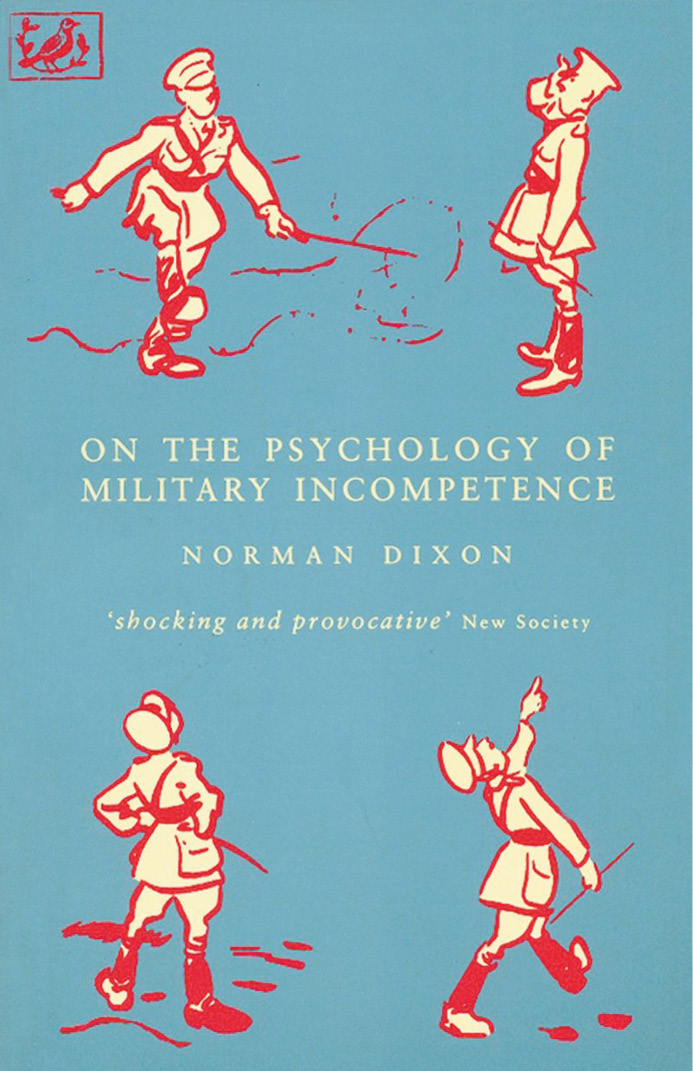
As Norman Dixon frequently asserts in On the Psychology of Military Incompetence (1976), war is a risky, high-stakes gamble, with fearful consequences for failure – so why dwell on the failures of a few unfortunate individuals? Well, we are still fascinated by events so catastrophic they seem to defy all human logic: the retreat from Kabul in 1842, the Battle of Spion Kop, the Siege of Kut, the fall of Singapore in 1942, and many others. What leads intelligent men to turn their backs on common sense and wise advice, and to drag their unfortunate troops stubbornly into massacre or captivity, actively rejecting every opportunity to save them? If we can’t single out stupidity, age, and other external factors, can we find common psychological explanations?
Dixon’s qualifications for writing this book are twofold, first as a former officer in the Royal Engineers, and second as a psychology academic. Military history was not his background, and Part 1 of his text, which details a series of military disasters, relies heavily on the popular sources of the day, such as the works of Cecil Woodham-Smith, Alan Clark, and Cornelius Ryan (all previously featured in this column). The various command failures are described with gusto, and subsequent research has often given a more nuanced account of the leaders involved. Nevertheless, Dixon gets his point across – that these sorry episodes share certain features, including a stubborn clinging to tradition, rejection of unpalatable information, underestimation of the enemy, indecisiveness, persistence in actions that are patently failing, and reliance on brute force and frontal assaults. The debacle at Arnhem in 1944, for example, illustrates all these faults except perhaps the first.
Particular personalities
It is the psychological explanations for the events described that make this a pioneering work. These cover both the behaviour of individuals and the collective mindset of military institutions. Central to Dixon’s argument is that certain types of individual are attracted to the military, and their participation perpetuates a particular culture, which in turn attracts more individuals of the same type. This discourages the elevation of the more original and maverick types who are often needed to achieve real success.
One example of a not-very-helpful aspect of military culture is ‘bull’ – the word in shortened form! – which all British and American veterans will recognise. It is exemplified by the old saying:
If it moves, salute it.
If it doesn’t move, pick it up.
If you can’t pick it up, paint it!
Endless drill, ritual, obsessive polishing of equipment, and avoidance of realistic battle exercises have characterised a number of armies. Dixon associates this with the Freudian concept of the ‘anal character’: he argues that early anxiety induced by negative experiences of toilet training is mitigated in the military by structure, order, cleanliness, conformity, and tradition. Needless to say, this all evaporates under the stress of battle, leaving some generals singularly unprepared.
Freud’s theories were already being challenged in 1976, and Dixon’s later suggestion that Field Marshal Haig’s asthma in WWI was ‘psychosomatic’ and reflected ‘infantile dependency’ may be jarring to the modern reader (particularly if they are asthmatic!). Whatever the theory, bizarre behaviour like General Percival’s WWII refusal to fortify the island of Singapore because of its impact on ‘civilian morale’ requires an explanation:
In the case of Percival and [fellow Allied officer] Gordon Bennett, to erect defences would have been to admit the danger in which they stood. In other words, their professed anxiety about civilian morale was really displaced from anxiety about their own morale. Looking further into the story of Singapore one is struck by the compulsive element in this refusal of the military to defend itself. Such compulsive behaviour is typical of many who present an authoritarian personality and are ‘reared’ in an organisation which traditionally deals with fear and danger by ritualistic means – ‘bull’, drill, parades etc.
I find this more convincing than Dixon’s earlier comments about defence being seen as ‘feminine’ and unmasculine. After all, that most aggressive and masculine of armies, the German Wehrmacht, excelled in defence.
Dixon claims that the psychopathology of military organisations is dominated by anxiety – the rewards for success being so small, and the penalties for failure so huge. This negative reinforcement leads to fear of failure, rather than hope of success, being the dominating motive, and this fear increases up the command chain because there is further to fall. It is notable in the historical examples quoted, personal failure is most feared – there seems to be a surprising level of callousness to the fate of the thousands of troops caught up in defeat. General Townshend, who in 1916 surrendered his troops at Kut, south of Baghdad, was lavishly accommodated by his Turkish captors in a luxury villa on an island while his troops died in their thousands from dysentery, cholera, typhus, and starvation.
Great generals
A lot of space is devoted to authoritarianism. Dixon argues that the British boarding-school system, and the military academies which follow, have selected generations of leaders based on excellence in sport, physical courage, ‘muscular Christianity’, anti-intellectualism, and ‘anti-effeminacy’. This results in commanders who expect total obedience and are characterised by ‘rigidity, meanness, lack of spontaneity, and having a closed mind.’ Subordinates are expected to be compliant, self-controlled, unquestioning, and to keep their bright ideas to themselves.
According to Dixon, great generals pursue excellence rather than status.
So what makes a great general? Dixon singles out those who pursue professional excellence rather than their own status. The best (and rarest) combination is ‘excellence as a task-specialist with an equal flair for the social or heroic aspects of leadership’. He mentions Wellington, Nelson, T E Lawrence, and Slim as possessing both warm humanity and extreme professionalism. Some leaders who suffer a deficit in the human skills manage to simulate the warmth and accessibility expected. Montgomery is a notable example – by nature cold and introverted, he endeared himself to his troops with eccentric costume, a confident manner, and free packs of cigarettes. The concept of Emotional Intelligence (EQ) didn’t become widely current until the 1990s, but it is surely relevant to this argument about commanders and their intuitive connection to their troops.
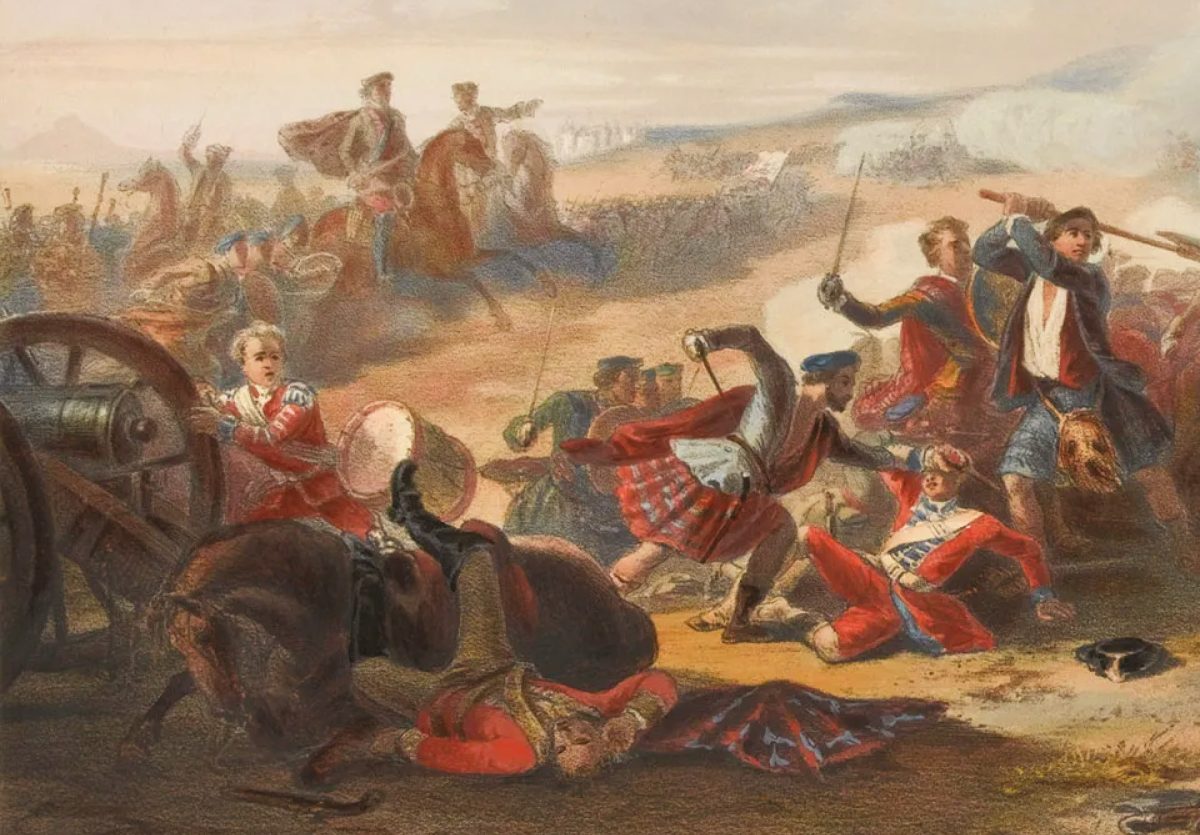
Commanders like Wellington and Napoleon were known for their warm, emotional encounters outside the profession of arms. Nelson’s death was greeted by uncontrolled weeping among his men, while his homeland consigned his mistress to poverty and disgrace. Nelson was also known for his disobedience when his judgement warranted it – his refusal to obey a signal at the Battle of Copenhagen gives us the expression ‘turn a blind eye’. Similarly, General Wolfe, when he was a lieutenant at Culloden, flatly refused an order to execute a wounded Jacobite officer. Both Nelson and Wolfe were noted for their concern about the health and wellbeing of their men (one could hardly say this of Napoleon). Wellington was seen to weep openly on several occasions when he saw the bodies of the fallen.

Dixon argues these men share the common characteristics of a happy childhood with consequent self-assurance and confidence. They were open to innovations and happy to delegate. Nelson’s ‘band of brothers’ and Napoleon’s marshals became famous in their own right.
Fifty years after publication, this book is still a fascinating read. It has its quota of dated psychobabble, but generally it has stood the test of time. It would be interesting to know what a study of female commanders reveals, but of course Dixon did not have access to examples in the 1970s, apart perhaps from the occasional warrior queen. He doesn’t offer a prescription for selecting senior officers, but we are left in no doubt that this is more important than ever. Recognising this difficulty, Dixon eerily prefigures a risk that we all face in this age of AI and drones: ‘Indeed, the foregoing analysis of generalship prompts the thought that it might be better to scrap generals and leave decision-making aspects of war to computers.’ Flawed though generals are, it’s perhaps better to stick with the devil we know.
Norman Dixon
Born: 1922
Died: 2013
Nationality: British

Norman Dixon served in the Royal Engineers for ten years – including during World War II, when he was wounded (‘largely through my own incompetence’) and awarded the MBE – before leaving in 1950 and entering university. He obtained a first-class degree in psychology, followed by a Doctor of Philosophy in 1956 and Doctor of Science in 1972, and was awarded the University of London Carpenter Medal for his doctoral thesis. Dixon went on to teach psychology at University College London, where he became a Professor Emeritus on his retirement; he also held an honorary doctorate from the University of Lund. Dixon produced several books during his career, but remains best known as the author of his 1976 study On the Psychology of Military Incompetence.