Maps that tell a story

Christopher Catling, Contributing Editor for CA, delves into the eccentricities of the heritage world.
September 2, 2024
This article is from Current Archaeology issue 415


Subscribe now for full access and no adverts

When Venice features in the media, the story is usually about the malign consequences of flooding, cruise ships, and tourism, which crowds out more positive news, like the development of the Venice Time Machine, due to be showcased at this year’s European Association of Archaeologists conference in Rome. This is the first product of a hugely ambitious European Commission project that aims to bring together every bit of digital data that currently exists to help us understand the entire history of Europe, no less. The scheme is dressed up in lots of flowery language, with charts purporting to show how it will all work (see http://www.timemachine.eu/about-us/ if you really want to know), but the developers of the Time Machine have wisely chosen to begin with the small and well-defined fragment of the European continent that is the Venetian archipelago. We will see whether this is ever scaled up to cover the entirety of Europe.
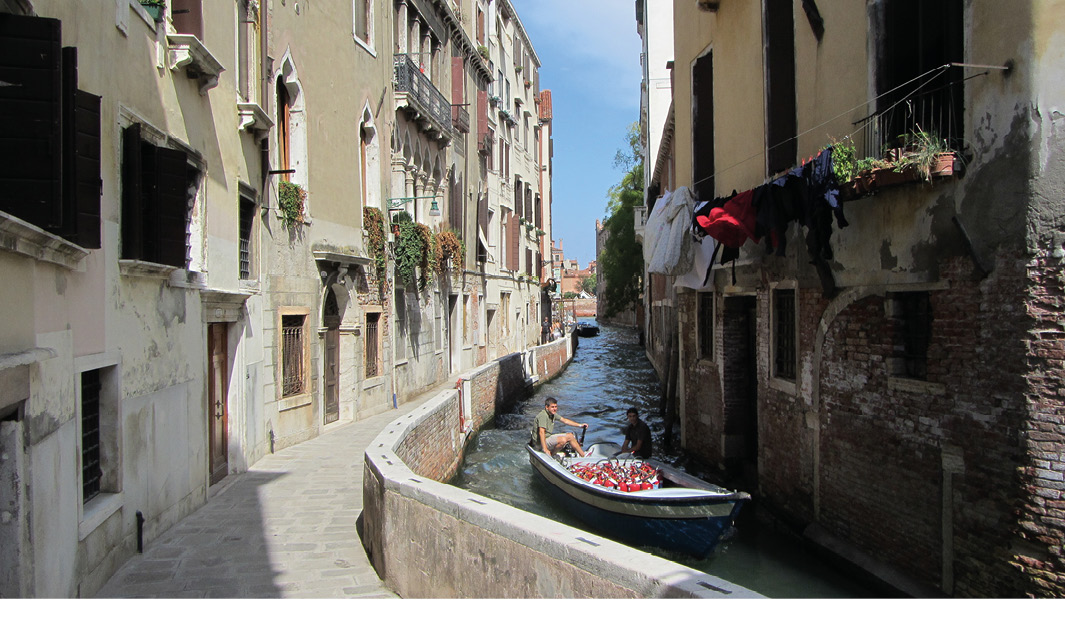
The European Commission’s Time Machine project has chosen Venice as its inaugural city. Image: Stephen Colbourne

Time Machine Venice is just one of many such projects that are trying to harness the power of AI and supercomputers to bring together large and disparate datasets to tell a more holistic story about the historic environment – in simple terms, showing how the world has evolved and changed over time. Another such development is the Archaeological Atlas of France, published by Inrap, the National Institute for Preventive Archaeological Research, in November 2023. The Atlas consists of 100 maps synthesising thousands of finds, surveys, and excavations, starting with the migration of Homo sapiens into what is now France. It then traces their first artistic works, and ends with the marks left by the violence of the two World Wars and the post-War history of colonial and overseas France.

Each map represents a slice of time through France’s past, and is accompanied by analytical commentary, photographs, and artistic reconstructions of landscapes representing thousands of years of human occupation and activity. Or, as Inrap President Dominique Garcia put it, ‘the invisible heritage beneath our feet’. One map, for example, shows the distribution of ports, settlements, and finds (including tin, amber, wine amphorae, and ornaments) that constitute the evidence for 7th-century BC trade networks.

France has had its archaeological landscape described in great detail in Inrap’s Archaeological Atlas of France. Image: Patricia M

Map regression

Essentially these are large-scale distribution maps, and they use a rather old-fashioned medium (the printed page). Even so, it would be good to have similar maps for the UK and Ireland, showing the results of 35 years of developer-funded archaeology and the PAS records of metal-detectorist finds. Much could also be learned from bringing together historic maps, as pioneered by the Welsh Royal Commission’s award-winning Deep Mapping project, which uses software to find the best fit between historic maps (dating back to the 16th century) and the OS master map. Overlaying these maps and using software to highlight different features in the landscape enables us to see change and continuity in the landscape over time.

The next step beyond map regression is then to add in all the other data from Historic Environment Records, LiDAR, aerial photography, and the like – the potential is limitless, and would provide planners as well as archaeologists with a comprehensive visual account of historic landscape features that is hard to gather at present. Such information is vital for planning the location of new woodland as a carbon-offset measure, locating wind farms and solar arrays, or identifying land suitable for housing development and related infrastructure while at the same time preserving and enhancing what is significant in the historic environment – ancient woodland, peat bogs, and unploughed grassland, for example.

Going underground

A further dimension (literally) is to map what lies deep underground – including historic mining activity. Sherds learned recently, from Tim Tatton-Brown, that Oxford Archaeology has been mapping the vast network of Bath Stone underground quarries and tunnels around Corsham and Monkton Farleigh, in Wiltshire. Some of these were used as bombproof ammunition depots during the Second World War, before being turned into the Central Government War Headquarters (CGWHQ), the very existence of which was known only to a few hundred people until the 1970s. This 35-acre complex was built 120 feet underground in 1956-1961 to house the Prime Minister, Cabinet, and 4,000 civil servants and military personnel in the event of nuclear war. Above ground, the nearby Ministry of Defence Information Systems and Services (ISS) complex, the very secret hub of military communications, is said to be the most expensive building ever put up in Wiltshire. The bill for the ISS complex came in at £690m in 2008, compared with an estimated cost of £500m at today’s prices for constructing Salisbury Cathedral.
The Wiltshire volume of Buildings of England comments that the underground CGWHQ complex was dismantled in 1991, and that the ‘opportunity was lost’ to make the subterranean city accessible. Among the interesting spaces to be found here was the BBC studio from which the Prime Minister would have addressed the nation, and a ‘special accommodation suite’, finished to a higher standard, that was probably intended for senior members of the Royal Family. A small part of the complex is now a scheduled monument, and the list entry describes the ‘sober fitting out of the Bath Stone chamber, with breeze block partitions’, as ‘redolent of the grim character of the Cold War era and the functional nature of the area’.

Community archaeology

As a side comment, Tim Tatton-Brown adds that it was near here that Henry Hurst excavated the Box Roman villa in 1967-1968. Among the local volunteers who turned up to join the dig was Richard Hodges (well known to readers of our sister magazine, Current World Archaeology, for his regular column), then a Bath-based schoolboy. Richard records in his blog (http://www.richardhodges.net) that he went on to set up the Box Archaeological and Natural History Society, which is still going strong, and that 80 of their 129 members recently turned out for a 50th anniversary party. ‘How on earth, as a 16-year-old with shaggy hair, did I persuade village grandees to help me form a committee and get it all up and running?’, Richard asks.

Sherds suspects the answer lies simply in the healthy desire of local people of all ages to connect with their predecessors and learn more about how they lived. This continues to be the case, judging by several articles about heritage that have been published this summer in The Sunday Times, though with the difference that whereas Richard was clearly able to connect with the grandees, inter-generational relationships today are often more fraught.

Box Archaeological and Natural History Society was the focus of ‘Odd Socs’ in CA 350; this is a model of the excavated villa, by society member Christine Williams.

This is especially paradoxical when it concerns the folk scene, which is entirely dependent on handed-down traditions. One article (‘For Folk’s Sake’, 28 April 2024), quoted Lucy Wright, 39, as an ‘artist, academic, and mainstay of a scene aiming to remove folk traditions from male, pale, and stale hands and return them to the people’. Others are quoted in the same article as aiming to ‘liberate folk from traditions of conservatism and convention’, which seems to mean ‘make it up as we go along’ and is therefore hardly ‘traditional’.

Undoubtedly it is true, however, that there is a growing interest in what could be described as hippy, New Age, raver, countercultural, or folk rituals. Sherds heard many more people wish each other ‘happy solstice’ on 21 June this year, and English Heritage reports a substantial increase in the numbers of people visiting prehistoric sites for solstitial and equinoctial gatherings. Archaeologist Dr Jennifer Wexler (the English Heritage Senior Properties Historian for Stonehenge, Grime’s Graves, Tintagel, and other early history and prehistoric sites) was quoted as saying that ‘we want to inspire visitors to remove themselves from modern worries and make emotional connections to our sites… more people are interested in marking seasonal moments to give our lives meaning, connecting to the spiritual power of the cosmos so we can move beyond our daily woes’.

Musician Matthew Shaw explains the desire that he has for escaping from organised religion and ‘the burden of a stern patriarchal bearded sky god’, but others talk about relinquishing a much more recent ‘deity’, known as ‘the mobile phone’. Russ Gater, designer of handmade clothing inspired by the past, says that we are smothered by social media: ‘We want something more elemental. You cannot capture the vibe of solstice by scrolling. The experience has to be analogue.’

By Country

Popular
UKItalyGreeceEgyptTurkeyFrance

Africa
BotswanaEgyptEthiopiaGhanaKenyaLibyaMadagascarMaliMoroccoNamibiaSomaliaSouth AfricaSudanTanzaniaTunisiaZimbabwe

Asia
IranIraqIsraelJapanJavaJordanKazakhstanKodiak IslandKoreaKyrgyzstan
LaosLebanonMalaysiaMongoliaOmanPakistanQatarRussiaPapua New GuineaSaudi ArabiaSingaporeSouth KoreaSumatraSyriaThailandTurkmenistanUAEUzbekistanVanuatuVietnamYemen

Australasia
AustraliaFijiMicronesiaPolynesiaTasmania

Europe
AlbaniaAndorraAustriaBulgariaCroatiaCyprusCzech RepublicDenmarkEnglandEstoniaFinlandFranceGermanyGibraltarGreeceHollandHungaryIcelandIrelandItalyMaltaNorwayPolandPortugalRomaniaScotlandSerbiaSlovakiaSloveniaSpainSwedenSwitzerlandTurkeySicilyUK

South America
ArgentinaBelizeBrazilChileColombiaEaster IslandMexicoPeru

North America
CanadaCaribbeanCarriacouDominican RepublicGreenlandGuatemalaHondurasUSA

Discover more from The Past

Subscribe now to keep reading and get access to the full archive.

Continue reading