

Subscribe now for full access and no adverts
Journeying north up the A9 between Pitlochry and Blair Atholl in the Scottish Highlands, most travellers are unaware that they are driving through the centre of a battlefield. But if they were transported 327 years back in time, to their left they might have seen the red-coated line of a Government army and to the right three columns of charging Highlanders. Despite being divided by a major road, Killiecrankie is one of the best-preserved battlefields in Scotland. Archaeological fieldwork in 2015 revealed new evidence for the location of the fighting that saw a Jacobite army of Highlanders overwhelm a numerically superior Government force.

Came ye by Killicrankie, O?
Fought on 27 July 1689, the battle at Killiecrankie was the opening clash of the first Jacobite Rising, which followed the tumultuous events of 1688, when James VII (or James II of England) – the last Catholic King to reign over Scotland, England, Wales, and Ireland – was ousted and replaced in England by the Protestant William of Orange and Queen Mary, James’s own daughter. In 1689, the Scottish Parliament voted to give the crown of Scotland to William and Mary. In response, John Graham of Claverhouse, Viscount Dundee, raised an army under the standard of James VII. Dundee’s army mainly comprised Scottish Highlanders, supported by a small force of Irish troops. To counter this, a Government army of Lowland Scottish, English, and Dutch forces was raised, led by Major General Hugh Mackay, who wrote an eye-witness account of the battle.
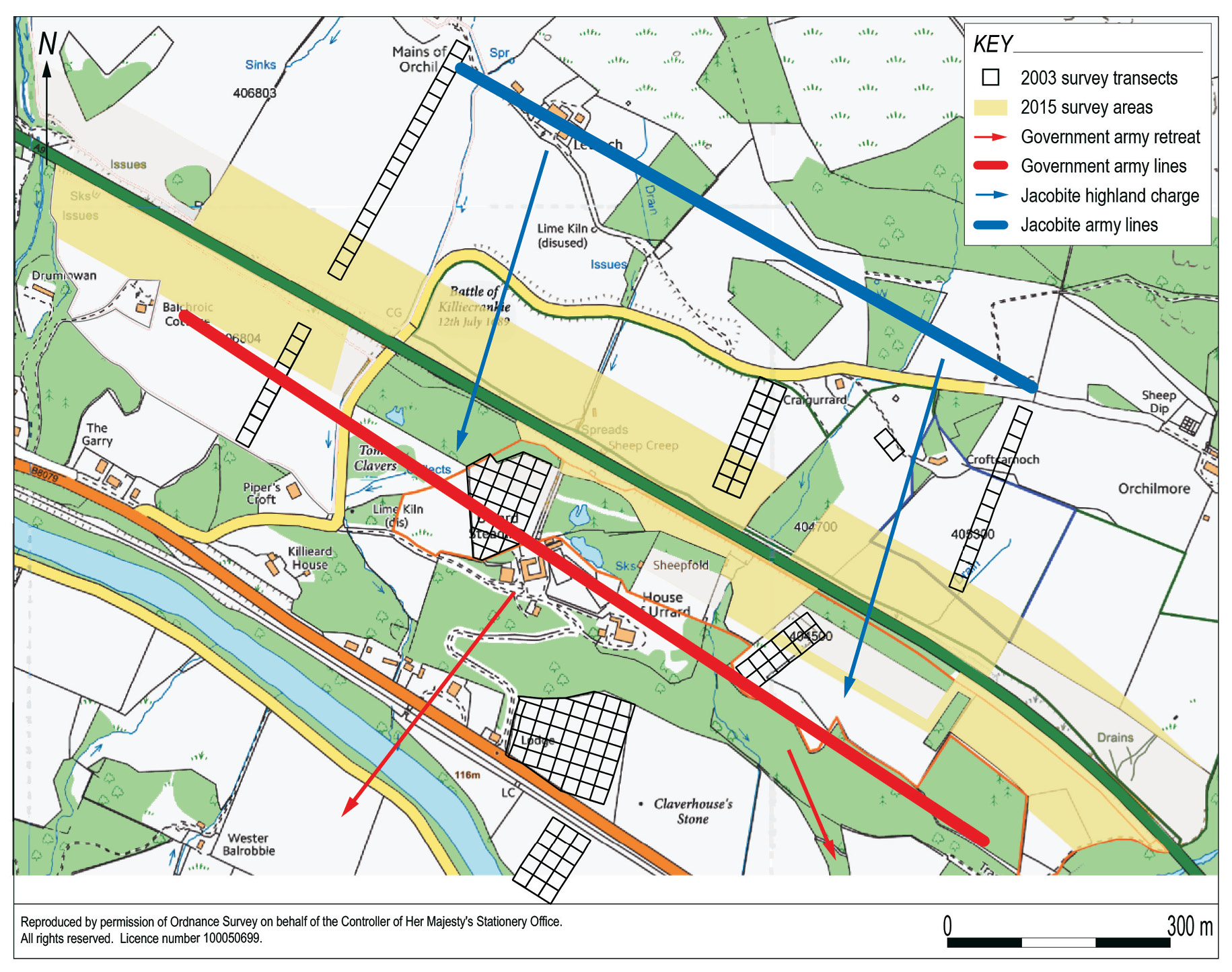
The battle came at the end of a cat-and-mouse chase around the Highlands, as Mackay and Dundee each tried to gain an advantage over the other and bring their opponent to a decisive battle. In July 1689, both were heading for Blair Atholl to capture the castle there, which they intended to use as a base. ‘Bonnie Dundee’, as he was dubbed by Sir Walter Scott, or ‘Bluidy Clavers’ to his Covenanter enemies, was coming south with around 2,400 men, while Mackay was marching north with a much larger army of between 3,500 and 5,000 men. It was on the slopes of Creag Eallaich, at the Pass of Killiecrankie, a gorge formed by the River Garry on the key communications route into the Highlands from Perth to Inverness, that the two armies met.
The Jacobite army had arrived first and taken the higher ground, while the Government army were deployed across the base of the hill, either side of Urrard House. Once in position, the two armies spent several hours insulting each other, while Dundee apparently waited for the sun to go down so that it no longer shone in his soldiers’ eyes. During this period, the Government lines were harassed by Jacobite snipers firing from a building between the two lines. Mackay sent a party of men to dislodge them, which precipitated the main battle that evening. Shortly after the Government soldiers regained their own lines, the Jacobites attacked in three groups in a classic ‘Highland Charge’.
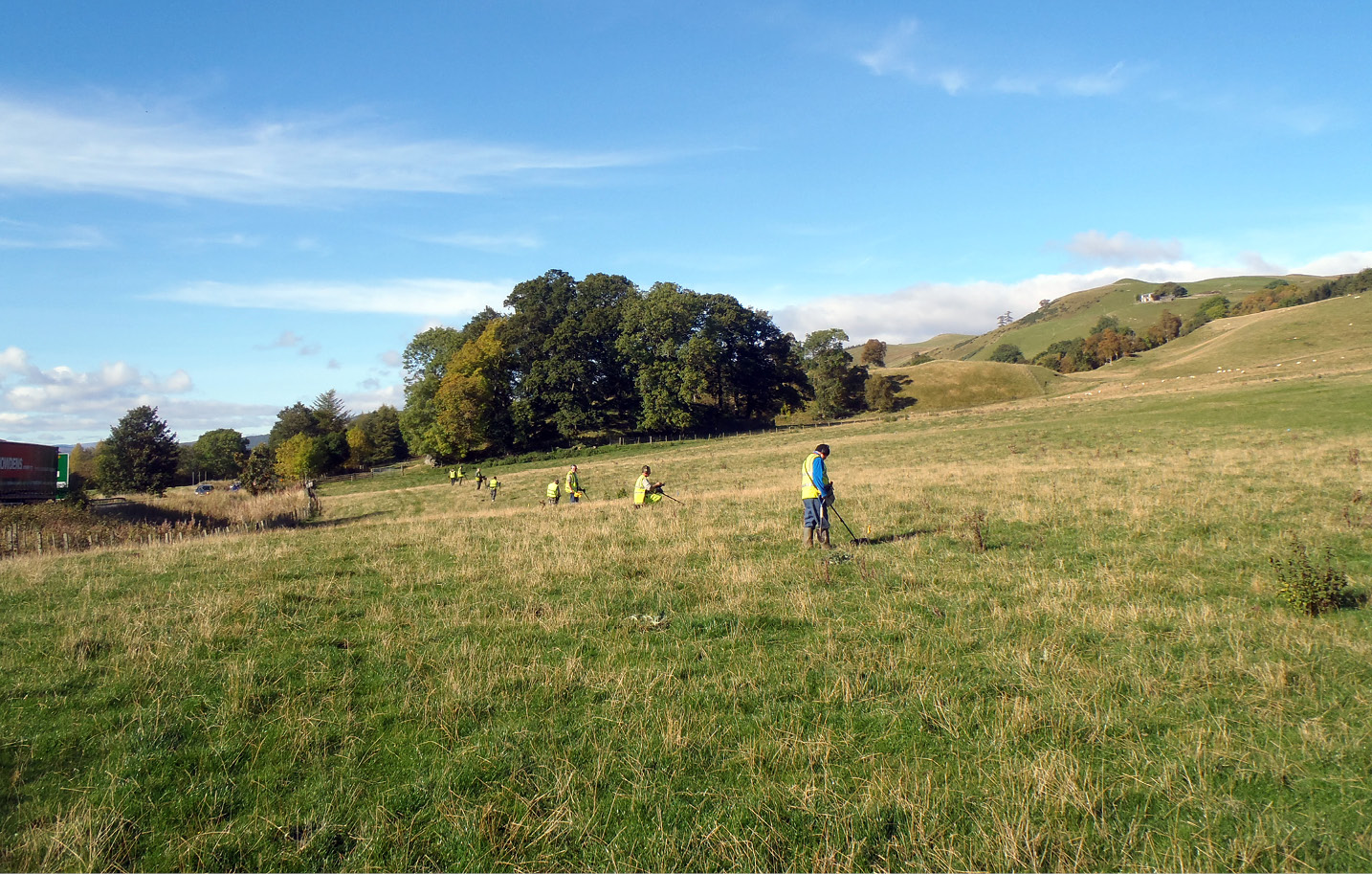
The braes o’Killicrankie
Contrary to popular belief, a Highland Charge was not a chaotic, ill-disciplined mob riot, but instead required a high degree of discipline from men rushing into musket range. Speed was essential, so Highlanders often preferred to charge downhill over firm ground and remove clothing from their lower body, as at Killiecrankie. Clad only in their linen shirts, the Highlanders ran forwards, and once in effective musket range (about 60 yards) those with firearms would shoot; gun smoke from this would obscure their enemies’ aim. Firearms were then dropped and edged weapons drawn, whereupon the Highlanders made the final rush on the enemy line, yelling in Gaelic. Once within striking distance, a Highlander would attempt to take an opponent’s sword or bayonet point on his targe (the small round shield they bore), while lunging in low to deliver an upward thrust to their enemy’s torso. Indeed, it seems that once the Highlanders had reached the Government lines at Killiecrankie, their broadswords proved much more deadly than the plug-bayonets of the Government soldiers.