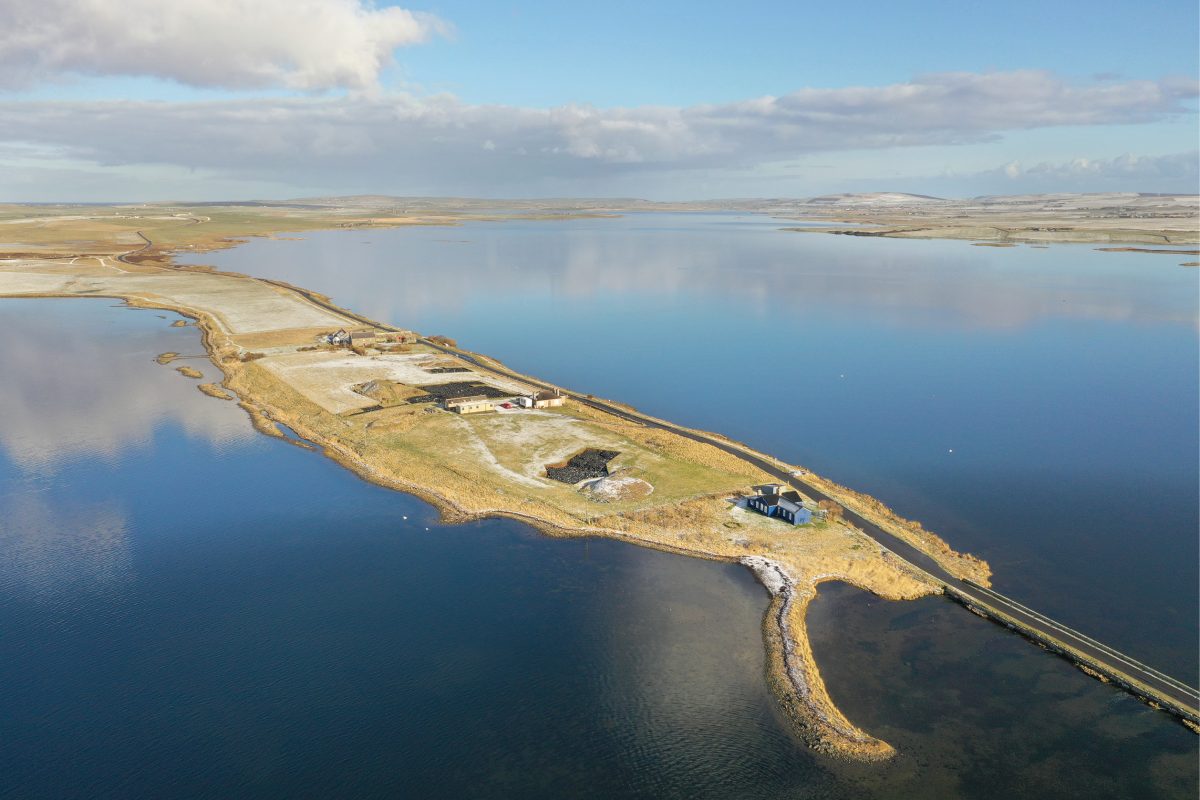
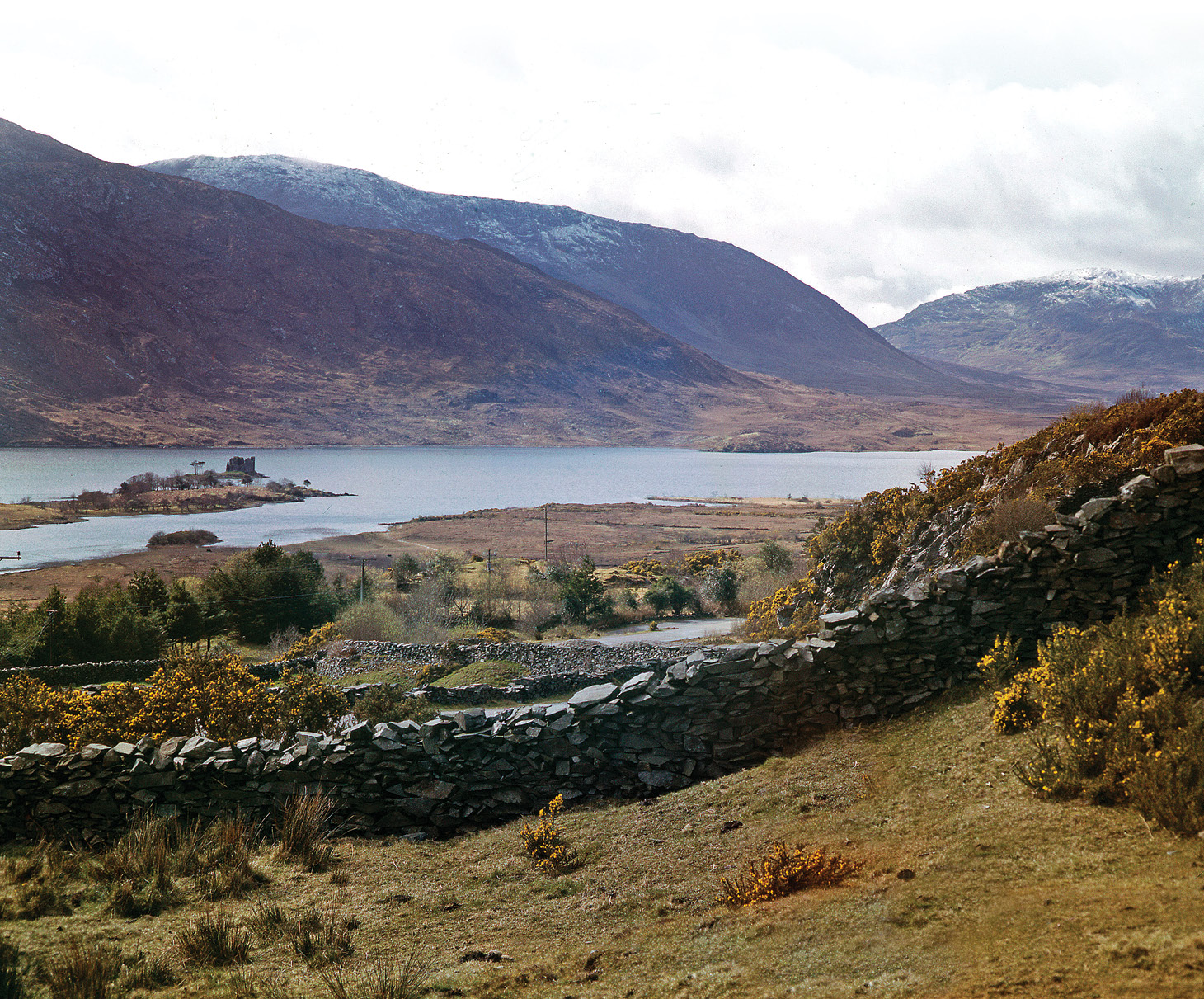
Precisely what happened that 11th-century day on the waters of Lough Corrib is lost in the mists of time, but one thing is certain: it was an ignominious end to what should have been an ostentatious journey. Earlier, a Medieval Irish dignitary had set out across the vast lake – which covers 176km² of what is now Co. Galway – in a finely crafted logboat. Propelled by four rowers, the 6m-long vessel would have skimmed swiftly over the waters. But while the crew had their battleaxes safely stowed beside them, this was no raiding expedition: a number of unusual items had also been placed in the vessel’s hull, including a slab of red sandstone, and a rock rich in fossils; neither object was common to the local geology. Perhaps these curiosities were intended as gifts for one of the many monastic communities scattered around the edge of the lake. They would never reach their destination, however.
What came next is unclear, but several possible scenarios can be devised. Most likely is that the weather took a sudden turn for the worse and the lake became choppy, as it often does today. A narrow vessel like the logboat would have been tossed about by the waves, perhaps striking a rock jutting out from the lakebed only a short distance from where the wreck was found. Certainly a large split in the hull, which had been shaved to just 2cm thick, suggests a fatal encounter with a hard object. But might the boat’s cargo have been its undoing? As the sandstone slab was found directly over the breach, it is easy to imagine a sequence of events in which the logboat violently lurched over a wave, causing crew and cargo to bounce, and the heavy slab to come down hard on the delicate hull, cracking it open. With the vessel taking on water, there was no alternative but to make for shore with as much haste as the rowers could muster. Their situation was hopeless, however. With the vessel still 500m from land, her crew was forced to jump overboard and swim to safety, leaving the boat – and their possessions – to founder.
Locating the logboats
It would be a thousand years before the wreck was discovered. Although a wealth of sites, particularly Medieval ecclesiastical settlements, have been located and explored on the lake’s shore and among the hundreds of islands studding its surface, previously little archaeological attention had been paid to what lay in its depths.
This has now changed, thanks to a project by marine surveyor Captain Trevor Northage to produce up-to-date navigation charts of Lough Corrib. As the lake was last charted in the 19th century, this undertaking offers obvious benefits for the fishing boats that ply its relatively shallow waters – but with an added archaeological bonus: Trevor’s sonar sweeps highlighted a number of previously undetected sites.
‘While the 1846 survey of Lough Corrib was a technical feat in its own right, it was not even approaching what I would call a reasonable chart by today’s standards – I had already damaged my own propeller, as had many friends, when I decided to have a go at charting it properly,’ said Trevor. ‘I use sidescan technology to help locate hazards, which generates enormous amounts of data that I analyse in my spare time. If I see any anomalies that look interesting, I go back and pop the dropcamera in the water for verfication, and then send the results off to the Underwater Archaeology Unit.’
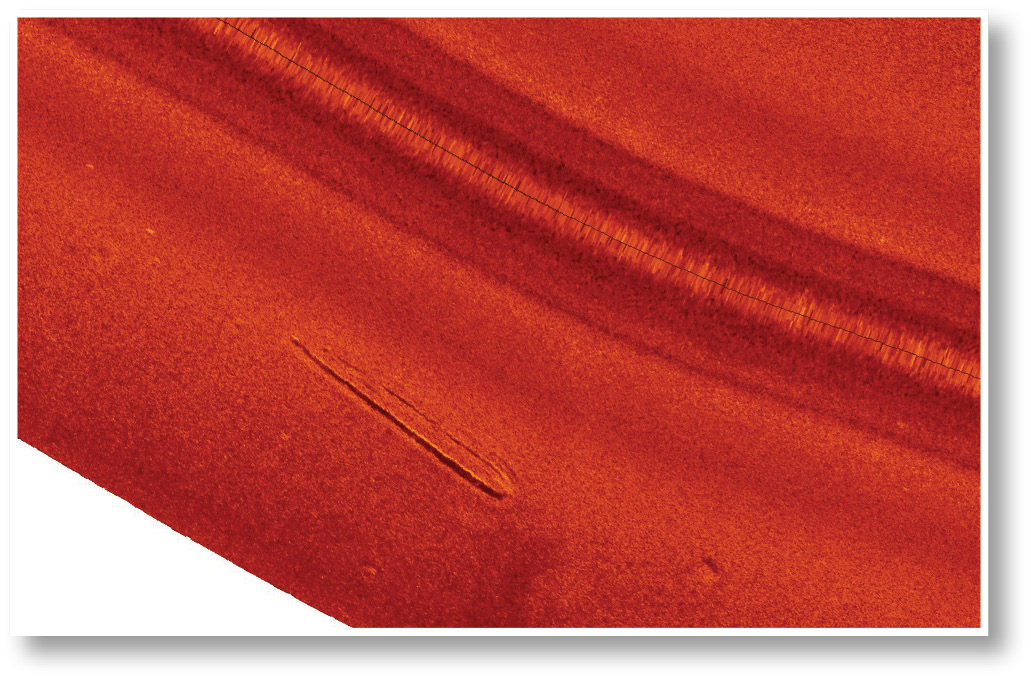
It was the appearance of a long, slender anomaly, evocative of a sunken vessel, that first prompted Trevor to contact the Unit (part of Ireland’s National Monuments Service). Responsible for all heritage sites in Irish waters, the Unit has been compiling an inventory of underwater discoveries over the last 15 years that includes more than 18,000 shipwrecks. A dive team headed by Karl Brady was sent to investigate the feature, as well as around 20 other anomalies picked up during the mapping project.
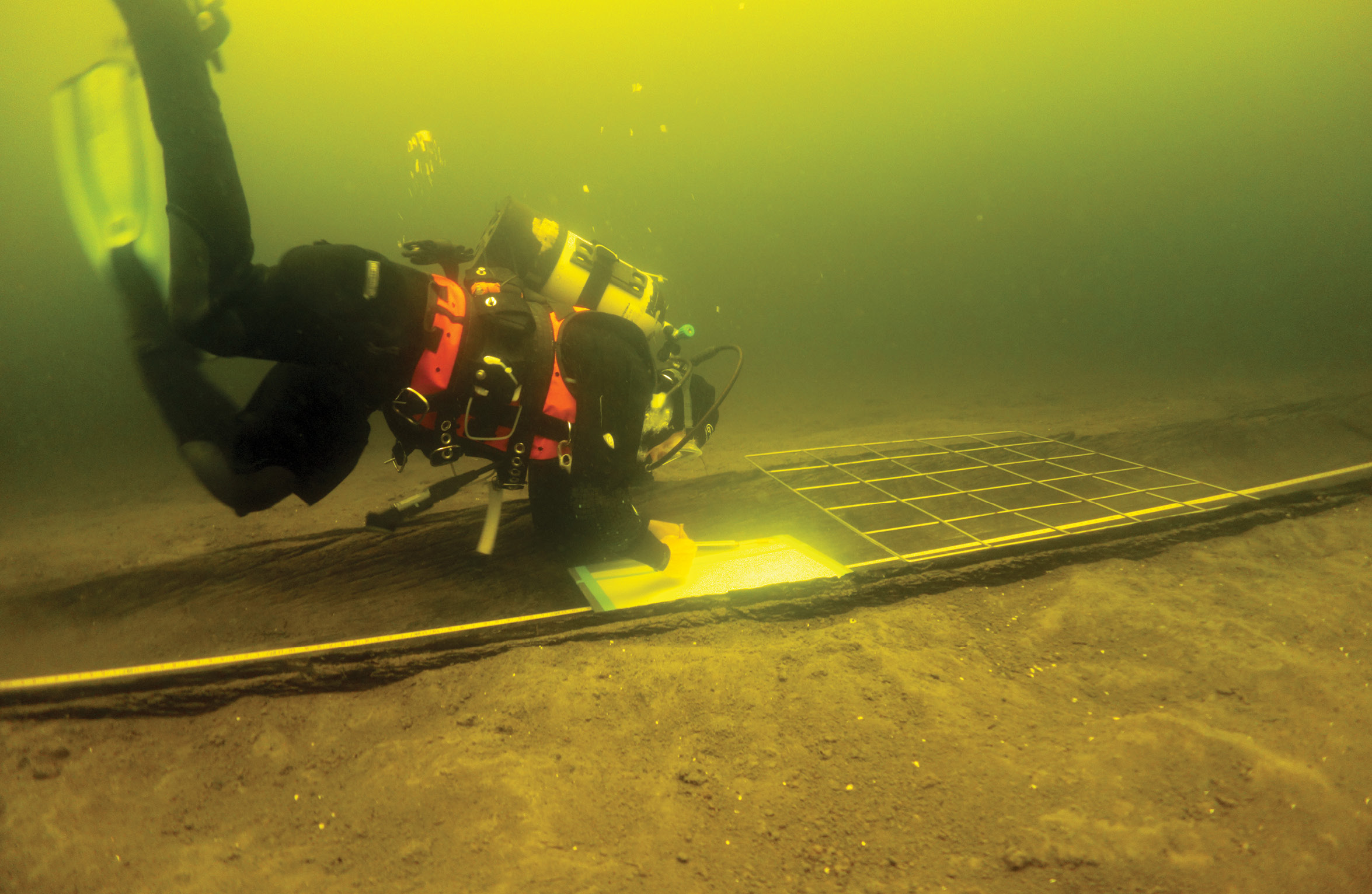
To-date, over half of these sonar ghosts have proven to be the remains of boats of various ages. Most recent is an ill-fated Victorian pleasure craft, but an ongoing programme of radiocarbon analysis and careful examination of artefacts still stowed inside some of the vessels suggests that others could be much older. Among these, five logboats have been securely dated so far, ranging from the Early Bronze Age (c.2500 BC) to the 11th century AD. Exploring the wrecks is no small task, however. Although Lough Corrib’s shallow depth is a blessing for the divers, who are able to work for long periods of time without having to factor in decompression, and can easily return to the surface to speak to colleagues or fetch additional tools – other conditions proved more challenging.
‘The bottom of the lake is very muddy: a fine, rich, sticky mud that, combined with frequent wind and rain, can mean that underwater visibility is often very bad,’ said Karl. ‘The main thing was not to touch the lakebed while recording the wrecks – if we did, it churned everything up and we had to wait for 15-20 minutes for the water to clear before we could continue working.’ While the mud was a hindrance for the researchers, it is also the reason why the logboats have survived.