
Digging into Paris’ past
Excavations on the Île de la Cité are uncovering thousands of years of Parisian history. Amy Brunskill spoke to Julien Avinain and Lucie Altenburg to find out more.

Excavations on the Île de la Cité are uncovering thousands of years of Parisian history. Amy Brunskill spoke to Julien Avinain and Lucie Altenburg to find out more.
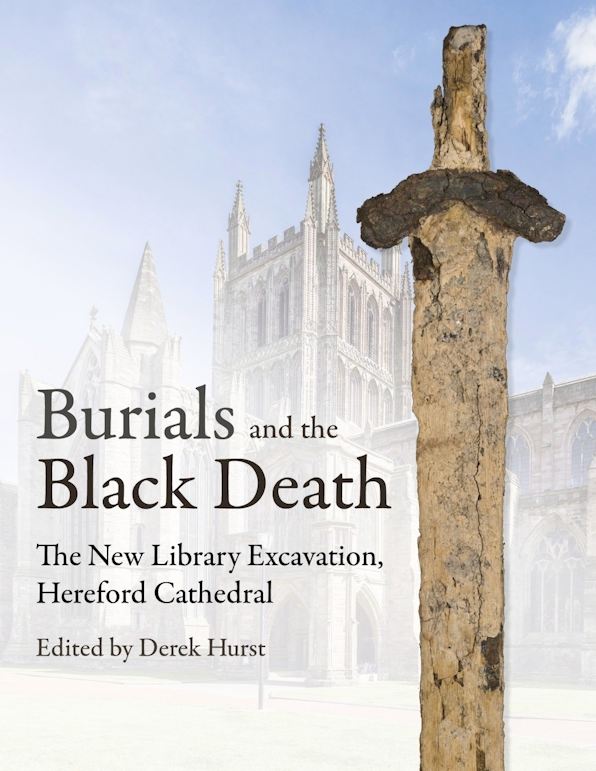
Excavation reports often have a long gestation, and the publication of the City of Hereford Archaeology Unit’s 1993 excavations on the site of Hereford Cathedral’s new Mappa Mundi museum has been eagerly awaited. Yet any frustration at the delay quickly…

Work has begun on conserving Gloucester Cathedral’s Great Cloister, an intricate and important undertaking as this structure features the earliest surviving fully developed fan vault. The project was undertaken after a trial had found that the cloister was under significant…

During the 13th century, a series of popes made use of the palace at Viterbo in Italy. During this period, the city hosted five conclaves, while the palace grew increasingly impressive. Tim Tatton-Brown examines the evolution of this complex and the events that unfolded there.

A nalysis of a reliquary box long believed to house the remains of Magnus Erlendsson, Earl of Orkney in 1106-1117, has confirmed that the container is contemporary with the saint. The story of Magnus’ execution (following a power struggle with…

Excavations close to Exeter Cathedral have uncovered echoes of the city’s medieval and Roman past. Archaeologists from Devon-based AC Archaeology were excavating in Cathedral Close ahead of the installation of a replacement substation and associated infrastructure by the National Grid,…

The sounds that one associates with places of worship are those of an angelic choir or the intricate patterns of a Bach fugue. Some churches have, however, been enjoying success with the rather more unexpected pairing of doom metal bands and church organs.

REVIEW BY MARIE THERESE FLANAGAN Discovering Medieval Ferns, Co. Wexford, focuses on the town as a regional religious and royal centre in the Kingdom of Leinster during the medieval period. It provides reports on surveys and excavations at three sites.…

The Caucasus is a region where nations have often found themselves sandwiched between competing great powers. Christoph Baumer examines the political intrigues and military struggles that led to the rise and fall of the Kingdom of Georgia, while taking in some of the key monuments from the era.

Recent excavations within the cloister of Exeter Cathedral have unearthed significant structures and artefacts spanning the Roman, medieval, and post-medieval periods, including traces of a legionary fortress. The project has been carried out by AC Archaeology, led by Simon Hughes…

At another English cathedral, that of Exeter, excavations have revealed Roman remains

Last month, Warwick Rodwell guided us through recent research in Canterbury Cathedral, focusing on the virtuosic mosaic that once lay before the shrine of Thomas Becket. As a sequel, he now reveals what was learned about the shrine itself, and the chapel in which it stood before the Dissolution of the Monasteries.

Among the objects on show are the pipes from the cathedral’s great organ and a stained-glass panel from the cloister of the sacristy

Following their discovery by a team from Inrap last year, the coffins were sent to the forensic institute of Toulouse University Hospital for further investigation.

A round-up of some of the latest news; includes the discovery of one of Scotland's largest medieval coin hoards.

Reconstruction of the collapsed stone vault in the north transept of the cathedral has now been completed.

Influential figures in the heritage world are concerned about the scale and height of new buildings proposed for the centre of Canterbury, where the primacy of the cathedral as a focal point of views and the intimacy of historic streets are under threat. Chris Catling reports on a manifesto for the city produced by SAVE Britain’s Heritage, warning against the mistakes of post-war development and recommending a new approach that has lessons for many of our towns and cities.

Although none of the stained-glass windows were destroyed or damaged by the fire, many of them, already dusty, were exposed to smoke and soiled as a result.

Among the discoveries were a large number of fragments of Notre-Dame de Paris’ lost medieval rood screen.

The Friends have raised some £15 million towards projects as diverse as the purchase of a minibus for the choristers, the conservation of rare books in the library, the restoration of the splendid Tudor gatehouse, and the creation of a new garden in the cathedral precinct.

The heritage sector is central to the UK’s appeal as a tourist destination, which will be crucial in reopening our borders and rebuilding the economy as the COVID-19 pandemic is brought under control.

The figure of Nathan possibly dates to AD 1130-1160, making it perhaps the earliest surviving stained glass in England, and among the oldest in Europe.

In the latest season of fieldwork this year, a team led by Artur Obłuski, director of the PCMA UW, cleaned the dome of a large tomb and the wall of the church’s apse, revealing paintings with two rows of monumental figures, possibly apostles.

Museums and sculptors should work more closely with archaeologists and palaeontologists to recreate the appearance of our extinct ancestors.

In 1170, Archbishop Thomas Becket was killed in his cathedral by knights linked to his former friend King Henry II. But how did Becket become a revered saint and protector of the king?

World news stories covering the restoration of the Mausoleum of Augusts (Rome), the restoration of the Ghent Altarpiece (Belgium), and a sculpture of the capital of the Kingdom of Ghana.

In a small city on Italy’s Adriatic coast, faces of all-powerful emperors, empresses, and bishops gaze out from glittering mosaics. But why are these magnificent decorations here? Judith Herrin explores the history of Ravenna, a well-connected city and one-time capital of the Western Roman Empire.

Researchers had moved the best textiles, including the ‘Eagle Silk’ and a pillow with birds, deemed more fitting for a king, over to Cnut’s shrine, where they are displayed with his remains under a glass lid.

This is a medieval ampulla, made of lead alloy and probably dating to the late 12th or early 13th century. Discovered by a mudlarker along the Thames foreshore in London, it was probably originally purchased during a pilgrimage to the…

Churches are what archaeologists call ‘persistent sites’, places used for the same purpose for centuries, even millennia. But that does not mean the churches themselves are static: they represent the accretion of various building interventions of many different kinds and dates. None are richer in art and architecture, though, than those from the period we call ‘Decorated’, as Nigel Saul’s new survey of 14th-century Herefordshire church buildings demonstrates. Current Archaeology's Chris Catling reports.

Among the 856 heraldic shields emblazoned on the ceilings of the cloister of Canterbury Cathedral is hidden a story of the social and political history of 14th- and 15th-century England. In this large and intensively researched volume, Paul A Fox…

When flames ripped through the cathedral of Notre Dame de Paris in April 2019, the world feared for its survival. Now a small team of scientists is working towards its restoration and discovering secrets along the way. Christa Lesté-Lasserre spoke to some of them about their work and its challenges.

Eight hundred and fifty years after Thomas Becket’s martyrdom within the walls of Canterbury Cathedral, major works have shed vivid light on how the religious building has been used over the centuries. Nathalie Cohen shares some of the highlights.