Subscribe now for full access and no adverts
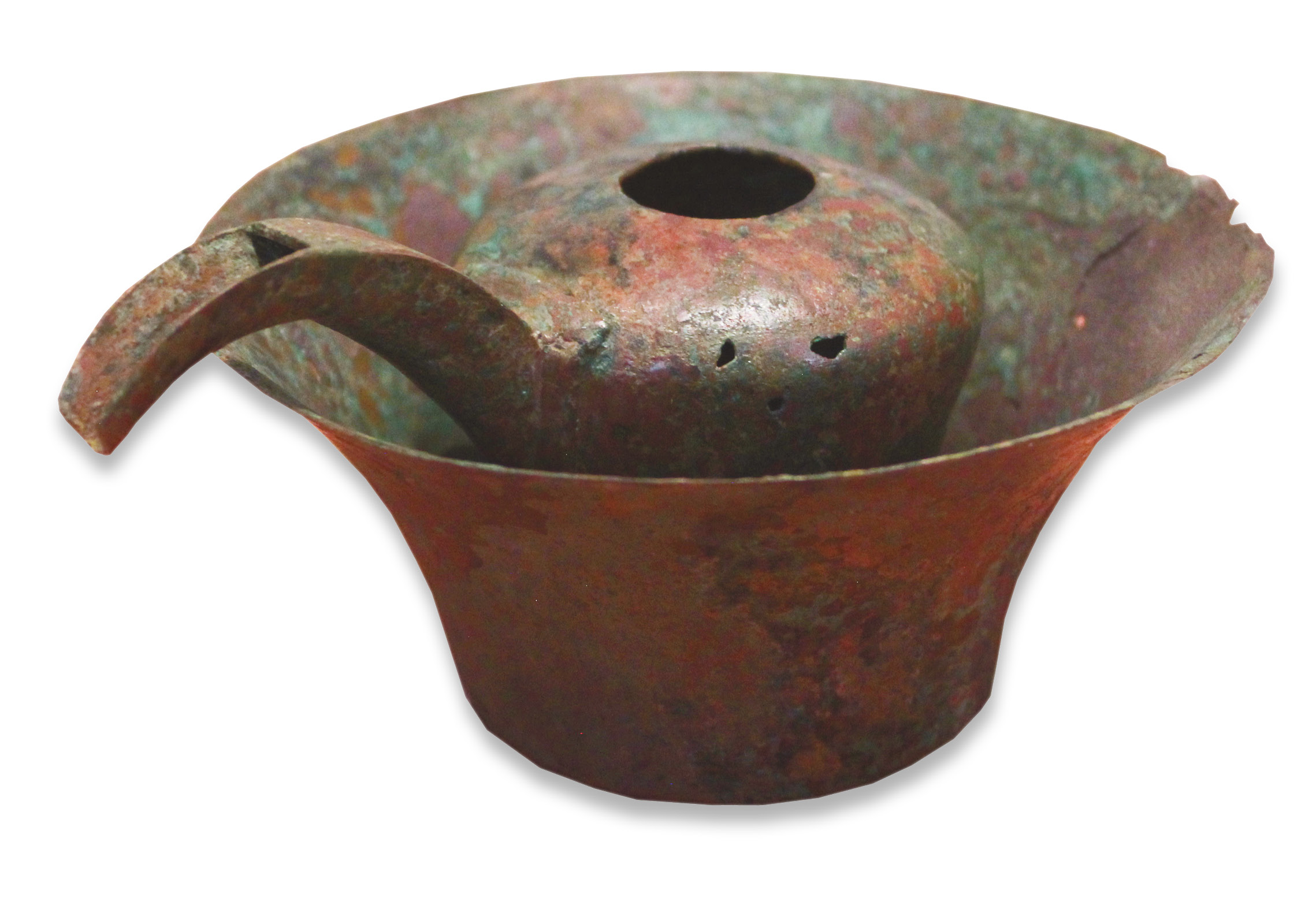
Physical purity was of prime importance to ancient Egyptians when accessing sacred spaces. It was therefore also essential for a proper transition into the afterlife, where the deceased themselves would join with the gods. Of the relatively few object types found in later Old Kingdom tombs, one of the most significant is exemplified by this small copper-alloy basin and accompanying ewer with its typically long spout.
Although attested chiefly from funerary contexts, the cleaning of the hands was an important aspect of rituals – and continues to be so in Islamic religious practice, for example. Cleansing before and after food consumption using such an object – made from valuable metal – would be an indicator of status. Basin-ewer sets dating to the medieval and Islamic periods are made of costly materials and are highly elaborate in design, showing their importance in cultures where cutlery was not regularly employed.
A basin and ewer set is often shown in scenes in Old Kingdom tombs where the owner is depicted seated in front of a heaped table of offerings. Although no one is actually shown pouring the water or actively washing their hands, the presence of such equipment implies proper ritual observance at the meal, and the purity of the deceased. The discovery of items such as these within a sealed tomb chamber suggests that they were intended for use by the spirit of the deceased rather than by the living; the pouring of liquids as offerings from other types of receptacles might occur in the open tomb chapel area.
Image: Sarah Griffiths