Subscribe now for full access and no adverts
Dear Editor,
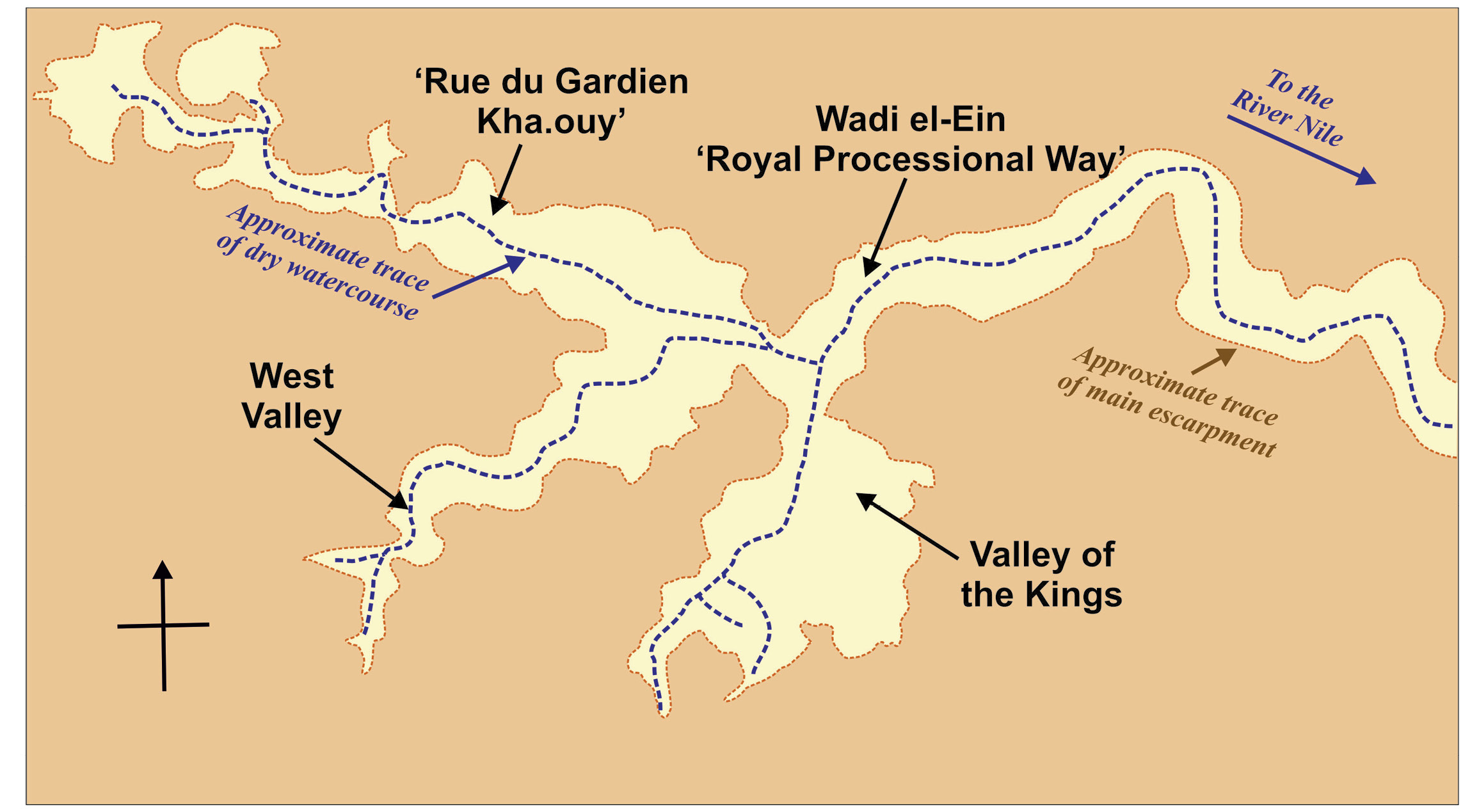
Is there a third ‘Valley of the Kings’? The two wadis in the Theban Hills that are most familiar to us – the Valley of the Kings and the West Valley – both open into Wadi el-Ein, the route taken by all New Kingdom royal funerary processions from the West Bank of the Nile. While much has been written of these two wadis, I have been unable to find any information on the third wadi that opens into Wadi el-Ein.
Lying to the north of the West Valley, it is the longest of the three, with similar stratigraphy and geomorphology, and opens into Wadi el-Ein at much the same point as the other two. In George Wood’s paper entitled ‘The Life and Times of Butehamun: tomb raider for the High Priest of Amun’ (available at https://uu.diva-portal.org; 2020), this wadi appears to be labelled, (somewhat illegibly) as: ‘R. du Gardien Kha.ouy’.
To my knowledge there are no papers that reference exploration within this wadi, no reported evidence of tombs or other archaeological finds, no data on graffiti – nothing.
That it hasn’t been thoroughly and repeatedly explored in the recent and ancient past seems inconceivable, so can any of your contributors/readers enlighten me on the exploration history of this third ‘Valley of the Kings’? Have any ancient Egyptian artefacts or limestone chippings been found? Any traces of workmen’s huts? Any graffiti that indicate it was visited in antiquity? Have the dated initials of our most famous explorer, Howard Carter, been found anywhere in the valley?
Mike Marfleet, Sewall’s Point, Florida
Dear Mike,
This is indeed an intriguing mystery and one that we hope AE readers will be able to shed light on!
J Peter Phillips
Dear Editor,
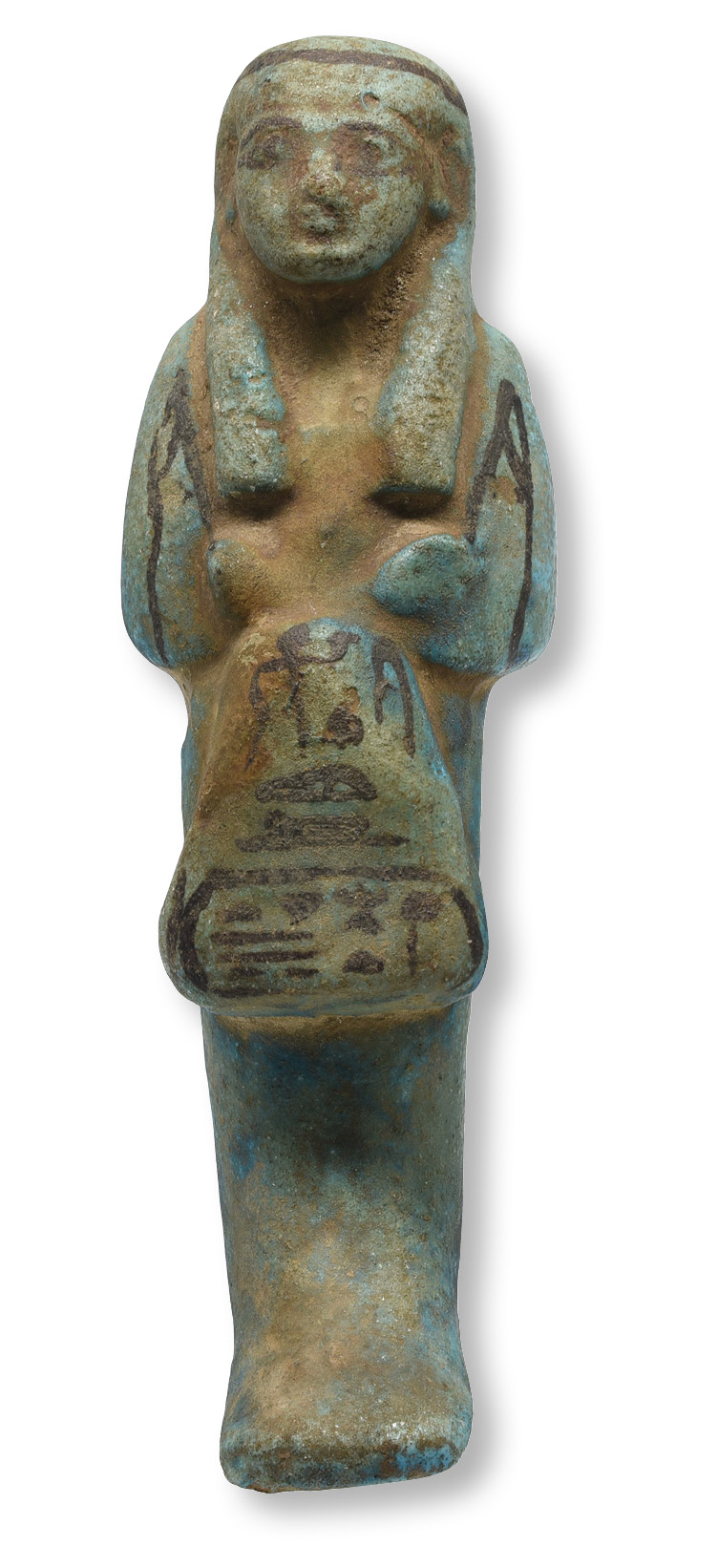
I have been reading your online magazine with interest for years and I always await the next issue anxiously to be able to read it all in a few days. However, I must make a note regarding a small inaccuracy relating to the shabti of the Divine Adoratrice of Amun, daughter of Pinudjem II, Henuttawuy D, described on p.38 of issue 143 of July/August 2024.
It is said there that it was found in the cachette of Deir el-Bahri; however, her shabtis do not appear in the list of those found in the cachette TT320 of Deir el-Bahri, where those of her father and her mother Isetenkhebi D were found. But it is believed with good reason, by analogy with the shabtis of other Divine Adoratrices of Amun, that they were found near the Ramesseum in Thebes, whose premises, once used for the trade of provisions, were later used as a burial place. In reality, only the shabtis of another Henuttawy, so-called Henuttawy A, the wife of Pinedjem I, grandmother of our Henuttawy D, were found in the Deir el-Bahri cachette. Unfortunately, only a few shabtis remain of the Divine Adoratrice Henuttawy D, distributed across museums and private collections around the world (I own one), and it is only thanks to them that her existence is known.
Rolando Campanella, Rivergaro, Italy
Dear Rolando,
You make a valid point about the shabtis of the Divine Adoratrice not having been found in the Deir el-Bahri cache. I should not have added this provenance to the article. While you also rightly point out that her shabtis were likely coming from the Ramesseum, this is by no means certain. I’m not aware of any confirmed shabtis of Henuttawy having been found in the Ramesseum, unlike those of Karomama and Qedmerut. Hopefully, further excavations at the Ramesseum will lead to the rediscovery of her tomb, if she was actually buried there. Of course, some scholars believe that Henuttawy A and D were the same woman. If so, this would indicate that those inscribed for the Divine Adoratrice did actually come from the cache after all! I think it’s also telling that quite a lot of these shabtis make an appearance in the 1880s, which coincides with the Deir el-Bahri discovery.
Ken Griffin, Curator, The Egypt Centre, Swansea University
Email the Editor: peter@ancientegyptmagazine.com with your comments.