Subscribe now for full access and no adverts
the modernist society (the lack of capitals is deliberate, in line with the modernist philosophy of embracing innovation and seeking freedom from traditional forms and established rules) is the meeting place for all those who are interested in the often-derided 20th-century movement that was inspired by the possibilities of industrialisation and urbanisation, by abstraction, and by new forms of artistic, literary, and architectural expression – the polar opposite of William Morris and the tradition hugging acolytes of the Arts and Crafts Movement.
The society has a network of city ‘chapters’ based in Birmingham, Bristol, Glasgow, Huddersfield, Leeds, Liverpool, Manchester, Sheffield, and Swansea, on which foundation the members organise talks, film screenings, and exhibitions specifically focused on raising awareness of modernist architecture and design. The society’s most popular activities are the ‘mooches’ (as in ‘mooching around’), ambles, meanders, shuffles, hustles, bustles, and strolls, which they organise several times a month to explore the best of British 20th-century architecture – all of which sound much more appealing and innovative than mere ‘guided walks’.
Equally innovative is the society’s approach to fund-raising. To supplement its membership income, the society publishes architectural city guides and photobooks, the most recent example being Modernist Scotland by Bruce Peter, Professor of Design History at the Glasgow School of Art, which explains the nation’s post-war built heritage and explores 150 of the most architecturally and culturally interesting of Scotland’s remaining post-war modernist buildings and places.


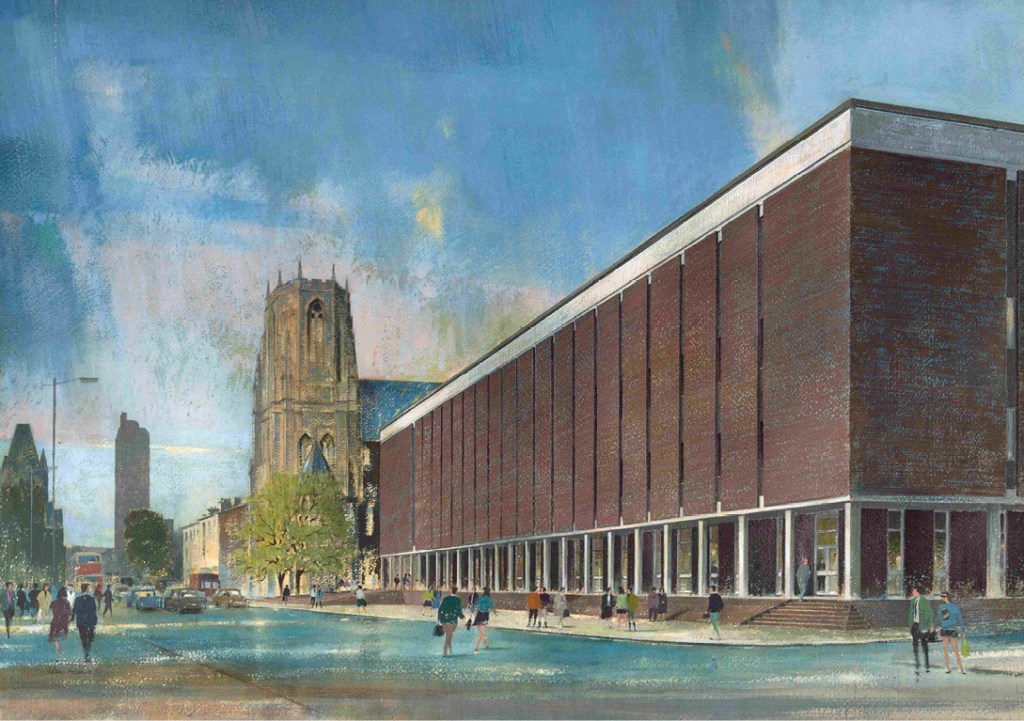
From its gallery in Manchester and via its online shop, the society sells specialist books as well as its own products reflecting the design languages and graphic styles of the post-war era: you can purchase mugs, T-shirts, stationery, wallets, works of art, and prints.
Members receive three issues a year of the modernist magazine and discounts on shop products and events. The latter often feature authors talking about their work. For example, the historian Owen Hatherley recently revealed the contribution to British culture of the central European émigrés who sought sanctuary from fascism in Britain in the 1930s, bringing with them new and radical ideas that fundamentally reshaped our intellectual, artistic, and architectural landscapes – all those innovations that the modernist society exists to celebrate.
Further information: https://the-modernist.org
Image: the modernist society; courtesy John Rylands Library; John Greene

Is there a society that you would like to see profiled? Write to theeditor@archaeology.co.uk