
Subscribe now for full access and no adverts
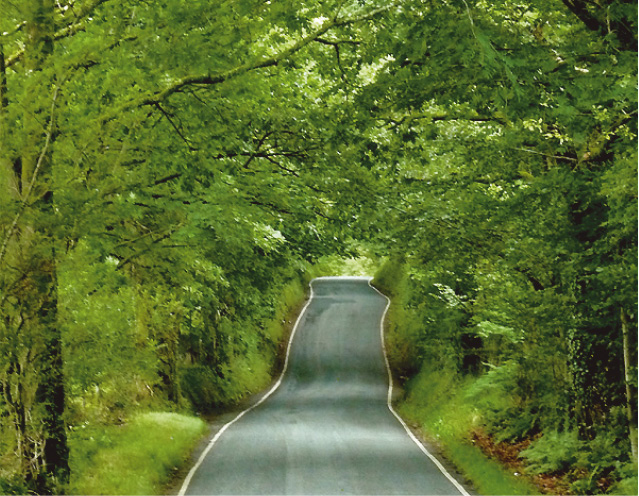
By AD 150, the Roman road system extended for some 300,000km (more than 186,000 miles – 7.5 times the circumference of the earth). This comprehensive transport infrastructure underpinned the mobility and trade that characterised the Roman Empire. Later, it enabled the mass migrations of the early medieval period, and today much of the European and wider Mediterranean trunk-road system is built on Roman routes.
Roman roads were among the earliest archaeological monuments to be studied and mapped by antiquaries. In 1757, Charles Bertram published a manuscript, which he claimed was written by a 15th-century monk called Richard of Cirencester, that included a map of Romano-British roads. Now known to be a forgery, the ‘ancient’ map nevertheless led to the inclusion of fictitious Roman routes on early Ordnance Survey maps.

Despite centuries of study, new discoveries are being made all the time. The authors of a new Digital Atlas of Ancient Roads (https://itiner-e.org) have estimated that we only know the precise location of 2.7% of the Roman road network, while the routes of 90% are conjectural and 7.3% entirely hypothetical.
Building on the pioneering work of Ivan D Margary, whose Roman Roads in Britain (1955; revised 1973) provided the first comprehensive assessment of the Romano-British road network, the Roman Roads Research Association was founded in 2015 to coordinate a nationwide programme of research into the subject, and to ensure a consistent and rigorous approach (the Association’s website comments that the subject has, on occasions, ‘attracted individuals whose enthusiasm has been rather more evident than their objectivity’).

Under the guidance of the Chair, Mike Haken, the Association is compiling a digital map of Roman Britain that aims to be more accurate and up-to-date than anything that has gone before, tackling the country one region at a time and aiming to complete the whole work by 2028. As well as deploying LiDAR to identify roads, the Association works with local organisations to carry out geophysics and excavation to confirm new findings.
The Association now has 620 members who take part in talks, seminars, and conferences, and who also receive an annual journal (Itinera) and a quarterly newsletter (all but the most recent are freely available on the Association’s website), which are packed with maps and photographs reporting on recent finds and fieldwork results.
Further information: http://www.romanroads.org
Images: John Illingworth/Blackstone Edge Roman Road/CC BY-SA 2.0; Roger Kidd, CC BY-SA 2.0

Is there a society that you would like to see profiled? Write to theeditor@archaeology.co.uk