Subscribe now for full access and no adverts
In the famous Eddic poem Völuspá (Prophecy of the Volva), the god Odin seeks the counsel of a powerful sorceress. She tells him the story of the creation of the cosmos and foretells the events that will bring about the destruction of the gods and the end of the world. This woman, to whom the mighty Odin turns in his hour of need, is a Völva. The figure of the Völva appears in other Norse sagas and poems, too. These accounts describe the Völva as a sorceress and fortune teller who could perform a variety of ritual activities, often involving entering a trance-like state where she was able to communicate with spirits and higher powers, receive prophecies, and even influence future events.
The National Museum of Denmark’s new exhibition explores the place of the Völva in Viking Age society, drawing together tales from mythology and evidence from the archaeological record.

A royal Völva?
The Völva’s existence beyond the sagas has long been a source of controversy. For many years, a ‘magical’ interpretation of the archaeological material was rejected by scholars, and there are some, even now, who argue that the Völva was nothing more than a mythological figure or a literary device used by authors of sagas – written several centuries after the events they ‘describe’ – and bear little relevance to people who actually lived in Viking Age Scandinavia. However, over the last few decades, there has emerged a growing body of archaeological evidence for the presence of real women with spiritual identities that align with descriptions of the Völva.
One such find is a female burial discovered in the 1950s during excavations at Harald Bluetooth’s ring fortress at Fyrkat, in Northern Jutland. The grave is one of around 30 uncovered at the fortress, dating to between 975 and 1000. At 4.85m long and almost as wide, this grave is bigger than any other in the cemetery, making it apparent that it belonged to an important individual. Further examination revealed just how significant she might be. The woman had been buried in the body of a horse-drawn wagon, a practice now known from a number of high-status female Viking Age graves, and she was accompanied by several items also typical of female burial, including a small whetstone and textile tools including scissors and spindle whorls. However, she was interred with an array of other objects, too, that were much more unusual. Among the grave goods were a small, fragmented iron rod decorated with copper-alloy knobs, a 1m-long iron roasting spit, and the remains of a wooden shaft that may have had a round metal terminal. Researchers believe that any – or all – of these could have served as a Völva’s staff. The name Völva means ‘staff bearer’, from the Old Norse völr (‘staff’), and such items were quintessential symbols of these magical figures.

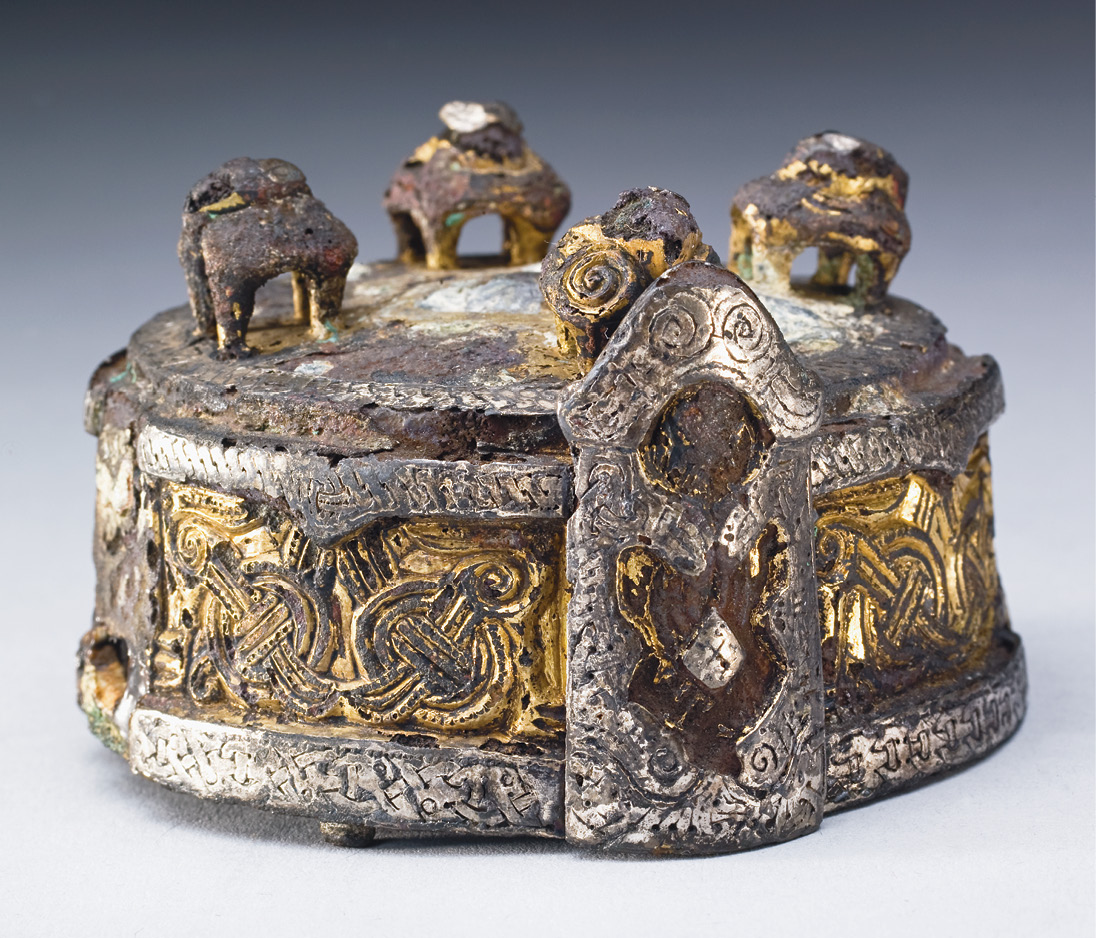
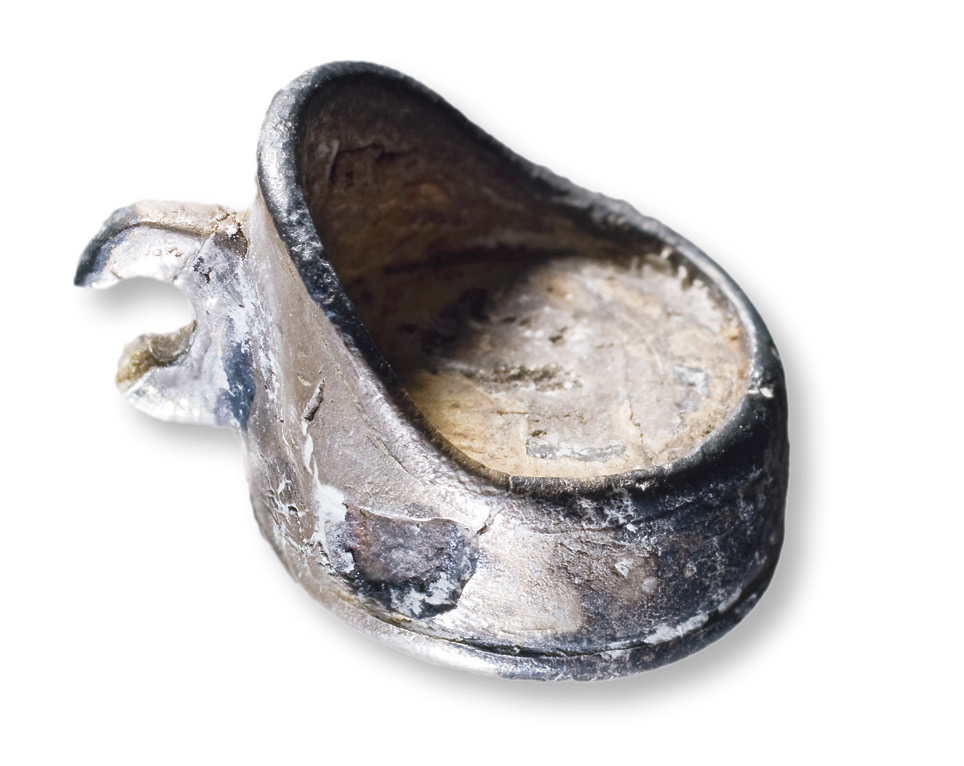
The grave also contained an amulet shaped like a miniature chair or throne, possibly representing the seidhjell, a special seat on which the Völva is said to have sat to conduct her rituals. A pouch of henbane seeds, which have hallucinogenic and psychedelic properties, could have been used to induce the trance-state for which the Völva was known. Other unusual finds included two silver toe-rings (the only examples of such items found in Scandinavia), a bronze vessel originating from Central Asia, a collection of small mammal and bird bones, and a Gotlandic box brooch containing white lead, which was sometimes used as an ingredient in ointment or face paint.
Based on these finds, it is now believed that this woman was a Völva on the royal staff of King Harald Bluetooth. Interestingly, her burial dates to shortly after Harald had made Christianity the official religion of Denmark, in c.965. Despite this, it seems that – at least in seemingly military contexts like Fyrkat – the king still relied on the wisdom and power of the Völva and her pagan rituals.
Since the Fyrkat burial’s initial discovery, attitudes towards magic and ritual in Norse archaeology have changed, and further discoveries have been made. There are now several known burials that have been identified as possible Völva graves, containing staff-like artefacts, plants with hallucinogenic properties, objects from distant lands, and other elite objects with probable ritual significance.
A sorceress’s treasure?
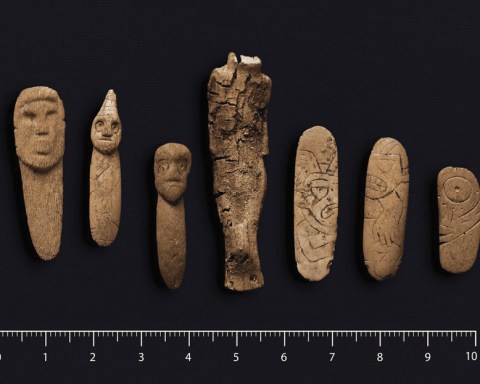
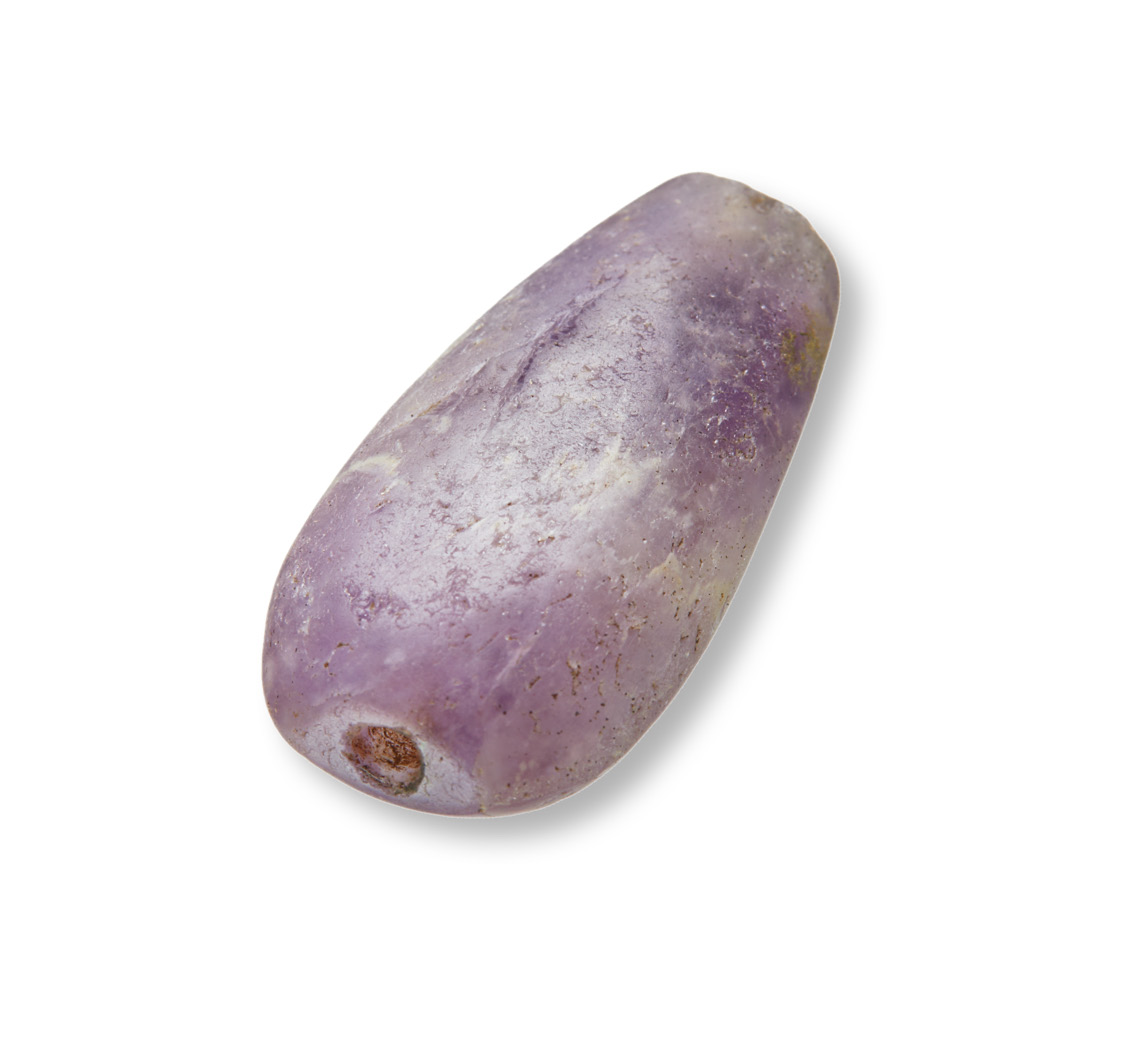
It is not just in graves that we find signs of the Völva, though. In 2014, a hoard was discovered in a field near Lille Karleby, on Zealand. The treasure was buried over 1,000 years ago but, unlike most Viking Age hoards, which are mainly comprised of bullion, it contained a curious collection of objects. Among the 392 items in the hoard were 300 beads made of glass, amber, and rock crystal, including an amethyst bead believed to have been imported to Scandinavia several centuries before the treasure was buried. It included 53 bronze or silver pendants as well, and coins (both Arabic and western European in origin) that had been perforated for suspension, as well as other items such as a braided silver chain, a silver arm-ring, silver cups, and several large brooches. The objects originate from a wide range of locations, including France, Ireland or Scotland, Eastern Europe, the Mediterranean, and the Middle East. The unusual nature of this collection has led to suggestions that the deposition had some kind of ritual purpose, and that the objects in question may have belonged to a Völva.

These remarkable discoveries only scratch the surface of The Viking Sorceress’s rich archaeological offering. Created with the help of experts from the Royal Danish Theatre, the exhibition is designed to immerse visitors in the story of the Völva. The result is a show that brings these mysterious women out of the shadows and offers a fresh perspective on the Viking Age, exploring how the people who lived through this period understood the world around them, and the ways in which they dealt with questions about life, death, and the human condition, as well as the problems of everyday life.
The Viking Sorceress
Address: National Museum of Denmark,
Ny Vestergade 10, 1471 Copenhagen K, Denmark
Open: until 2027
Website: https://en.viking.natmus.dk