
Subscribe now for full access and no adverts
The 19th century was when British military art came of age. War was still, in Winston Churchill’s words, ‘cruel and magnificent’ – rather than ‘cruel and squalid’, as it was soon to become. While Victoria’s reign saw plenty of fighting, practically all of it happened far away, adding the spice of the exotic to the traditional red coats, flashing swords, and snorting horses.
The fighting mattered – national prestige was at stake, and kith and kin were risking their lives – but it did not menace Britain directly as the Napoleonic Wars had done. Artists were thus under less pressure to bang the patriotic drum. And this, as Myth and Reality: military art in the age of Queen Victoria, a major new exhibition at the National Army Museum in London, demonstrates, allowed them to spread their wings and go where war artists had never gone before.
Some painters still offered the straightforward depiction of ‘glory’, as in the paintings of soldiers hacking their way to their VCs as they put down the Indian Mutiny. Knowing the racial paranoia and the lust for revenge that surrounded that ugliest of conflicts, these are difficult works to enjoy today.
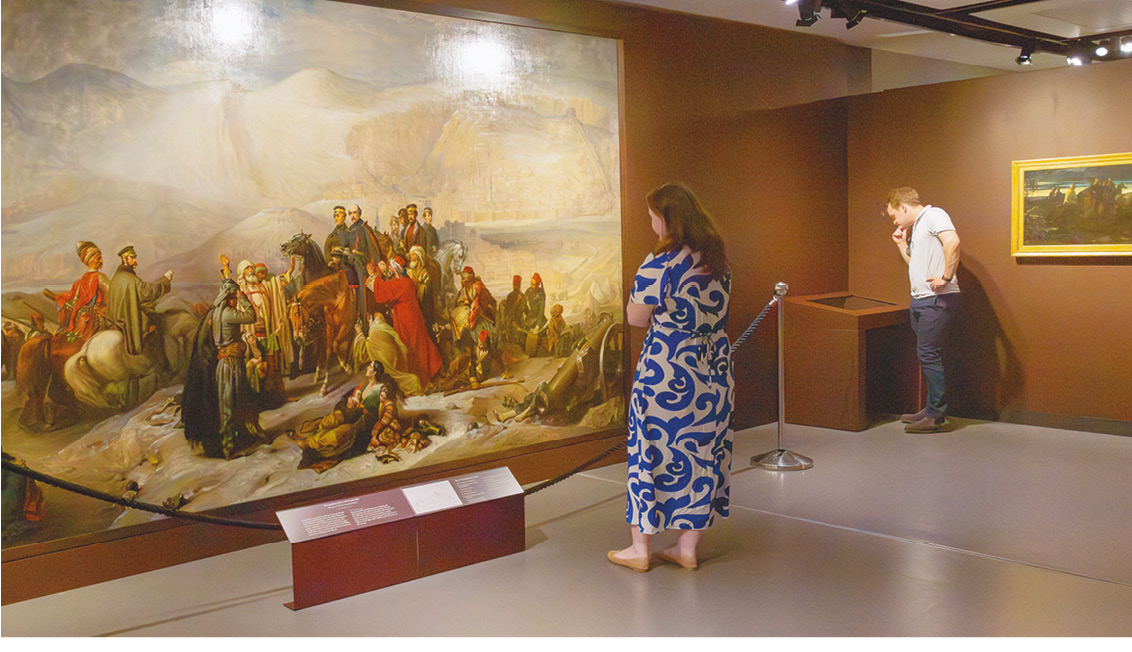
The mystifying allure of the Orient inspires the biggest picture on show, The Capitulation of Kars. During the Crimean War, with Britain and Turkey ranged against Imperial Russia, Brevet Colonel William Williams defended the Turkish town of Kars against several Russian attacks until forced to surrender. Appealing to the British love of plucky losers, Thomas Barker Jones shows Williams on his horse amid the pitiless Anatolian landscape – bald, glum, freezing, and on his way out – while picturesque turbaned Turks hail him, cling to his saddle, and even (in the case of one young lady) pay homage to his stirrups. It’s a picture that encapsulates the ‘myth’ element of the exhibition’s title.
Star of the show
What of the reality? Scotland for Ever!, the subject of which is the charge by the Royal Scots Greys at the Battle of Waterloo, is real enough. For the full impact of this, the most striking image in the show, a trip to the Horse and Guardsman pub in Whitehall is recommended, where a huge reproduction covers an entire wall. But even at the smaller scale seen here, the terrifying exhilaration – the murderous glamour – of the classic cavalry charge hits home.
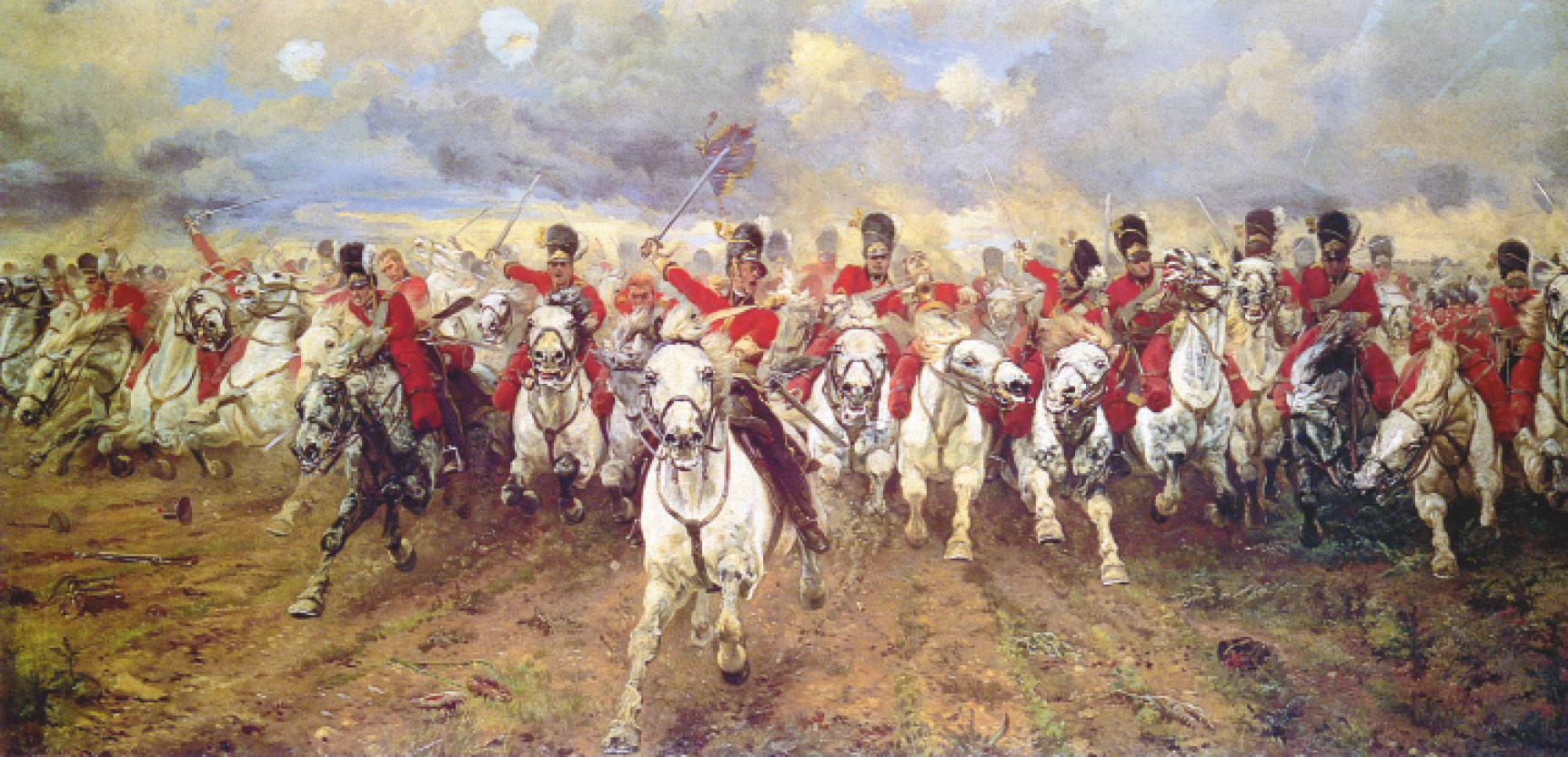
But it is not in the least a fanciful picture: it’s all too easy to imagine the sanguinary shambles that is shortly to result. One is shocked but not surprised to learn that the artist stood in front of a charge like this to see the effect up close – though not for long. ‘One cannot of course stop too long to see them close,’ she remarked laconically.
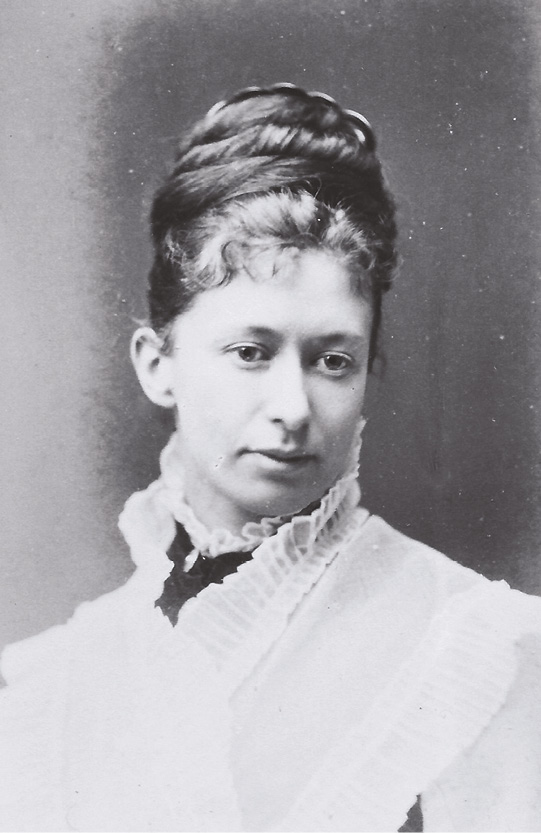
Yes, she. Elizabeth Thompson is the unrivalled star of this show. Born and raised in Switzerland, partly trained as an artist in Italy, this sharp-eyed, delicate-featured woman tramped the world with her aristocratic Anglo-Irish husband Sir William Butler, a career army officer, and her paintings possess a unique combination of intimacy and detachment: the empathy of an artist with skin in the game, yet also an abiding sense of wonder at the drastic things the male of the species gets up to. ‘I never painted for the glory of war,’ she wrote in her autobiography, ‘but to portray its pathos and heroism.’
Scotland for Ever! is in her heroic register; her famous work Remnants of an Army (not on display here), depicting William Brydon slumped on his exhausted horse as he approaches Jalalabad Fort in 1842, epitomises the anti-heroic. In Dawn of Waterloo, silhouetted trumpeters wake soldiers tranquilly sleeping on what is to become the field of battle; while in The Roll Call, the most moving picture in the exhibition, a line of busby-clad troops stand up to be counted in the Crimean snow as an older, moustachioed officer on horseback demands to know which of them are fit to fight again. One soldier lies dead, others are swathed in bandages; as for the rest, one can almost hear them groan.

Hopes of happiness
The Roll Call was shown at the Royal Academy’s Summer Exhibition in 1874 and made Thompson’s name; she awoke that day, she later said, to find herself famous, and a policeman had to be stationed near the painting to keep the crowds back. Yet a less heroic work – in the conventional sense – it would be hard to imagine: it is closer in spirit to the grimly sardonic songs of First World War Tommies than to the Orientalist make-believe of The Capitulation of Kars.

The contemporary esteem of The Roll Call reminds one that it was not jingoistic enthusiasm that made military art popular in the Victorian Age, but empathy with the soldiers’ condition, and the yearning and anxious concern of those at home for their loved ones in harm’s way. If the public wished to wallow, it was not in visions of glory but hopes of happiness.
Henry Nelson O’Neil’s 1859 painting Home Again – companion to his work Eastward Ho! – encapsulates that mood: a vertical canvas crowded with veterans of the Indian Mutiny campaign coming down the gangplank of the ship that is bringing them home and into the arms of their loved ones. At centre-stage, a soldier is portrayed proudly showing his Victoria Cross; but just as important are the new babies, the rosy cheeks and tender smiles of happy wives and girlfriends, and the exhaustion and relief of the men. Heroism was not unimportant – but it was remote; and, with the loved one clasped in one’s arms again, all but incidental.

Myth and Reality: military art in the age of Queen Victoria
Until 1 November 2026 (free entry)
National Army Museum, Royal Hospital Road, London SW3 4HT
www.nam.ac.uk/whats-on/myth-and-reality
+44 (0)20 7730 0717
All images: NAM/Royal Collection Trust, unless otherwise stated; Leeds Art Gallery
MHM visits
EXHIBITIONS
• Gladiators: heroes of the Colosseum
Until 2 November 2025
Royal Armouries Museum, Armouries Drive, Leeds LS10 1LT
https://royalarmouries.org/leeds/whats-on/gladiators
Adult £6.50
Explore the world of the legendary Roman combatants through an astonishing array of artefacts – including helmets, spearheads, and body armour – found in the gladiators’ barracks in Pompeii. In collaboration with the National Archaeological Museum of Naples, Expona, and Contemporanea Progetti, this unmissable exhibition is in the UK for a limited time only.
• Call to Arms: the soldier and the Revolutionary War
Until June 2027
National Museum of the United States Army, 1775 Liberty Drive Fort
Belvoir, VA 22060, USA
http://www.thenmusa.org/exhibit/special-exhibition-gallery
Free admission
This new exhibition in Virginia has been curated specifically to commemorate the 250th anniversary not just of the American Revolution, but of the founding of the US Army itself. Call to Arms showcases a unique collection of more than 280 artefacts from England, France, and Canada, as well as from the first colonies.
• Unsilenced: sexual violence in conflict
Until 2 November 2025
IWM London, Lambeth Rd, London SE1 6HZ
http://www.iwm.org.uk/events/unsilenced-sexual-violence-in-conflict
Free admission
From ancient times to the present day, there have been victims of sexual violence during wartime. By increasing public awareness and understanding of the issue this powerful exhibition at London’s Imperial War Museum aims to contribute towards meaningful change.