Subscribe now for full access and no adverts
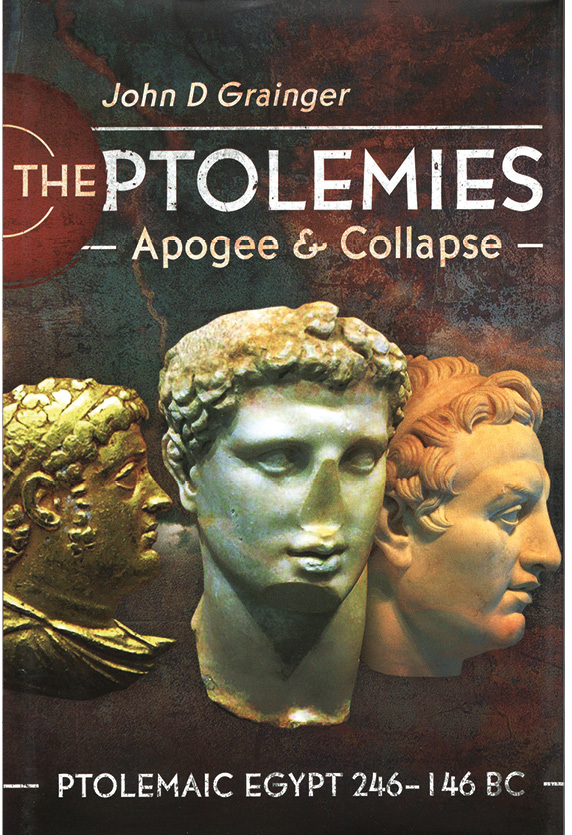
REVIEW BY SARAH GRIFFITHS
This is the second of the author’s planned trilogy on the last of Egypt’s dynasties (The Ptolemies: Rise of a Dynasty, the first of the series, was reviewed in AE 138). John D Grainger is a specialist in Classical and Hellenistic Greek history rather than Egyptology, but writes here from the Egyptian point of view, and is an expert guide to a period where Egyptian history becomes part of a wider Mediterranean narrative, particularly with regard to the deeply entwined relationships between Egypt, Syria, and Rome.
This volume explores the most exciting period of Ptolemaic history, from the accession of Ptolemy III (the ‘apogee’ of the dynasty) to the death of Ptolemy VI, during which time there were five wars with Seleucid Syria (including a defeat for Antiochos III and the invasion of Egypt by Antiochos IV), royal murders and assassinations (in Egypt and Syria), rebellions, rival southern pharaohs (Horwennefer and Ankhwennefer), and the loss of virtually all of Egypt’s overseas territories except for Cyprus and Cyrenaica.
The Ptolemaic and Seleucid dynasties began to unravel spectacularly, as succession was disputed, family members eliminated, courtiers seized power, and royal brothers bickered and battled. Their troubles were compounded by the growing power of Rome and its interference in eastern affairs which, while keeping Philip V of Macedon from attacking Egypt, formed a menacing shadow hanging over the Egyptian and Seleucid empires.
The author is more at home on the battlefield than dealing with affairs within Egypt. The short chapter ‘Ptolemy III and Egypt’ mostly goes back over the events in Syria from the previous chapter, only briefly touching on Berenike II, the poets Kallimachos and Apollonios, and the reform of the military (organised mostly by the Greek courtier Sosibios), although later events in Egypt – such as the Great Rebellion (207-185 BC) – are given more in-depth treatment.
The narrative can meander at times, with repetition that sometimes interrupts the chronological flow – although, given the complexity of the story, some repetition is actually quite welcome. Although authoritative, Grainger does on occasion have an amusing turn of phrase. For example, he explains that the Syrian population may have welcomed the return of the Egyptians: ‘Not that there was a liking for Ptolemaic rule when it existed, but that’s nostalgia for you’; and, with regard to the inconsistent interference by the Senate in Egyptian affairs, he tells us that ‘Egypt would continue to be subjected to Roman policy, when Rome could be bothered to notice’.
Overall, this is a well-researched work that manages to untangle a rather complex period of history, while at the same time being an absorbing read for both scholars and those with little previous knowledge of the period. I look forward to reading the final instalment!
The Ptolemies: Apogee & Collapse - Ptolemaic Egypt 246-146 BC
John D Grainger
PEN & SWORD, 2023
ISBN 978-1-3999-017-9
Hardback, £25