Subscribe now for full access and no adverts
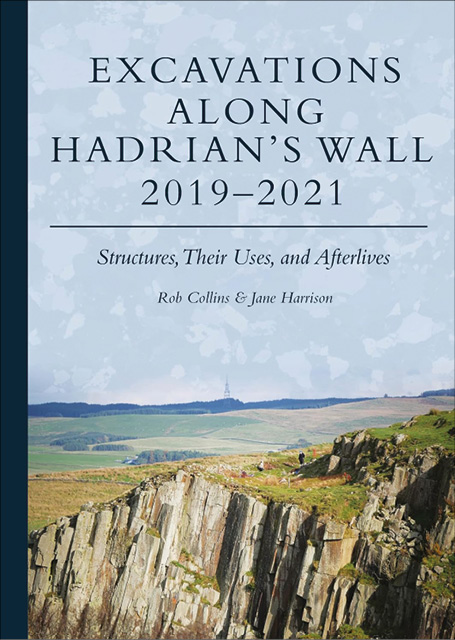
REVIEW BY PAUL KITCHING
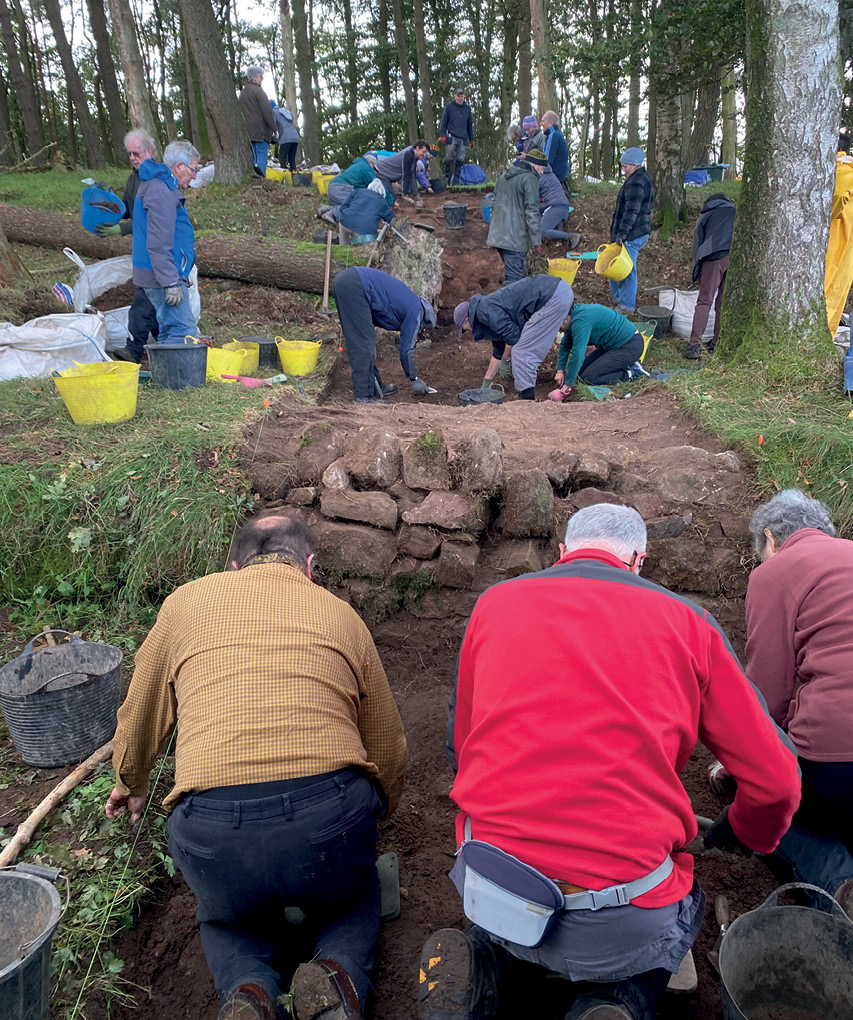
This monograph presents the results of archaeological investigations undertaken as part of the Heritage-at-Risk strand of the Hadrian’s Wall Community Archaeology Project (WallCAP), with fieldwork focused on understanding and mitigating the threats to the monument, both natural and human-made. Over three years, seven sites were subject to archaeological survey and excavation (while a watching brief took place during consolidation work at a further three), the detailed discussion of which forms the book’s six central chapters. With the exception of Corbridge, the focus is on the frontier’s linear elements: the Vallum at Heddon, the Wall-crossing at Cam Beck, and the curtain at Thirlwall, Drumburgh, Port Carlisle, and Walltown Crags.
This is an important book that adds significant new data to the existing corpus. For instance, environmental sampling from the Vallum, which has seen comparatively little research interest since Brenda Heywood’s seminal treatment, suggests that at Heddon it was largely undisturbed until the 13th century; such consideration of the frontier’s post-Roman afterlife is a recurrent and welcome theme. Elsewhere, the identification at Cam Beck of a possible detached tower from the Turf Wall phase is a genuine first. Alongside new insights into the curtain’s construction, including the use of a natural sea bank on the approaches to the Solway and its construction on deliberately exposed bedrock at Walltown, these discoveries highlight the flexible approach to the Wall’s design, sensitive to the local geography both human and physical.
Notwithstanding the research’s discrete and site-specific nature, WallCAP’s geographical scope is a successful adoption of the approach advocated by R G Collingwood nearly a century ago of selective and dispersed investigation better to understand the Wall complex as a whole. The authors also commendably attempt to capture the challenges, sometimes lost in a large synthesis, of drawing conclusions from partial and fragmentary information. In this regard, the inclusion of contexts and specialist report data in the Appendices is particularly useful. WallCAP demonstrates the great potential of citizen science and this clearly written and well-illustrated book, one of its several outputs, is a valuable addition to Wall scholarship.
Excavations along Hadrian’s Wall 2019-2021: Structures, Their Uses, and Afterlives
Rob Collins and Jane Harrison
Oxbow
Books, £50
ISBN 978-1789259445