
Subscribe now for full access and no adverts
Excavations at Achnacon, an abandoned township in the Scottish Highlands, have uncovered evidence relating to the Glencoe Massacre of 1692.
This infamous episode targeted the MacDonald clan on the grounds that they had failed to pledge allegiance to the new monarchs, William III & II and Mary II, against a background of Jacobite uprisings (see CA 378 and 405). In the early hours of 13 February, 120 soldiers who had been quartering with the MacDonalds turned on their hosts and killed 38 men, women, and children, including clan chief Alasdair Ruadh ‘Maclain’ MacDonald and his wife. A further 40 froze to death in the snow after fleeing the scene, but Maclain’s cousin, MacDonald of Achnacon (who had hosted the gathering), was among those who managed to escape. He was brought outside to be shot, but evaded death by throwing his cloak over his attackers and fleeing.
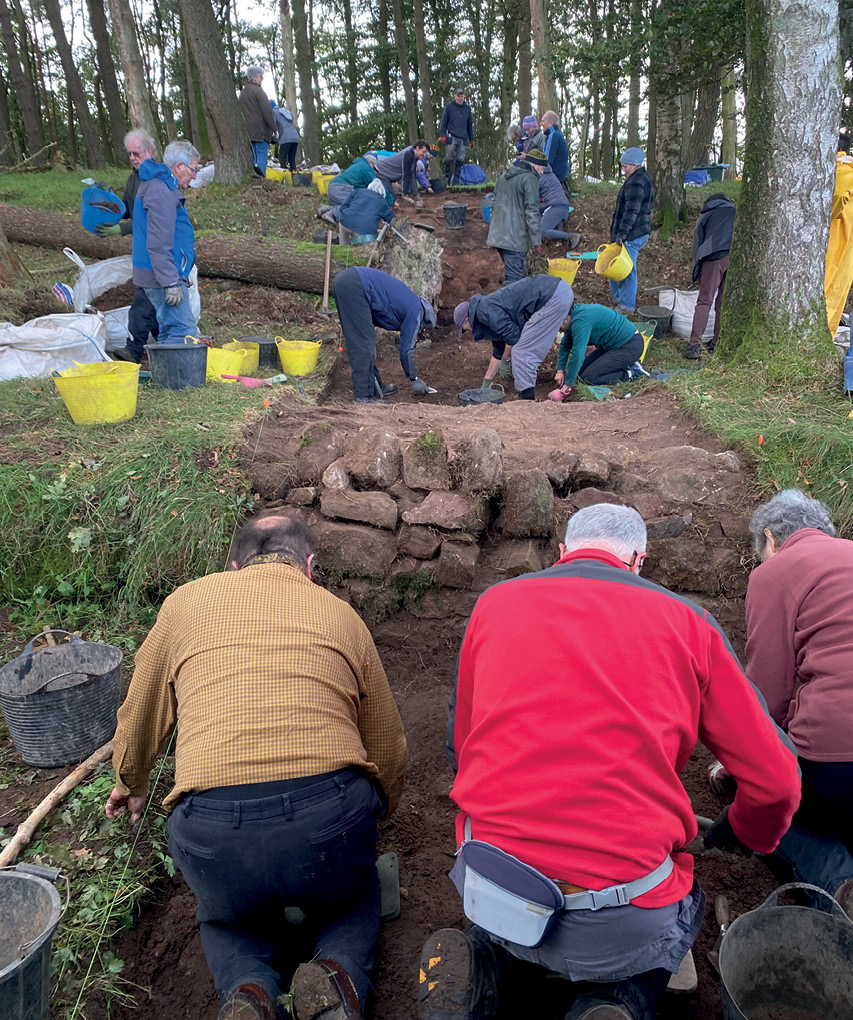
Now possible traces of these events have been uncovered during an excavation by the University of Glasgow and the National Trust for Scotland.
Following investigations of the ‘summerhouse of Maclain’ in Gleann Leac-na-Muidhe last season, this year the team of archaeologists, students, and volunteers hoped to shed more light on how the township of Achnacon was used in the years leading up to the massacre. One structure – a classic post-supported, turf-walled byre house, with a hearth and a space that probably housed cattle – produced large volumes of imported pottery and glass, indicating that it was most likely to be the house of the Tacksman (a member of minor Highland gentry), and therefore the site of the massacre. A scattering of coins – including low-value coppers and a piece of 1690 ‘gunmoney’ – was found across the floor. (‘Gunmoney’ was produced to pay those fighting in Ireland on behalf of James VII & II, the previous king, who was deposed in favour of William and Mary.) It has been suggested that they may have been used in gambling activities interrupted by the massacre.
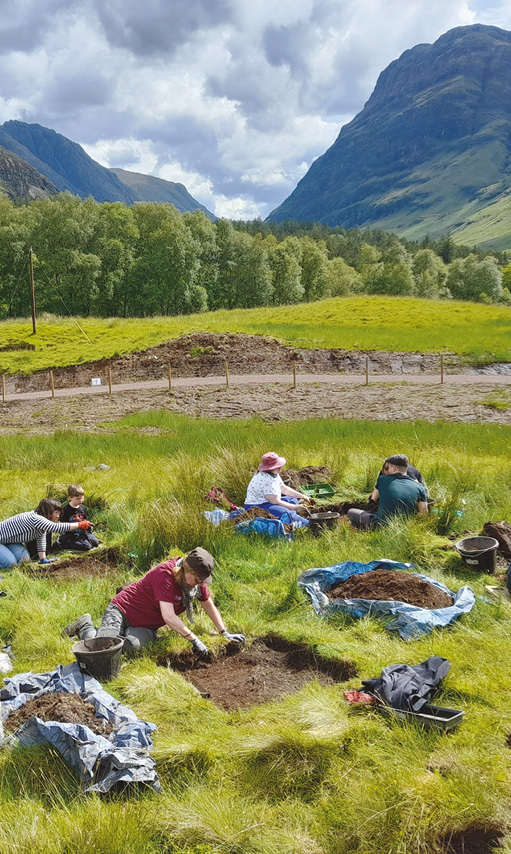
Just outside the house, the team found fragments of musket shot and a bent plaid pin. It is, of course, possible that the shot reflects hunting activity or the various local military actions carried out by the MacDonald clan – however, given their location just outside the house, together with the damaged pin, it is tempting to speculate that they could reflect the attempted murder of MacDonald of Achnacon. Either way, the project has added significantly to our knowledge of the events leading up to the massacre, as well as the lives of people in Glencoe at this time. Landscape surveys of the town have highlighted the connection between local inhabitants and the land, emphasising the traumatic impact of the massacre and subsequent land clearances on the local community, and how these effects trickled down through the generations. ‘Through better understanding their lives, and how successive generations shaped and managed the landscape, we can start to challenge narratives which marginalised those communities in the past and continue to have harmful impacts on contemporary communities,’ Dr Edward Stewart, excavations co-director, explained.
Archaeological work at Glencoe is set to continue next year, with the aim of uncovering another house structure, as well as an associated corn-drying kiln and an area of cultivation. Landscape survey will also continue, and a programme of experimental media installations and outputs is set to run alongside the excavations.
Text: Rebecca Preedy / Photo: Derek Alexander