
Subscribe now for full access and no adverts
It is generally assumed that archaeological remains buried in the ground are relatively safe, and that – aside from the effects of climate change and natural forces like erosion – human-created developments represent the main factor that might affect their continued existence. A new study, however, has shown that humans may be irrevocably affecting archaeological preservation even without the threat of a digger. Microplastics (MPs) – small (1μm to 5mm) pieces of plastic that have been found in everything from the water we drink to the foods we eat and the air we breathe – have been making headlines as potential health and pollution hazards, but they may also be having another effect, not on our future but on our past. As MPs are frequently carried through water, they have the potential to infiltrate deep into the soil. In this month’s ‘Science Notes’, we explore whether MPs can also be found in archaeological deposits, and, if so, what that means for the continued preservation of historical remains.
Research into MPs is a relatively new but quickly growing field. Recent studies have shown that MPs are present in soil from Europe, North America, South America, China, and Australia at levels as high as 62.5 MP items per kilo of soil. They probably enter the soil through landfill, road runoff, compost, flooding of waste water, irrigation, and atmospheric deposition. While the impact of this pollution on the ecosystem is not yet fully understood, some studies suggest that MPs are able to alter microbial activity and can potentially affect rates of degradation of organic matter.
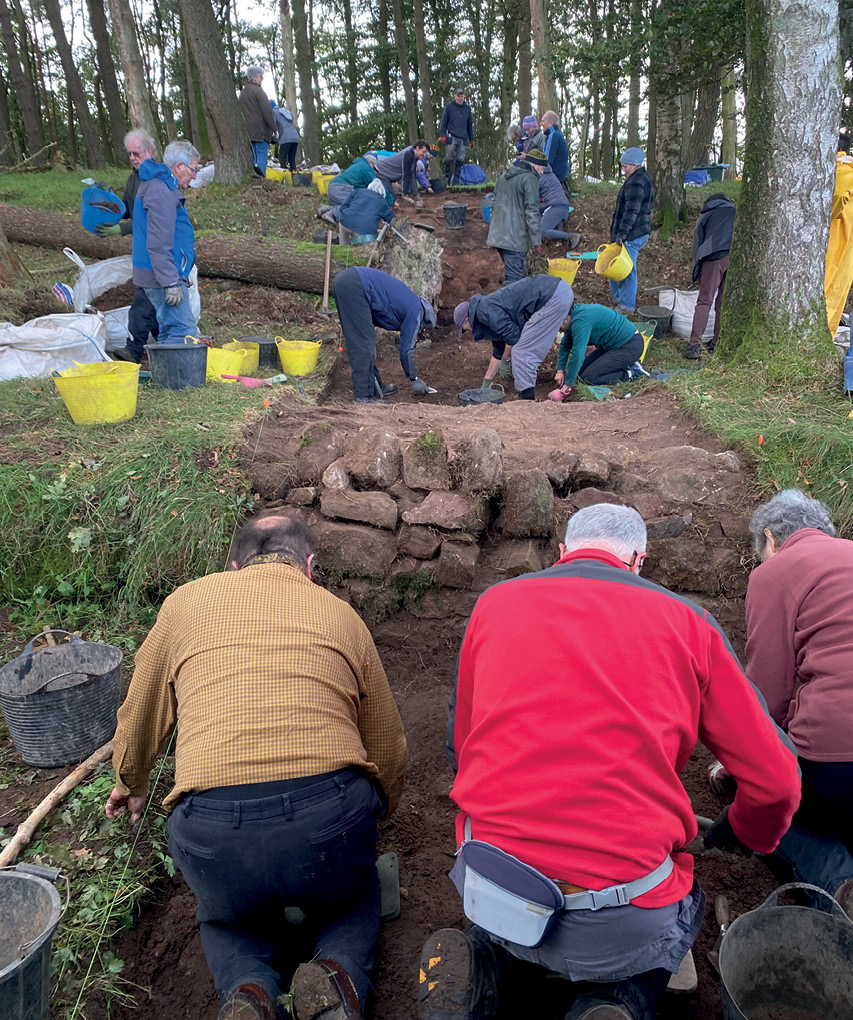
To test whether archaeological layers may be being contaminated by MPs, a team led by researchers from the Universities of Hull and York analysed four borehole samples: two taken last year and two from archaeological excavations undertaken more than 30 years earlier which had been kept for subsequent analysis. One of the archival samples was from an excavation conducted between 1989 and 1990 at the site of the Queen’s Hotel in York and contained 5.33m of archaeological sediment dating from the 1st century AD to the 20th century, and the other was from the Wellington Row site, also in York, which was excavated between 1988 and 1989 and contained 2.91m of archaeological deposits dating from the late 1st or early 2nd century AD to the 20th century. For comparison, two boreholes were then taken last year as near to the sites of the original excavations as possible given changes in the urban landscape in the subsequent decades (below). In order to account for any possible contamination of MPs after sampling, ‘blank’ samples were taken from the atmosphere at the site of sampling, within the laboratory, and, for the archival samples, within the facilities where they were stored.
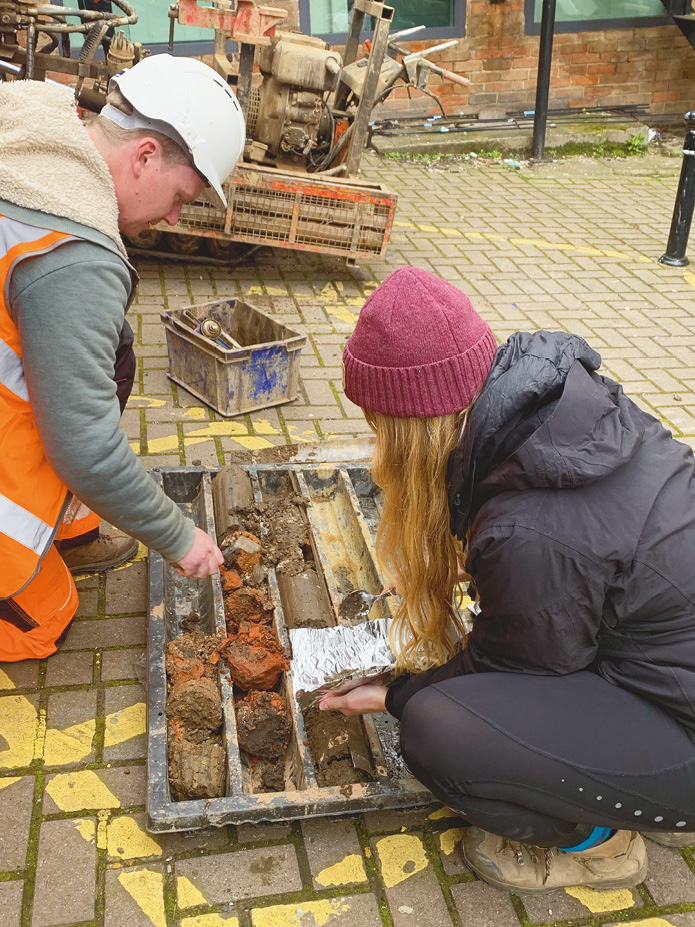
The contents of the boreholes were then assessed using a micro fourier transform interferometer (μFTIR) that identified spectral ranges for each sample, which were then compared with the spectral ranges of various polymers. The results clearly showed that all four boreholes were contaminated by MPs, each containing a variety of polymer types of significantly different sizes and with no significant difference in the amount of MPs present within each. The team also found that the ‘blank’ control samples contained different polymers than those found in the sediments, suggesting that the MPs identified in the soil did not represent post-sampling contamination.
In particular, fragment-shaped particles were the most commonly identified MP within the samples, a type believed to come from the wear and tear of larger plastic products such as bottles. Other common MPs included EVA-EVOH tie layer polymers, which are often found in food packaging and lamination processes, and PP:PE copolymers, which are used in textiles such as carpets, as well as in the car industry. While the exact source of these MPs in the sediment has not been confirmed, the team believe that, since both of these sites are located within the floodplain of the River Ouse, they may have been deposited through the water table – although other factors such as leaking water mains, drains, and sewers could also be contributing factors. This could mean that the waterlogged environment of parts of York – conditions that have helped preserve hugely significant organic remains – could now impact on future preservation. While this effect has yet to be quantified, as the team note in a paper recently published in Science of the Total Environment (https://doi.org/10.1016/j.scitotenv.2024.169941), ‘the possibility that deeply stratified archaeological sediment sequences in York are now contaminated with MPs raises serious questions about this presumption of in situ preservation… Through contamination, MPs may compromise the scientific value of archaeological deposits, and environmental proxies suspended within significant sediment, and as such represent a new consideration in the dynamism of, as well as arguments for preserving, archaeological deposits in situ.’
Text: Kathryn Krakowka / Image: University of Hull