
Subscribe now for full access and no adverts
Following the discovery of more pieces of the Bromeswell Bucket at Sutton Hoo last year (see CA 414), the fragments have now been micro-excavated, revealing its intact base along with the cremated remains of both human and animal bones.
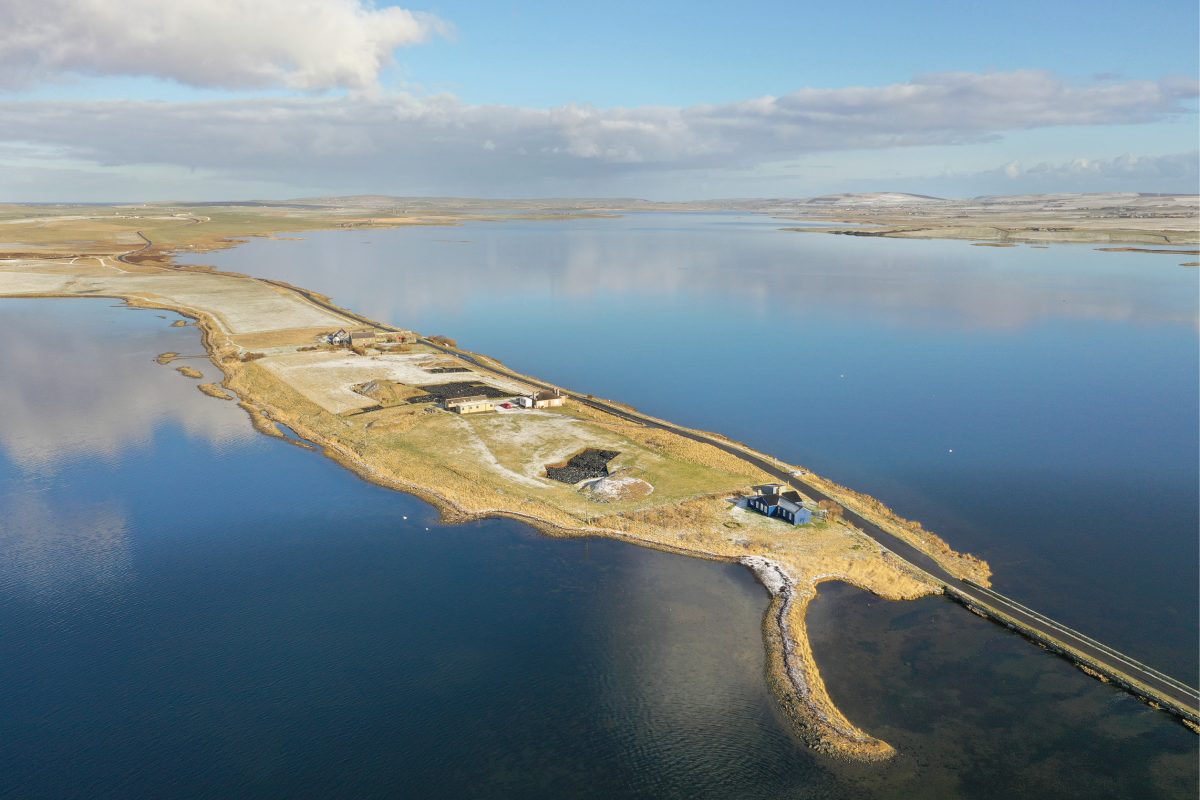
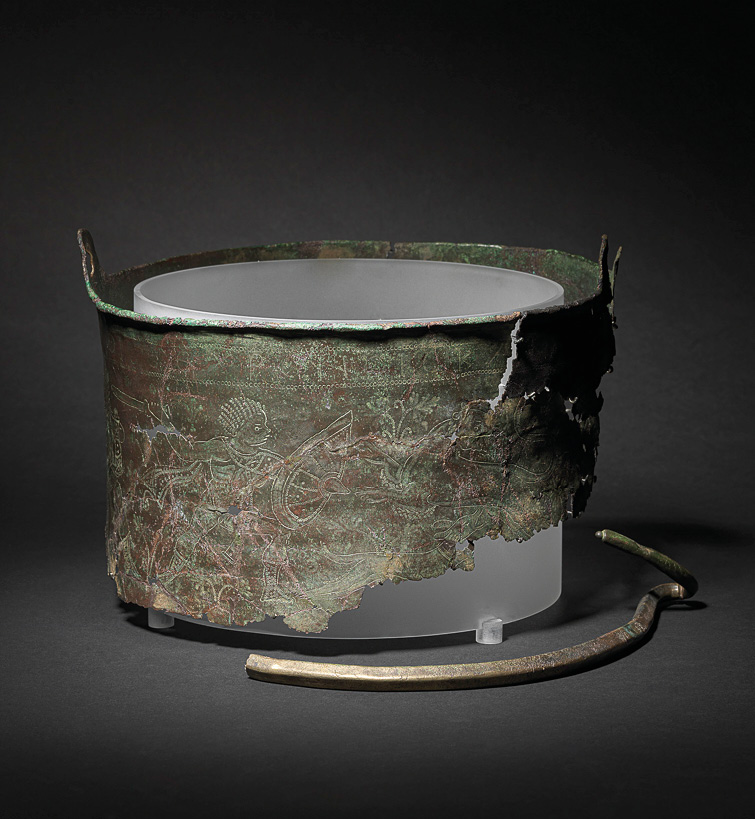
The Bromeswell Bucket was first uncovered in 1986 by a farmer whose harrow brought several pieces of it up to the surface. It was found only 60m from where the Exhibition Hall at Sutton Hoo would later be built, and was probably part of the 6th-century cemetery that extends into Garden Field. Post-excavation research found that it was a 6th-century vessel – predating the Sutton Hoo ship by several decades – and may have come from Antioch, in modern Turkey, but which at the time was part of the Byzantine Empire. Made of copper alloy, it is decorated with a hunting scene, including men armed with swords and shields along with lions and a dog; there is also a Greek inscription.
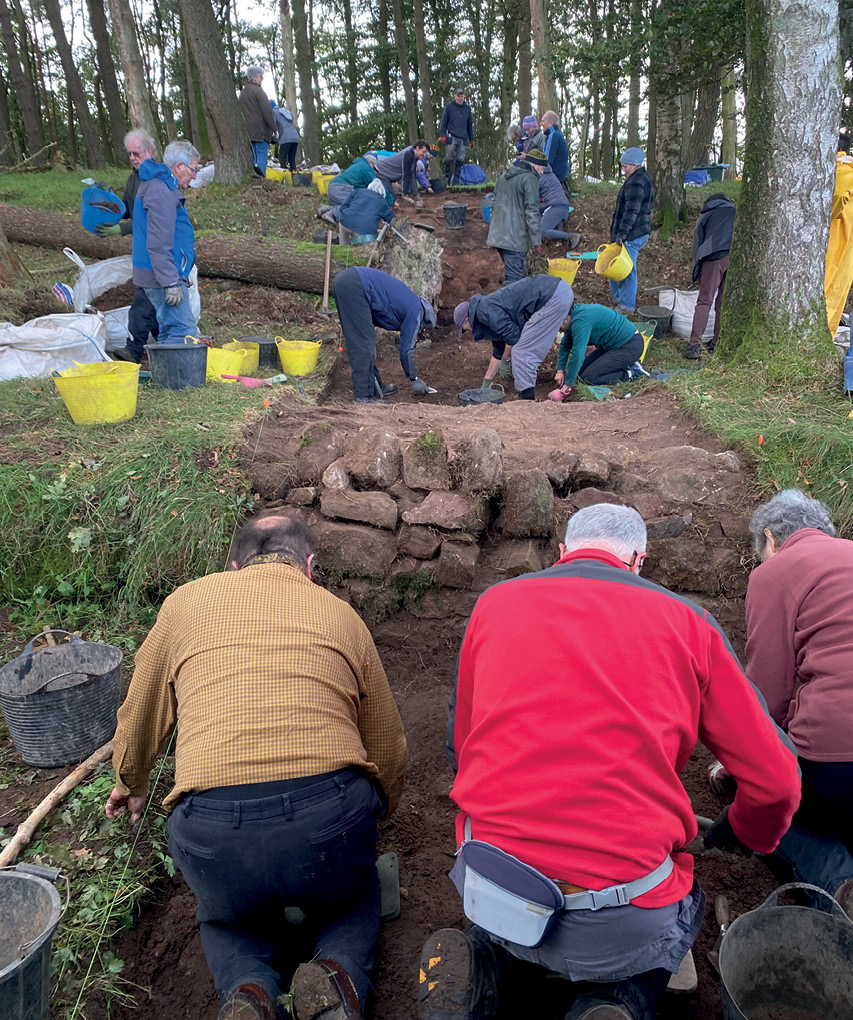
Further pieces of the bucket were recovered in 2012, and when Time Team returned to the site last summer, their excavation uncovered even more fragments, all of which matched the hunting scene design. Once they realised what they had found, FAS Heritage, commissioned by Time Team, lifted the whole block of soil so that it could be scanned and carefully excavated. It was first sent to the University of Bradford, where it underwent a CT scan and X-ray. This showed that the soil block contained the base of the bucket as well as a mysteriously shaped object. The block was then brought to York Archaeology so that it could be carefully micro-excavated. This work revealed cremated remains, including parts of a human talus (ankle bone) and cranium, although, unfortunately, the sex of the human bones could not be assessed. While the animal bones found in the vessel have not yet been identified, they belong to an animal larger than a pig. As horses are known to have often been included on the cremation pyres of early Anglo-Saxons, it seems probable that they are the remains of a horse.
Some of the bones might have been outside the bucket, but the bones inside were tightly packed together, suggesting that they may have once been held in a bag or other type of organic container. These remains will now undergo radiocarbon dating to confirm their relationship with other Sutton Hoo burials.
In addition to the cremated remains, the mysterious object identified on the CT scan was revealed to be a double-sided comb, made of antler. It had not been burnt, meaning that it had not been cremated along with the individual. Antler combs are known from both male and female graves during the Anglo-Saxon period, but it is hoped that aDNA analysis might be able to be conducted on the comb to tell us more about its owner.
Finally, the micro-excavation revealed the base of the bucket, which was completely intact and in relatively good condition. It was composed of concentric rings, visible on the CT scan, which indicates that it was made by cold hammering. Along with the radiocarbon and aDNA analysis, examination of the plant remains from the soil will also be carried out, which it is hoped will help elucidate what time of year the bucket was buried, as well as more about the climate at that time.
Text: Kathryn Krakowka / Photo: David Brunetti, National Trust Images