
Subscribe now for full access and no adverts
Archaeologists in western Pennsylvania have identified the site of a tragic episode during the North American conflict known as the French and Indian War (1754-1763).
On the evening of 12 November 1758, two Virginia regiments, led by Lieutenant Colonel George Mercer and a young Colonel George Washington, encountered each other near Fort Ligonier, a British fortification c.100km from the French-held Fort Duquesne. Confused by the dark and foggy conditions, the troops mistook each other for enemies in the woods and a devastating exchange of friendly fire occurred. Realising their mistake, the 26-year-old George Washington reportedly rode between the lines of men knocking their muskets away with his sword in an effort to stop the shooting, but dozens were killed and injured, with the number of dead reported as ranging from 13 to 40. However, the tragedy resulted in the capture of a French soldier who revealed information that helped British forces take Fort Duquesne.
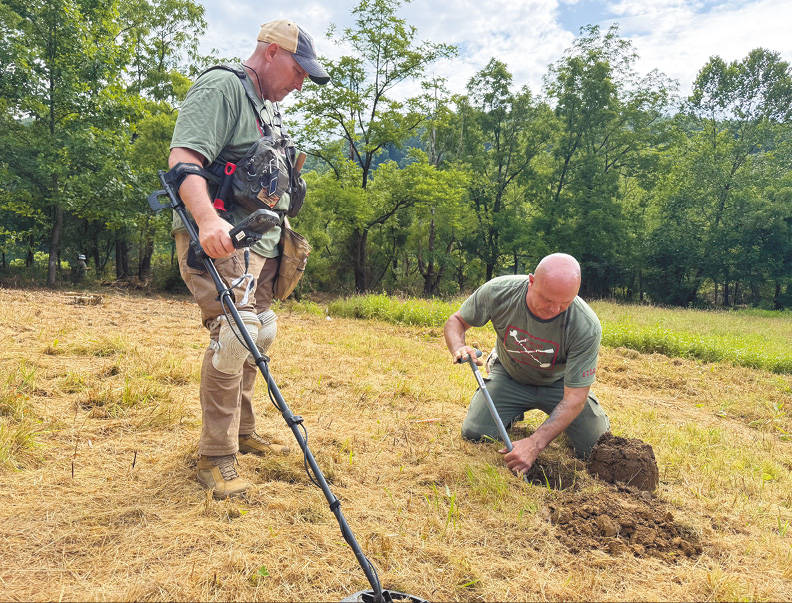
Since 2021, a team of students and veterans led by Jonathan Burns from Juniata College has been searching the area near Fort Ligonier for physical evidence of this incident. Using drones, metal-detectors, computer-aided mapping, and other technology they have discovered hundreds of 18th century objects, including musket balls and ammunition, uniform buttons and buckles, and even a French watch key. The patterns of these finds correspond to historical accounts of the event, and isotope analysis of the musket balls has traced the lead used to mines in Europe, Quebec, and Missouri – all known sources for the ammunition of French and British forces in this period.
Archaeologists are continuing the search for more material in the field, and the question of where the dead were buried remains unanswered, but the researchers are confident that they have, at last, pinpointed the exact location of this unfortunate incident, which looms large in local history.