
Subscribe now for full access and no adverts
Newly published analysis suggests that the Altar Stone, a six-tonne sandstone slab lying at the heart of Stonehenge, was originally extracted at least 466 miles (750km) away in north-east Scotland.
Archaeologists and geologists alike have long sought to shed light on the make-up of this most famous of Neolithic monuments, and many of its stones are now well-provenanced. Over a century has passed since Hubert Thomas first proposed a link between some of the Stonehenge ‘bluestones’ (the smaller stones that currently stand inside the monument’s imposing circles and horseshoe of sarsen uprights and trilithons) and the Preseli region of Wales. Since then, geologists have managed to trace specific source-outcrops at Carn Goedog and Carn Rhos-y-felin, and archaeologists have identified traces of the Neolithic sites where some of the bluestones may have begun their journey to Salisbury Plain (see CA 311, 345, 366, and 412).

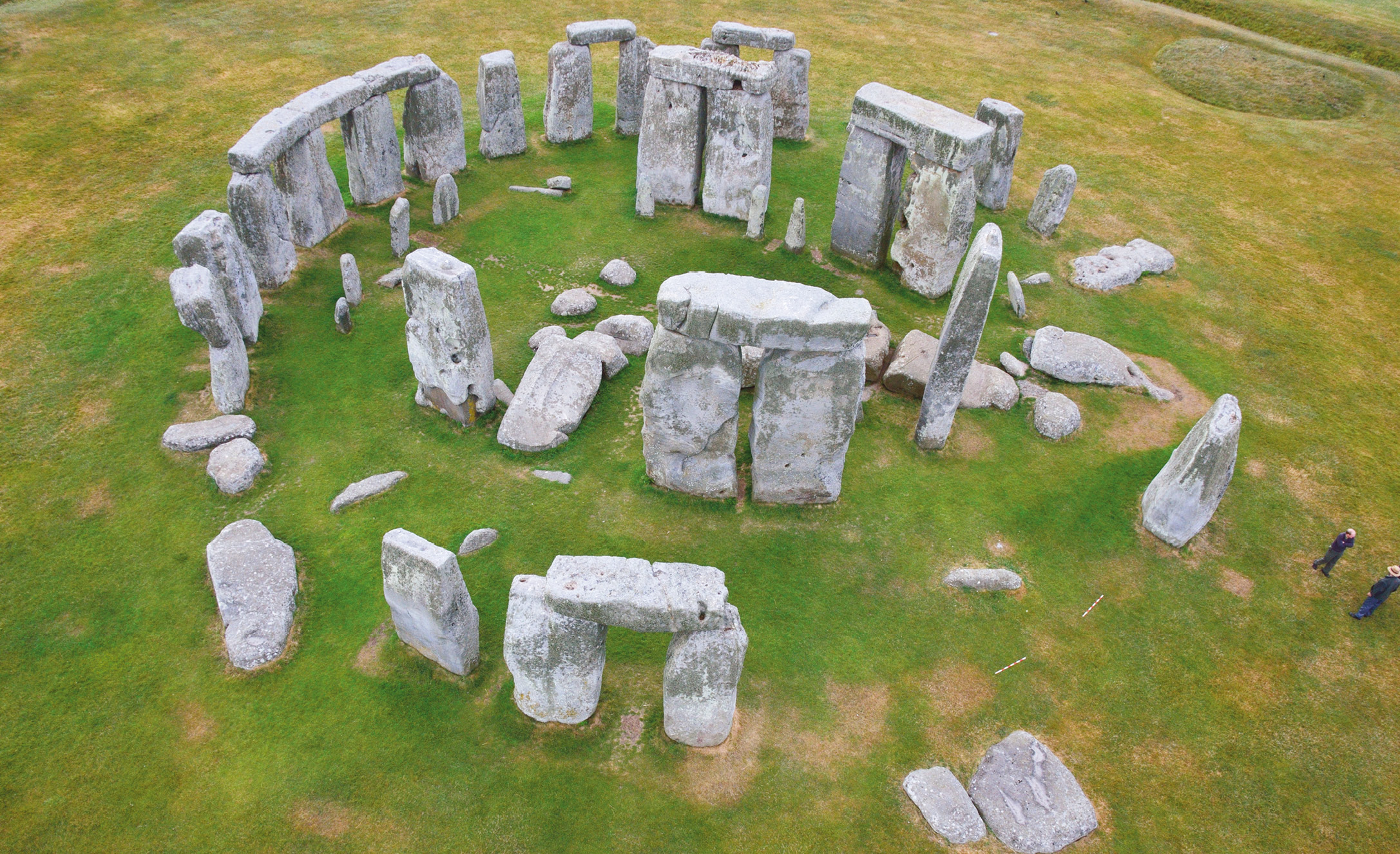
The probable source of the sarsens has also been pinned down – unsurprisingly, given the towering scale of these stones, it is rather more local: about 20 miles to the north, at West Woods (CA 367). Until recently, however, the origins of Stone 80 – better known as the ‘Altar Stone’ – have been much less clear. This lateness to the petrological party is not the only way in which the Altar Stone is an outlier at Stonehenge; although it, too, is classed as a bluestone (the word is a generic term for any megaliths thought to be ‘exotic’ to the area), its rock is a grey-green sandstone entirely unlike the igneous uprights from Wales. It is the largest of the group, too, a deliberately worked slab measuring 5m by 1m, and 50cm thick.
This element of Stonehenge is as unobtrusive as it is enigmatic: it currently lies prone and broken in the middle of the monument, partly covered by one of the uprights and the lintel of the Great Trilithon, which collapsed centuries ago. Its position suggests it may have been an important component, however; it is located right in the centre of the circle, just in front of the tallest trilithon, between whose stones the light of the setting sun would have shone during the winter solstice, its rays finally touching the Altar Stone just before it dipped below the horizon. It is not known whether the Altar Stone had originally stood upright, or even when it arrived at Stonehenge, but current thinking is that its installation formed part of the monument’s second phase of construction, c.2500 BC.
As for the slab’s source, it was previously proposed that the Altar Stone was also Welsh, albeit from a different area, perhaps picked up by the transporters of the Preseli bluestones during their travels. In recent years, however, petrographical and geochemical analyses have gradually ruled out potential locations and, in an article published in the Journal of Archaeological Science: Reports, geologists Professor Richard Bevins, Professor Nick Pearce (both Aberystwyth University), and Dr Rob Ixer (UCL) suggested that future searches should focus on northern England and southern Scotland (CA 405).

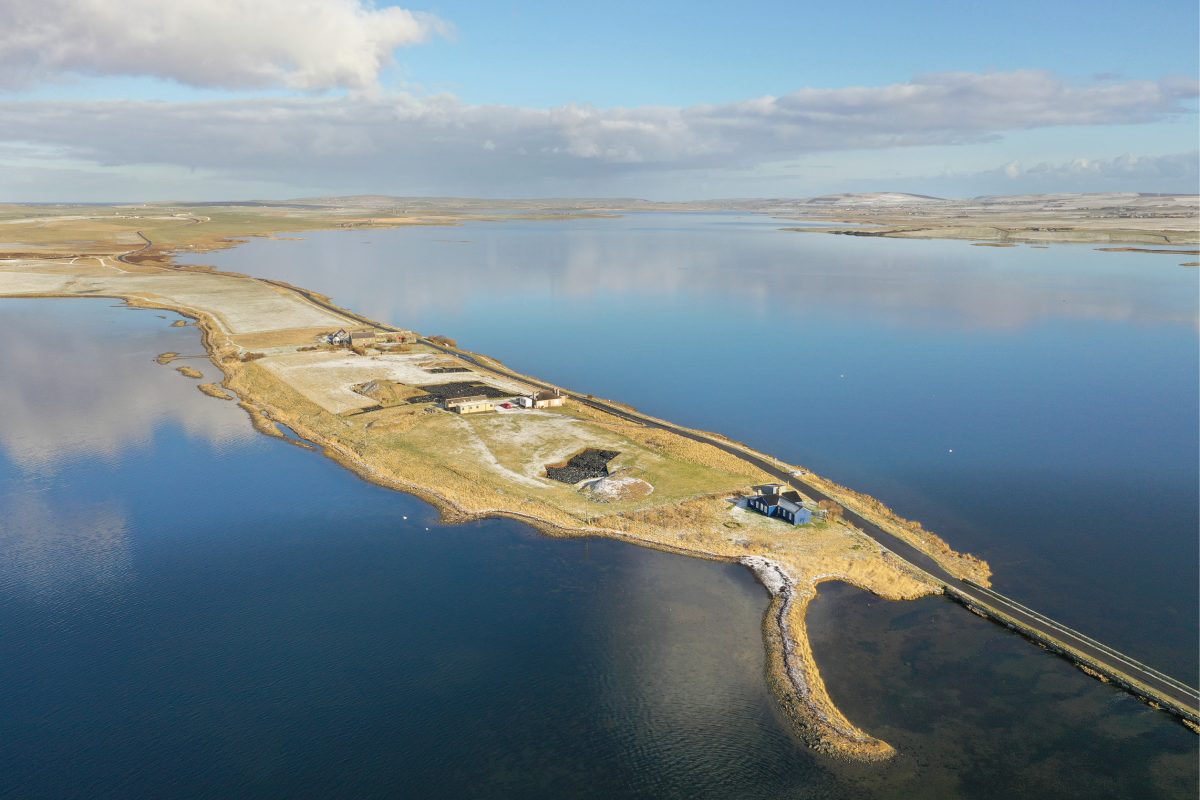
Now a collaboration between scientists based at the two institutions named above, and Curtin University and the University of Adelaide in Australia, has identified a much more specific source, and one even further to the north: the Old Red Sandstone of the Orcadian Basin. This area encompasses outcrops around the fringes of the Moray Firth and the northern tip of mainland Scotland; all of the Orkney archipelago; and southern portions of the Shetland Islands. These findings, recently published in Nature (see ‘Further reading’ below), would mean that the Altar Stone was carried hundreds of miles further than the Welsh bluestones – a 4,500-year-old journey whose length and logistics seem astonishing in a pre-technological era.
A far-travelled stone
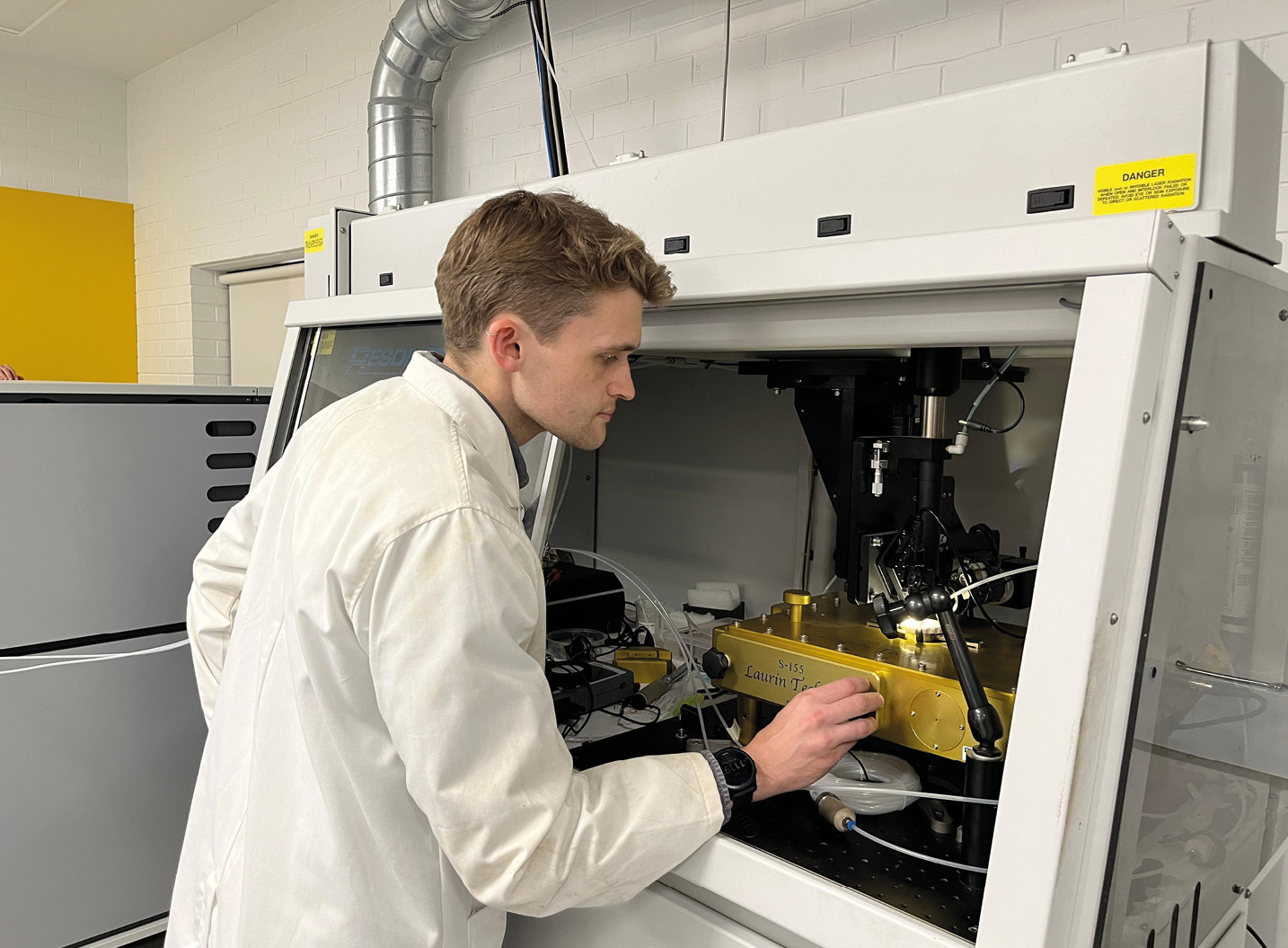
The research at the heart of these conclusions took place at Curtin University in Perth, Western Australia, where Professor Chris Kirkland’s Timescales of Mineral Systems group had developed a range of isotopic tracing tools for rocks, to reduce mining exploration risk in the dusty outback. Thanks to the region’s influential mining sector, the university is home to an array of cutting-edge equipment for geological research – and there Tony Clarke, lead author on the Nature paper, was undertaking a PhD focused on using isotopes to date rocks from various sources in Wales. This happy coincidence led Nick Pearce to offer him thin sections of two existing samples of the Altar Stone recovered in 1844 and the 1920s.
These pieces made an even longer journey, to the other side of the world (albeit by rather more modern methods), where Tony used laser ablation mass spectrometry to learn more about their chemical make-up. Sandstone is formed from numerous compacted grains, each with an age and chemical signature: these can be used to create a unique ‘fingerprint’ for a rock that can be compared to potential source-outcrops. It was in this way that Tony and his co-authors were able to make the connection with the Orcadian Basin – and establish a rather more personal link for Tony himself. He commented: ‘I grew up in the Mynydd Preseli, Wales, where some of Stonehenge’s stones came from. I first visited Stonehenge when I was one year old and now, at 25, you could say I’ve come full circle at the stone circle.’
As for next steps, co-author Richard Bevins said: ‘We can now say that this iconic rock is Scottish and not Welsh. Although we can say that much, and confidently, the hunt will still very much be on to pin down where exactly in the north-east of Scotland the Altar Stone came from.’ Nick Pearce noted that the Altar Stone represents ‘the longest recorded journey for any stone used in a monument at that period’, while Rob Ixer added: ‘The work prompts two important questions: how was the Altar Stone transported from the very north of Scotland… and, more intriguingly, why?’
Evidence of organisation
There is no known evidence of glacial erratics anywhere near Salisbury Plain, indicating that the Altar Stone and other bluestones were transported by humans, rather than the movement of ice. Whether they were carried overland or by sea remains the subject of debate (see CA 275 for more about evidence for Neolithic seafaring), but successive archaeological discoveries evoke a much-more organised society than was previously thought, with communities capable of communicating and travelling over huge distances.
The Neolithic ‘package’ (encompassing such innovations as pottery production, animal domestication, and crop cultivation) crossed from the Continent to Britain around 6,000 years ago (CA 290), and artefacts found far from their place of origin also speak of wide-ranging trade networks or cultural contacts linking Britain, Ireland, and mainland Europe. The movement of animals like the Orkney vole – which is found within the eponymous archipelago and on the Continent, but not in mainland Britain – and genetic research into the introduction of red deer to Orkney and the Outer Hebrides (CA 315) testifies, too, to cross-Channel journeys and wider seafaring capabilities.
As for specifically north–south journeys within Neolithic Britain, the flat-bottomed and distinctively decorated pottery known as Grooved Ware is thought to have originated in Orkney, before swiftly spreading through Britain and Ireland. Increasingly, a picture is emerging of Stonehenge as a great communal effort: a project that brought together people and materials from diverse and distant destinations.
Dr Heather Sebire, Stonehenge Curator at English Heritage, said: ‘This new scientific research about the source of the Altar Stone is a really interesting contribution to the already extensive body of work about Stonehenge. However, as always with this remarkable place, the more we uncover its secrets, the more questions arise – not least about how and why they brought the stone from so far away. Stonehenge is just an incredible place to experience, whether you have travelled from down the road, Scotland, Wales, or even further afield to get here.’
Further reading:
Anthony J I Clarke, Christopher L Kirkland, Richard E Bevins, Nick J G Pearce, Stijn Glorie, and Rob A Ixer (2024) ‘A Scottish provenance for the Altar Stone of Stonehenge’, Nature 632: 570-575.
The paper can be read online (open access) at https://doi.org/10.1038/s41586-024-07652-1.