
Subscribe now for full access and no adverts
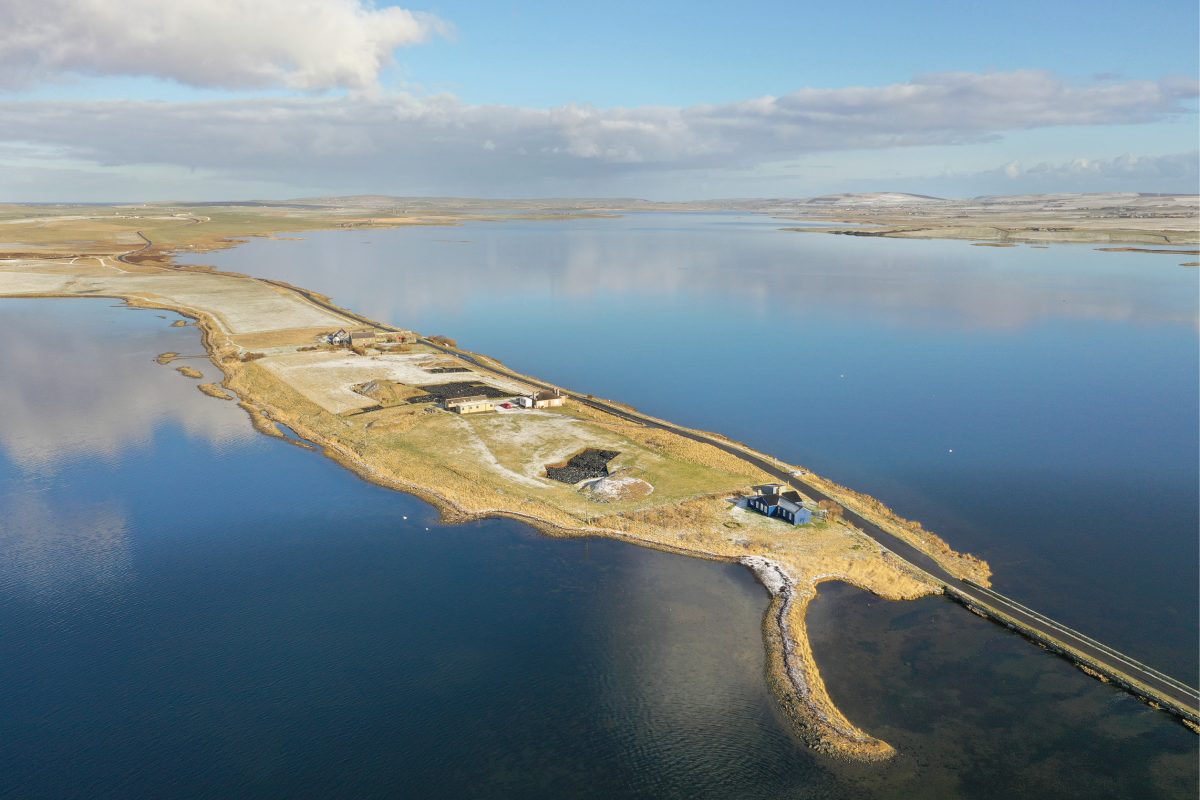
Analysis of a sediment core from Doggerland – the prehistoric landscape that once connected Britain to mainland Europe – has provided the clearest chronology yet for when this area became submerged beneath the North Sea, showing that the process of inundation began gradually around 10,000 years ago.
For the last decade, a team from the University of Bradford have been leading investigations into this underwater environment as part of the Europe’s Lost Frontiers (ELF) project. During this study, 78 cores were extracted from 60 different locations in Doggerland – specifically from the Southern River, the major watercourse that flowed through this landscape. Recently the team re-examined Core 19 (ELF019), using a combination of scientific techniques that have provided a complete depositional history for the first time.
As the team’s recent paper in Humans (https://doi.org/10.3390/humans6010005) attests, by using Thermogravimetric Analysis (TGA), which measures percentages of organic matter and carbonate content, alongside lipid and XRF analysis, they were able to ascertain alterations in the depositional environment of the core. This identified three discrete regions. Area C, the lowest, oldest layers, revealed evidence of a primarily freshwater environment from the Southern River. Area B, the central section, was defined by lots of rich organic matter and carbonate content, as well as alternating terrestrial and marine vegetation, suggesting an unstable dynamic. This section is believed to reflect the start of the inundation, and radiocarbon dates from these layers indicate that the sediments were laid down during the Greenlandian Period, around 10,243-10,199 years ago. Area A, which contains the topmost layers of the core, were predominately characterised by marine deposits, reflecting the complete flooding of Doggerland (below).
This study provides one of the most in-depth and coherent timelines for sedimental deposition in Doggerland to-date, highlighting that the landscape was not lost in a single event but instead was progressively submerged over time.
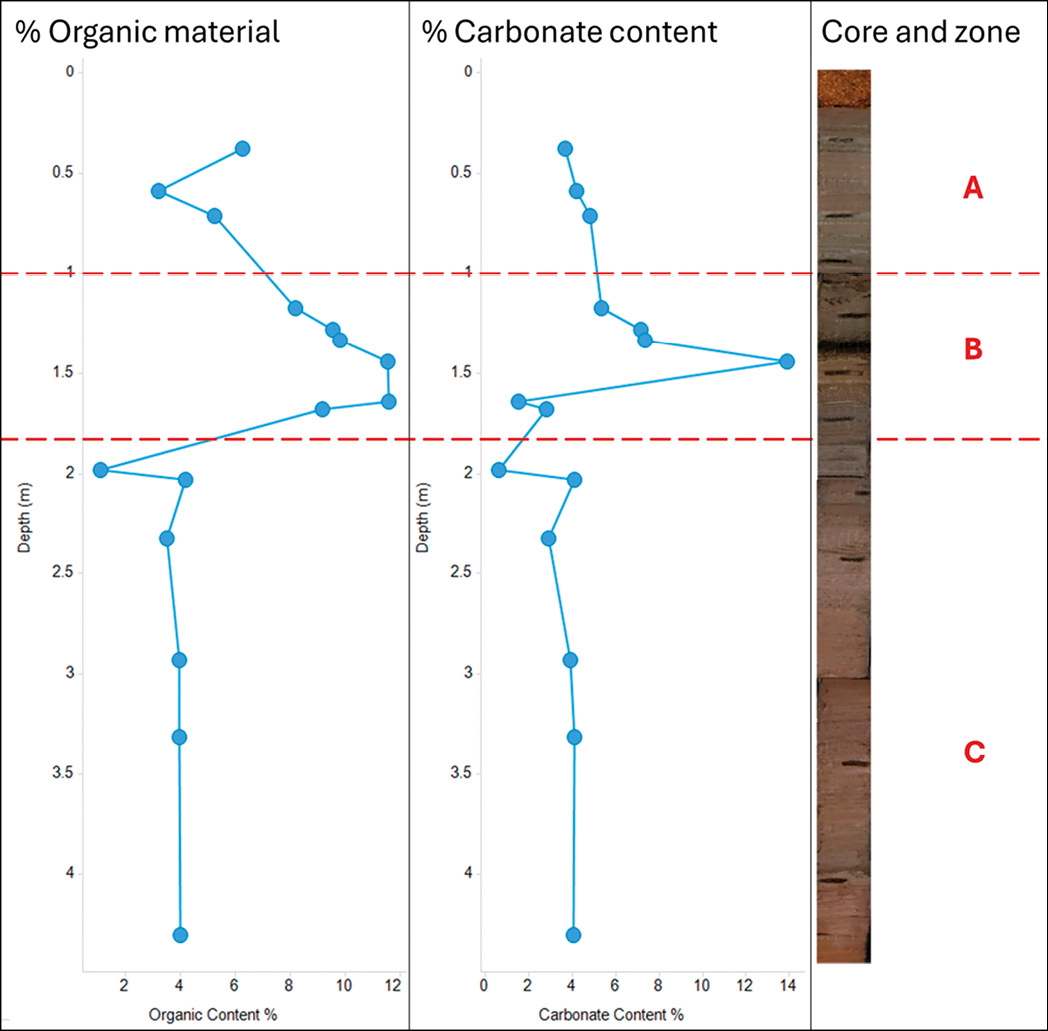
Text: Kathryn Krakowka / Image: Bensharada et al. (2026) Humans 6(1): 5