Subscribe now for full access and no adverts
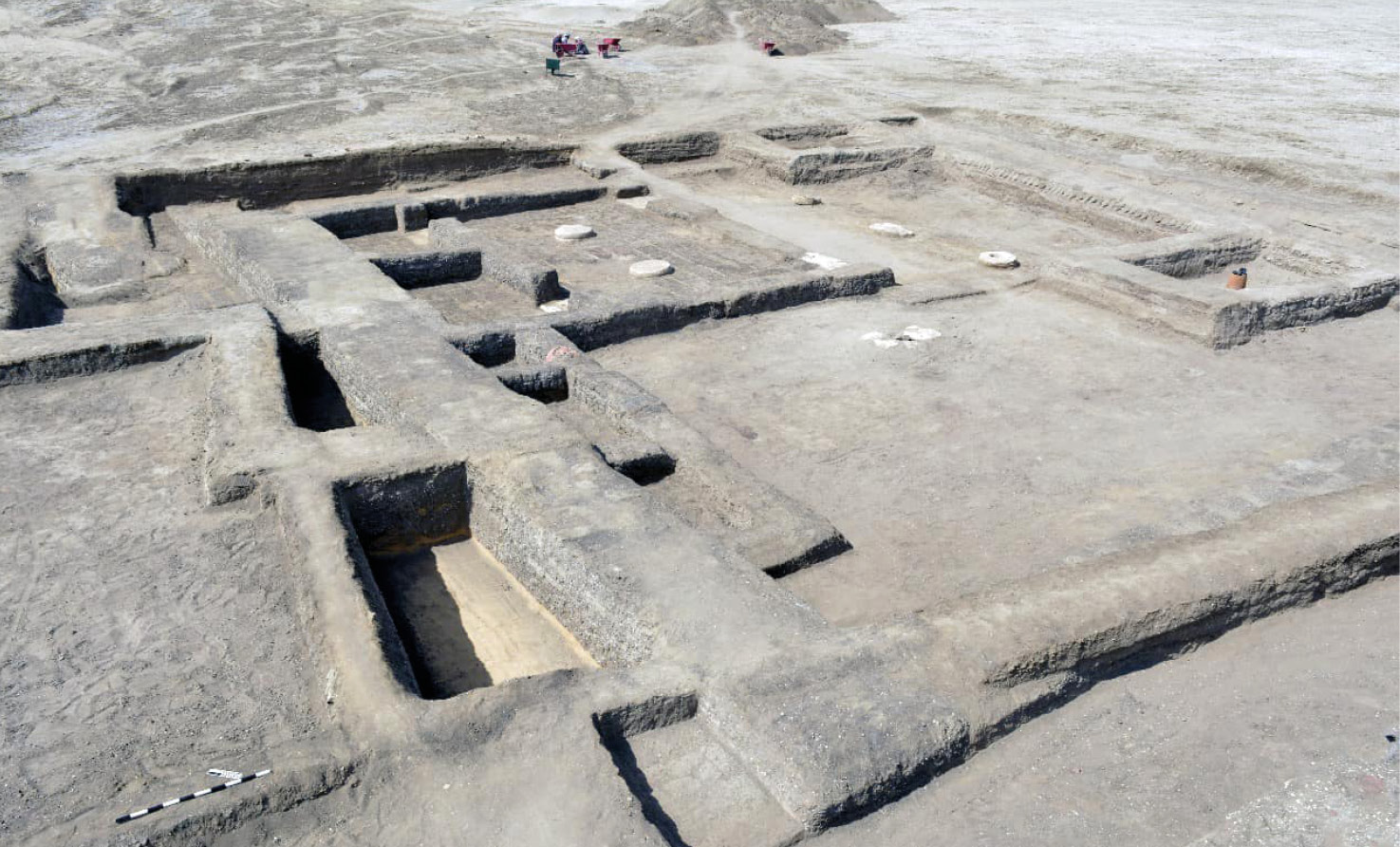
The remains of a royal fortified military rest area have been discovered at Tell Habwa (northern Sinai) by a mission from the Egyptian Ministry of Tourism and Antiquities. The team found the remains of a mud-brick building near the beginning of the ‘Way of Horus’ road, the ancient eastern route out of Egypt. Inscriptions on finds in the area date the structure to the reign of Thutmose III (c.1479-1425 BC). The lack of pottery fragments inside, and the architectural layout of the building, with two adjoining columned halls and a number of other rooms, suggest this was a royal palace and military accommodation for the king and his forces en route to campaigns in the Levant region. Other finds at the site include funerary vessels for child burials during the Twenty-first to Twenty-fifth Dynasties, and a small faience plaque bearing the cartouche of Ahmose II (Amasis) of the Twenty-sixth Dynasty. Earlier excavations in the area have unearthed other military rest houses dating to Thutmose III (reported in AE 89), Sety I, and Ramesses II.
Text: Sarah Griffiths / Image: © Ministry of Tourism and Antiquities