
Subscribe now for full access and no adverts
A ground-penetrating radar (GPR) survey conducted on the open spaces of Lincoln Castle has revealed a series of archaeological features, including previously unknown structures that probably pre-date the Norman castle and which add to our overall understanding of the evolution of this site.
Lincoln Castle was first built in 1068 on the orders of William the Conqueror, shortly after his victory at Hastings, to help quell northern resistance. For the next 1,000 years, the motte-and-bailey castle has served as a focus of power and justice within both the city of Lincoln and the surrounding area, with various iterations of gaols and courthouses located on its grounds. Before its tenure as a Norman stronghold, however, the site once bore a Roman fortress, as well as part of the Roman town of Lindum Colonia.
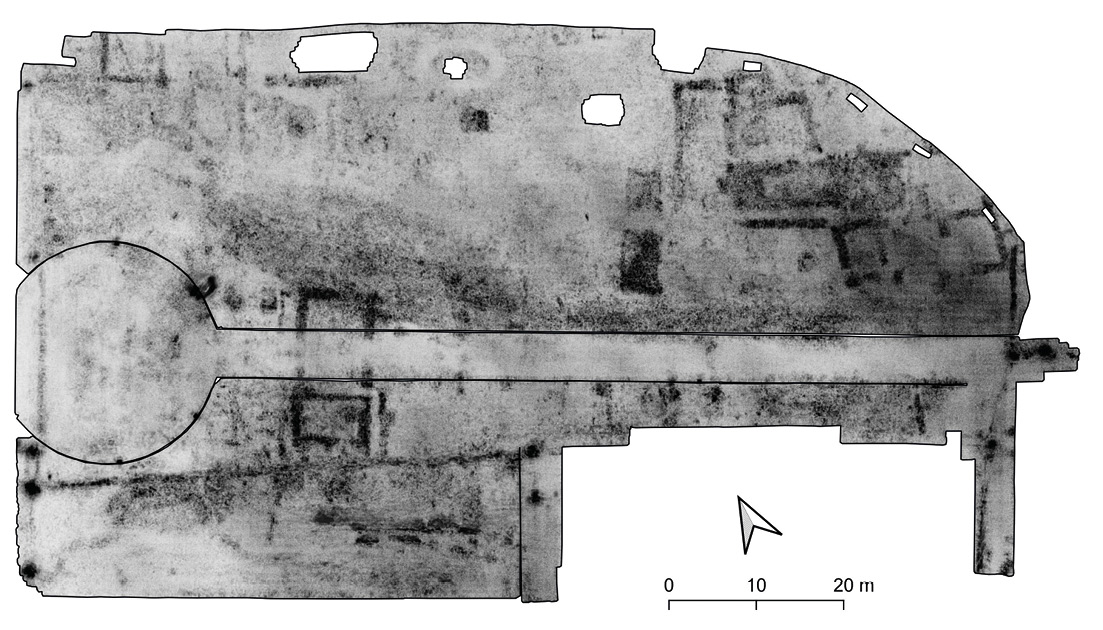
The survey was conducted this past May and led by Chris Casswell of Reclaim Heritage – a small, family-run business that completely self-funded the project. Under the north lawn, walls were found just below the surface, which are believed to be from the castle’s early gaol. This early prison was built in 1788 to hold both felons and debtors, but was largely demolished in 1848 to make way for the construction of a new Victorian prison wing. Lower down in the stratigraphy, other as yet unidentified buildings were found, which may be medieval in date. There were also structural remains found under the road in front of the Crown Court. These are thought to belong to the original County Court, which once stood in the centre of the castle grounds. While the general location of the gaol and courthouses were previously known, this survey has been able to pinpoint their exact location.
Most excitingly, however, urban features were found approximately 2m below ground level, under the castle. This suggests that they probably pre-date the Norman structure and, based on their layout, may be part of the original Roman town. Analysis of the survey is ongoing, with Reclaim Heritage hoping to publish their full findings sometime this year. These results will then be used to inform potential future work, including possible excavation of some of these features.
Text: Kathryn Krakowka / Image: Reclaim Heritage