Subscribe now for full access and no adverts
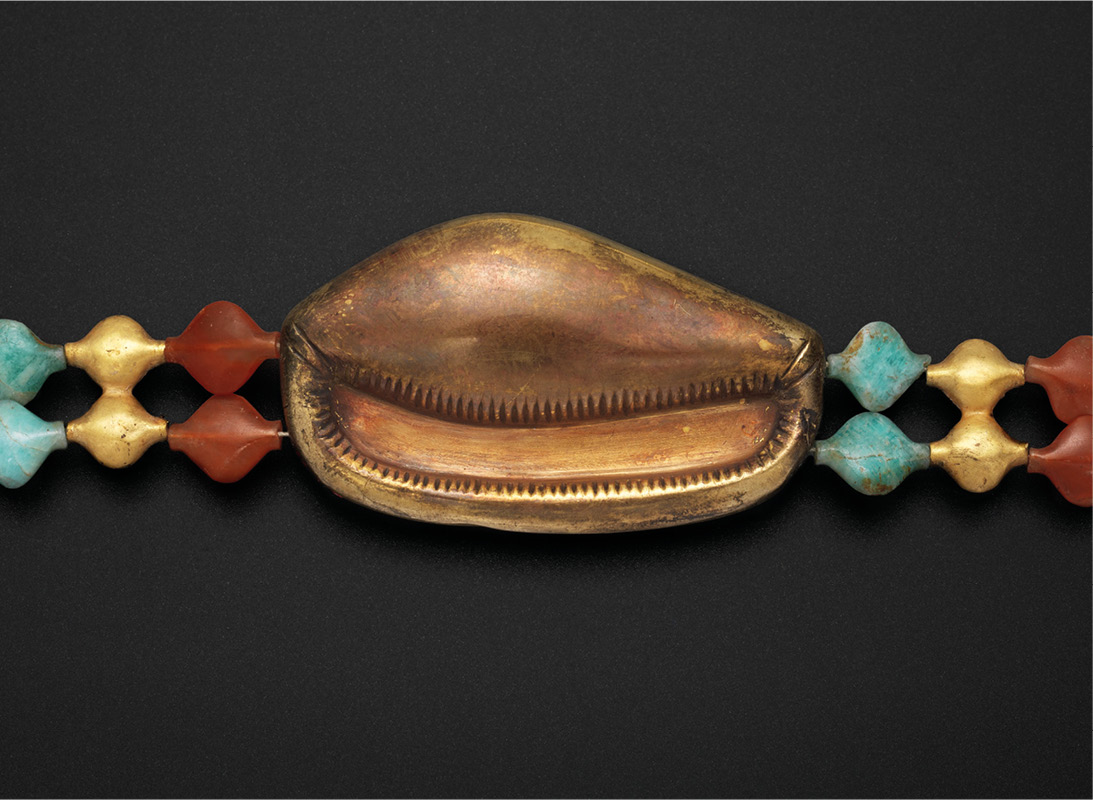
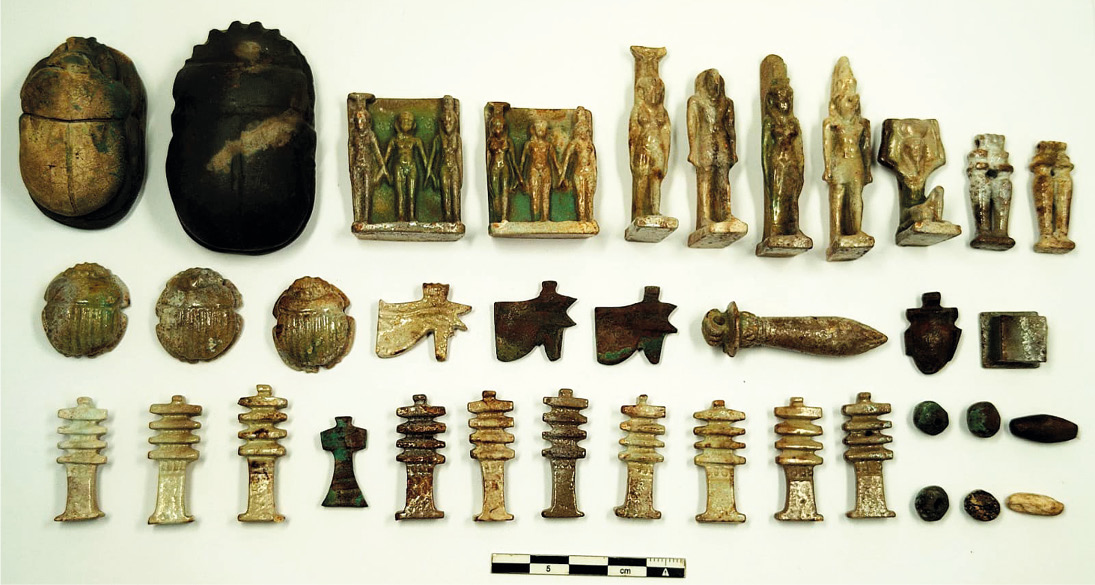
Thirteen mummies with golden tongues in their mouths have been discovered at el-Bahansa (Minya) by the Oxyrhynchus Archaeological Mission, a joint Spanish–Egyptian team led by the Institute of Ancient Near East Studies of the University of Barcelona. The mummies were part of a group of 52 Roman Period burials discovered in a number of tombs at the site. One mummy was found to have two gold tongues, while another had small gold plates covering their fingernails. Other artefacts associated with the mummies included 29 djed pillar amulets, small amulets of Horus and Isis, and two tiny plaques depicting Harpocrates holding hands with Isis and Nephthys.

Gold tongues discovered in Roman Period mummies at the ancient site of Oxyrhynchus.
The team also uncovered a rectangular stone burial shaft leading to a Ptolemaic tomb with a central hall and three chambers. Inside were some 300 mummies and four limestone sarcophagi – indicating the space was a communal burial site. A second shaft led to three chambers, one of which was decorated with colourful paintings of the tomb’s owner Wennefer and his family, who were depicted presenting offerings to the gods. The ceiling was decorated with a depiction of Nut, in white on a blue background.
Text: Sarah Griffiths / All images: Ministry of Tourism and Antiquities