Subscribe now for full access and no adverts
Excavations on Islay, in the Inner Hebrides, have uncovered the archaeological remains of an early medieval metalworking workshop.
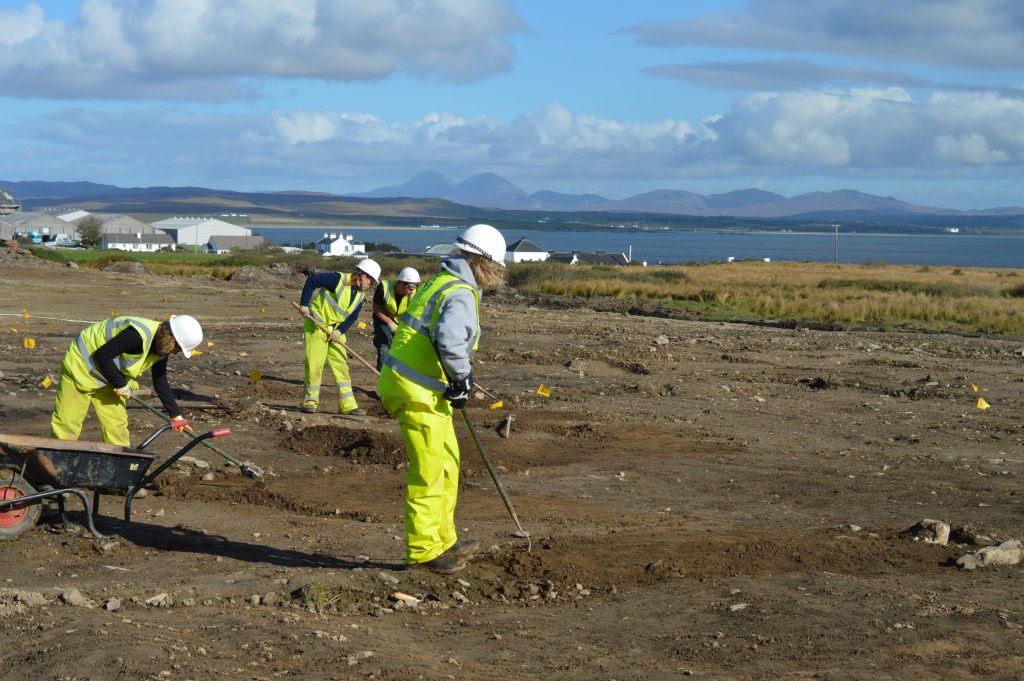
Finds of flint had been emerging from the plough soil for some time, hinting at the area’s archaeological potential, but this was not fully brought to light until excavations in 2015 – carried out by GUARD Archaeology Ltd ahead of a planned warehouse development for the Bruichladdich Distillery – revealed significant features across four areas on the site. This summer, the results of post-excavation analysis were published in Archaeology Reports Online (available at https://archaeologyreportsonline.com/reports/2024/ARO58.html).
Evidence of metalworking activity emerged during the excavation of a figure-of-eight-shaped building (also known, more whimsically, as a ‘jelly-baby’ structure) made up of several overlapping curvilinear gullies. This design is Pictish in style – an exciting discovery, as features of this period, when Islay was incorporated into the kingdom of Dál Riata, are seldom found on the island – and its interlinking enclosed areas contained a number of pits and post-holes. The pits produced fragments of hammerscale (a by-product of metal smithing), along with smelting slag prill, and fused stone indicative of high heat levels. Several fragments of fired clay were also discovered, which represent the remnants of a hearth or a superstructure used to cover a furnace.
Radiocarbon dating returned early medieval dates for these features, but the team believe that the figure-of-eight structure was originally used domestically (owing to residual Iron Age pottery and botanical remains recovered from domestic hearth waste), and that it was later con-verted into a workshop when the earlier building fell into disrepair.
No other evidence of early medieval occupation was identified on the site; Maureen Kilpatrick, who led the excavations, explained: ‘The workshop was probably part of a dispersed settlement pattern across the surrounding landscape, but this is all we encountered in the excavation areas that we examined.’
The structure itself did produce further finds, however: among the most interesting were fragments of two bangles made from shale, the only known examples of such items from Islay. Similar examples are also rare on neighbouring islands and, although more have been found on mainland Argyll, the shale itself is exotic to the area. The bracelets are unusual in their form: the first has a design that does not fall into standard typologies, being broad and flat rather than the usual variation on a D-section; the second shows evidence of having been reworked after a breakage, which is not in itself unusual, but such artefacts are more commonly recycled to make beads or pendants, rather than being reworked back into a bangle.
Other features uncovered during the investigations proved to be earlier in date, including a D-shaped timber roundhouse and a small prehistoric post-built structure, which have been dated to the late Bronze/early Iron Age transition; flint fragments and Mesolithic and Neolithic pottery were also recovered from features on the site. In particular, however, the newly published results have been instrumental in revealing information about early medieval Islay. ‘This early medieval workshop built over the ruins of an earlier Pictish-style building reveals a snapshot of life in the early Scots kingdom of Dál Riata,’ Maureen commented.
Text: Rebecca Preedy / Photo: GUARD Archaeology