
Subscribe now for full access and no adverts
It is one of the oldest and most mysterious battlefields in Europe. But new research into arrowheads dating from the 13th century BC has revealed more about who was involved.
The Tollense Valley in the northern German state of Mecklenburg Vorpommern has long been known as the site of a large conflict that took place in 1250 BC. Since its discovery in 1996, the site has been extensively excavated – and, from human remains uncovered, it is estimated that some 2,000 people were involved. However, little was previously known about the people who fought in the battle at Tollense, and less still about why it took place.
Now a team of researchers from several German institutions has analysed bronze and flint arrowheads found in the valley, comparing them with other contemporary examples found across Europe.
The majority of the arrowheads were discovered to be of a type previously encountered in the Tollense region, suggesting that most people who fought in the battle were relatively local.
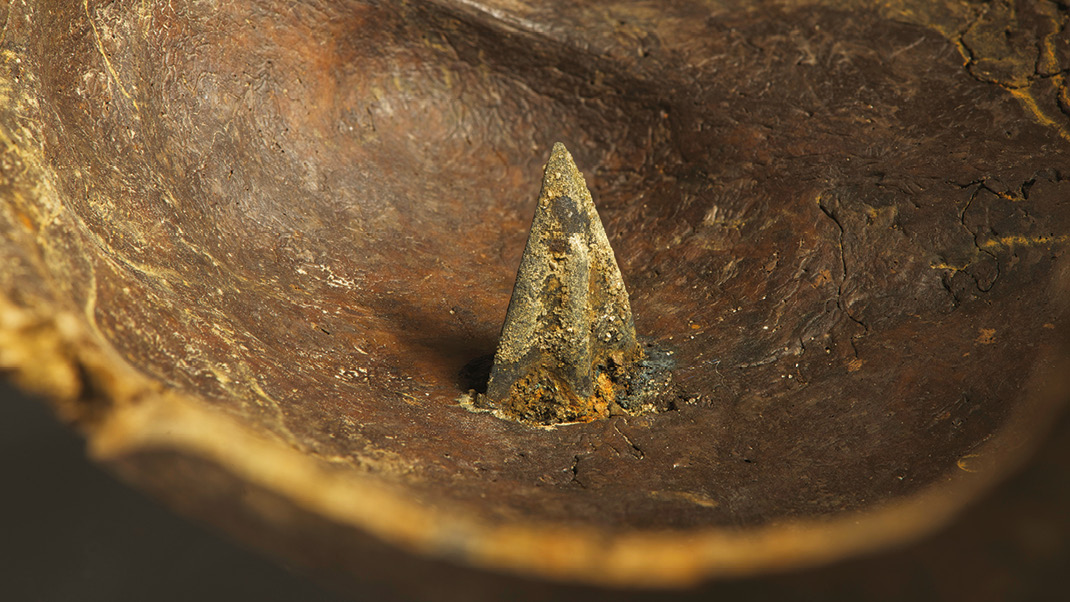
However, analysis of other arrowheads reveals that they show signs of having come from the south of the country, within the region that encompasses modern-day Bavaria and Moravia. These arrowheads, with some distinctive features such as straight or rhombic bases, were most likely used by southern warriors, or even an army, who travelled across the country and met an adversary at Tollense.
Leif Inselmann, a researcher at the Free University of Berlin and the lead author of the research, which was recently published in the journal Antiquity, described the arrowheads as a kind of ‘smoking gun’.
‘Just like the murder weapon in a mystery, they give us a clue about the culprit, the fighters of the Tollense Valley battle, and where they came from,’ he said.
The findings confirm Tollense as the site of Europe’s earliest known inter regional battle, occurring at a time when armed conflict appears to have increased and professionalised across much of the continent.