Subscribe now for full access and no adverts
Evidence for the world’s first case of metal contamination has been discovered in the sediments of an ancient harbour at Giza. The harbour, close to the Great Pyramid of Khufu, was located on a now defunct branch of the Nile, and was key to the transport of materials for the construction of pyramids during the Old Kingdom.
Using the latest geochemical technologies, a team from Aix-Marseille University (France) measured levels of copper, arsenic, aluminium, iron, and titanium in water, soil, and air. The results, published in the journal Geology, show high levels of contamination from these metalworking by products, with copper at five to six times higher than natural background levels. Such contamination could have been hazardous to the health of the workers. Copper was used for making blades, chisels, and drills – tools needed for the construction of the pyramids – and many were alloyed with arsenic to increase their strength.
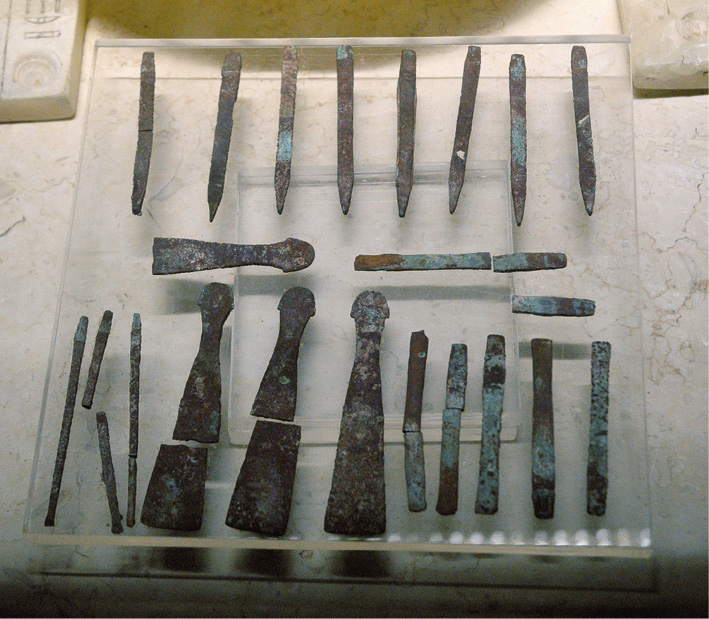
Metal contamination, caused by the production of copper tools (for agriculture as well as construction) peaked during the Old Kingdom, but the team’s findings suggest that it began in the Predynastic Period, 200 years earlier than previously thought, and continued until about 1000 BC (although their chronology is based on carbon-dating only six objects, which may not be enough for accurate dating).
Text & image: Sarah Griffiths