Subscribe now for full access and no adverts
Culture vultures
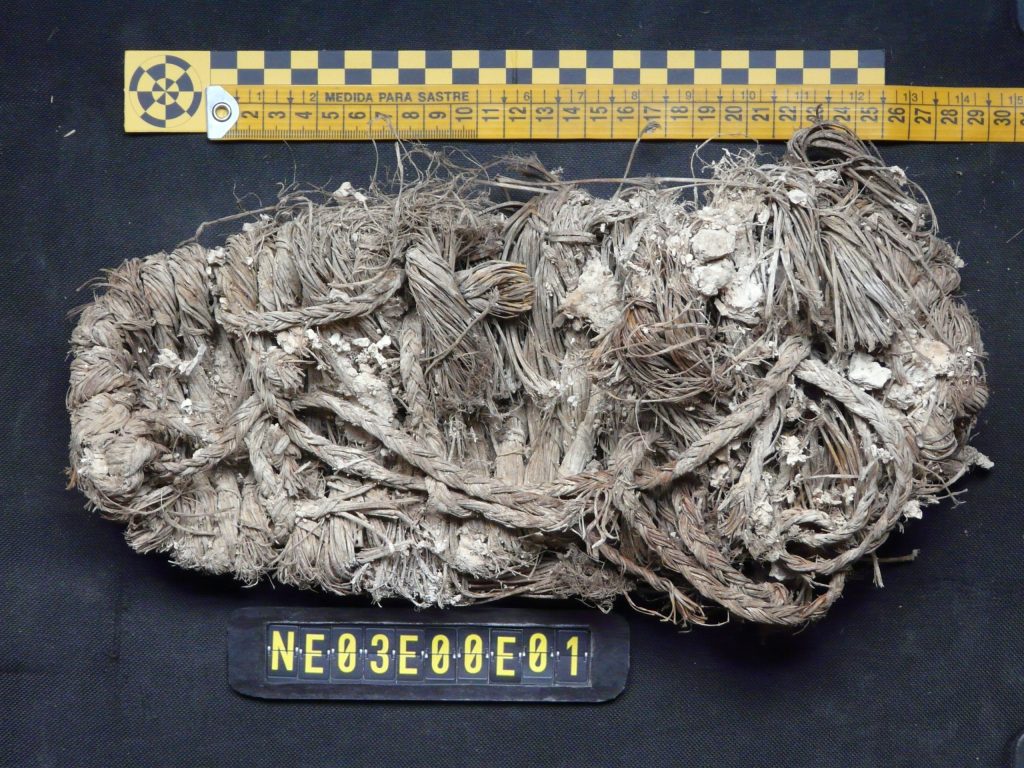
A new study, recently published in Ecology (https://doi.org/10.1002/ecy.70191), reveals that the nests of bearded vultures can contain objects dating back hundreds of years. Examination of more than 50 historical bearded vulture nests in southern Spain, where the species has been extinct for c.100 years, demonstrates that many were reused by multiple successive generations of these birds. Researchers analysed 12 of the cliffside nests in detail, following archaeological stratigraphic methods and using radiocarbon analysis to date the finds. Although the assemblages were dominated by ungulate bones related to the birds’ diets, over 9% of the almost 2,500 items recovered were human made objects used by the vultures to build their nests. Among the well preserved finds were a complete esparto sandal dating to the 13th century (pictured), a fragment of ochre-painted sheep leather from the same era, remnants of 18th-century basketry, a crossbow bolt, pieces of horse tackle, slingshots, ropes, and other fragments of objects made of leather, esparto grass, hair, and cloth. The nests also provide an important record of environmental conditions in the past, as well as preserving information about the birds’ habits that will aid in the conservation of this endangered species.
Early icehouse
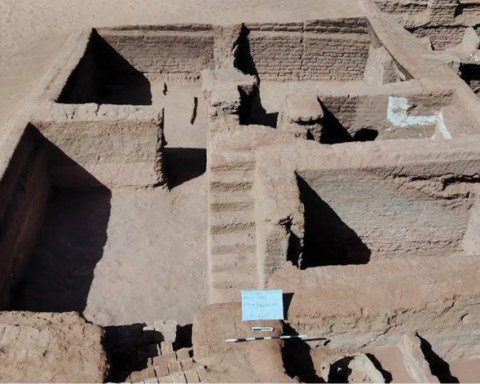
A 1,400-year-old ice-storage facility has been unearthed by the National Research Institute of Cultural Heritage in Buyeo at Busosan Fortress in South Korea, which served as a royal citadel during the Baekje Sabi period (AD 538-660). The ice-storage structure, or bingo, is a rectangular space measuring 7m by 8m and 2.5m deep. Cut into the bedrock beneath the fortress, the bingo later had stones added along one wall, and also features a stone-lined pit in the centre thought to have served as a drainage system. The researchers stress that this specialised facility for long-term ice-storage – the earliest found in South Korea – could only have been constructed and used by a powerful state or ruler. Nearby, another discovery was made: a jar containing five Wushu coins. This is believed to be a jijingu – a ritual deposit made to ensure the success of the construction project.
Indigo processing
Analysis of 34,000-year-old stone tools found at Dzudzuana Cave in Georgia has discovered the earliest known evidence for the production of blue dye. Recent research, published in the journal PLOS One (https://doi.org/10.1371/journal.pone.0321262), identified traces of indigotin, a blue dye compound, on the surface of the stones. Further investigations confirmed that the tools had been used to grind the leaves of the plant Isatis tinctoria, commonly known as woad, which is still used to produce blue dye today. Woad has no nutritional value, indicating that the plant was being processed for other purposes such as dyeing or medicine. This discovery offers intriguing evidence that Upper Palaeolithic people had a more complex relationship with plants than previously recognised.
Text: Amy Brunskill / Image: Sergio Couto