Subscribe now for full access and no adverts
Pompeii reoccupied after eruption
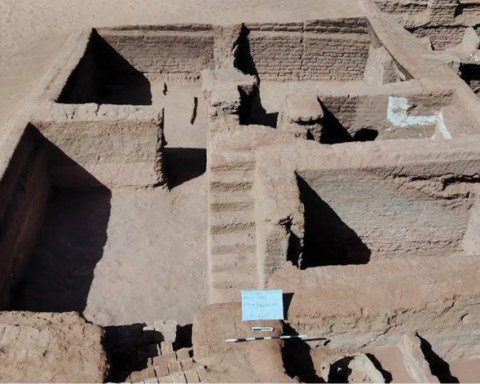
Excavations at Pompeii have uncovered evidence that certain areas of the city were reoccupied after the eruption of Vesuvius in AD 79. This had been suggested before, but previous excavations focused on reaching Pompeii’s pre-destruction levels overlooked traces of later activity. Recent work in the Insula Meridionalis has now found signs that survivors of the eruption with nowhere else to go returned to the city, where they may have been joined by homeless people from other areas, attracted by both the prospect of a place to live and the possibility of finding valuable items left behind among the rubble. These new inhabitants settled on the upper levels of houses that had re-emerged from ash, while the original ground floors became cellars where hearths, ovens, and mills were established. This disorganised living situation lasted until the 5th century AD, when the area was fully abandoned, possibly as the result of another eruption.

A lost Maya stronghold
When Spanish conquistadors destroyed the Maya city of Lacam-Tún in 1586, its inhabitants, the Lakandon Ch’ol, retreated into the Lacandon jungle of southern Mexico and founded a new capital, known as Sak-Bahlán (meaning ‘Land of the White Jaguar’). There they remained, independent from Spanish rule, for more than 100 years. But it was not to last: the Spanish arrived in 1695, and by 1721 the city had been abandoned. Now archaeologists from INAH believe they have pinpointed the location of the lost stronghold. Using a combination of historical documentary sources. and GIS (geographic information systems), researchers developed a computer model to predict the location of the city and carried out archaeological fieldwork to investigate this area. The site has now been inscribed in the Public Register of Monuments and Archaeological and Historical Zones as ‘Sun and paradise. Probably Sak-Bahlán.’
Artefacts from a Japanese imperial burial
The 5th-century Daisen Kofun, in Osaka, is Japan’s largest keyhole-shaped burial mound. The tomb, traditionally associated with Emperor Nintoku, was excavated in the late 19th century by local official Kaichiro Kashiwagi, who created drawings of the objects uncovered before returning them to the burial chamber. However, it now seems that he may have kept a couple for his personal collection. Last year, Kokugakuin University Museum acquired two pieces from an art dealer: an ornate gold-plated knife in a cypress sheath and several fragments of gilded iron armour. The artefacts were wrapped in paper dated September 1872, stamped with Kashiwagi’s seal, and accompanied by handwritten notes that listed their origin as the Daisen Kofun. Now analysis carried out by the museum appears to confirm this. The rediscovery of these grave goods makes them the first verified objects from the tomb available for modern analysis, as access to the kofun is strictly controlled.
Text: Amy Brunskill / Image: courtesy of the Archaeological Park of Pompeii