Subscribe now for full access and no adverts
Modern interest in ancient Iranian metalwork has a long history. It intensified following the discovery of impressive bronzes in the region of Luristan during the 1920s, and continues up to this day. Northwestern Iran in particular is famous for its metalwork, with fine examples unearthed during excavations in Hasanlu, an important Iron Age site in the province of West Azerbaijan, as well as at Marlik in Gilan province. Here it is important to note that while the term ‘Iron Age’ usually denotes a period when iron was the predominant metal for tools and weapons, that is not the case in Northwestern Iran. Instead, it is the appearance of a very distinct pottery tradition in the region that prompted scholars to designate the beginning of a new era during the 13th century BC. While iron was indeed used in small quantities from the 13th to 11th centuries BC, it did not fully take hold in the region until the 9th century BC. For this reason, all of the objects discussed here, whether bronze or bimetallic, belong to the era referred to as the Iron Age (1250-550 BC).
Iranian metalwork from that era is known for its decorative nature and high quality, often achieved through lost-wax casting. The attractiveness of the finds combined with the interest they created sparked a surge in illicit excavations to meet the demand among collectors and museums eager to expand their collections. Indeed, the continuing popularity of these items on the antiquities market is ably demonstrated by an online search for ‘Luristan sword’. The first results were websites with swords for sale, rather than online museum collection catalogues from institutions like the Penn Museum or the Met.

Once the interest in this metalwork was established, another attempt to satisfy demand followed in the form of forgeries and pastiche-making. It appears that these practices have never stopped. Pastiches are objects created from fragments of various different – often ancient – artefacts that have been combined in modern times to create an object that is more interesting, more beautiful, or more profitable. At another level, the illegal trade in such metalwork has had an important impact on how it is understood today. A significant number of objects in Iranian museums, for example, were not recovered during controlled excavations. Instead, they were confiscated from looters who got to them before the archaeologists. Because of the scattered nature of these collections, large assemblages of objects are rarely analysed together. For this reason, there has never been a comprehensive study of Iron Age Iranian weapon technology.

The beginning
In recent years, a large assemblage of metallic objects that can be traced back to Iran has been intercepted by the Border Force in the UK. Among these artefacts were weapons such as swords, daggers, and spearheads, as well as pins, bracelets, and sundry other small finds. This collection was eventually handed over to the British Museum, who have an established track record of liaising with foreign governments in cases of antiquities trafficking. Sadly, the arrival of this material cannot be regarded as an isolated incident. In recent years, many other artefacts were recovered from the illicit market in the UK, ranging from a carved wall plaque and kudurru (boundary stone) from Iraq to fake cuneiform tablets and figurines. Courtesy of the combined efforts of the Border Force, the Metropolitan Police, and the British Museum, genuine artefacts can be recovered and repatriated to their country of origin. In the case of the metallic objects from Iran, the Iranian authorities gave permission for the objects to be scientifically analysed prior to repatriation. This work became part of my PhD research.
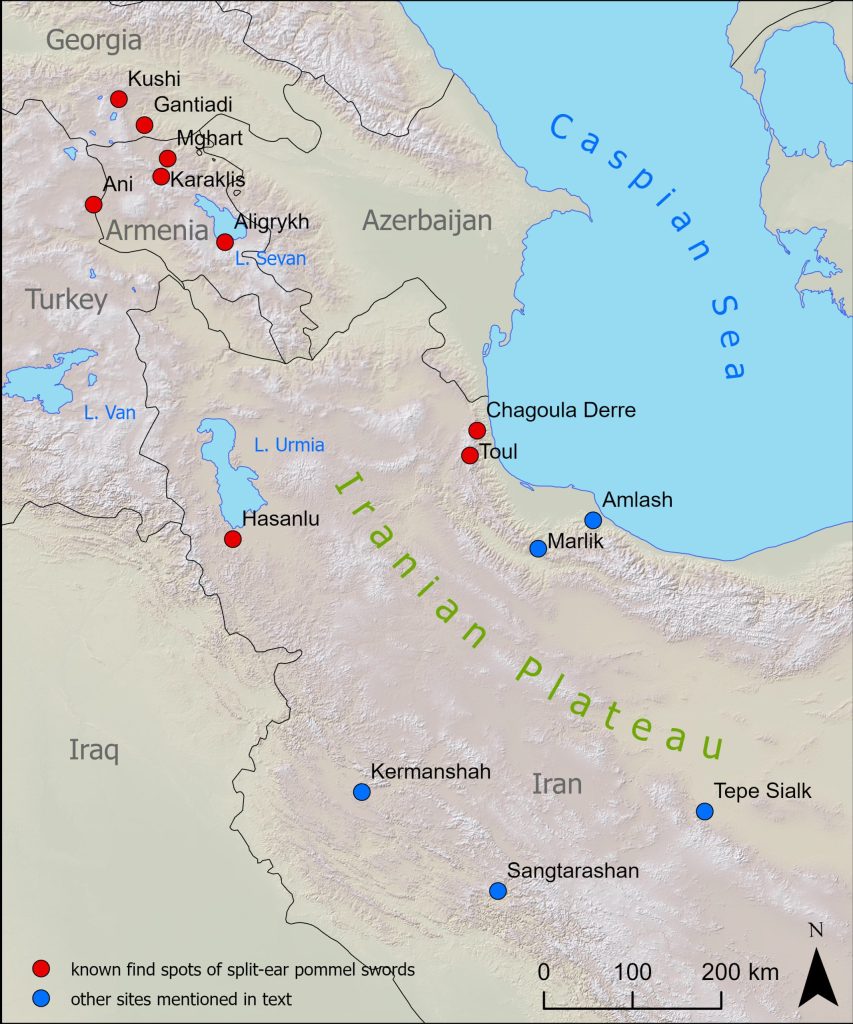
While there were many weapons that I could analyse, I decided to focus initially on a distinct group of nine swords. They all belong to what is known to specialists as the ‘split-ear pommel’ type, which is named after the characteristic shape of their pommel. Examples typically feature a long, narrow blade that can be either bronze or iron, with a forked guard. Swords of this type have previously been excavated not only in northern Iran, but also in Georgia and Armenia. In addition, many unprovenanced examples can be found in museums, which makes the task of mapping their occurrence challenging.
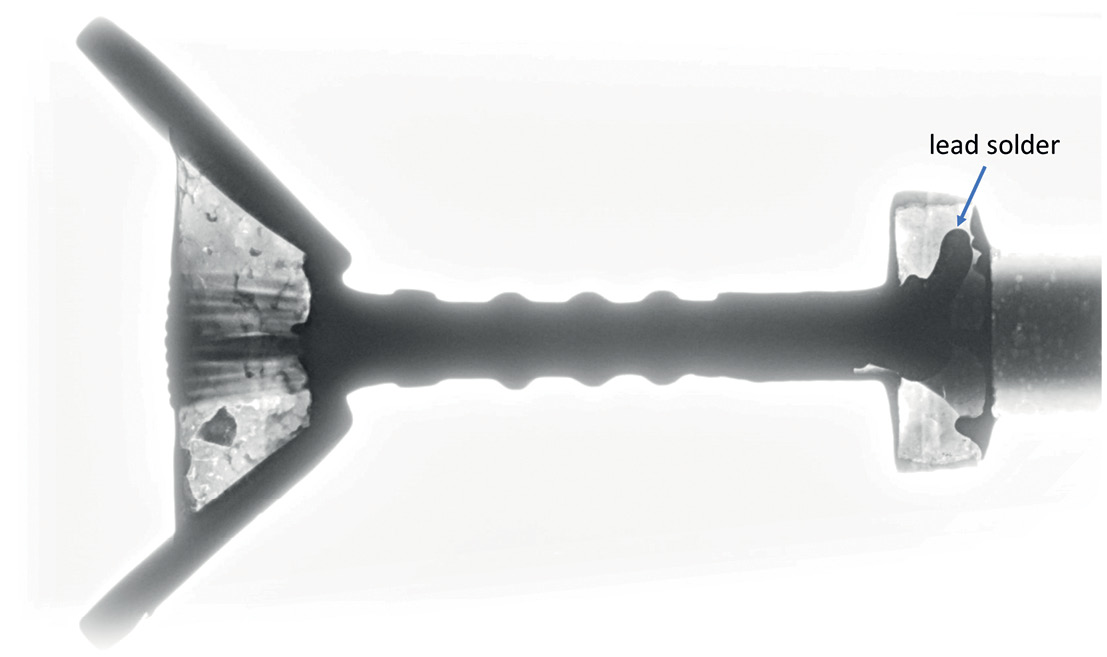
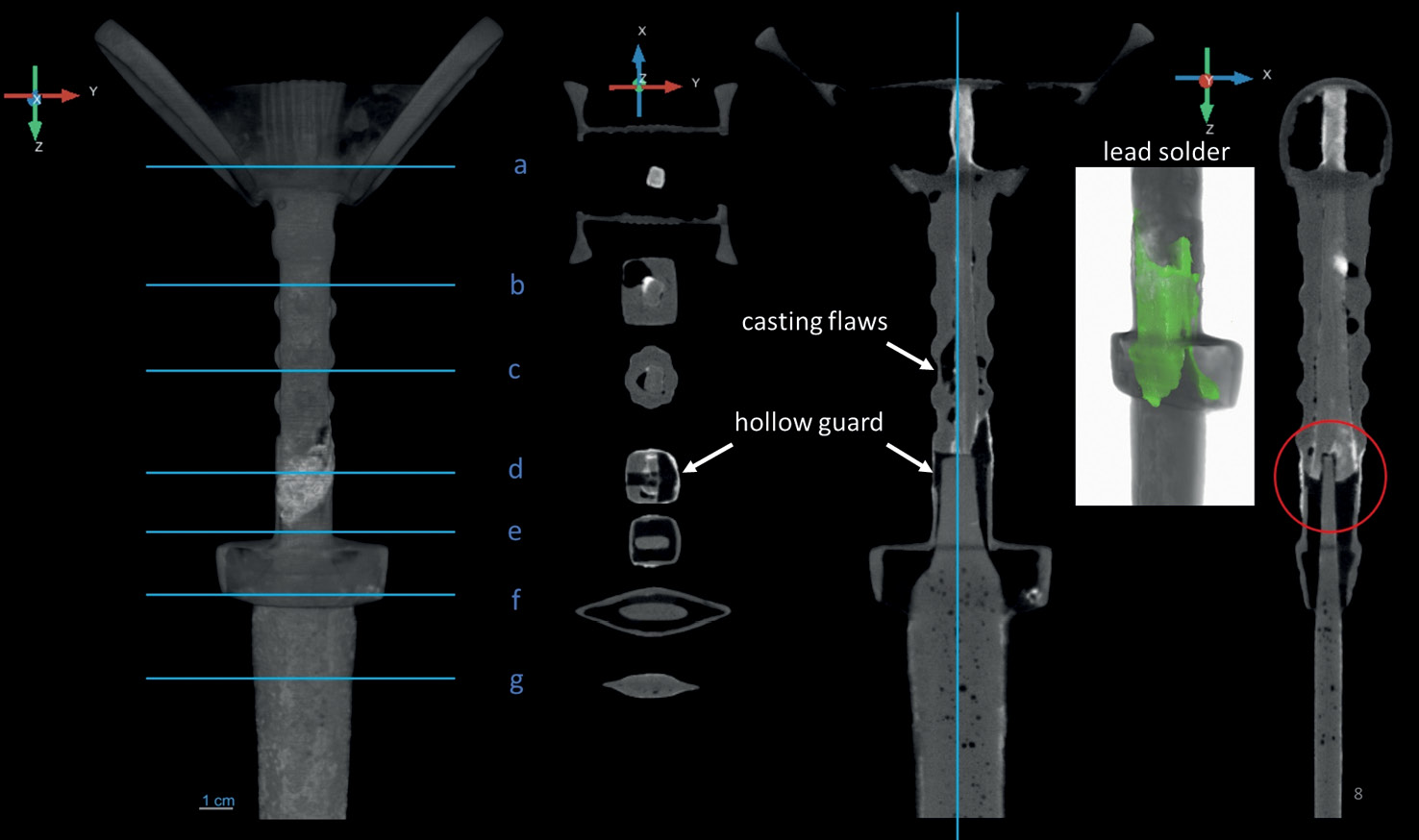
Most documented examples were acquired from dealers and are discussed in the literature in the context of pastiche-making. There can be no doubt that this reliance on objects that have been purchased from illegitimate sources has had a significant impact on scholarly attempts to study these artefacts. For a time, it was even believed that an ‘iron core’ within the bronze hilt was a technological or symbolic feature of split-ear pommel swords. The sad truth was revealed by the presence of lead solder that had been painted green: this had been used in the recent past to attach a bronze blade to a hilt containing iron. Rather than reflecting ancient technology, this was just a way to fashion a complete object that was more likely to sell.

Initial suspicions
My scientific analysis of the nine swords started with a close inspection of them; I was quickly convinced that the blades on at least some of the swords had been replaced. Because of the greenish colour of the metal, I could assume that they were made of a copper alloy. Some of the weapons, though, had tangs that were covered in reddish corrosion, visible when peering through the ear hole of the pommel. Such red corrosion is strongly suggestive of iron, so I used a magnet to see if it confirmed my suspicions. Sure enough, I soon knew that five of the swords had iron in their hilts (AR1, AR2, AR3, AR8, AR9). The presence of an iron rod inside an otherwise bronze sword would not make sense from a technological point of view, and I was aware that multiple examples of swords of this type had been revealed to be pastiches. At this point, I still held out some hope for the swords that did not show signs of iron being present, although the shape of several of the blades did not fit with the standard style of these objects (AR1-AR4). Even more concerningly, dark stains on one of the blades (AR6) were reminiscent of marks made by excess glue dripping while trying to stick something together.
Two of the guards were missing a fork (AR1, AR5) and it looked like one might have been cleanly cut off, leaving a gap between the hilt and the area where the blade decoration began (AR1). The corrosion pattern on the shoulders of two blades (AR1, AR2) was also more consistent with the presence of a different guard shape in the past. Perhaps the most unsettling feature of all was that one of the swords (AR8) had a blade that was rotated at a 90° angle respective to all other known swords of the type.
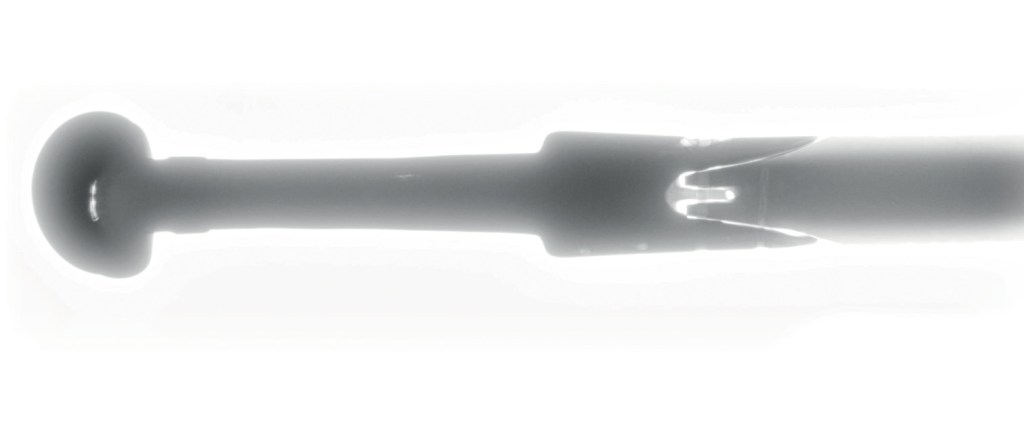
To gain a clearer understanding of these weapons, I started by undertaking quick X-ray radiography at Cranfield. Our portable instrument is designed for medical purposes and is ideal on the battlefield, but it was powerful enough to confirm my suspicions. The hilts did not appear fully solid, and there also seemed to be empty gaps between the blade and the hilt. At this point, I was still just beginning my research and did not feel quite confident interpreting these images beyond observing ‘something is certainly not right: I need to investigate further’. I knew the swords were modified, but how? Was it modern tampering or perhaps ancient repurposing or repair? Performing neutron tomography would be the next step.

Modern technology for ancient swords
Neutron tomography is an imaging technique that closely resembles X-ray tomography, which is commonly used in the medical field and known as CT (computed tomography). It uses a neutron beam to allow us to see inside an object in order to investigate how it was assembled and what features might lie concealed beneath its surface. This method entails rotating an artefact – in this case the individual swords – so that radiographic images can be taken from every angle. Once the images have been combined and computed, they create a dataset providing a 3D representation of the scanned object, allowing it to be virtually sliced in any direction to reveal its innards.
The object is also represented in greyscale (corresponding to numerical values), which visualises the differing ways that materials respond to the neutrons as they pass through. Air, for example, does not interact with neutrons, while the response of metals depends on their atomic composition and density. As a consequence, the presence of different metals within an object will be apparent from the gradation of hue. Neutrons interact with the nucleus of the atom, while X-rays interact with the electrons, which makes these two types of radiation complementary. For example, lead famously protects from X-rays because of its high atomic number, while neutrons easily pass through it. Neutrons are also sensitive to light elements such as hydrogen, which are invisible to X-rays. Unlike X-rays, however, neutrons are only available at a limited number of large-scale facilities worldwide.
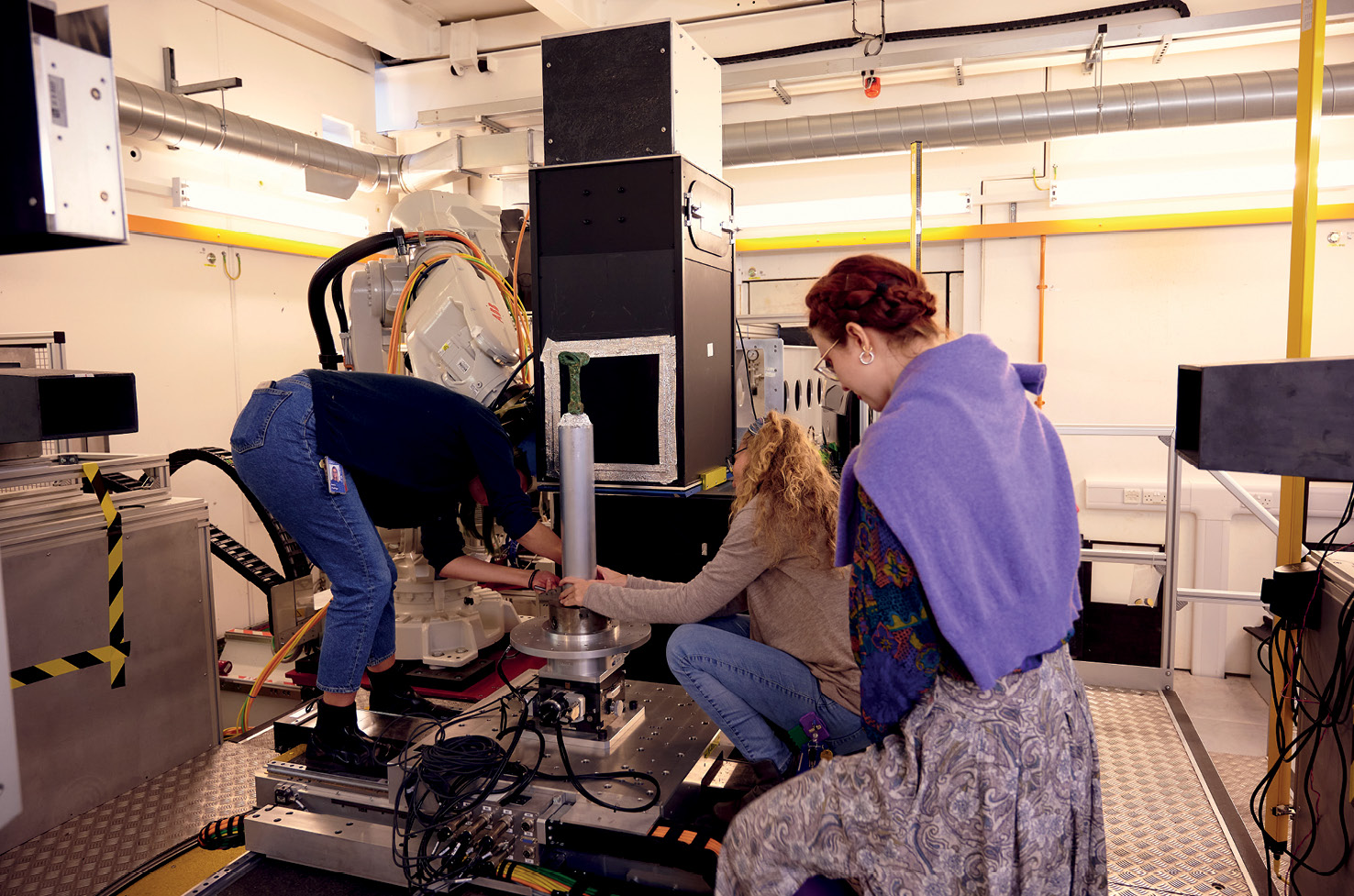
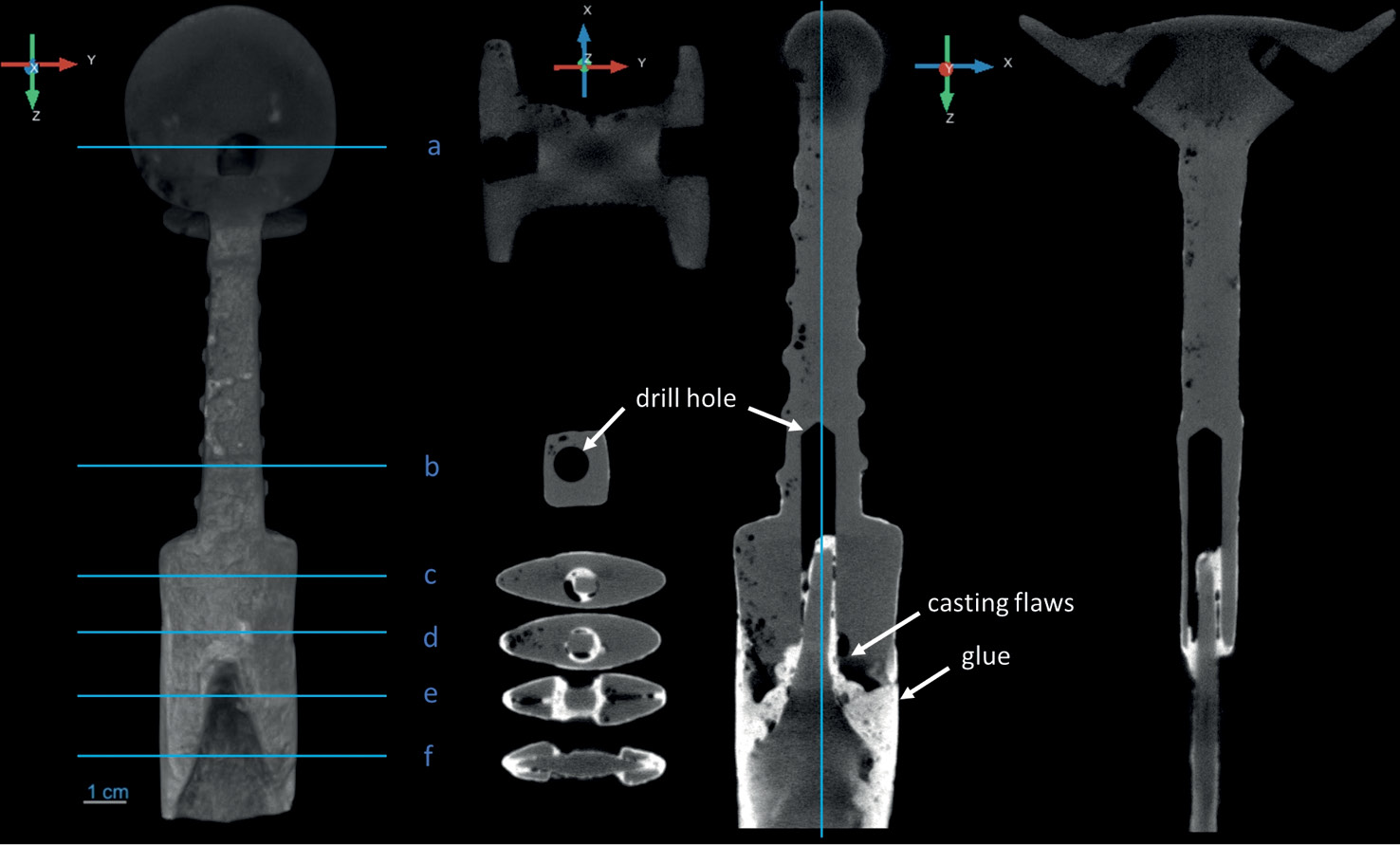
I performed the imaging with an IMAT (Imaging and Materials Instrument) at ISIS Neutron and Muon Source, part of the Rutherford Appleton Laboratory in Oxfordshire. The first sword to be scanned was AR9, which the X-ray radiography had already told me was heavily tampered with. What appeared on the screen after seven hours of scanning – producing almost 800 images that were combined into a 3D reconstruction – was even worse than I had expected. Staring back at me was a modern drill bit embedded in the sword hilt, looking as if it had broken off halfway through some drilling and simply been left inside. The threads on the bit are perfectly visible and if you slice the image to see its circumference you can even see them ‘rotate’.
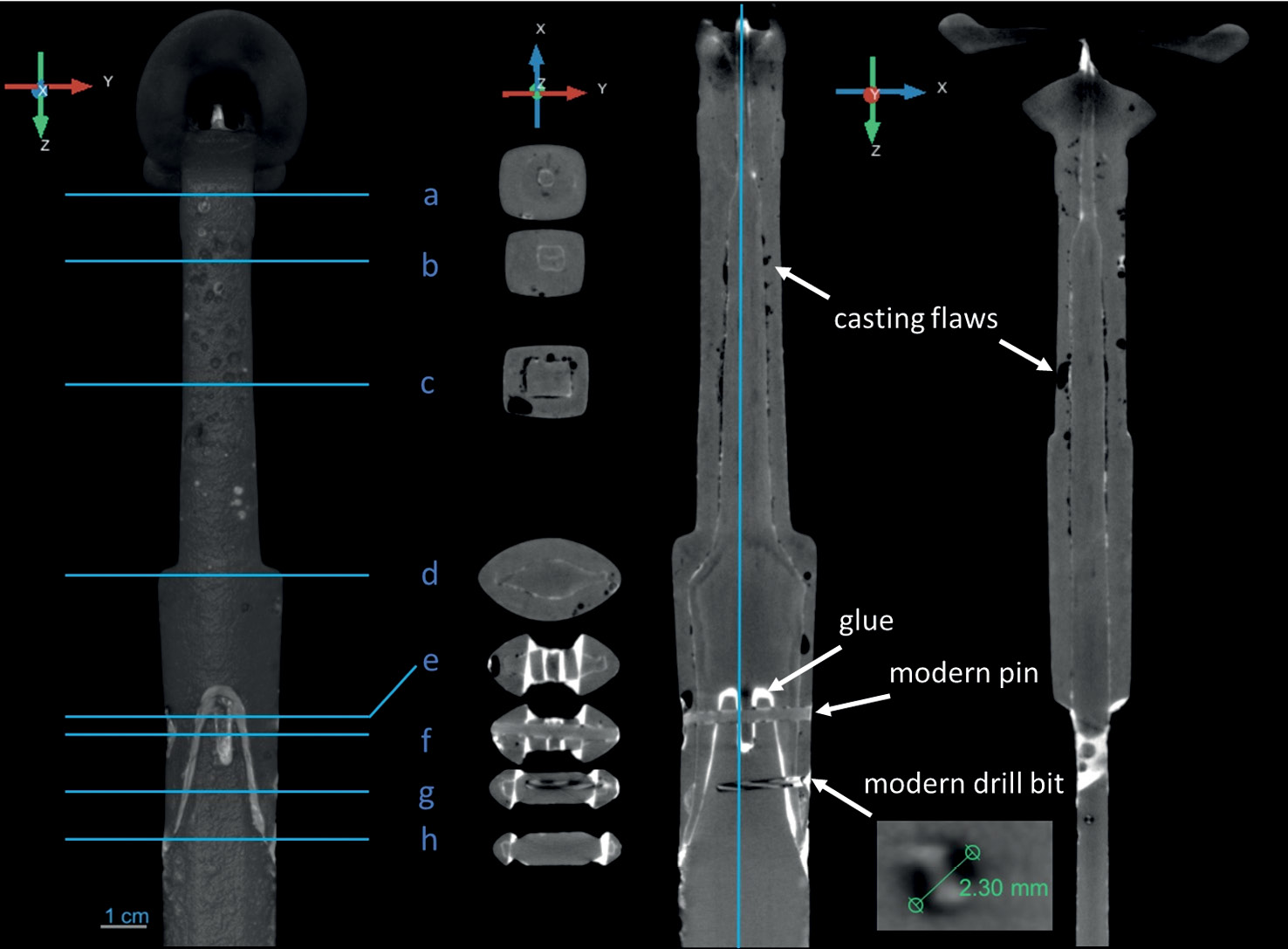
Imaging the remainder of the assemblage of split-ear pommel swords revealed that all of their original blades had been replaced in modern times. This I was prepared for. What I did not quite expect, though, was the means by which most of these objects were held together. In all previous examples discussed in the literature, the blades were attached using lead solder, which could be detected with X-rays. In this assemblage, I only found one blade that had been fixed in place using such solder. As I mentioned, the great advantage of neutrons over other probes is their sensitivity to light elements. In this case, it revealed hydrogen in the form of hydrogen-based glue, which appears bright white in a neutron tomography image. This showed how the pastiches were put together: a hole was drilled in each hilt, and the bronze blade was then inserted into it, with glue used to keep it in place. While some drill holes were perfect in circumference, others had run into large voids in the hilt, which changed the shape of the final drilling.
Another interesting feature that was highlighted with neutron tomography was the corrosion present on both the surface of two objects (AR8 and AR9) and inside. This affected not only the part of the iron tang that can be seen through the hole in the pommel: the remainder of it, enveloped in bronze, was covered with a thin layer of corrosion as well.
Finally, I could see how well the swords were cast and appreciate the differences in the quality of the cast. This was something that was mainly determined from the presence and quantity of bubbles, which are considered casting flaws. Their alignment within the object should also tell us about the direction in which the object was cast.
From an archaeological point of view, the most troubling thing about these discoveries is that five of these swords were originally bimetallic, with iron blades and copper-alloy hilts. These iron blades were then replaced with bronze ones, probably also ancient, by the pastiche makers. This fact, alongside what is known from previous studies of objects modified for the illicit market, shows that we are dealing with a precedent. The true nature of the extent of bimetallic technology in Iran during this period is being obscured by these illicit modifications – changes brought about purely as an attempt to increase the modern commercial value of these objects to potential buyers. As iron corrodes much faster than bronze, it is not uncommon for archaeologists to find bimetallic swords with iron blades that have either completely corroded away, or been reduced to a small rusty stub. Such a weapon does not make for an attractive display piece. However, if someone stumbled on a cache of ancient weapons (most likely in a grave), they might find singular bronze blades among the swords, perhaps deposited in this manner, or missing wooden hilts that had rotted away over the centuries. It is these blades that could then be used to render our swords complete. Strangely, the fully bronze swords did not escape the fate of their bimetallic sisters. We can only theorise on why that might be the case. Perhaps their blades were already damaged when the swords were put into the ground almost 3,000 years ago. Or the explanation could be more dramatic, and they were broken during illegal excavations conducted under the cover of darkness. Whatever the explanation may be, someone decided that these swords needed new blades too.
Such metallic objects… should be viewed with caution… The risk of them having been altered is high.
Future research
This study raises further doubts about the authenticity of Iranian swords in museum collections, especially those acquired through purchase or donation. While they are often not on display (which might have something to do with their dubious provenance), they do appear in online museum collection catalogues, where they can be accessed by the public and researchers alike. Any metallic object that does not come from a controlled excavation should be viewed with caution. It is hoped that this study will serve as a warning to anyone considering buying such ancient artefacts. The risk of them having been altered is high, and if the cases involving the Border Force in recent years are anything to go by, more looted or fabricated antiquities are likely to make their way to the UK.
While this paper has focused on exposing modifications to the swords, and how they were perpetrated, it is far from the only thing that we can learn from these objects. Even though the pastiche makers did so much damage, luckily the iron tangs still remain inside the hilt, sometimes accompanied by the shoulder of the blade as well. I am currently preparing a publication where I will discuss how the swords were made, combining what can be seen using neutron tomography with information gathered from neutron diffraction. This second technique allowed me to analyse the iron hidden within, without doing any further damage to the swords. There was more to learn about the bronze as well, including its elemental composition, how it was cast, and how the various components of the sword were assembled. Despite what these ancient artefacts have undergone in recent years, when studied with care they still offer an invaluable source of information about the technological knowledge and sophistication of their ancient makers.
Further Information:
Alex Rodzinka, PhD candidate, Cranfield University (www.cranfield.ac.uk).
This article is based on a paper published in the Journal of Archaeological Science by A Rodzinka, A Fedrigo, A Scherillo, A Shortland, St J Simpson, and N Erb-Satullo (available open access at https://doi.org/10.1016/j.jas.2024.106018).