Subscribe now for full access and no adverts
One thing is certain about the recent discovery of the erstwhile Tomb of Thutmose II: no one was expecting it! It is true that his was one of the few unknown tombs of the Eighteenth Dynasty, but as his mummy was thought to be one of those rehoused in the Deir el-Bahri cache, it was assumed that his ancient tomb had been emptied and probably reused.
But now we have a tomb, consisting of four chambers and two corridors, that has been positively identified as belonging to the king – and a possible location for a second tomb that may actually be his final resting place. So how did these momentous discoveries come about?
The Western Wadis
The Valley of the Kings, Deir el-Medina, Deir el-Bahri, and the Valley of the Queens are all famous sites to the east and south of the al-Qurn mountain, visited by many tourists. However, the western side has previously received much less attention, and its valleys have perfunctory names like Wadi 300, Wadi A, Aa, Ab, C, D, and so on. There are few landmarks other than rocks, more rocks, and the occasional footpath or cave, but now we know this landscape intimately.
The New Kingdom Research Foundation, in collaboration with the Egyptian Ministry of Antiquities, has been exploring the Western Wadis of the Theban Mountain for the past 12 years, investigating cracks, crevices, and tunnels on the less famous side, and documenting archaeological remains for publication. The west of the mountain is rich in material from several periods that seem to be separated by gaps when the area was uninhabited.

The earliest signs of habitation date to the Early Pleistocene (100,000-400,000 years ago), when pre-sapiens humans littered hand-axes around the shores of a large lake that filled the area. After something of a gap, the lake re-formed and, during the mid-Pleistocene (40,000-80,000 years ago), was the focus for a group that made heavy spear-like points from a pre-shaped (Levallois) core. During the last Ice Age, the lakes dried up, and the area was very arid until global warming, around 10,000 years ago, re-formed the lakes at a lower level. Once again people were attracted to the lake shores and flint for tools, depositing tools characteristic of the Holocene. In time, these lakes drained and there was little activity in the mountain area until the Eighteenth Dynasty, when there was a sudden expansion into the mountains, and a pathway leading 40 kilometres across, that came into regular use.

Climate change
The New Kingdom remains include tombs, huts, wells, roadways, and hunting shelters, and thousands of examples of graffiti. But why did people come here and why did they describe their cemeteries as ‘beautiful places’? The area now is arid and there is little to hunt, but contemporary images depict the deserts as full of vegetation and teeming with game.
In the early days of our explorations, we met the odd jackal patrolling the mountain, and heard their eerie singing early in the morning. There were some trumpeter finches and the odd gerbil, but not much to entice one out for a carriage ride along the ancient road. And why build tombs 7-8 kilometres out into the mountain, when there were plenty more rocks nearer at hand? Recent winters have been much wetter and there has been a corresponding increase in wildlife, including snakes such as the Saharan Cliff Racer. Is this re-wetting of the desert a clue to what enticed people there in the New Kingdom?

The evidence is always blurred, as almost every New Kingdom site in the western mountain was reused during the Roman Period. Most of it seems to be from the late 1st millennium, possibly the activity of Coptic monks and nuns who were connected to the city of Jeme (or Djeme), which was itself built in the ruins of a New Kingdom temple at Medinet Habu. Documents from Jeme and monastic tales describe how monks scratched a living from the mountains. One such monk, called Frange, lived in TT29, the Tomb of Amenemopet, called Pairy. In Wadi 300, we found a comparable Late Roman dwelling reusing a New Kingdom tomb as a storeroom. It had several other rooms, including a stall for sheep or goats, and a large terrace. Eroding from the surface of the mud terrace were the tell-tale bones and mummy-wrappings of their ancient predecessors, who had been turned out of their tomb.
Similarly, at Wadi Bairiya, where we found a group of family tombs for women of the royal household of Amenhotep III, the Romans had moved in afterwards. The tombs contained canopic jars that had biographical details of these queens and princesses, but these had been chopped up with chisels by a state-sponsored mission, before being burned. Was this an attempt by Amenhotep’s son Akhenaten to destroy the memory of a rival family?
Now we have a tomb… that has been positively identified as belonging to the king.

Written evidence
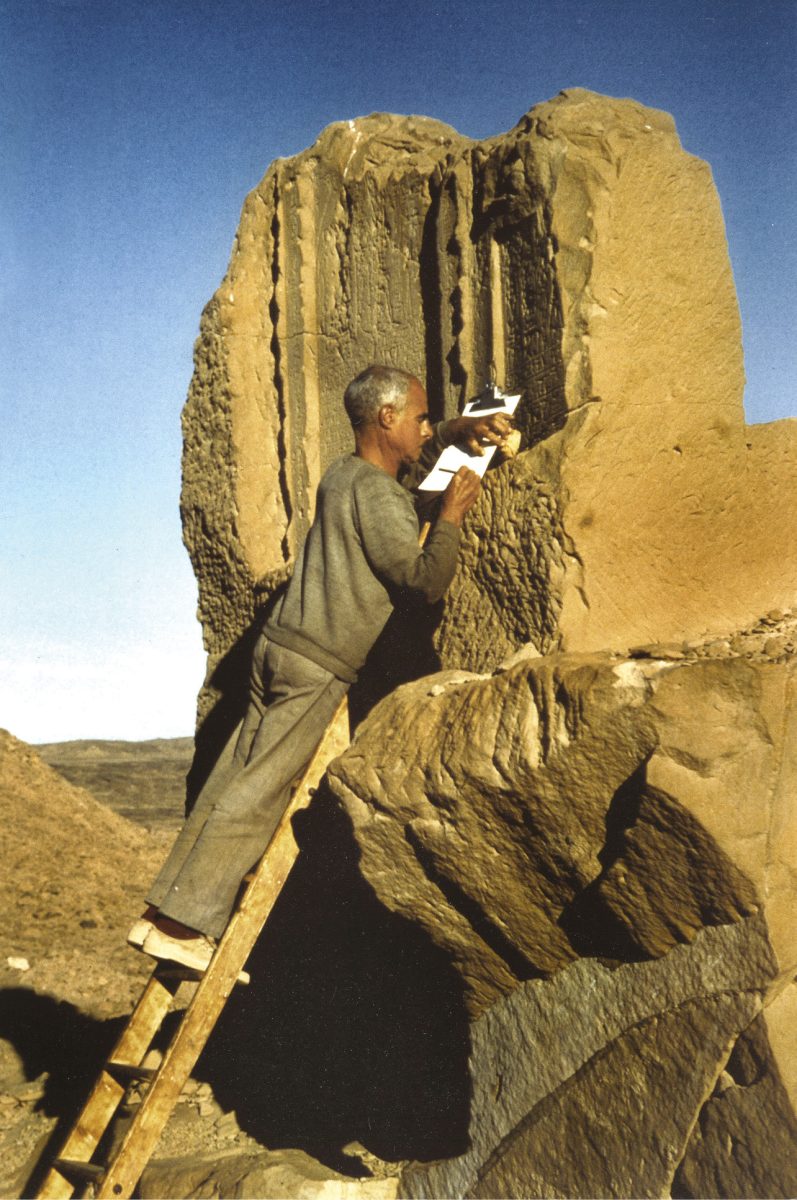
In the New Kingdom, we can add textual information from others who knew these mountains intimately. Among them is the architect Ineni (TT81), who worked for both Thutmose I and Thutmose II, and who boasted about the measures he had taken to conceal the burying places, covering them with ‘fields of clay’. Next, we have the records of one Butehamun who, during the Twentieth Dynasty, visited all these wadis and may have been part of the rescue mission sent out to find the tombs of the kings and bring them to the cache at Deir el-Bahri (TT320). Since I am a geologist, Butehamun is my constant companion, as he jotted notes on the rocks to say that he had checked this or that wadi, particularly favouring the geological layer into which the tombs of the Valley of the Kings and the Valley of the Queens are cut.
Mummies and wasps
The fact that the same sites were occupied in both New Kingdom and Roman times made us wonder whether the Coptic monks had a fascination with mummified bodies, or if there was another factor that drew them to the places used by people who lived nearly 2,000 years before. The monks certainly lived intimately with the remains of their New Kingdom forebears. In contemporary tales, we hear of a monk, taunted by a demon, who claimed he was afraid of the mummy within his cell. The monk protested, first knocking on the chest of the mummy, and then using its linen-clad body as a pillow. Years passed, and when, in due course, the monk decided to move on, his mummified companion appeared to him in a dream, imploring him to remain and keep him company.

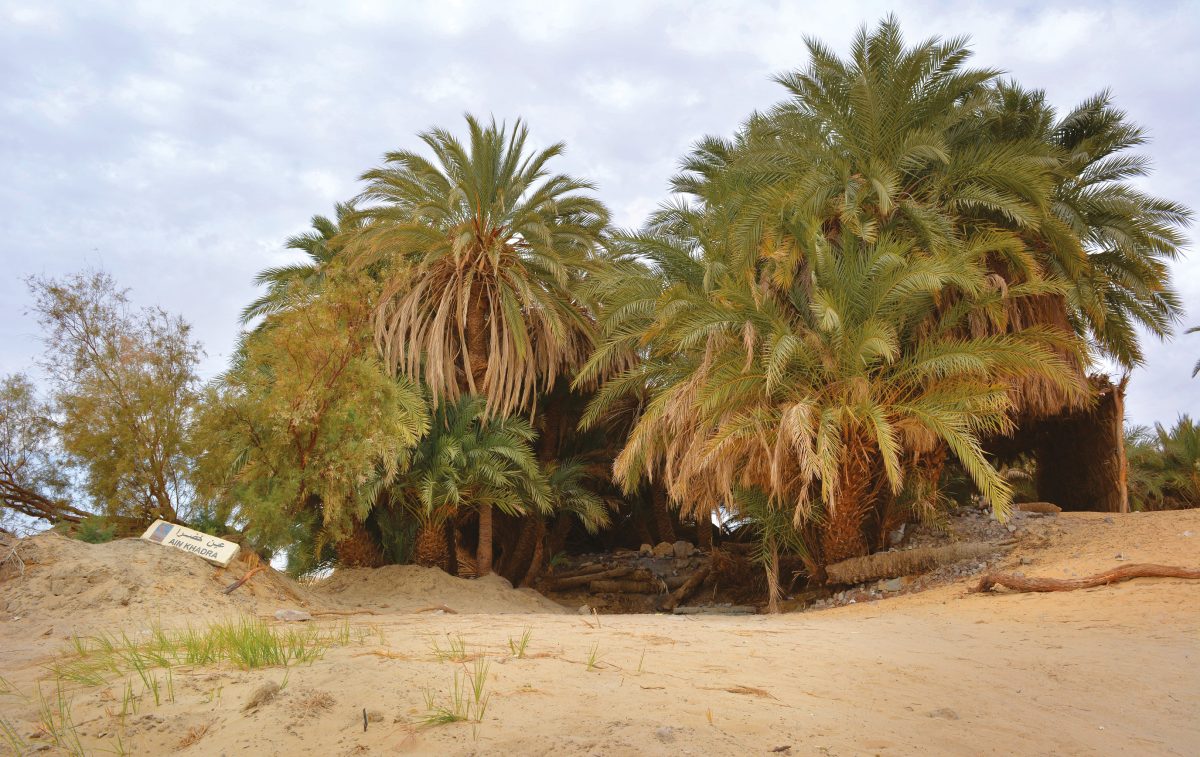
However, the desire to sleep on a mummy did not seem a sufficient reason to travel far out into the desert, carrying water up to 14 kilometres. We began to suspect that the chief attraction of the area was the presence of mountain springs, now dry, but flowing during periods of global warming. The springs that brought the New Kingdom mourners to specific ‘beautiful places’ in the desert later attracted the Coptic monks. While this was an interesting theory, it seemed impossible to prove until we received assistance from an unexpected quarter – the mud wasps.
Mud wasps in Egypt drink nectar from local plants, and then collect wet mud to build their nests on the rock-face. They catch and paralyse insects, and place them into the mud cell with their egg. When they hatch, the larvae of the wasps eat the insects and mature, breaking out of their cells ready to fly to another damp patch to make their own nest. Many of the tombs and hermitages contained the tell-tale mud cells of the wasps, indicating that there must have been wet mud within 100m of them. As the mud wasp nests coincided with the location of the Coptic sites, this implies that the places were chosen for their occasional springs, which were sufficient to sustain the monks and their sheep or goats, at least seasonally.

A New Royal Tomb
Ten years into our exploration, we were beginning to understand the patterns of activity in the mountain. We had re-entered and cleaned a number of tombs, some of them never before described, but none of these was the tomb of a king. The site Wadi C, which is prone to water damage, does not seem a particularly suitable place for a king’s burial, but the neighbouring Wadi D was the scene of a spectacular find in the early 20th century – that of the tomb of the ‘three foreign wives of Thutmose III’. This was a burial in a watercourse, discovered by the residents of nearby Qurna. It was rich in golden finds, although all the wood and textiles had rotted away due to water damage.

In Wadi C, we explored a cliff tomb said to be that of Neferura, the daughter of Thutmose II and Hatshepsut, tidying up the area and exploring the various foundation deposits in the floor of the wadi. There were many New Kingdom graffiti, but nothing to indicate another tomb until, in one of the ‘foundation deposits’ in the corner of the wadi, a large square hole began to emerge, with steps going down and down. As the area was known to be the burial site for royal women of the early Eighteenth Dynasty, we believed we had discovered the tomb of a royal wife or daughter.

As excavation work began, we realised that the area had been a trickling stream, and that the tomb seemed to have been placed deliberately under or beside the flowing water. However, not long after its construction, the water flows increased, bringing down large quantities of rubble, and cascading into the tomb, covering the tomb mouth with a pile of rock and mud more than 1 metre in height.
Excavation proceeded slowly, with limestone and rock dust set solid, almost like concrete. Eventually, the team excavated 16 steps leading into a corridor. The first room straight ahead (Chamber D) was filled with collapsed rubble, but there was a rough corridor leading to the left. The director, Piers Litherland, crawled over the rubble in the second corridor to explore the chambers ahead. On the chunks of fallen limestone, sharp crystals, like thorns, had grown on the rock, cutting his hands and clothing as he edged forward. At the end of the tunnel, a chamber opened out (Chamber A), and there he could see the remains of plaster, and a blue star-painted ceiling accompanied by a piece of a kheker frieze. Returning to the surface, Piers was so overcome with emotion that he burst into tears! The signs were that this was a previously unknown tomb of a king. Which king, we did not know.


Work continued at a slow pace, removing the tonnes of rubble that had fallen from the ceiling in Chamber A, including more parts of the painted ceiling, and a section of the Amduat funerary text which, in the New Kingdom, was almost exclusively reserved for royalty. At the base of the deposit was a thick layer of silty sediment, apparently the result of flooding, and the cause of the catastrophic collapse of the tomb ceiling which had filled all four interconnected chambers with rubble.
The second corridor appeared to have been built after the main tomb structure, but as it had been plastered, enlarged, and blocked and re-blocked, it could not have been a tomb robber’s tunnel. It became clear that, after the flood, the body of this king had been carefully removed from the tomb, possibly because of the flooding. The additional corridor had been excavated and plastered to ensure the safe removal of the body from above flood level. Almost all the grave goods had been removed with it, but there were a few broken fragments of alabaster that were to give a clue to the name of the king.


Identifying the king
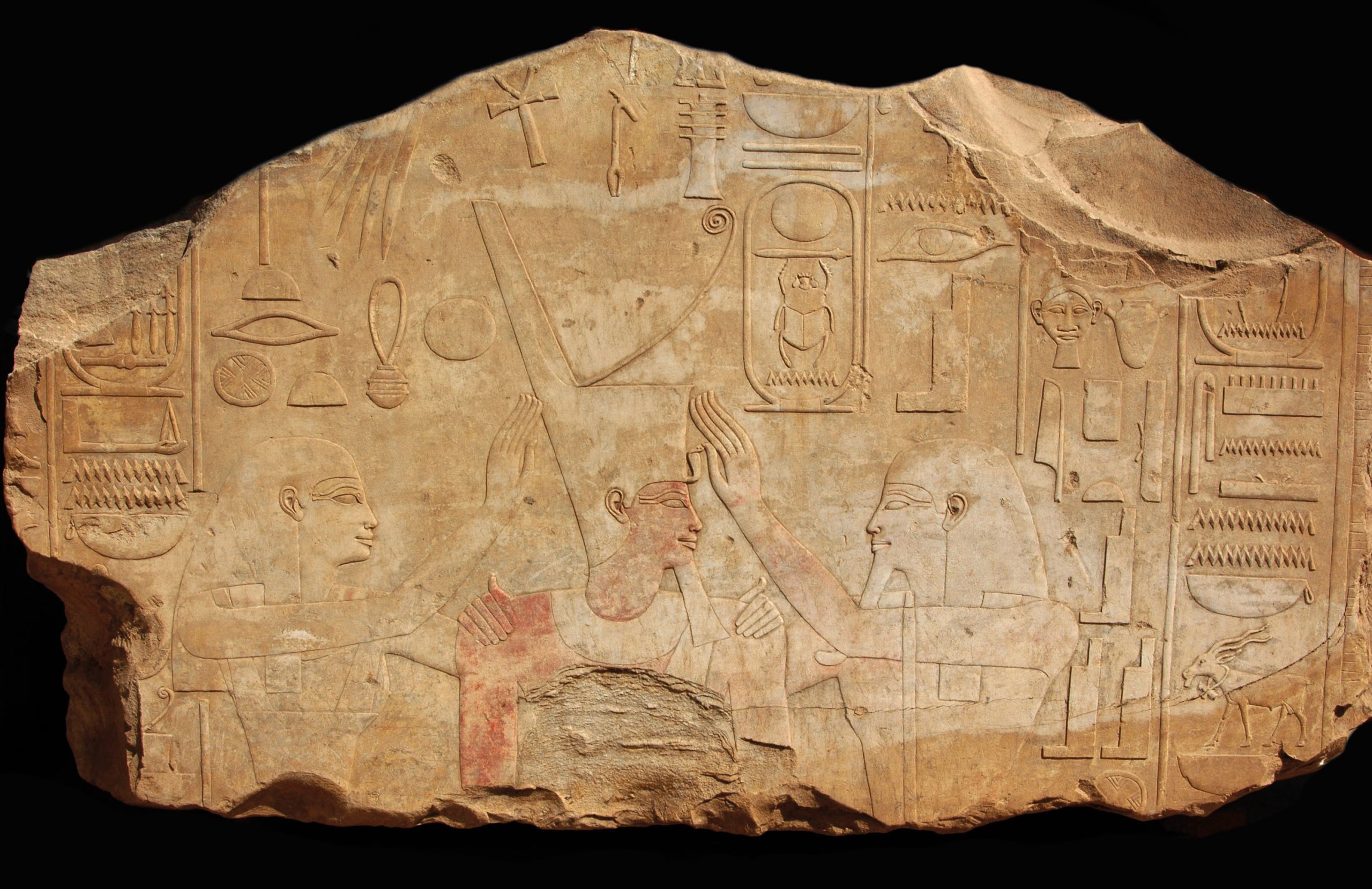
The alabaster fragments were from duck-shaped vessels and a large jar. Over a period of weeks, the fragments emerged and we started to piece together the name from part of an inscription. It was definitely a Thutmose from the beginning of the birth-name: ‘Son of Ra, of his body, Thut[…]’, with the throne name ‘Aakheper[…]ra…’. This could be either Thutmose I (Aakheperkara) or Thutmose II (Aakheperenra), but we did not have enough to know which one.
The team studied every inscription they could find of any of the Thutmose kings hoping to find stylistic clues, even spending the afternoon photographing all the cartouches we could discover in the Luxor Museum, but to no avail.
But then we found a final fragment of alabaster, around 2 centimetres wide, that gave us the clue we needed: the inscription ‘great chief wife his beloved… Hatshepsut, may she live…’. The king could only be Thutmose II, and we had the only known grave goods from his burial. If the mummy had been taken out with his other grave goods, none of which are known, where had they been taken? Was the mummy recovered from the Deir el-Bahri cache, and said to be that of Thutmose II, really that of the king, or of someone else?


Suspicion has often been cast on the identity of this mummy, now in the National Museum of Egyptian Civilisation. As we understand it, the king was very young when he came to the throne and did not live long enough to be as old as the mummy attributed to him. It seems that, having been flooded and then exhumed from his original tomb, Thutmose II, with the majority of his grave goods, was reburied elsewhere.
A second tomb?
We do not yet know for certain the location of this final burial, but the team has come across a large 23-metre-tall mound of limestone and rubble nearby, which we believe could have been constructed to conceal the entrance to a tomb. It will take more than a month to excavate this mound, however. So I look forward to future seasons of archaeology, and we will continue to hold our collective breath as we wonder whether we will find the treasures of Thutmose II.

Judith Bunbury is a geoarchaeologist and Senior Tutor at Wolfson College, Cambridge, as well as being a member of the New Kingdom Research Foundation. Her research focuses on the long-term movement of the Nile and evidence for ancient landscape and climate change in Egypt and elsewhere. In addition to her research articles, she is author of two books on the Nile.
Further reading:
• R L Burchfield (2014) Networks of the Theban Desert: social, economic, and religious interactions in Late Byzantine and Early Islamic Thebes (doctoral dissertation, Macquarie University).
• P Litherland (2015) The Western Wadis of the Theban Necropolis (London: New Kingdom Research Foundation).
• D L B Hedstrom (2017) The Monastic Landscape of Late Antique Egypt: an archaeological reconstruction (Cambridge University Press).
All images: the author, unless otherwise stated

You must be logged in to post a comment.