Subscribe now for full access and no adverts
Many have heard of a people referred to as the ‘Shasu’, since they are sometimes identified with the Israelites of the ‘Egyptian Captivity’ and/or their later descendants in Canaan. The term (meaning ‘to wander’ in ancient Egyptian) has come to be understood as referring to nomads or Bedouin from the area of Syria–Palestine. However, what the ancient Egyptians themselves meant by ‘Shasu’ is hotly debated. The term read as ‘Shasu’ in English is rendered from hieroglyphs, using the standard transliteration, as š3sw (=Sh+a+s+u).
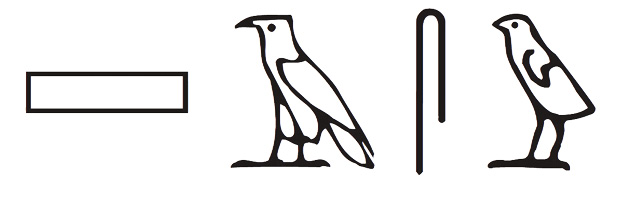

The original meaning of the term is not clear, but it may have been ‘pastoralist’ or ‘plunderer’. The earliest known occurrence of this term is still uncertain. It may date back to the Old Kingdom, but only became commonly used during the New Kingdom. It has been suggested that the term may occur as part of a damaged text next to a fallen ‘Semite’-type figure in a scene appearing on the causeway of the Fifth Dynasty funerary complex of Unas (c.2375-2345 BC) at Saqqara. This scene, carved in relief on a single block, depicts six Egyptian and foreign figures fighting each other. To the left of the aforementioned Semite figure appear the hieroglyphs sw+w that form the end of a word (‘su’); the beginning has been lost due to damage to the block. However, in this damaged region, there would have been space for the requisite hieroglyphs for ‘Sha’.
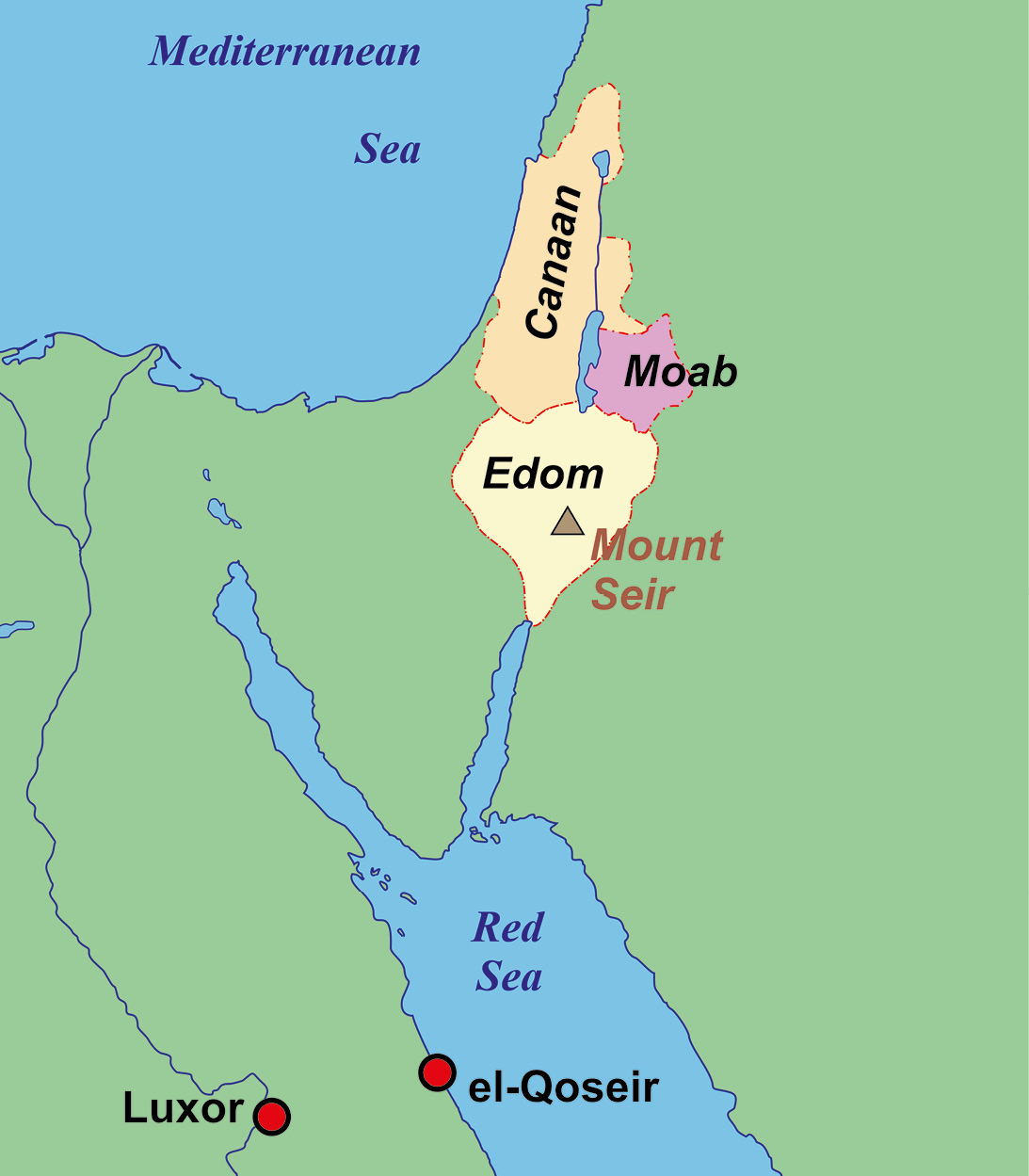
Alternatively, it is proposed that the term is first known from the reign of Thutmose II (c.1492-1479 BC), and that the preceding Hyksos Period was a logical time of origin for the introduction of a new term referring to an Asiatic people. This is because it was initially thought to have referred to the Semitic Bedouin of southern Palestine and Transjordan, especially the region of the ancient kingdom of Edom.
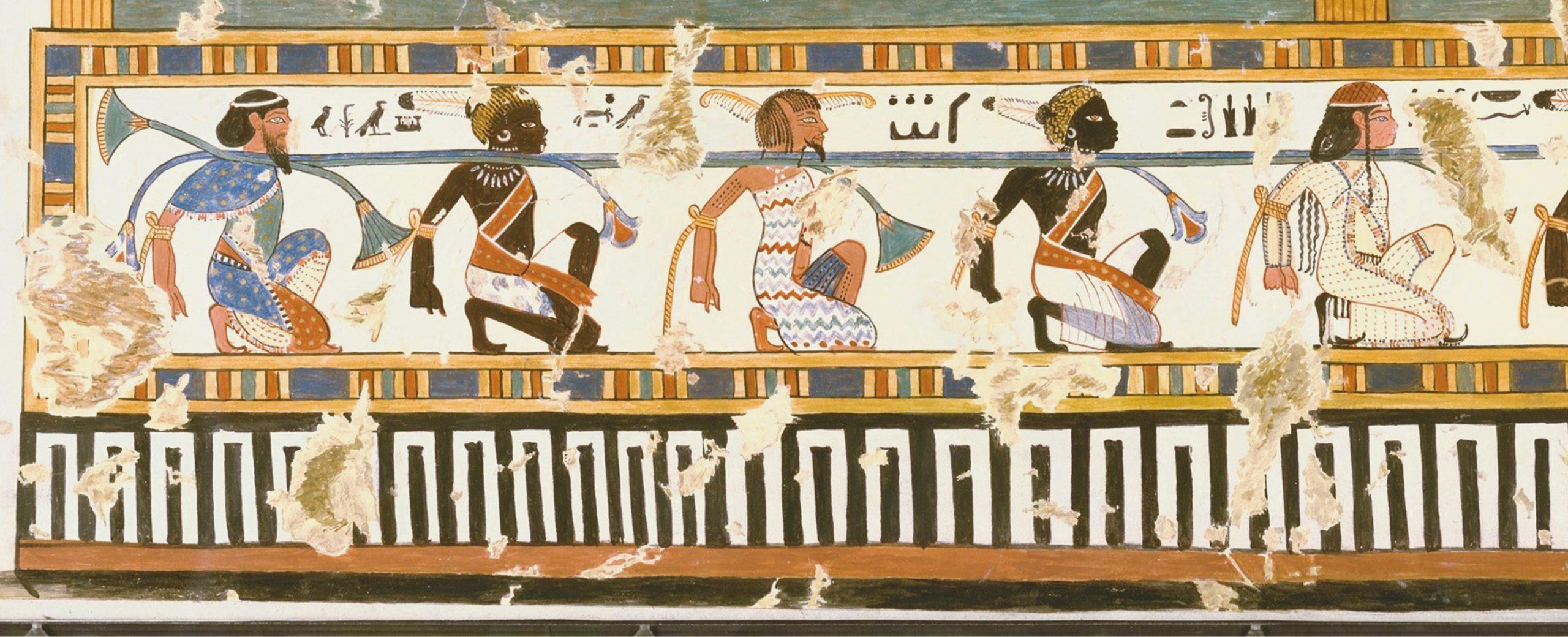
Later, the term ‘Shasu’ came to be used for Bedouin in general, not just those of a particular region, and also for all the enemies of Egypt originating from the east. The term, employing the latter meaning, appears twice on the Ptolemaic temple at Edfu. Further, in a collection of letters found at the Temple of Amun at Thebes, dating from the Twentieth Dynasty (c.1186-1069 BC), there is a reference to the Shasu from a land near the Red Sea coast – a place known to be in the area of el-Qoseir. In order to make this usage consistent with that referring to more northern areas, such as Transjordan, it was suggested that an originally Edomite Shasu may have migrated south following their defeat by Ramesses III.

Nubian connection?
However, the term ‘Shasu’ may have also been used by ancient Egyptians of the Eighteenth Dynasty to refer to an even wider range of peoples, including those of the far south. There is a contested reference to the Shasu in texts from the Nubian forts of Semna and Kumma, where possibly both the god Khnum and the pharaoh Amenhotep II are referred to as the ‘smiter of the šs3w’. However, this interpretation requires the assumption that the hieroglyphs rendered as šs3w may be considered phonetically equivalent to š3sw. Hence, it has been suggested that, instead, this particular epithet actually means ‘smiter of antelope’, since this occurs more commonly elsewhere in Nubia associated with Khnum.
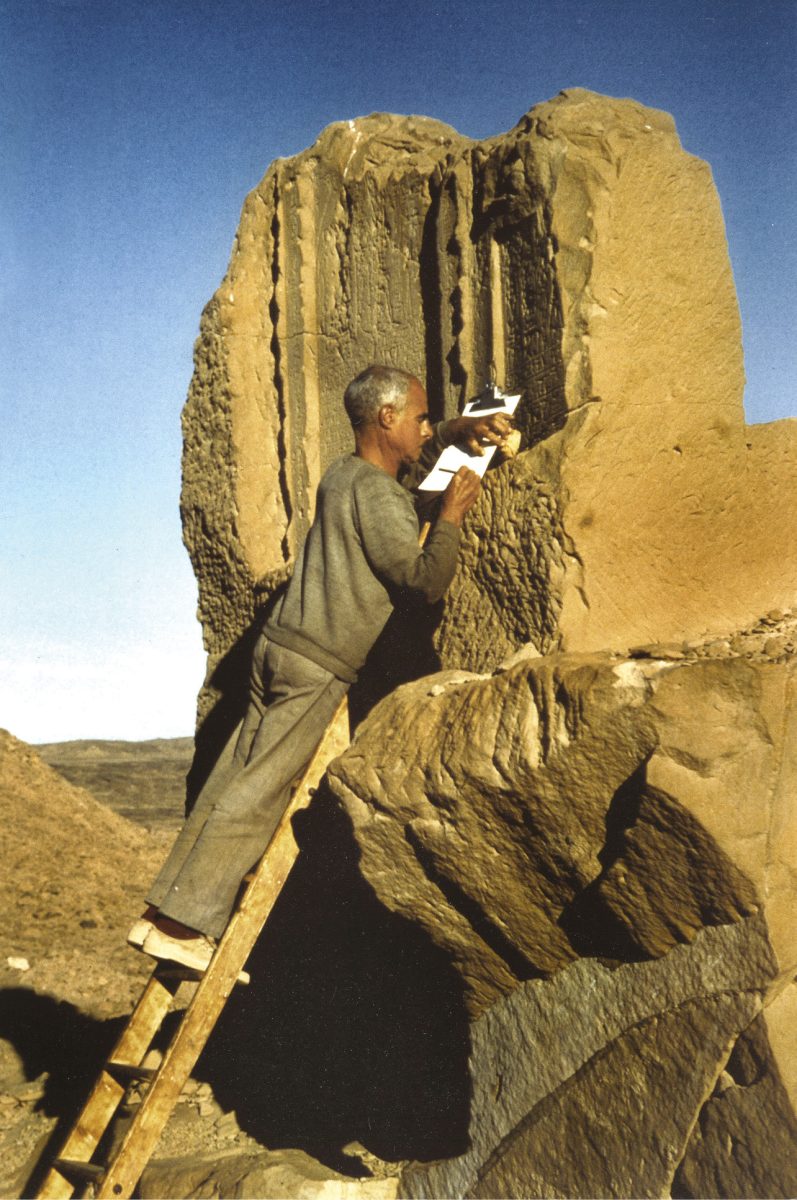
Perhaps the most famous occurrences of the term ‘Shasu’ are those in the Nubian temples at Soleb and Amara West, in an inscription that may include the earliest attestation of the Tetragrammaton (four-letter name) of the Israelite god: YHWH (Yahweh). The temple built at Soleb by Amenhotep III was dedicated to Amun and celebrated the so-called ‘Sed festival’ (Heb Sed) of the king.
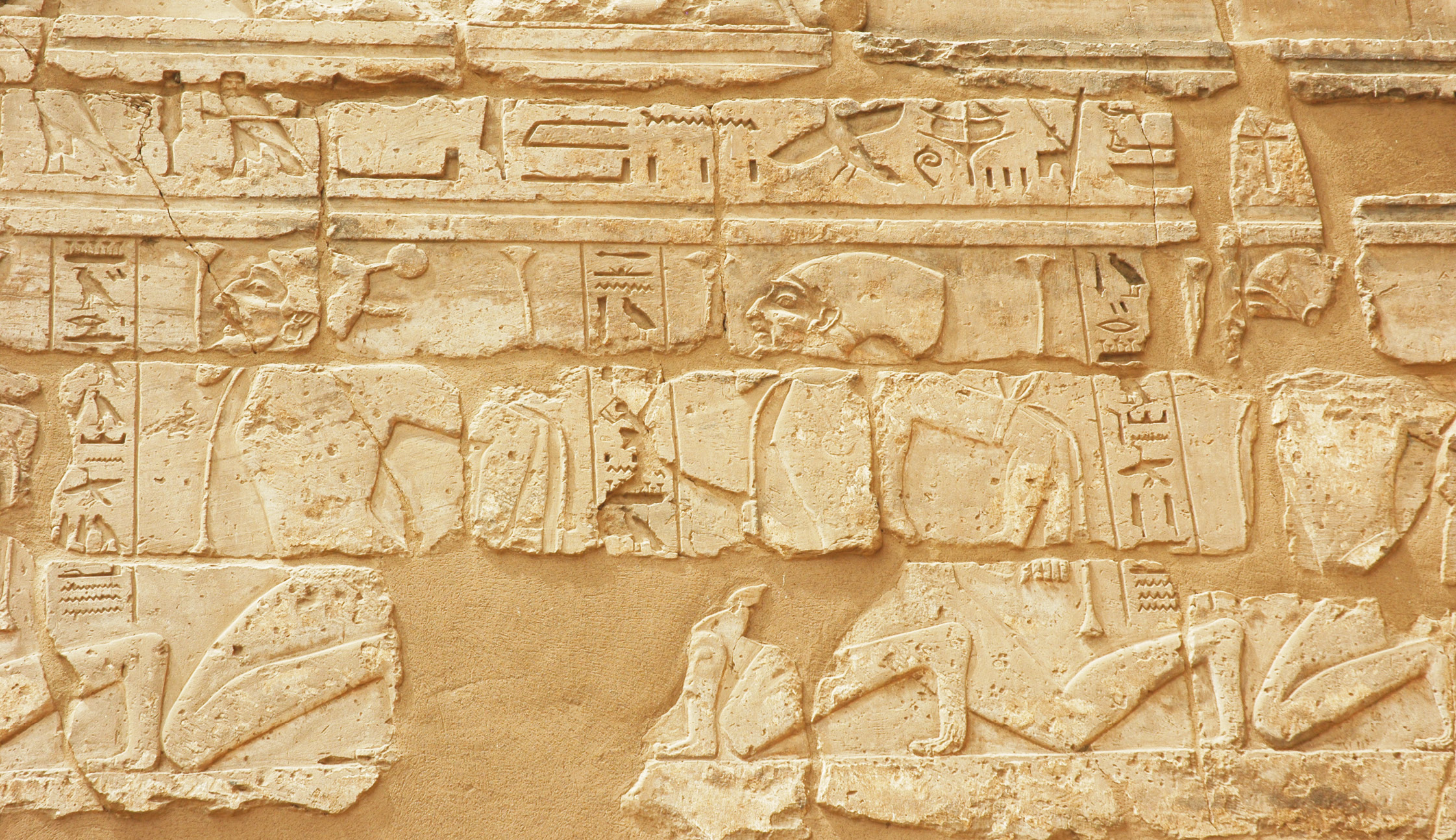
The temple contains two lists with names of foreign places and peoples that include the term ‘Shasu’. In both cases, the word for Shasu is preceded by the hieroglyph T3 (‘land’). These texts are typically interpreted to refer to ‘the land of the Shasu’, followed by a proper name of some sort, one of these names being Y-h-w […]. The second instance of the term ‘Shasu’ with the Tetragrammaton at Soleb was found in the hypostyle hall on column IV N4. The various individual columns in the hall each have eight to ten names inscribed on them, and each represents a specific geographical or geopolitical area of the world known to the Egyptians. The writings on column N4 (left half) are:
a1 T3 š3sw T-r-b-r
a2 T3 š3sw Y-h-w
a3 T3 š3sw Ś-m-t.
a4 destroyed

However, there are large gaps in the list, with the text below destroyed. The poor level of preservation of the texts means that the intention behind their organisation is not clear. In addition, while each column contains mirrored partial lists, several mistakes were made by the sculptors when they transferred from their template to the lists.
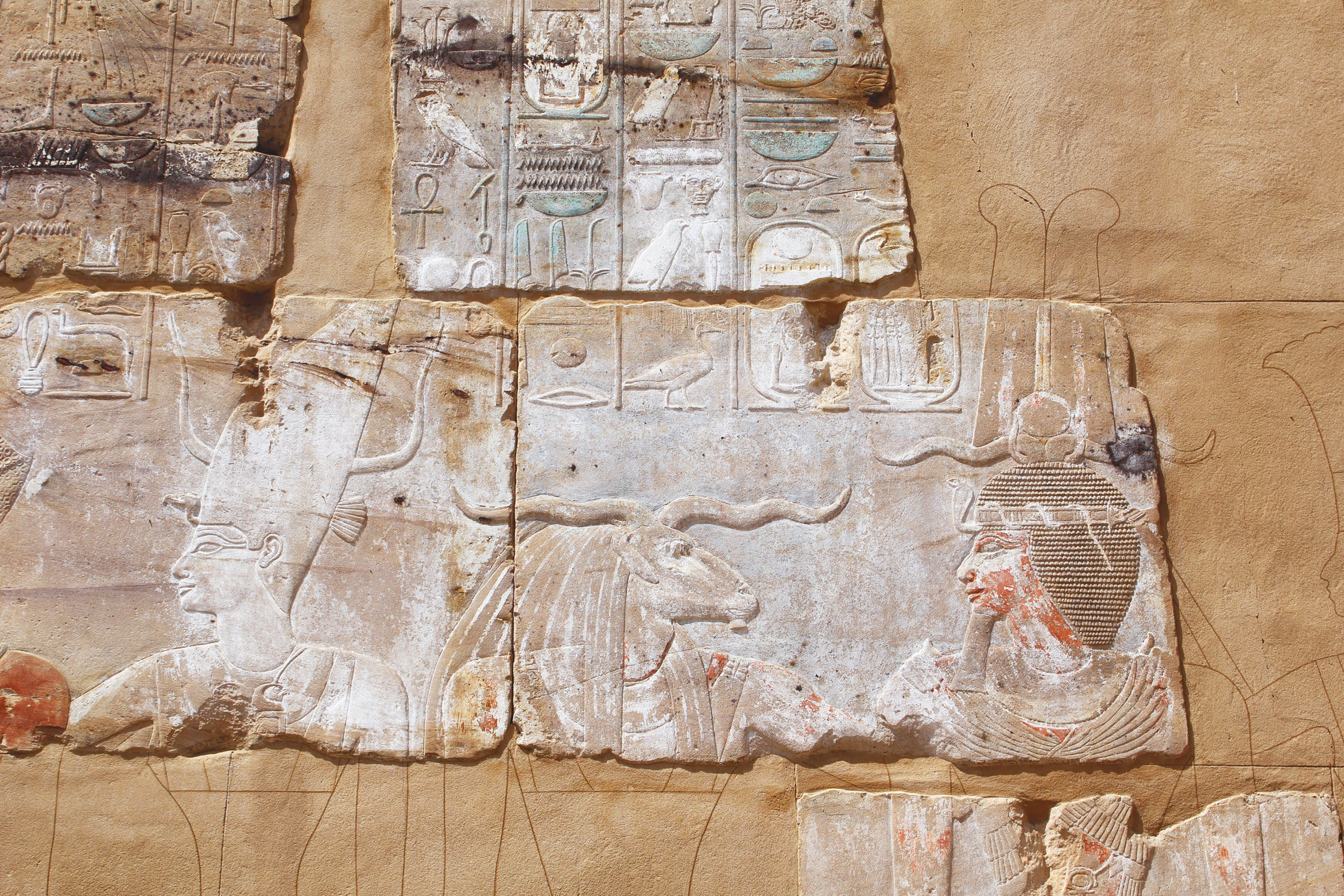
About 50 km north of Soleb is the settlement and nearby temple at Amara West. The temple was built by Rameses II, and was excavated in 1938-1939 and 1947-1950 by the British archaeologist Herbert Fairman, on behalf of the Egypt Exploration Society. The inner walls of the eastern half of the peristyle hall are decorated in their lower parts with a long list of northern peoples and place names. The hieroglyphic writings from the northern wall, east of the gate are typically transliterated:
93 T3 š3sw Ś-̔ -r-r
94 T3 š3sw R-b-n
95 T3 š3sw P-y-s-p-y-s
96 T3 š3sw Ś-̔m-t
97 T3 š3sw Y-h-w
98 T3 š3sw -r-b-r.
Identifying place names
The starting point for all the scholarly efforts to identify the places in the lists from both sites has been the first name in the sequence, given in text 93 (T3 š3sw Ś-̔ -r-r), at Amara West. This is because the name Ś-̔ -r-r is often read as ‘Sëir’, which is a place name (Mount Seir) known from the Old Testament, located in Edom. Hence, the subsequent places in the rest of the Shasu sequence are then assumed to be similarly located in the southern Levant. Text 97 might then be interpreted as ‘the place of Yahweh in the land (T3) of the Shasu’. However, the argument for all this may be slightly circular. The suggestion that the name Ś-̔ -r-r can be identified with Mount Seir rests on its proximity in the list to the name containing Y-h-w, and the known association of Mount Seir with Yahweh. Further, the hieroglyphic text transliterated as Ś-̔ -r-r has one too many consonants to be exactly equated with ‘Sëir’, and the writing of Y-h-w is missing the final h (although this may not be considered critical, since it is at the absolute final position, and may simply have been omitted).

Directly comparing the two lists, it can be seen that the Soleb sculptor placed the Shasu-sequence in reverse order, and their template may have contained an additional name (perhaps b1, Beth-Anath?), which was omitted at Amara West. This suggests that the place name Ś-̔ -r-r may not be a ‘header’ (that is, one signifying the general geographical region containing the places in the list) – although it is often interpreted to be so because this practice in seen in lists elsewhere.
Indeed, there is no reason to assume there is a spatial connection between the names on these lists. An alternative interpretation is that they are in fact tribal names designated by animals or colour terms. In this interpretation, the name Ś-̔ -r-r is taken to mean ‘he-goat’, while P-y-s-p-y-s may be connected to the Akkadian word paspasu, meaning ‘duck’. Further, R-b-n may be linked to the Hebrew word laban, meaning ‘white’. Hence, the names would be more like ‘the White tribe of/in the land of the Shasu’ and the ‘Duck tribe…’. The ‘land of the Shasu’ would be the general area where these tribes of nomads wandered. Overall, the interpretation of the names is made more difficult by the lack of a determinative (a sign in the hieroglyphs to designate to what the names refer, such as a people or country). However, it is still plausible that the name Y-h-w may be derived from a divine name, since it was common practice in the ancient world to refer to peoples or places as belonging to deities.
Ramesside texts
The equating of the Shasu with the biblical Israelites might be further supported by a text of Ramesses II (c.1279-1213 BC) – the pharaoh often associated with the Exodus – found at Abu Simbel:
He who brings Nubia to the north, the Asiatics to Nubia; he has placed the Shasu in the land of the west; he has established Libya on the hills, filling the fortresses which he has built with the plunder of his powerful arm.
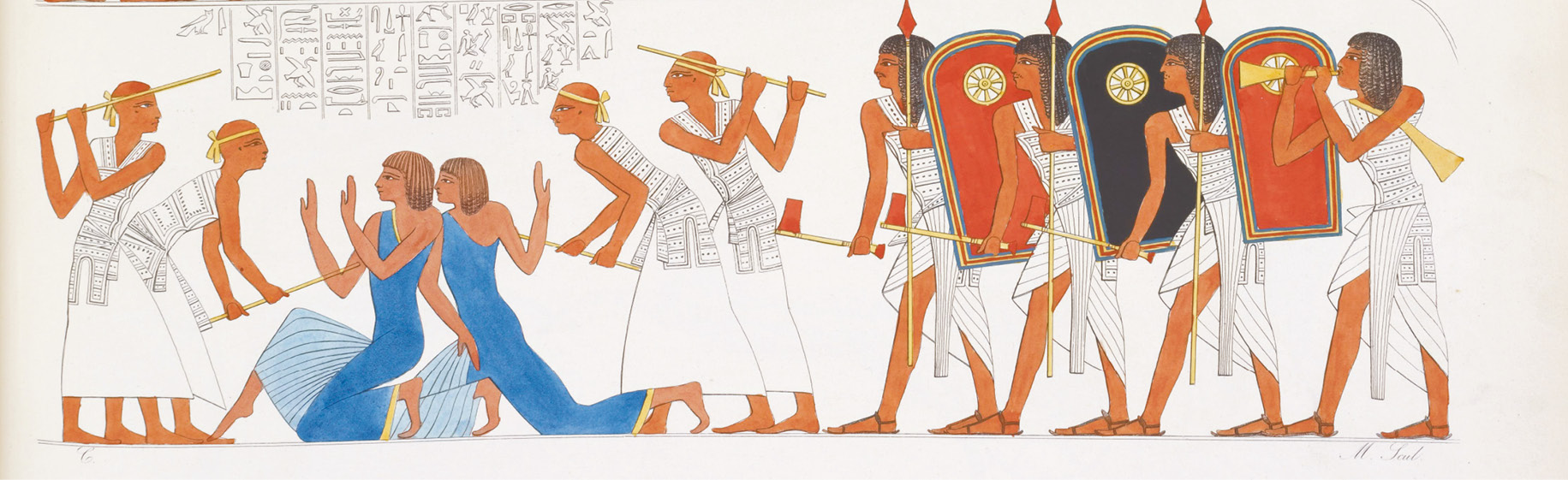
This text might be taken literally to imply that imperial Egypt employed a policy of forced deportations of conquered peoples from their homeland to other parts of the Egyptian empire, similar to that carried out by the Babylonians. Further, foreign peoples are known to have been brought to Egypt as prisoners of war during the empire-building period of the New Kingdom, especially the children of foreign rulers, who were used as hostages. Conversely, the meaning might also be simply symbolic: the term ‘Shasu’ used as a representative enemy of the east, and their supposed forced movement westward simply representative of Ramesses II’s potential power over them. However, it is possible that colonies of Shasu may have been set up in Egypt under Ramesses II, since the Shasu did later become mercenaries in the army of Ramesses III. Relevant place names in Egypt, such as Pen-Shasu, may refer to military colonies inhabited by Shasu mercenaries and their families, who must have lived as simple agriculturalists when not on active service.
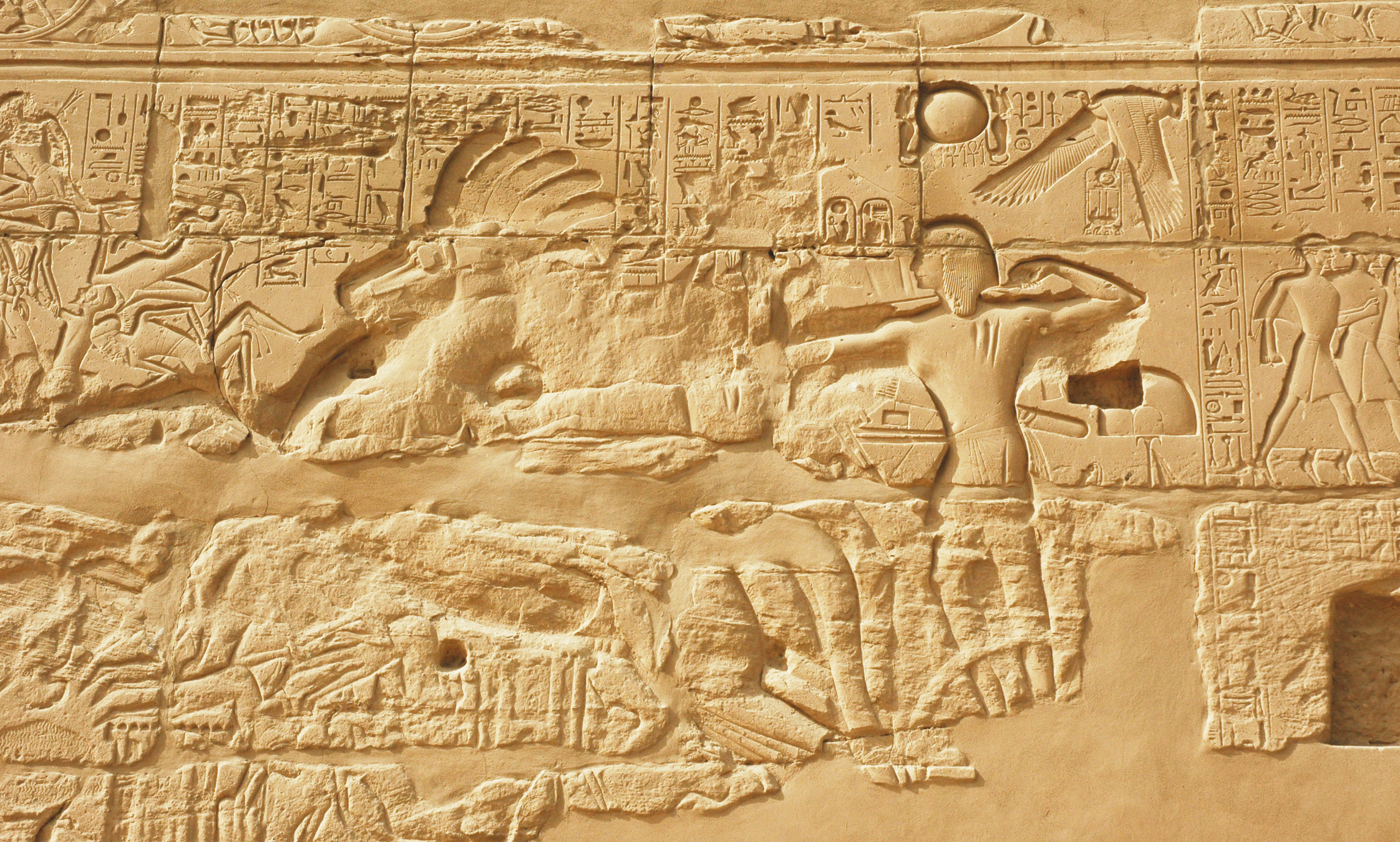
A text dating from the reign of Sety I (c.1294-1279 BC), found next to a picture of a group of people in Karnak’s hypostyle hall mentions Shasu pastoralists located on the mountain ridges of Canaan. They are said in the text to ‘have no regard for the laws of the Egyptian palace’, suggesting a nomadic existence. Further, three scenes in reliefs on the wall of the Court of the Cachette at Karnak, dated to the reign of Merenptah (c.1213-1203 BC), depict captive people referred to as ‘consisting of the Shasu plundered by his Majesty’. Some scholars have identified these particular Shasu with the ‘Israel’ of the famous Merenptah Stela. However, Michael Hasel has pointed out that Israel is not called ‘Shasu’ in the stela, and the inhabitants of Shasu are not called ‘Israel’ in the Karnak wall reliefs.

The Shasu in Egypt
Further, considering all known references in Egyptian texts, the term Shasu is most often accompanied by the term T3, ‘the land of…’, maybe referring to the name of the geographical location, rather than to a people who might be called Israel(ites). Indeed, where ‘Shasu’ is present in the hieroglyphs, it is most frequently accompanied by the determinative for a geographical location, rather than that for a people.
The Egyptian text on the late 13th century BC papyrus called Anastasi VI refers to:
[the transfer of] Shasu tribes… in order to keep them alive and in order to keep their cattle alive.
Hence, this text provides further clear evidence that the Shasu were pastoralists, permitted to enter the eastern Egyptian delta region so they could feed their flocks. Some people have drawn parallels with the Old Testament text from Genesis 42-45, which refers to the sons of Jacob taking their flocks to Egypt in the time of drought and famine.

Who were the Shasu?
The Egyptian evidence thus suggests that the term ‘Shasu’ refers to a land, probably located in the southern Levant region to the east of Egypt, inhabited by several tribes of semi-nomadic Bedouin who lived by raising livestock. These people came into contact with Egypt through the military expeditions of the pharaohs, and entered Egypt either as captives following these expeditions, or after being invited in to feed their flocks during times of drought, or, eventually, as mercenaries for pharaoh. However, the ‘land of the Shasu’ is probably not the same as the people called Israel on the Stela of Merenptah.
Sean Rigby is Professor of Chemical Engineering at the University of Nottingham, where his research interests include ancient glass manufacture. He also holds MAs in Ancient History and Ancient Religions from the University of Wales Trinity Saint David (UWTSD).
Further reading:
• M G Hasel (2003) ‘Merenptah’s inscription and reliefs and the origin of Israel’, in B A Nakhai (ed.) The Near East in the Southwest: Essays in Honor of William G Dever (Boston, MA: American Schools of Oriental Research).
• J Van Oorschot and M Witte (eds) (2017) The Origins of Yahwism (Berlin: Walter de Gruyter).
• W A Ward (1972) ‘The Shasu “Bedouin”: notes on a recent publication’, in Journal of the Economic and Social History of the Orient 15: 35-60.