Subscribe now for full access and no adverts
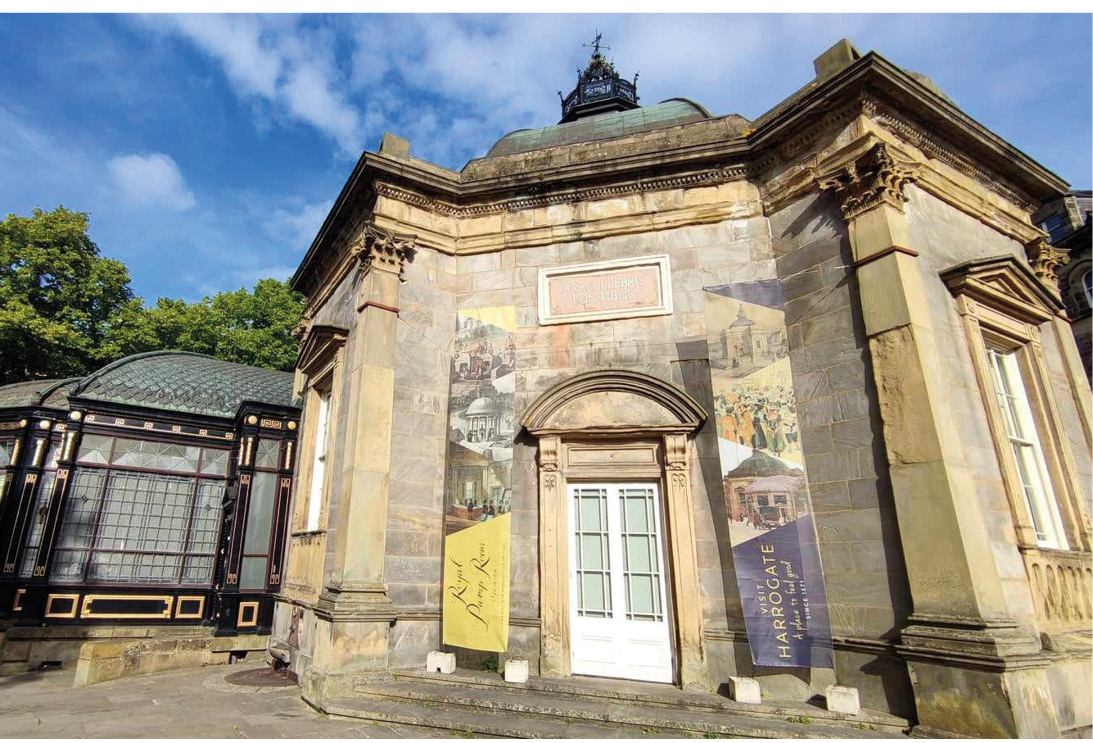
The Royal Pump Room Museum in Harrogate is one of many regional museums in the UK with a collection of Egyptian antiquities. In July 2022, Egypt Centre volunteer Sam Powell visited Harrogate to examine a wooden tomb figure (HARGM7673) as part of her ongoing PhD research. During discussions with Harrogate curators, Sam told them about the Egypt Centre, the museum’s object-based learning approach, and our collaboration with colleagues teaching Classics, Ancient History, and Egyptology at Swansea. Sam also showed them our online collection catalogue, which is hosted on the Abaset platform she created. As most of the Harrogate Collection had not been studied in detail (research and analysis of a selection of objects had been previously undertaken by Professor Joann Fletcher and Dr Stephen Buckley), the curators thought that this might be an opportunity to send it to Swansea on loan.

In February 2023, 813 objects arrived in Swansea on a three-year loan. The collection, called ‘Rediscovering Egypt’, will be researched, displayed, and presented online, thus making the objects more accessible to Egyptologists and the wider public. Three temporary exhibitions are planned, each running for approximately six months. The first, which opened in October 2023, is entitled Causing their Names to Live. It takes its inspiration from a common vivification formula found on statues, stelae, and other objects. In fact, one of the statues on loan (HARGM10634) is dedicated by Nebamun to his daughter Senetra ‘in order to cause her name to live’.
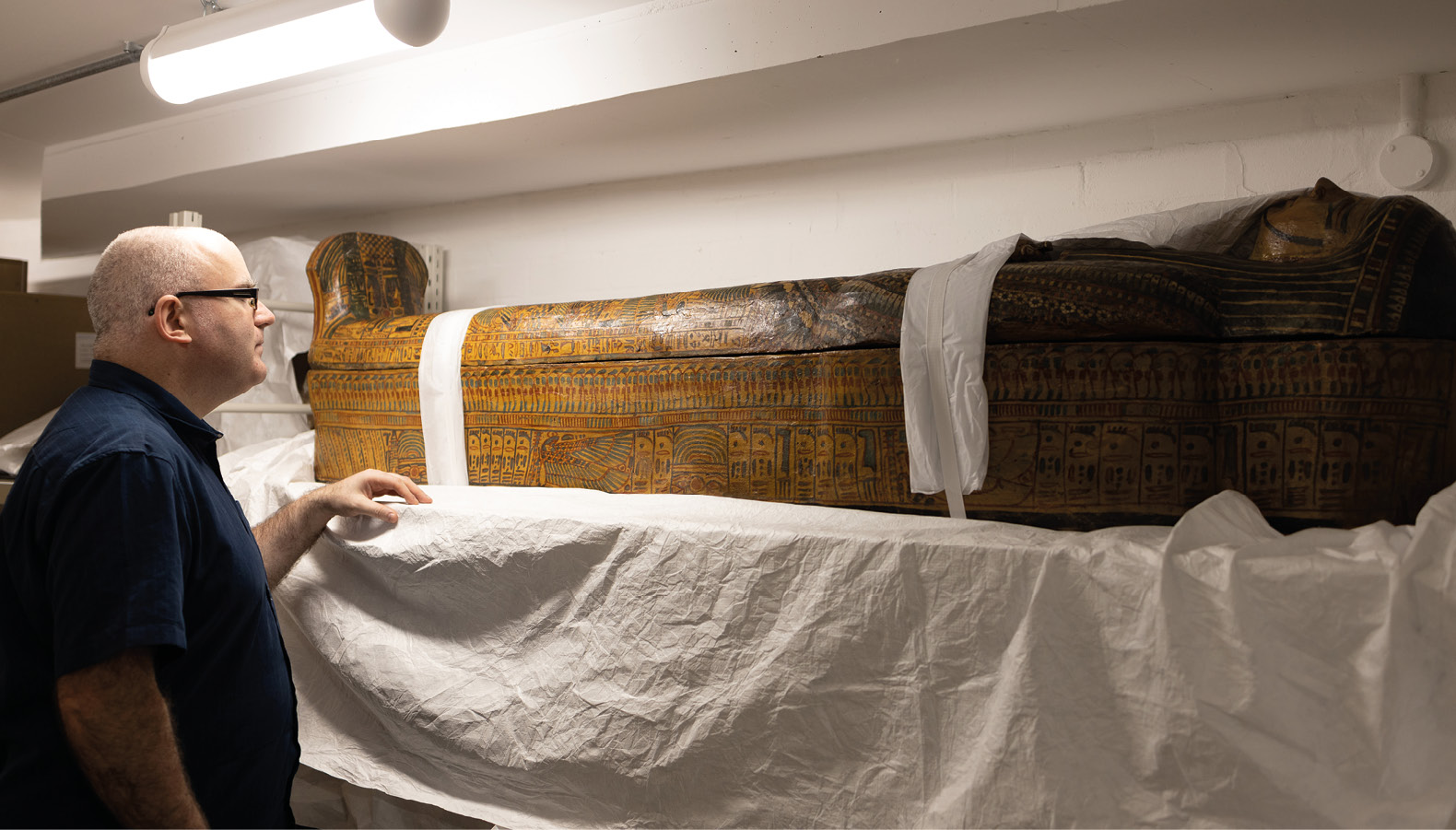
To document the Harrogate loan, a series of 11 videos were produced by Katie Greenhalf and Gary Lawson of This Film Production Ltd. These videos help to record some of the stories relating to the Harrogate Collection that were uncovered in the first few months of the loan, and they can be viewed here: https://bit.ly/44DQ97u.

The collectors
The Egyptian objects in the Harrogate Collection were primarily donated by two local men, Benjamin William John Kent (1885-1968) and James Roberts Ogden (1866-1940), who had assembled their artefacts in the late 19th and early 20th centuries. Many of the objects, particularly those from Kent, were purchased at auction, which is how Swansea’s Egypt Centre collection was formed. In fact, objects from Kent’s collection are known to have come from the auctions of Robert de Rustafjaell, Henry Martyn Kennard, Frederick George Hilton Price, Field Marshal Francis Wallace Grenfell, and others. These collectors are all well-known from material housed in the Egypt Centre, thus providing an excellent link between the collections.
How and why Kent and Ogden formed their collections are two of the main questions this project hopes to answer. In the case of Benjamin Kent, many items were inherited from his father Bramley Benjamin Kent, who had acquired them from the local Harrogate dealers John Emanuel and Elizabeth Kate Preston, or from George Fabian Lawrence, an antiquarian dealer and Inspector of Excavations at the London Museum. Others were seemingly obtained directly from William Matthew Flinders Petrie, or through the auspices of the Egyptian Research Account (ERA).
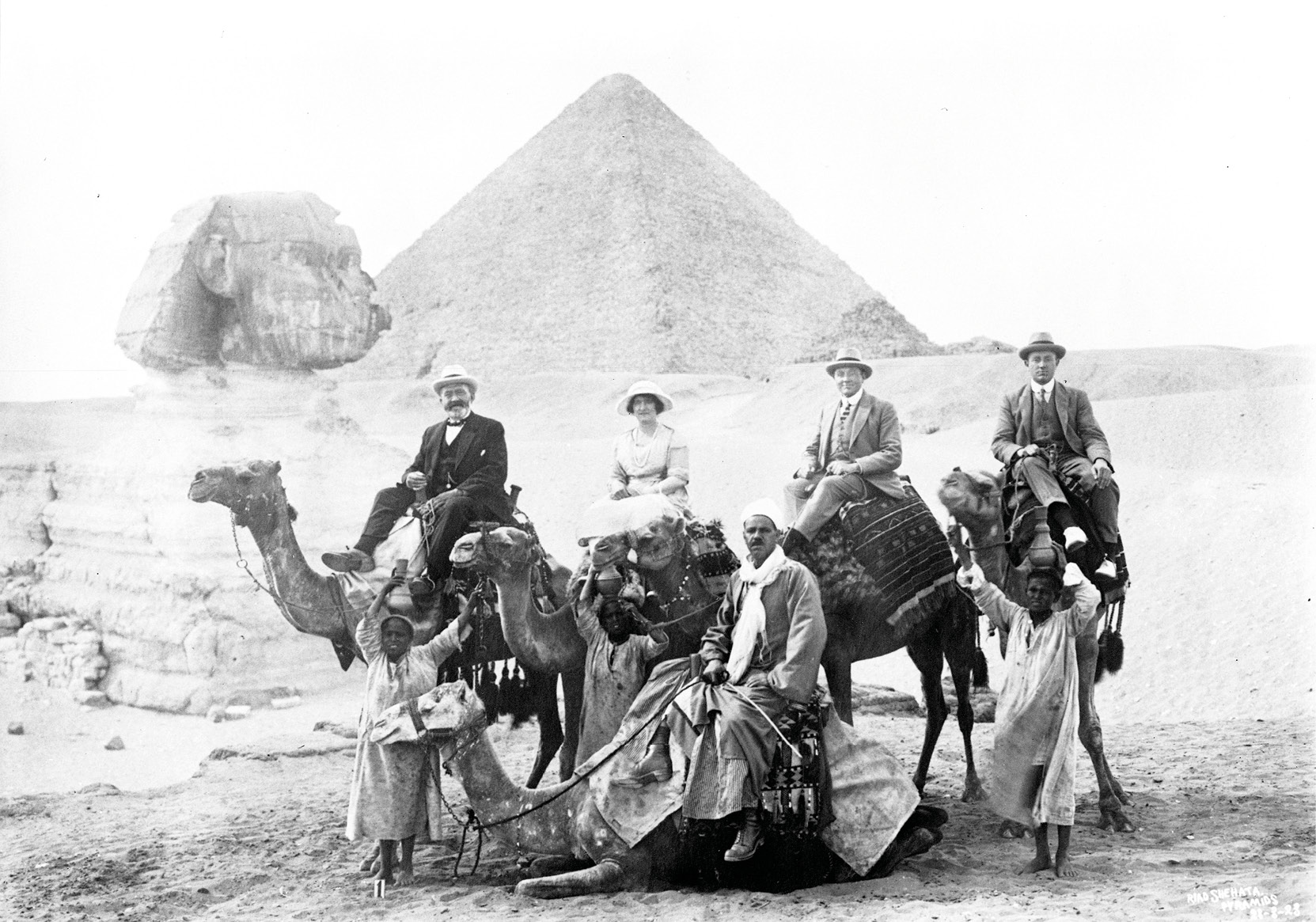
Less is known about the formation of Ogden’s collection, although we do know that he received donations from Harold Plenderleith, Sir Henry Sutcliffe Smith, and potentially others. He purchased at least some of his objects (for example, HARGM3591) from S G Fenton & Co., a London dealer in antiquities and armour. It is likely that Ogden also bought from the Prestons, whom he seems to have known personally. A photograph in the archives of the Ogden family shows Ogden and his son, while on holiday in Egypt, accompanied by the Prestons. Whether Ogden knew the Kents as well is not certain, although – given their geographical proximity – this seems likely.
Benjamin William John Kent
Kent was born in 1885, the son of Bramley Benjamin and Marianne Rosa Kent. The family were wealthy farmers and landowners from Beckwithshaw near Harrogate, North Yorkshire. From a young age, Benny, as he was commonly known, followed his father in developing an interest in the ancient world and a passion for collecting. Through Bramley’s connections with Petrie, Benny was apparently invited to participate in excavations in Egypt, an opportunity he declined owing to the demands of the farm business.
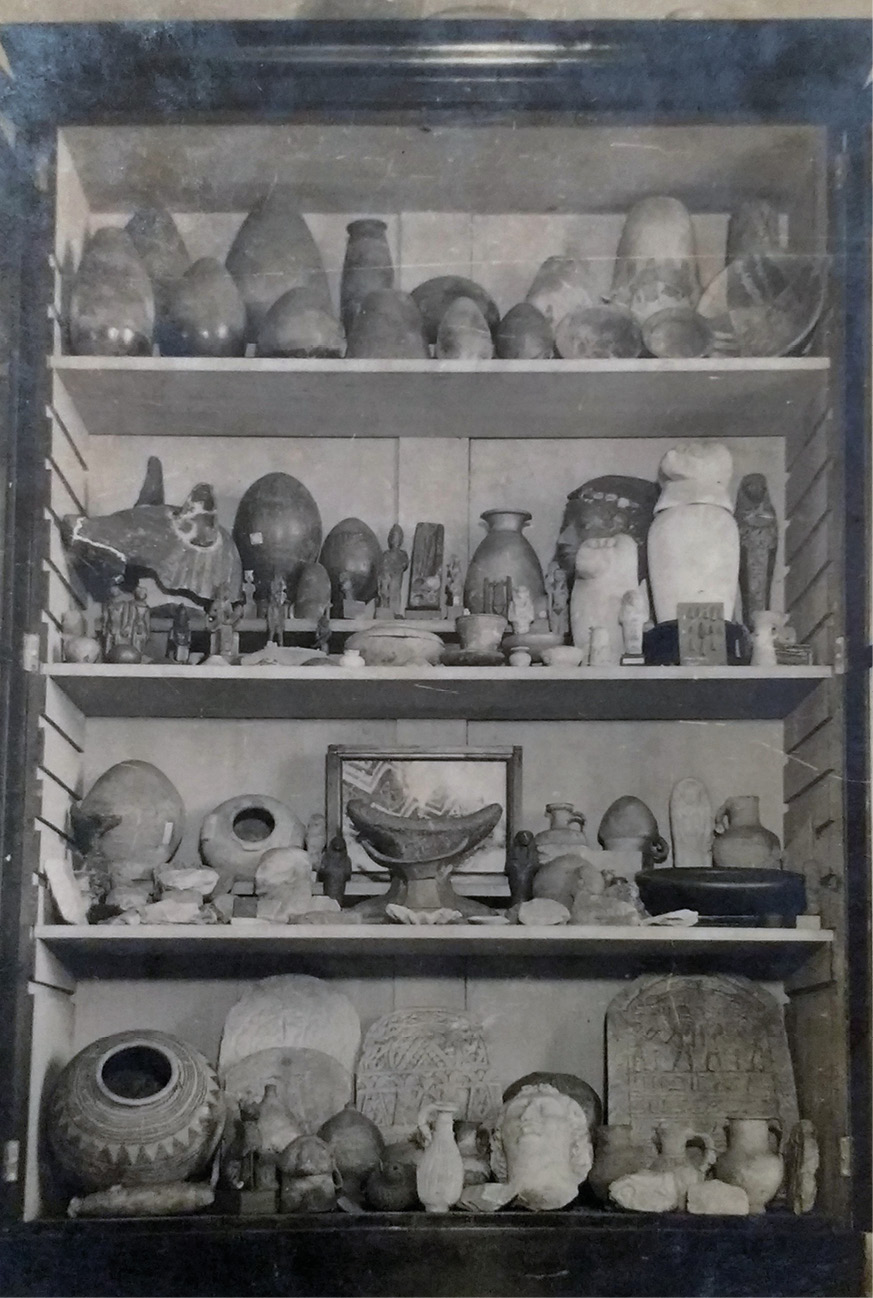
Benny’s father Bramley had formed an impressive collection of antiquities in the late 19th and early 20th centuries, purchasing artefacts from London auctions and local dealers. Benny continued to care for and increase the collection following the death of his father in 1924, through additional purchases and local excavations. At its peak, the collection consisted of roughly 1,500 objects from Egypt, Greece, Rome, Cyprus, Britain, and other regions.
The antiquities were housed in what was essentially a private museum at Tatefield Hall. Although a quiet and introverted man, Benny was well informed on a wide range of historical subjects and would share his knowledge with scholars, local societies, or interested individuals. There were regular visitors, and museums and historical and archaeological societies in West Yorkshire made repeated trips to Tatefield Hall. Scholars from across the world corresponded with Benny, and visited the Hall when they could. Items from the collection were even published or mentioned in academic literature. Closer to home, Benny often loaned material to the Manchester Museum and the Royal Pump Room Museum in Harrogate.
The Kents kept a handwritten register of their collection (almost 1,000 objects), including information on period and place of origin where available. It often records the auctions from which the objects were purchased, or the previous collectors who owned them. These details are particularly useful, since they help to build a better understanding of the antiquities trade and various networks at the time. They also show that the Kents did not necessarily purchase the items directly at auction, but instead through third-party dealers such as the Prestons. The register was compiled from loose-leaf notes, which demonstrates that the Kents took the documentation of their collection seriously, and signals their museum-like approach to recording.
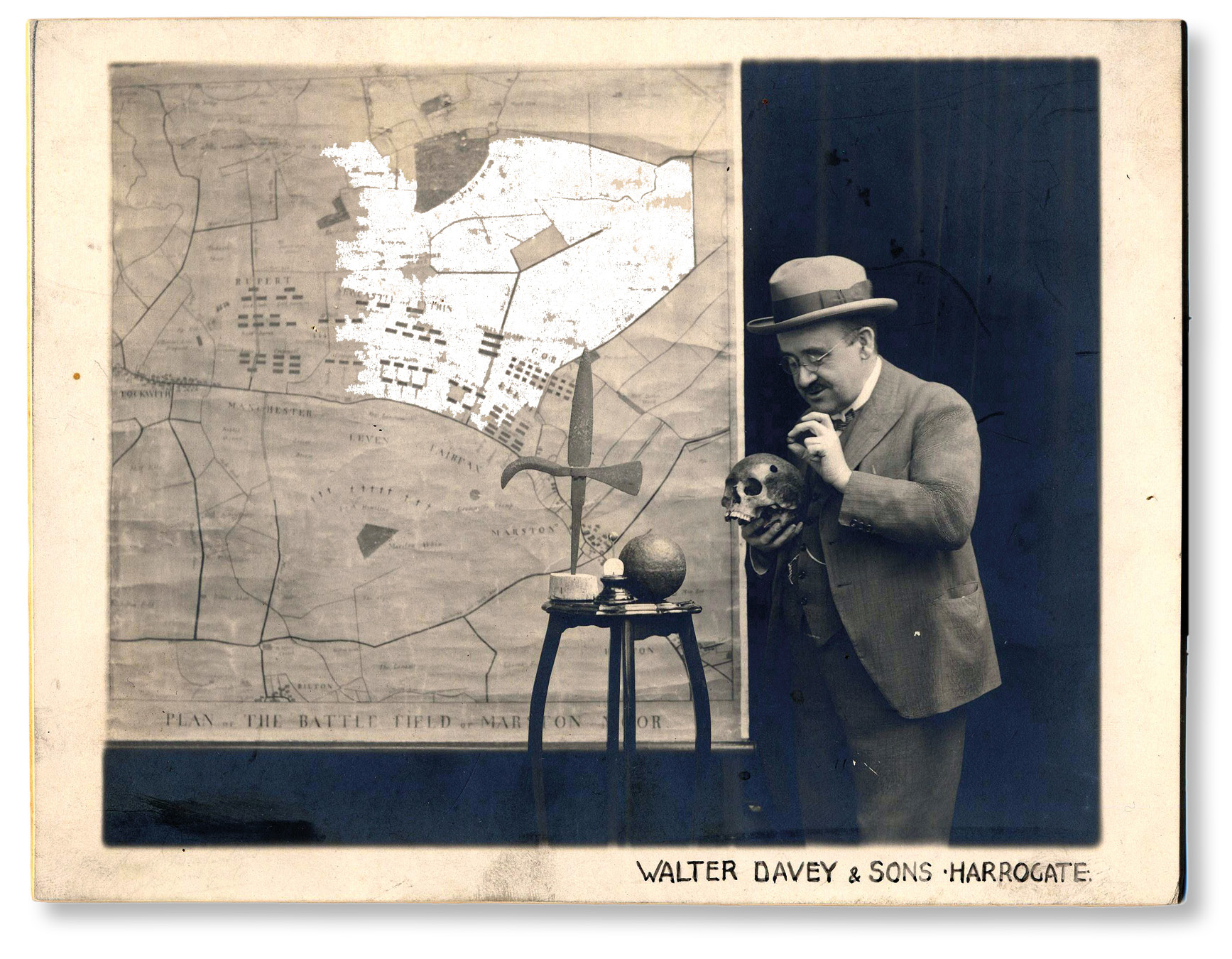
Benny took a deep personal interest in the development of a museum for Harrogate from its early days in the 1950s. Along with other active members of the Harrogate Group of the Yorkshire Archaeological and Historical Society, Benny pressed the local authority to create a municipal museum. Items from the Kent Collection formed part of the displays at the opening of the Royal Pump Room Museum, and Benny attended meetings of the museum sub-committee to advise on material in the municipal collections. He continued to advise on museum matters and lend material throughout the 1950s and ’60s. Following his death in December 1968, the Kent Collection was bequeathed to the Harrogate Corporation. However, it was not until 1969 that the Collection was transferred into the care of the Corporation.
James Roberts Ogden
Ogden was born in 1866 in Leeds, in West Yorkshire, the son of Charles William and Ellen Ogden. The year after his birth, the family moved to Harrogate, which was at that time the foremost spa-town in England. On leaving school in 1882, Ogden was apprenticed to Harrogate jeweller John Greenhalgh. By 1893, Ogden had opened his first jewellery shop, ‘Ogden’s Little Diamond Shop’, in Cambridge Street, Harrogate. The business expanded in 1896-1897 and 1907, taking several further shops in Cambridge Street. In 1910, Ogden moved the business to 38 James Street, and expanded to another shop, no.40, on the same street in 1928. This address is still the site of Ogden of Harrogate, which remains a family-run business.
Aside from jewellery, Ogden was deeply interested in archaeology, especially regarding its connection with biblical studies. He made numerous visits to Egypt and the Middle East, particularly to the recently discovered Royal Cemetery at Ur. He corresponded with, and acted as an adviser to, two leading figures, Howard Carter and Sir Charles Leonard Woolley. When the tomb of Tutankhamun was discovered in 1922, Carter sought the expertise of Ogden on ancient metals. Likewise, following the discovery of the royal tombs at Ur, Woolley noted that ‘without such assistance from an expert craftsman in metals, indeed, much of the evidence as to technique must have been lost’, highlighting Ogden’s important contributions.
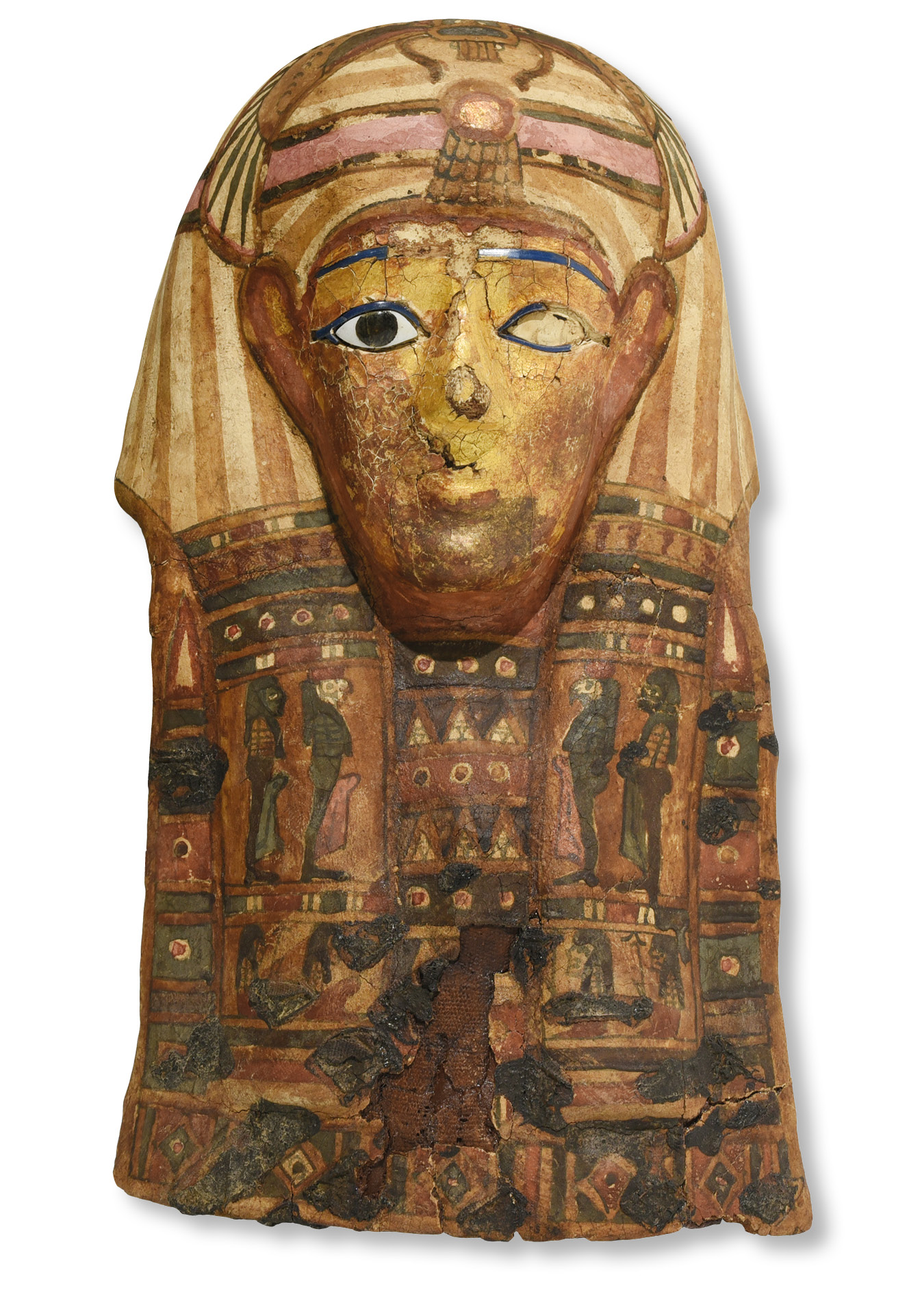
As well as being promoter and fundraiser for Woolley’s excavation, Ogden became a restorer of gold objects and makers of replicas. Many of his copies were so realistic that visitors to the exhibitions on Ur at the British Museum were unaware of the fact that they were copies. He was also an excellent lecturer who was in great demand. According to his obituary, he delivered more than 2,000 lectures, amassed 10,000 lantern slides, and raised more than £50,000.
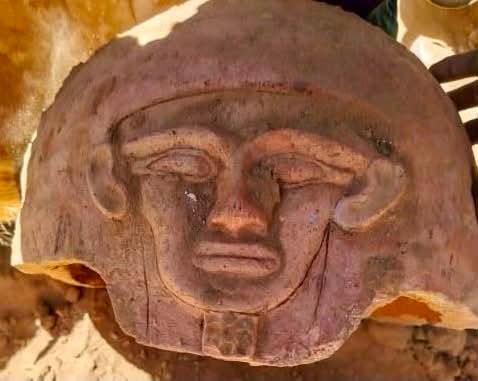
Ogden formed a modest collection of antiquities from both Egypt and Mesopotamia. The circumstances surrounding the acquisition of many of these objects is not known, but labels accompanying some suggest that he purchased them while on tour. Others, particularly those from Mesopotamia, were perhaps gifts from Woolley in recognition of his financial support. A large cartonnage mask (HARGM10685) was given to Ogden by Sir Henry Sutcliffe Smith, a dye and colour expert who lived just a few miles from Harrogate. Some objects were probably acquired through salerooms or dealers, with HARGM3591 known to have been purchased by the London-based dealer Samuel G Fenton at the auction of the collection of Robert de Rustafjaell in 1907. Most of the Egyptian objects were small, such as scarabs and amulets, which perhaps appealed more to Ogden given his background in jewellery.
The contribution to local life made by James Roberts Ogden was fully recognised by the town in 1936, when the council conferred on him the honorary ‘Freedom of the Borough’. During the 1930s, Ogden spent much of his time disposing of his vast collection of books, newspaper cuttings, historical notes, antiquities, and photographs. The majority of the antiquities, including the Egyptian material, were given to Harrogate Library in 1933, before later being relocated to the Royal Pump Room Museum in the 1950s. When Ogden died on 13 April 1940, council members stood in silent respect.
Collection highlights
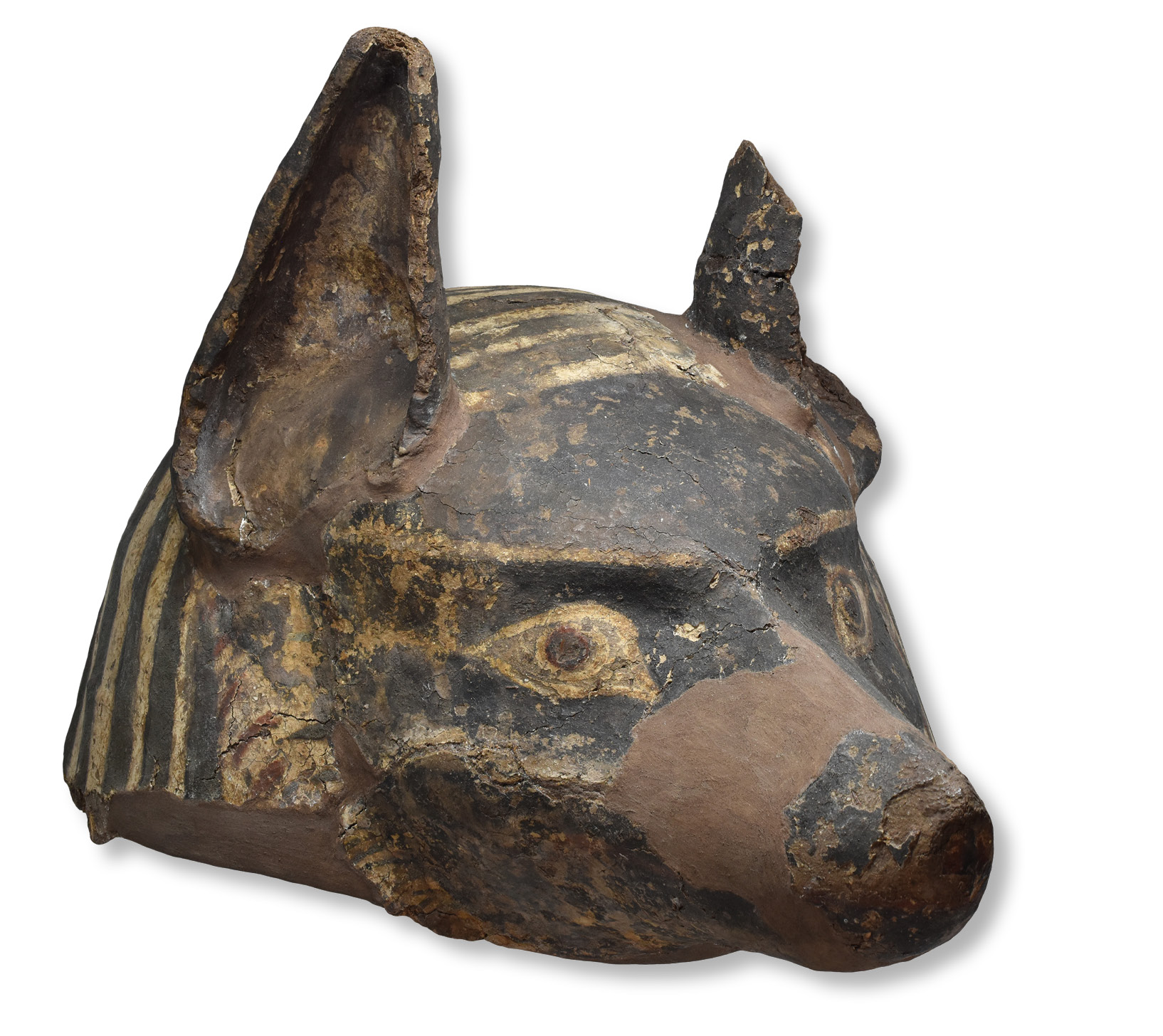
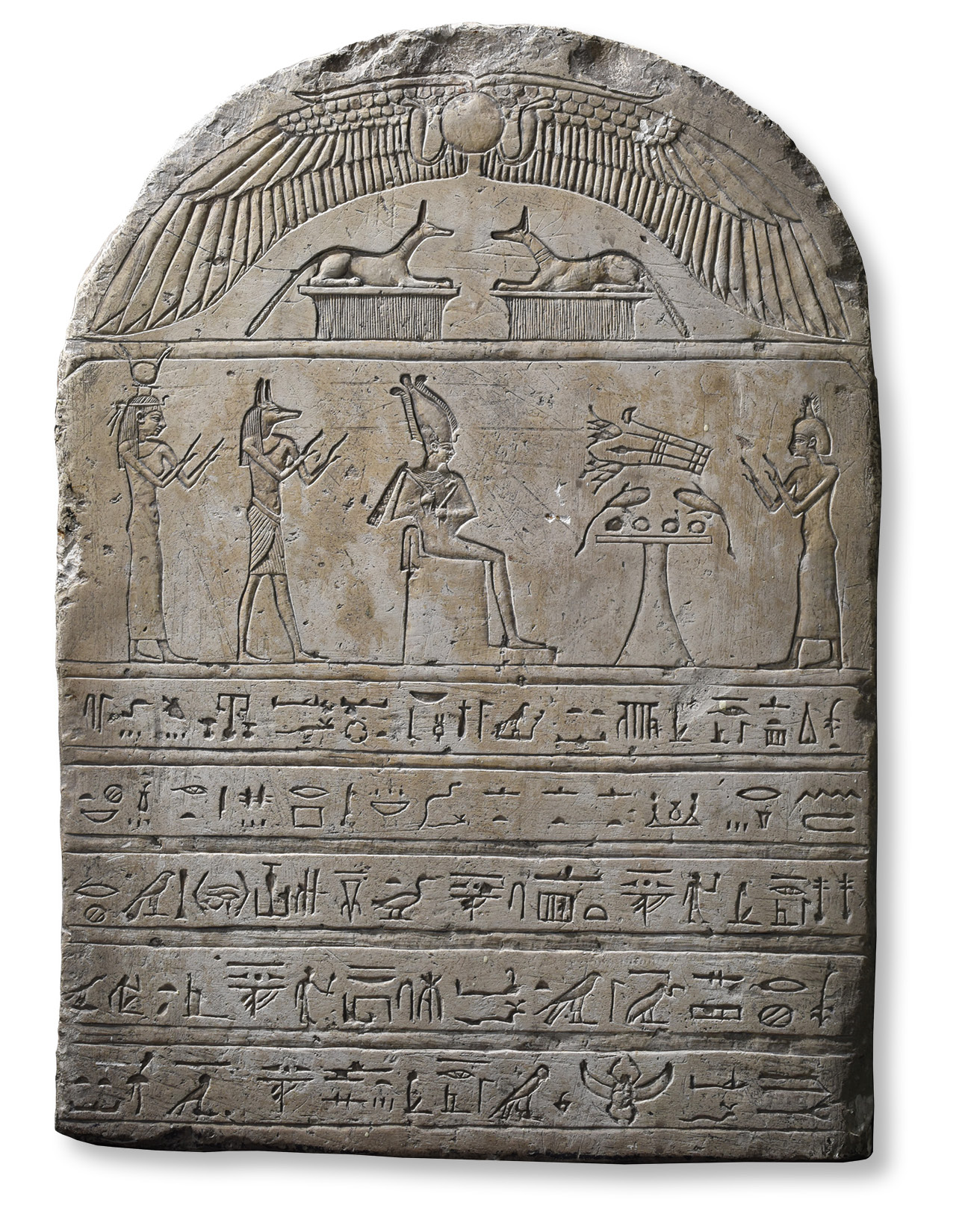
The material in the Harrogate loan is quite diverse. It includes stelae, statues, pottery, stone vessels, shabtis, amulets, canopic jars, a coffin, funerary cones, mummy masks, jewellery, papyrus, copper-alloy votive statues, mace heads, terracotta figures, and many more object types. There are even several non-Egyptian items, including Etruscan mirrors and a large collection of cuneiform tablets, bricks, and cylinder seals. Perhaps the most famous object is the Anubis mask (HARGM10686), which can be traced back to the 1907 sale of Robert de Rustafjaell. Some of the highlights include HARGM3584, the Stela of Hetepnesmin, a ‘Singer of Min’, one of several inscribed stelae in the Harrogate loan. Carved across three registers, it contains a winged Behdet in the lunette, with two recumbent jackals on plinths below. In the second register, the deceased is shown in adoration on the far right before a table of offerings, an enthroned Osiris, and standing figures of Anubis and Hathor (all unlabelled). In the register below, five lines of hieroglyphs begin with the offering formula addressed to Osiris. The stela was previously in the collection of George Matthews Arnold, the mayor of Gravesend, who established the Arnold Museum there at Milton Hall. It was sold at auction in 1911, where it was purchased by the Prestons. It was later acquired by the Kent family, who bequeathed it to Harrogate Museum in 1968.

The collection includes three shabtis of Sety I, two of which are more common wooden figures, but HARGM3722 is a beautiful faience example. Sety was a ruler of Egypt during the Nineteenth Dynasty (c.1294-1279 BC), who was buried in a beautifully decorated tomb in the Valley of the Kings (KV 17). The shabti was previously part of the collection of Ernest Ambrose Vivian, Second Baron Swansea (1848-1922), and was sold at auction in 1919. It was later part of the Kent Collection, which was bequeathed to Harrogate Museum in 1968.
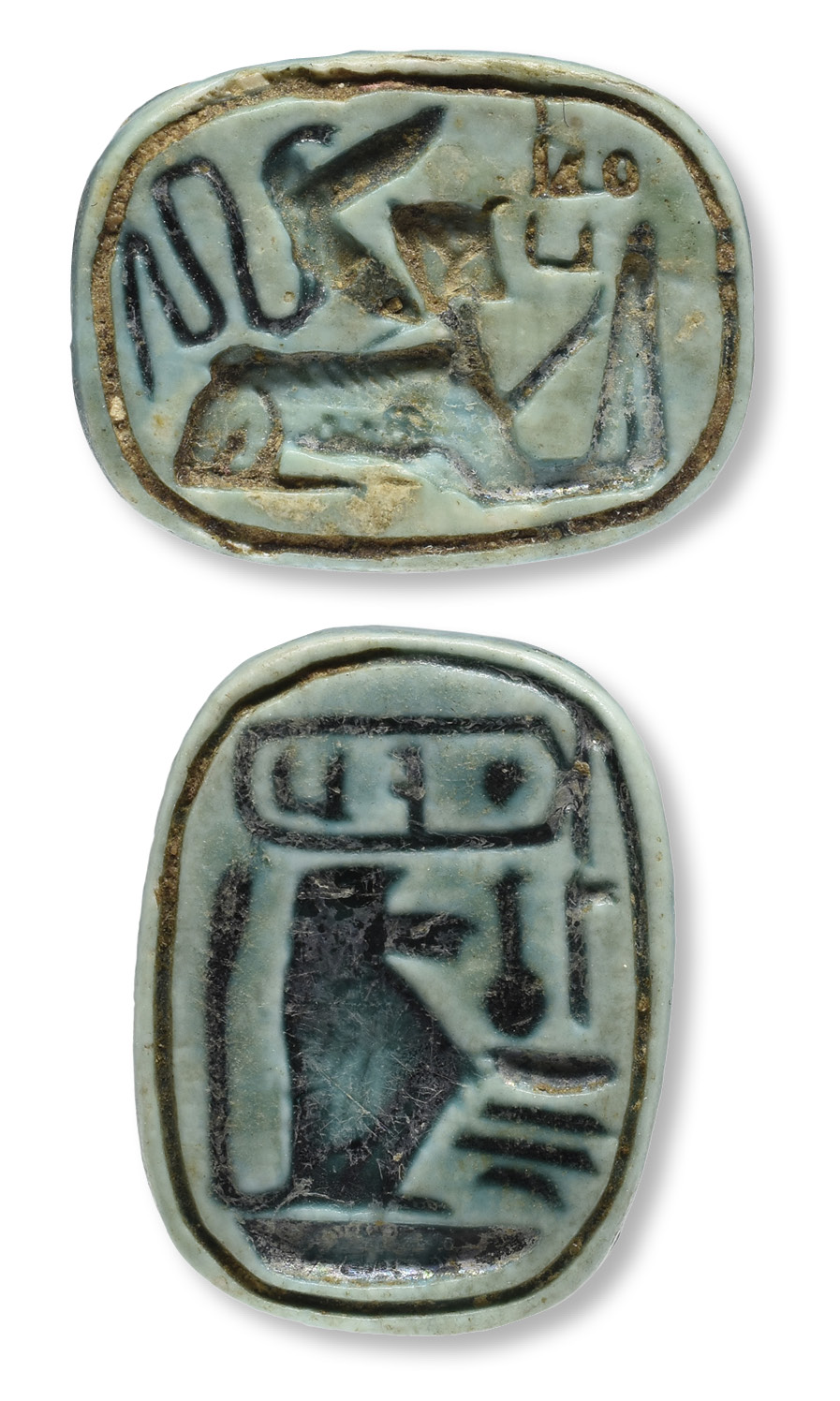
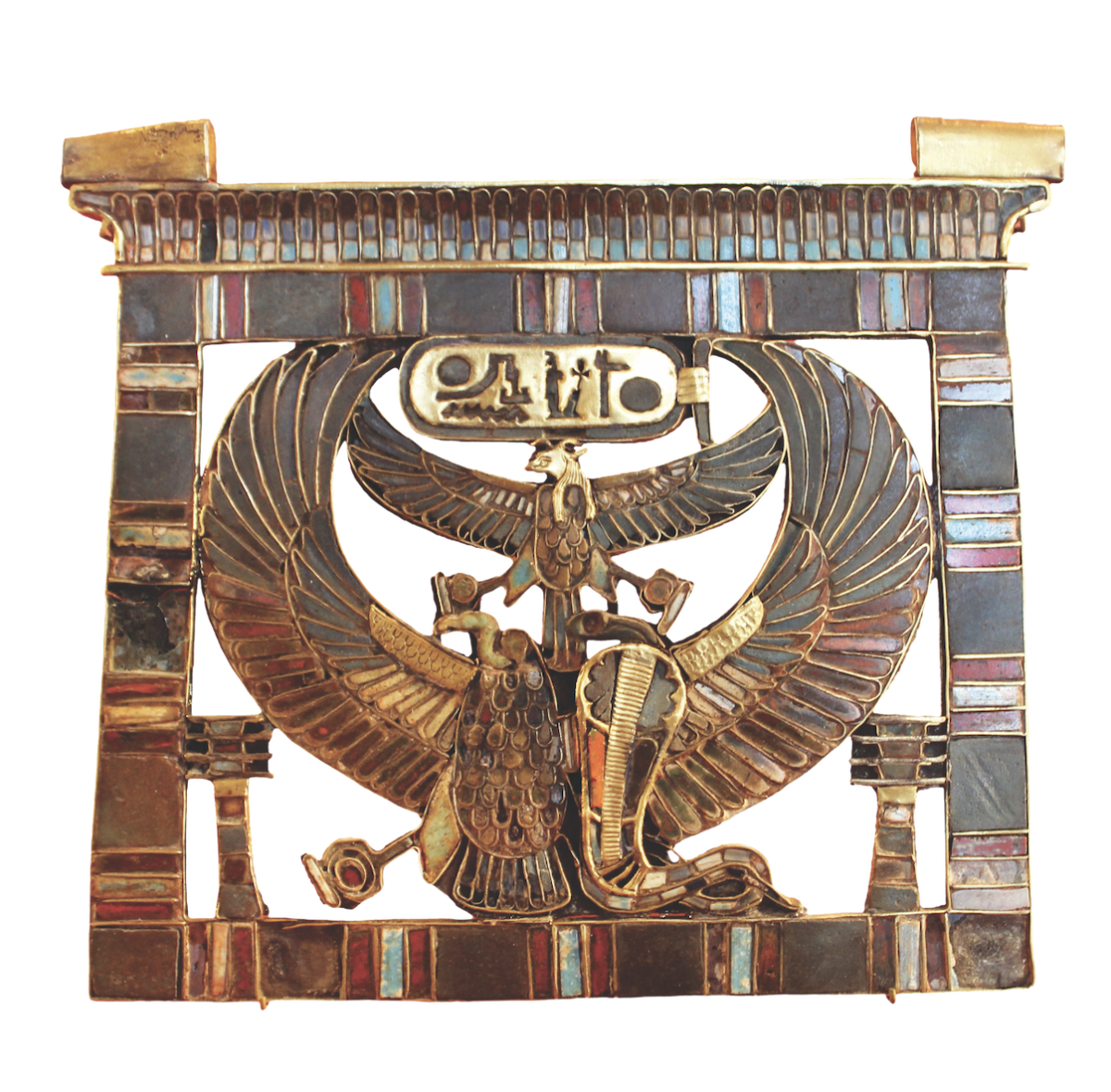
The collection also includes a blue-glazed steatite scaraboid or plaque (HARGM7627), with a longitudinal hole for threading. One side is decorated with an image of a sphinx with a winged uraeus above it. The throne name of Hatshepsut (Maatkara) is inscribed next to the sphinx. The reverse is decorated with a cartouche of Maatkara and a baboon sitting on the hieroglyphic sign nb in front of the title ‘the Good God, Lady of the Two Lands’. It was previously part of the Ogden Collection, which was given to Harrogate Museum in the 1930s.
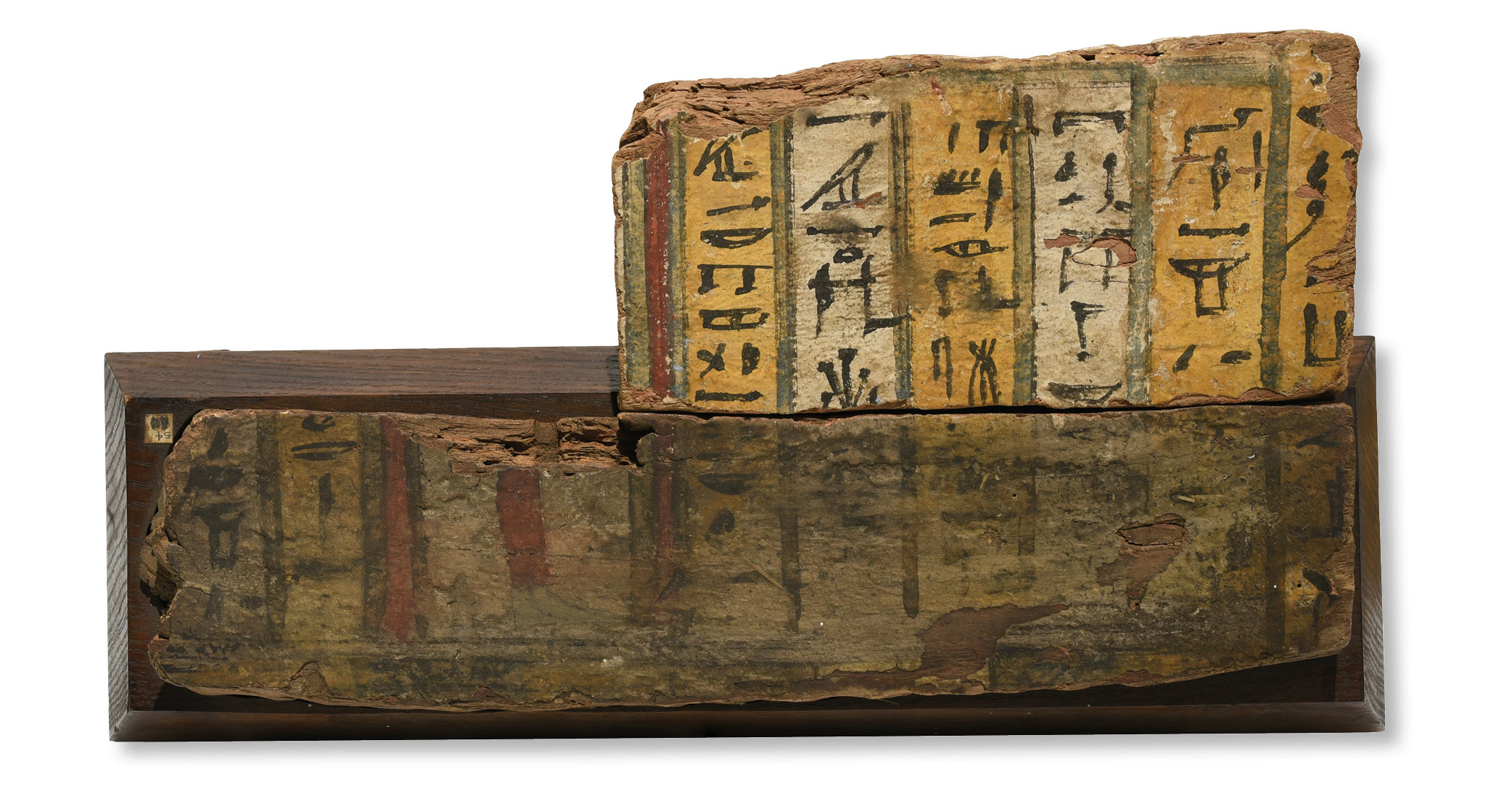
Since the collection arrived at the Egypt Centre,  many stories about the objects have been revealed. It turns out there are lots of previously unknown links between the Egypt Centre and Harrogate Museum. For example, HARGM10877, a rather grotty-looking coffin fragment, directly joins with another fragment in the Egypt Centre collection (EC385). By putting these together, it has been possible to read the name of the owner (Osirismes) and his parents (Horentabiat and Shepenhenuttaneb) for the first time.
All 813 objects from the collection have now been photographed and are available to researchers and the public through a online catalogue hosted by Abaset Collections Ltd: https://harrogate.abasetcollections.com. In the next issue, we will take a more detailed look at some key artefacts from the collection.
Dr Ken Griffin is the Curator of the Egypt Centre, Swansea. Prior to this he was a lecturer in Egyptology at Swansea University (2015-2018). His research interests include the rekhyt-people (see AE 38) and the collection of the Egypt Centre (see AE116).
Further reading:
A Millerman (2004) ‘Howard Carter and the goldsmith: James Roberts Ogden (1866-1940)’, in Ancient Egypt: the history, people, and culture of the Nile valley 24(4/6): 46-50.
A Reeve and S Waite (2021) ‘Re-collecting Cypriot antiquity: the Kent collection in Harrogate’, in Journal of the History of Collections 33(2): 359-372.
M Neesam (2013) Ogden, Harrogate, 1893-2013: 120 Years – a history of a family business (Manor Place Press).
All images: © Egypt Centre, Swansea, unless otherwise stated