

Subscribe now for full access and no adverts
It was, as we shall discover later in this series to mark the 160th anniversary of the end of the American Civil War, a very low-key affair – when, on 9 April 1865, the Confederate commander Robert E Lee offered his surrender to Ulysses S Grant, the commanding general of the opposing Union forces, in a now-famous encounter in the parlour of Wilmer McLean’s house in Appomattox, Virginia.
The moment had been a long time coming – the final act in a cataclysmic drama, acted out between the United States and the 11 Southern states that in 1860-1861 had seceded to form the Confederate States of America. But as Lee, resplendent in his best dress uniform, and Grant, arriving straight from the battlefield in drab attire and mud-spattered boots, shook hands to agree the Confederate capitulation, an atmosphere of magnanimity and mutual respect hung in the air.
As it was, the terms offered by Grant were generous. Lee’s soldiers would have to hand in their weapons, but officers would be allowed to keep swords and sidearms. All could then return to their homes, and any man who needed to plough his fields could keep his horse or mule one the army was paroled. On being told that Lee’s troops were living on parched corn, Grant also offered his adversary 25,000 rations from Federal stores. For his part, Lee was gratified by his opponent’s solicitousness. ‘This will have the best possible effect upon the men,’ he said.
Just days after their meeting, the American Civil War would officially be over – and after four years of fighting that had left at least 750,000 soldiers dead, the country could begin to rebuild. In our Special Feature for this issue, and over the next two editions of MHM, historian Fred Chiaventone marks the 160th anniversary of the war’s end by tracing the long and painful road to Appomattox – from Southern secession to final surrender.
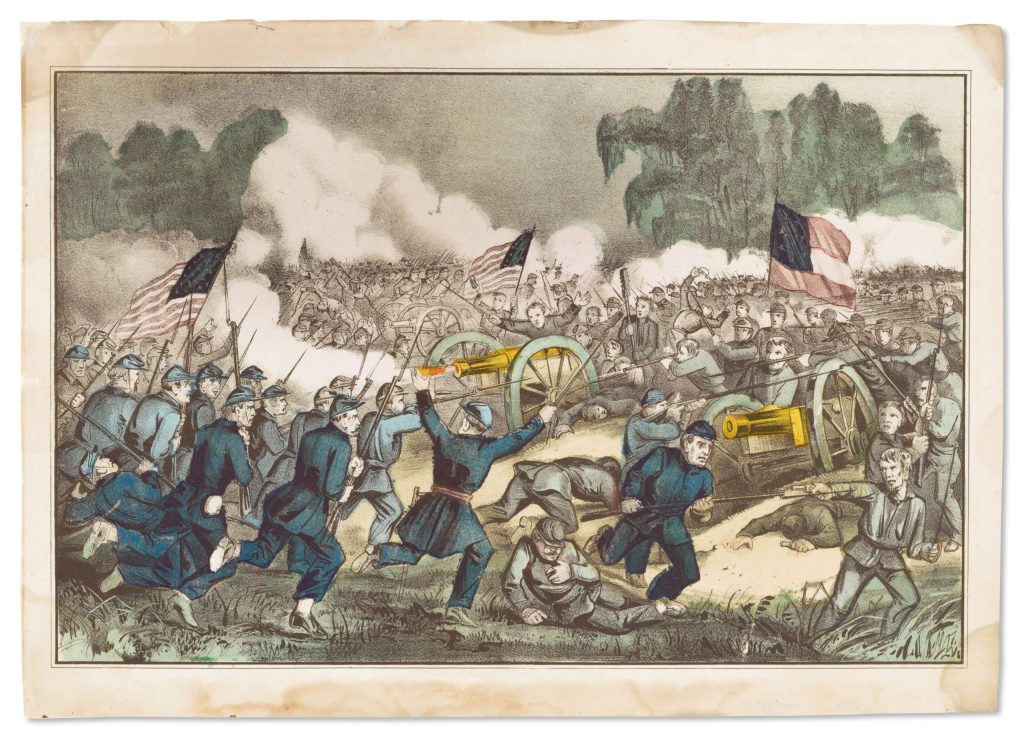
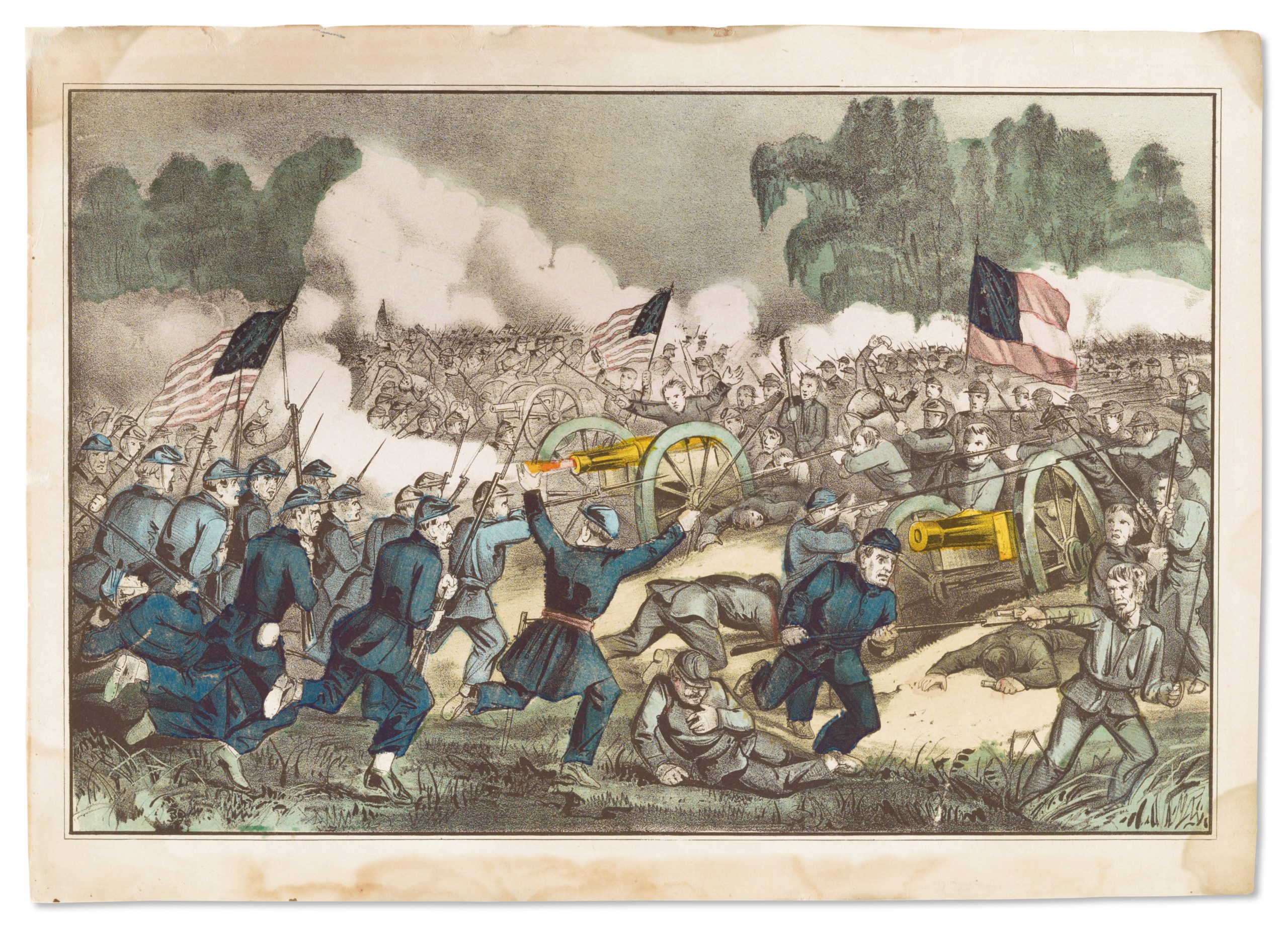
A nation divided: The road to Appomattox – Part 1: 1861-1862
With North and South pitted against one another, the opening months of the American Civil War saw a country tear itself apart, as Fred Chiaventone explains.
The causes for the American Civil War were many and varied. To this day, there are disputes among historians and scholars as to what precisely launched the nation into a catastrophic bloodbath. Most popular among these theories are the status of the institution of slavery and the issue of states’ rights. The Southern states were dominated by a largely agrarian society wherein a large proportion of enslaved people were cast in the roles of labourers, house servants, and artisans in an economy that was dominated by such crops as cotton and tobacco. However, this is somewhat misleading. In fact, only about 25% of the Southern population were slaveholders – the bulk consisting instead of yeoman farmers, merchants, and craftsmen. The plantation-owning class tended to be better educated and considerably more influential. They were also more inclined to engage with political and social issues, and thus set the tone for Southern political attitudes.
While the Northern states certainly had a large agrarian population too, this was augmented by a thriving industrial manufacturing base wherein slavery was not a factor. By mid-century, popular sentiment had begun to harden into polarised views, with many Northerners viewing slavery as immoral, while Southerners felt that those in the North were wrong to try to enforce their opinions and policies on such matters as ending slavery, imposing taxes, mandating infrastructure improvements, and controlling westward expansion.
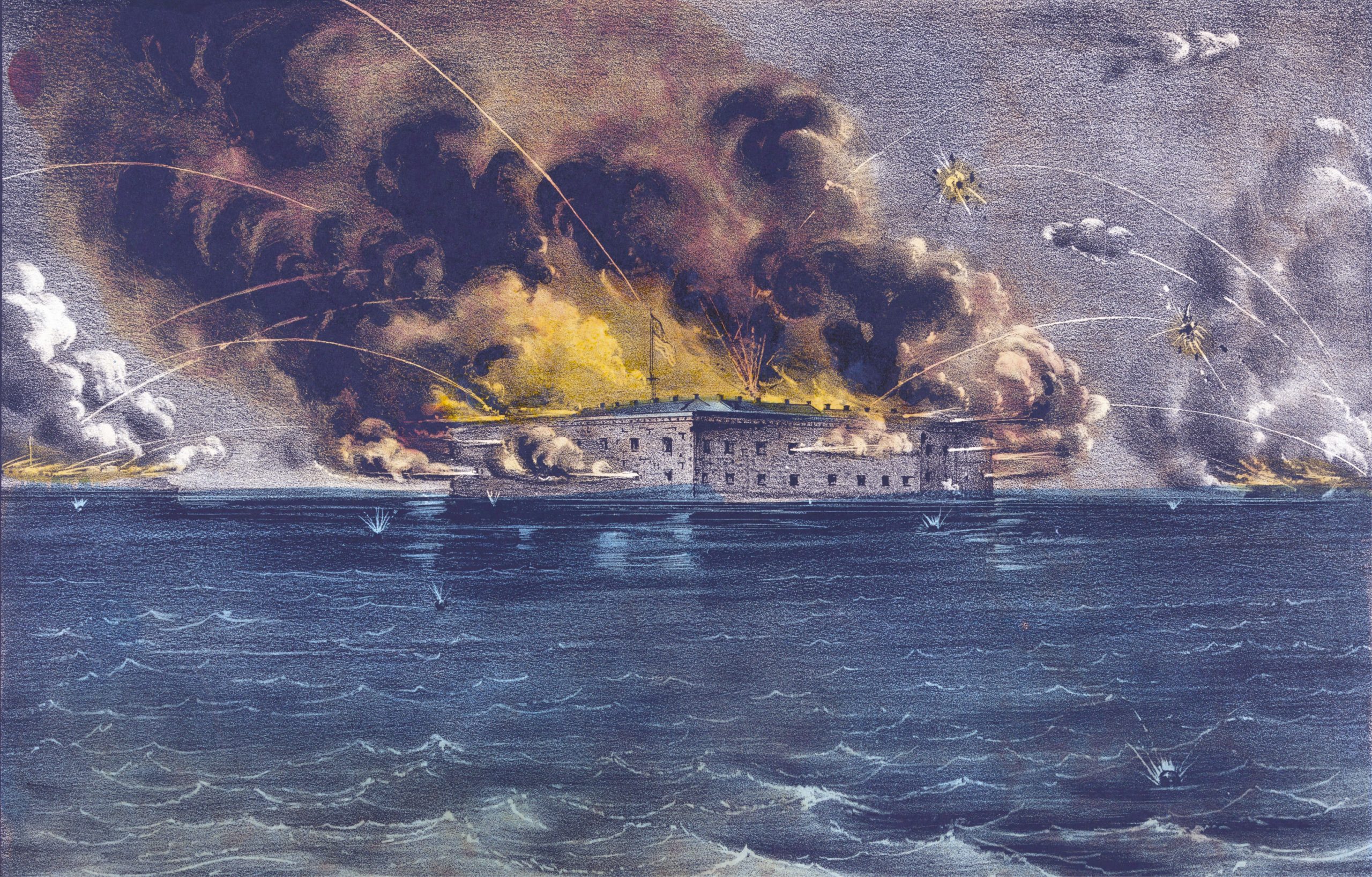
While there were a number of legislative attempts to mollify the interests of the competing factions, such as the Missouri Compromise of 1820 and the Kansas-Nebraska Act of 1854, the two competing sides drifted further and further apart until the national election of 1860 put Abraham Lincoln in the White House. Believing that Lincoln was implacably opposed to slavery, 11 Southern states subsequently declared their secession from the Union, electing Senator and former Secretary of War Jefferson Davis as the provisional president of their Confederacy. Tensions between the opposing factions would continue to rise for the duration of 1860. Then, in April 1861, Southern artillery batteries under the command of Confederate Brigadier General P G T Beauregard opened fire on the Federal forces garrisoning Fort Sumter, a sea fort located off the coast of Charleston, South Carolina. North and South squared off for what was to become a monumental crisis, and one that would result in the deaths of more than 750,000 soldiers. We still do not know how many non-combatants lost their lives as a result of the war.
The opposing sides
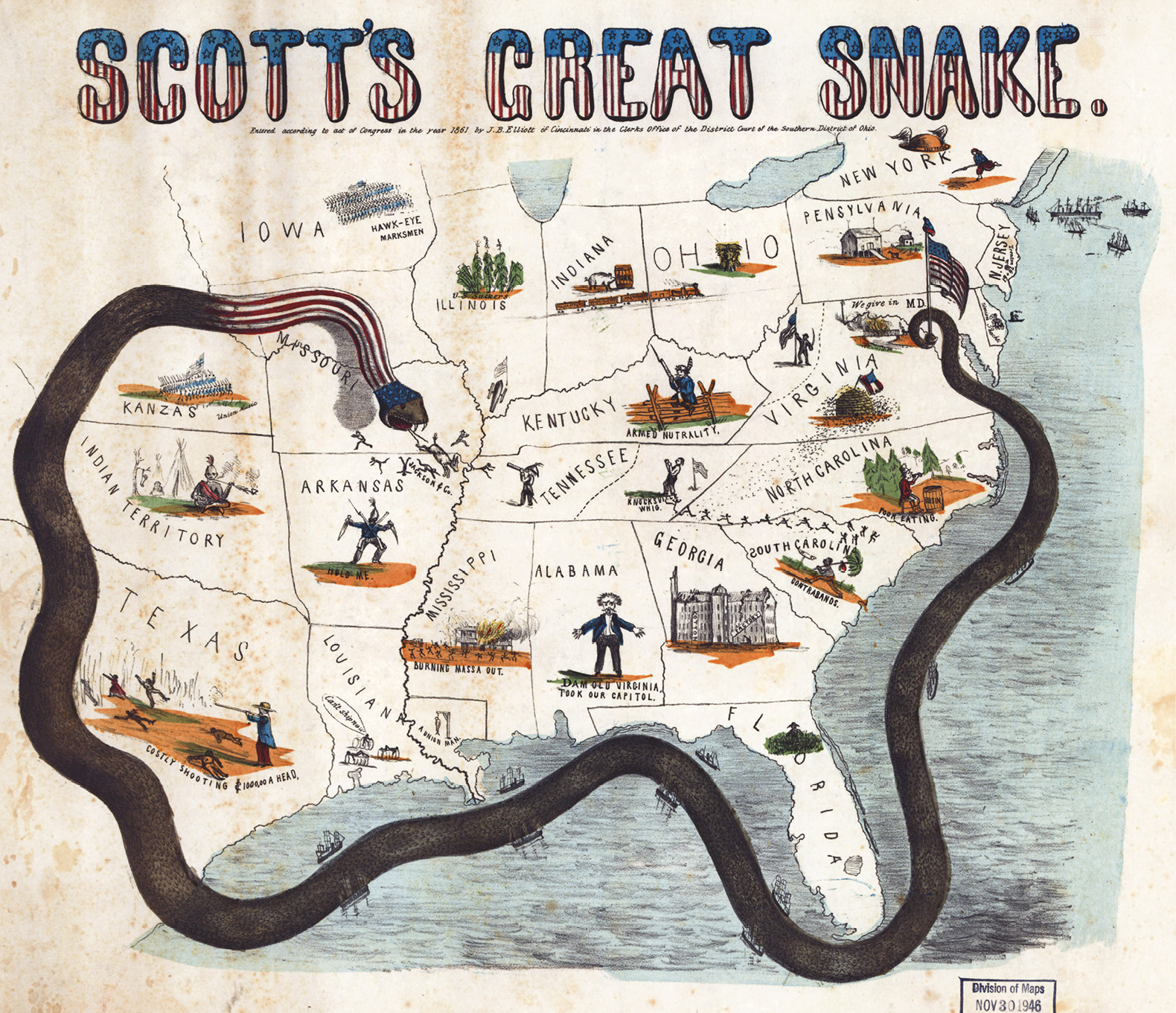
As difficult as it is to believe, the United States Army was remarkably small at the outbreak of war in 1861. With a total strength of 16,000 men and officers, the regular army was scattered across the nation in 198 companies at 79 different posts. Its commander-in-chief was 75-year-old General Winfield Scott, who had served as an officer in the War of 1812, and then commanded US forces that captured Veracruz and Mexico City in the Mexican-American War in 1847. Further complicating matters was the fact that, of the 1,108 regular officers in service in 1861, 270 submitted their resignations to join the Confederate forces. In any event, the Regular Army was in no way prepared to fight a large war. While the Federals kept most of the regular units together, the bulk of the Army was fleshed out by volunteer units from the various states. In 1861 alone, some 92,000 men had answered the call – but, though enthusiastic and eager for combat, they were poorly trained and ill-prepared. Nonetheless, by the end of the war more than two million men would have served in the Union Army.
The Confederacy initially called for the raising of some 100,000 men – a number that naturally increased as the war progressed. Unfortunately, no official records exist reflecting the actual numbers of men who served the South. While it began as an all-volunteer force, a policy of conscription would soon be adopted to fill the ranks. By the end of the war, more than one million men would have served the Confederacy. The years between 1861 and 1865 would exact a terrible toll on both sides. It should be noted that the capital of the Confederacy was located in Richmond, Virginia, just over 100 miles south of Washington, DC, and neither side believed that a violent confrontation would be very nasty or take very long. They were both destined to find out how wrong such assumptions were.


First contact
Southern forces actually had an initial advantage over their Yankee opponents, as was amply illustrated in the first major clash of arms at Manassas Junction about 25 miles west-south-west of Washington, DC. Under pressure from the administration, Union Brigadier General Irvin McDowell led his barely trained 28,000 men out of the Capitol and headed for Manassas, where a slightly larger Confederate force had encamped under the direction of Beauregard. The intent of the Confederate move was to deter a Federal thrust through this area, which opened on to the Shenandoah Valley and was thus the quickest route to Richmond.
McDowell’s forces, composed largely of so-called ‘90-day men’ (again, it was presumed that the conflict would be very short-lived) moved rather haphazardly though Northern Virginia. The men were unused to long marches under arms and wearing heavy wool uniforms, which were especially uncomfortable in the mid-July heat and humidity. These novice soldiers frequently dropped out of ranks to rest in the shade, pick fruit, and recover their strength. While the advance guard engaged in a small skirmish on 17 July, the main Federal force would not arrive and deploy until 20 July. The fighting began in earnest the next morning, along a stream called Bull Run, and while the Federals initially had the upper hand, poor judgement on McDowell’s part threw his forces into a failed assault on Confederate positions commanded by a former professor at the Virginia Military Institute named Thomas J Jackson. Jackson’s position held firm, and he was known ever afterwards as ‘Stonewall’. Later in the day, Confederate reinforcements under the command of Colonel Jubal Early arrived on the field and fell on the Federals’ right flank. Stunned by the move, the Federal lines collapsed and fled the field in panic, as Confederate cavalry led by Colonel J E B Stuart pursued the panicked remnants of McDowell’s army. The Union survivors did not stop running until they arrived back in Washington, DC. Thus ended the first real battle of what would become an increasingly deadly war.

The early months
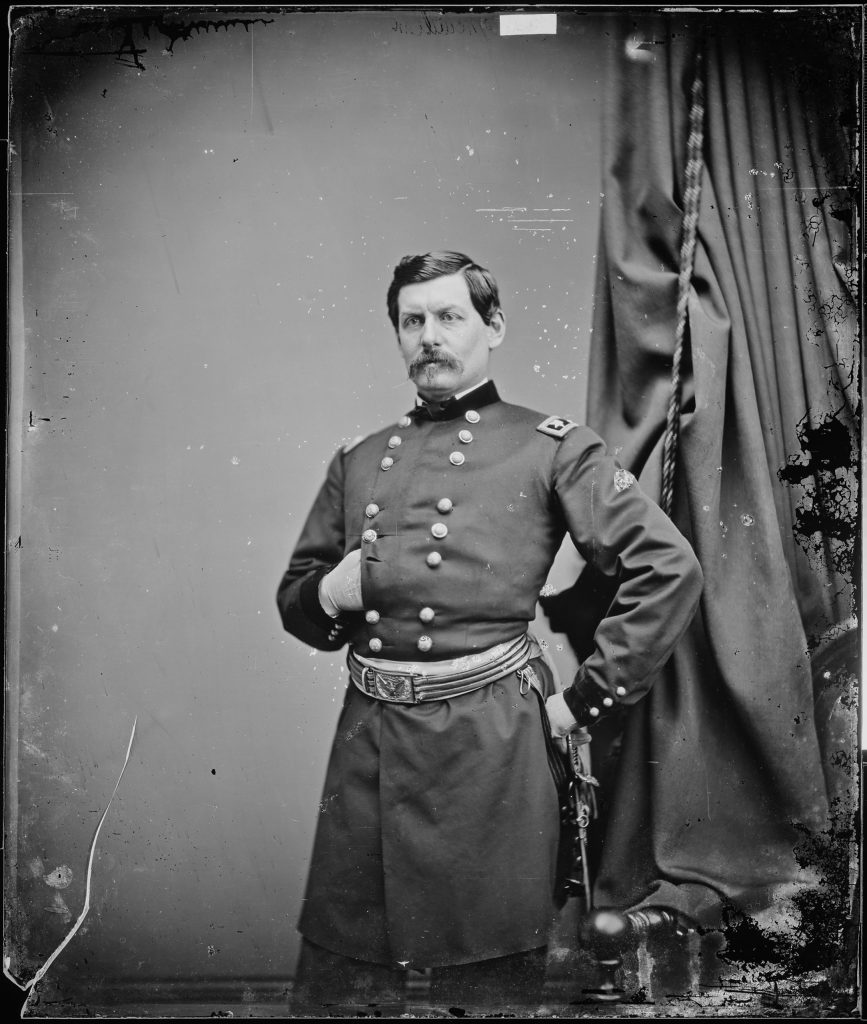
The fiasco experienced at Bull Run was a stunning setback for President Lincoln, who had hoped to bring the Confederate states back into the Union with an early and overwhelming victory. Instead, he had to prepare the nation for a protracted struggle. With the cooperation of Congress, he was able to establish three-year enlistments for the Army, and the various states rushed to provide new units for the war. After his loss at Bull Run, McDowell was quickly relieved and replaced by 34-year-old George B McClellan, who was tasked with reorganising and training the newly formed Army of the Potomac (named after the river that forms part of the border between Virginia and Maryland).
A veteran of the Mexican-American War who had spent time with British and French forces observing the Crimean War, McClellan was a seasoned professional soldier who plunged into the task of preparing his soldiers for combat. He quickly managed to forge order out of chaos, imposing routine and discipline on the troops who grew to admire and respect ‘Little Mac’. With an overwhelming sense of self and a belief that he knew best how to manage the war, McClellan also managed to clash repeatedly with Washington politicians and with his superior, General Winfield Scott. By November 1861, Scott had had his fill of McClellan and retired – but Abraham Lincoln, approving of the job McClellan was doing training and organising the Army, quickly appointed him to take Scott’s place.
While McClellan marched and drilled his troops to a high state of readiness, he was too much of a perfectionist and deferred taking action against the Confederates until he felt the Army was ready. As his efforts continued month after month, his relations with Congress and the President became ever more fractious. Absenting himself from a meeting of top generals in January 1862, he managed to raise the ire of President Lincoln, who remarked, ‘If General McClellan does not want to use the army, I would like to borrow it for a time.’ In April 1862, finally stirred to action by his critics, McClellan launched his ambitious Peninsula Campaign, which intended to capture the Confederate capital at Richmond. His plan was to land 100,000 troops at Fort Monroe, at the southern tip of the Virginia Peninsula, and then advance up the peninsula between the York and James rivers and assault Richmond from the south-east. It was an ambitious plan, but doomed to failure.

War in the west
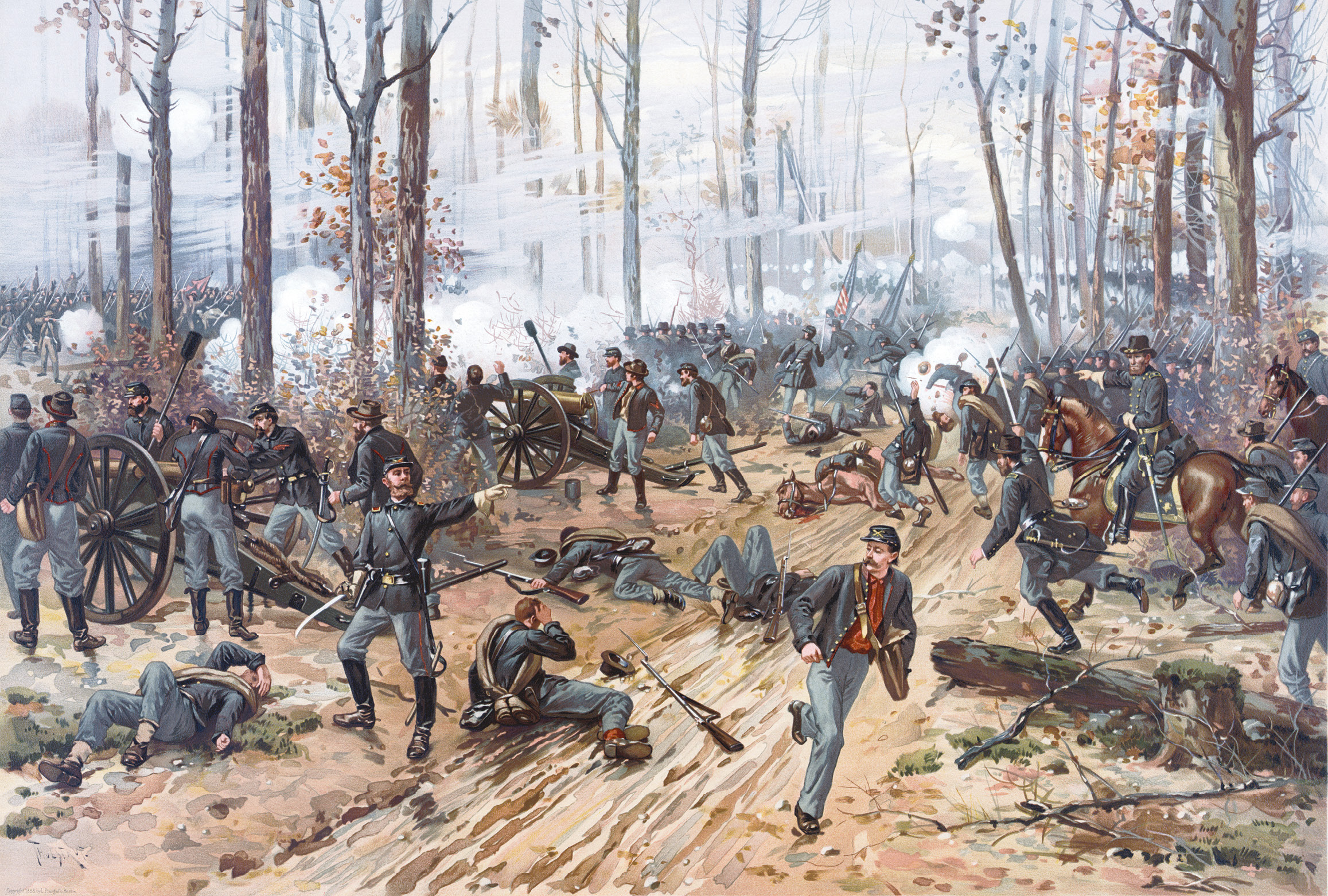
As McClellan was nudging his forces painfully up the peninsula in Virginia, the war in the western theatre (between the Appalachian Mountains and the Mississippi River, and including Alabama, Georgia, Florida, Mississippi, North Carolina, Kentucky, South Carolina, Tennessee, and parts of Louisiana) exploded in successive incidents of extreme violence. On the western front, recently promoted Brigadier General Ulysses S Grant had led several successful operations to subdue Confederate strongholds along the Tennessee and Columbia rivers, taking Fort Henry and Fort Donelson in quick succession. Moving towards the city of Corinth, Mississippi, where the remnants of General Albert Sidney Johnston’s Confederate Army was assembled, Grant reached Pittsburg Landing, on the Tennessee River, on 6 April. What followed, near a small Methodist church called Shiloh, was the bloodiest confrontation of the war thus far.

Routed at first by a ferocious attack by the rebels, the Union forces were rallied through the efforts of General William Tecumseh Sherman, whose troops slaughtered their attackers in an action later referred to as the ‘Hornet’s Nest’. Casualties were appalling, with more than 10,000 troops lost on each side. Driven back by successive assaults, and deprived of their commander when Johnston was mortally wounded, the Confederate forces abandoned the field and retreated southwards to Corinth. Perhaps the supreme irony is that Shiloh takes its name from the Hebrew term shiloh meaning ‘place of peace’. In April 1862, it was anything but. At the time, this was the deadliest fight that had ever occurred in North America. Lincoln was assailed from all sides by demands for Grant’s dismissal – but to no avail. The President stated his view unequivocally, saying, ‘I can’t spare this man; he fights.’
A failed campaign
As Grant continued to lead his forces deeper into the Confederate rear, Federal naval units worked assiduously to establish a blockade of Southern ports to strangle their opponents’ ability to export goods and import arms and munitions. As the Union Army was taking control of critical ports on the Upper Mississippi River, their naval forces closed in and drove Confederate troops out of Memphis, Tennessee, and New Orleans, Louisiana, leaving them in control only of Port Hudson and Vicksburg, Mississippi.
At the same time, McClellan struggled to advance on the Virginia peninsula, pushing ever closer to Richmond. A token force of Confederates bloodied his nose in fierce fighting around Yorktown, imposing enough delay on the Federal advance to allow General Joseph Johnston time to move his army between McClellan and Richmond. Federal forces continued to slog up the peninsula, fighting not only stubborn rebels but soaring temperatures and humidity, clouds of biting insects, and torrential rains that turned roads and paths into a quagmire. Malaria and dysentery took an increasing toll on the men.
The ever-cautious McClellan was certain that he faced a rebel force three times larger than it actually was. Sustaining McClellan’s fears, Johnston’s forces continued to bedevil the Federals in engagements at Gaines’ Mill (sometimes known as the Battle of Chickahominy River) and White Oak Swamp. But McClellan’s calls for reinforcement went unheeded – for, as he struggled towards Richmond, ‘Stonewall’ Jackson was threatening Washington, DC. While Jackson had no real intention of crossing the Potomac, his arrival caused panic in the nation’s capital and diverted thousands of troops from going to McClellan’s aid. Further complicating the situation, when Joe Johnston was seriously wounded in the fighting over the Chickahominy River, he was replaced by Robert E Lee, who took command with Federal forces not ten miles from Richmond. Driving the Federals back down the peninsula, Lee fought McClellan to a standstill at Malvern Hill. McClellan was convinced that Lee’s forces numbered over 200,000. But his intelligence was wrong, as Lee’s army numbered barely 60,000 soldiers. With his supply lines cut and no hope of reinforcement, McClellan began to withdraw his forces, and Lincoln recalled him to Washington.
A change of plan
With the immediate threat to Richmond neutralised and McClellan’s forces stalled on the peninsula, Lee decided there was a way to put enough pressure on the North as to prod the Federals to sue for peace. He would go north, taking the war deep into the Northern states and away from Virginia. He knew that Maryland contained a large number of citizens who sympathised with the Southern cause. Knowing this, he dispatched the Army of Northern Virginia on a new mission. First seizing critical supplies at Manassas, he drew the Union’s General John Pope into a furious fight – at Bull Run for a second time. This time, ‘Stonewall’ Jackson, aided by General James Longstreet, once again thrashed the Federal forces, sending them reeling back to Washington for a second time. President Lincoln dismissed Pope and hastily appointed the still popular but invariably hapless McClellan as commander of the Army of the Potomac. He hoped that this time ‘Little Mac’ would justify his confidence.
As Lee pushed ever deeper into Maryland, McClellan rushed to position his troops to intercept and defeat him thoroughly. Positioning his disparate forces for the anticipated confrontation, Lee sent out dispatches to all his subordinate commanders. Unfortunately for him, a copy of the orders he had sent to General D H Hill was discovered by accident in an abandoned campsite. A Federal private scouring the area for booty found a small bundle of cigars wrapped in paper. He quickly presented the wrapping to his commander, who discovered it was a copy of Lee’s instructions coordinating his forces. McClellan was overjoyed by the discovery. It was a timely intelligence coup that gave him a priceless advantage over his enemy, and he moved to exploit it on the banks of Antietam Creek.
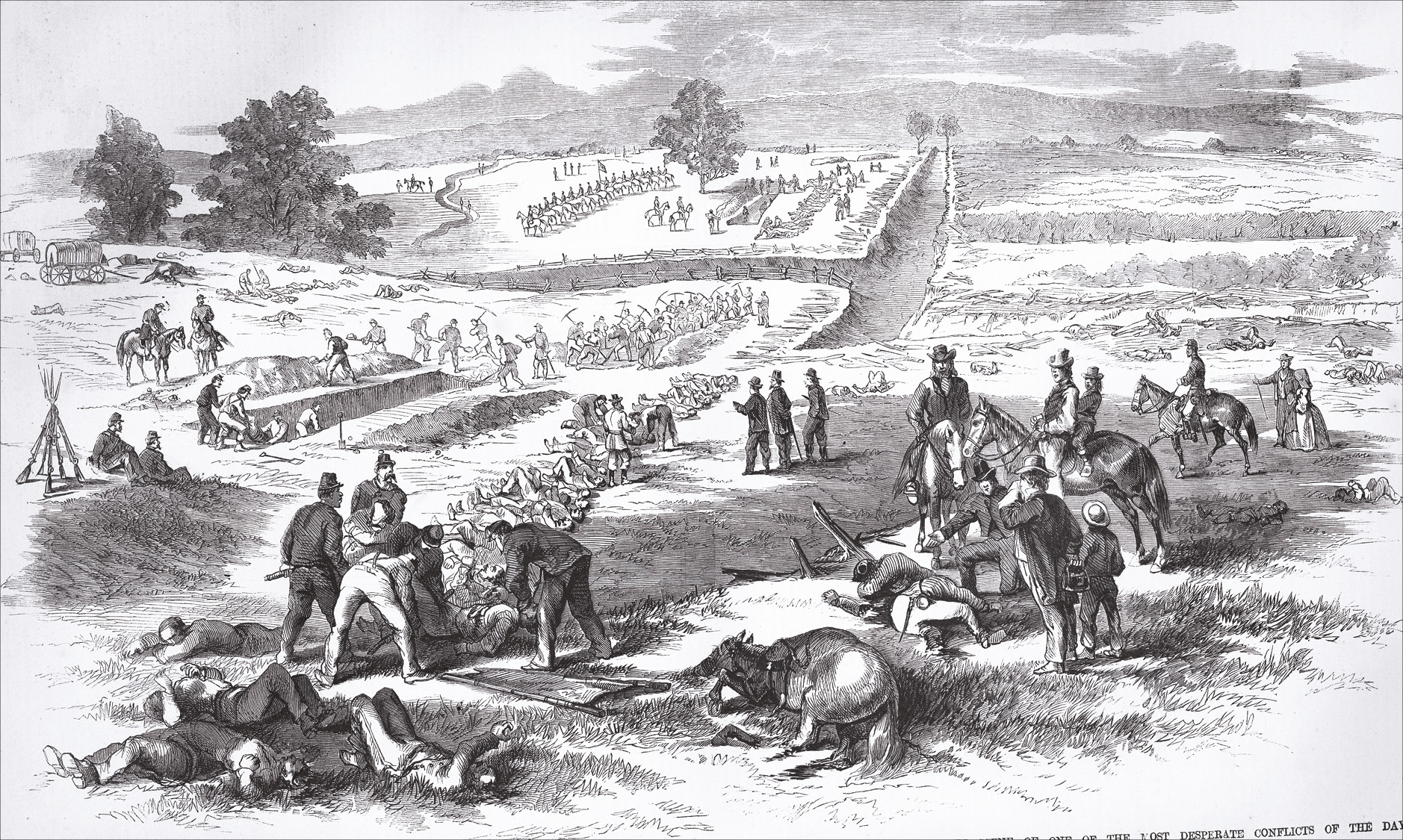
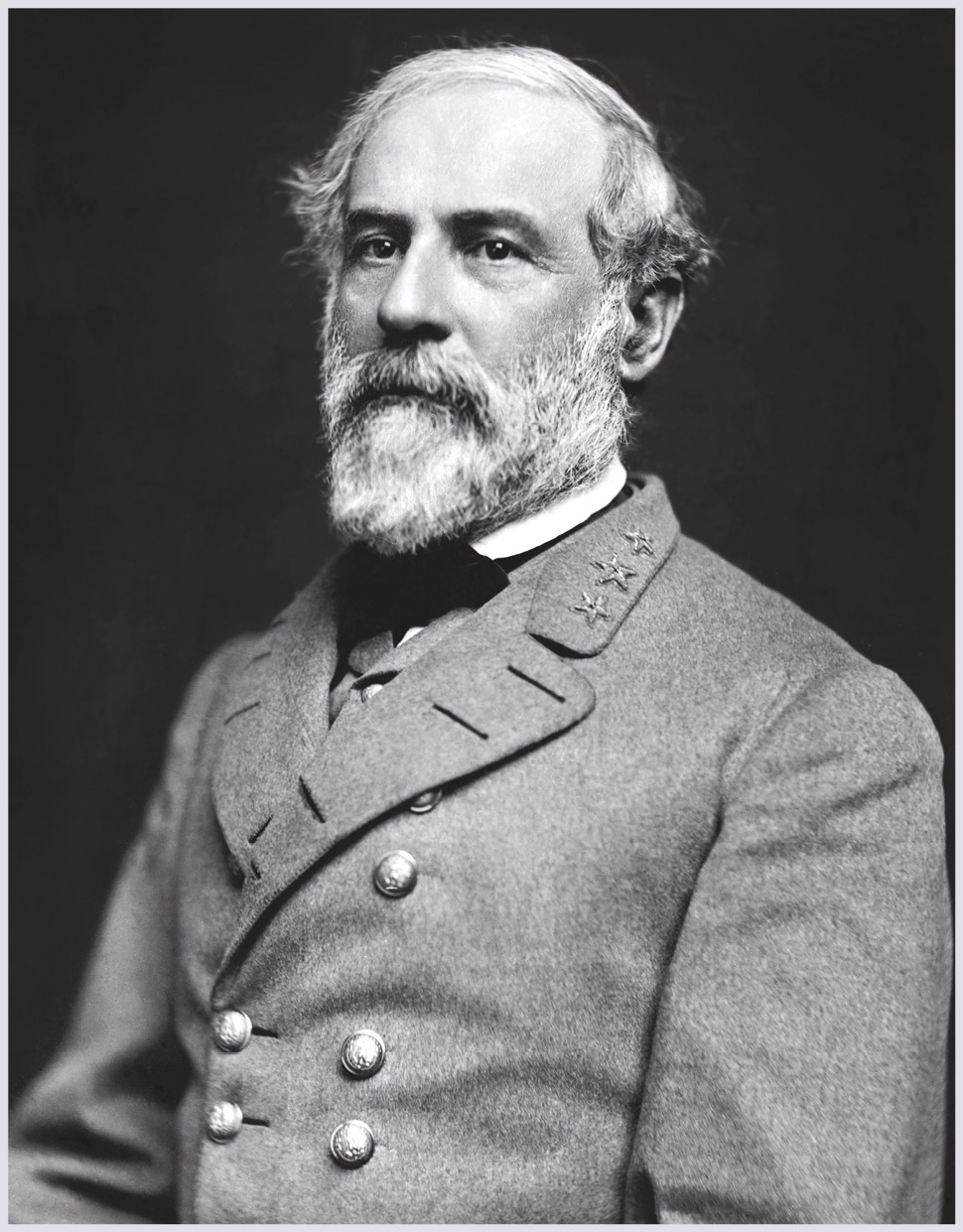
On 17 September 1862, with the Army of Northern Virginia ensconced around Sharpsburg, Maryland, they and Federal forces faced off in some of the bloodiest fighting of the war. But the ever-cautious McClellan elected not to commit his reserves, and Lee finally melted away with his Army of Northern Virginia badly mauled but intact. The Battle of Antietam was an engagement that left over 23,000 men killed, wounded, or missing. As Lee’s forces slipped back into Virginia, McClellan failed to pursue and harry his foe. As President Lincoln complained vehemently, the commander of the Army of the Potomac suffered from a ‘bad case of the slows’.
The exasperated president finally relieved McClellan of command, replacing him with Major General Ambrose Burnside in the hope that, whatever his very obvious flaws, he would fight. As it turned out, Burnside would indeed fight, but not well. In December 1862, he threw an army of more than 120,000 men against an entrenched Confederate force of some 75,000 at Fredericksburg, Virginia – a prominent port on the Rappahannock river, and the strategic midpoint between Washington and Richmond. Lee’s forces occupied the high ground across the Rappahannock and athwart the route to the Confederate capital. Burnside delayed his assault until the arrival of pontoon bridges, allowing Lee to consolidate his positions. When the Federals finally attacked, they were slaughtered by the Confederate guns. One Federal officer remarked that it was ‘murder, not warfare’. Burnside would soon be replaced by ‘Fighting Joe’ Hooker, and the bloody struggle would continue.
Images: All images Wikimedia Commons unless stated.
You can read the second part by Fred Chiaventone here and find Calum Henderson's infographics here.