

Subscribe now for full access and no adverts
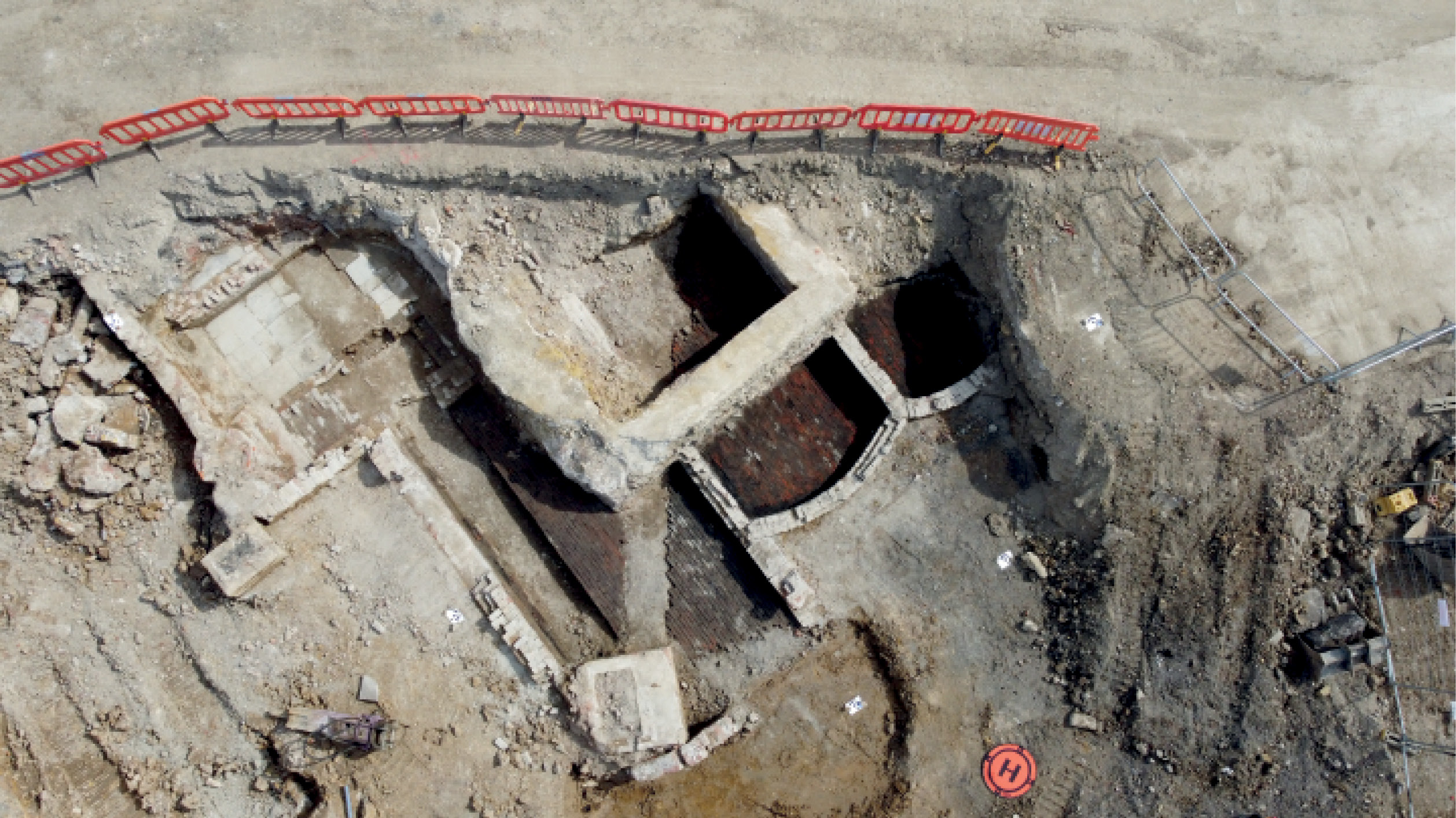
When we hear the word ‘workhouse’, many of us will be immediately transported in our imaginations to the world of Charles Dickens; to dingy Victorian institutions, overcrowded and disease-ridden; to uncaring masters and matrons doling out harsh punishments; and to a starving scrap of a child holding out a bowl in the forlorn hope of a second serving of watery gruel. Nineteenth-century novelists and social reformers alike decried this system of ‘support’ for society’s most vulnerable members, and we have a wealth of written references, records, and reports to help build a vivid account of the conditions under which these infamous institutions operated. Was this situation always so bleak, however – and what can archaeology add to the picture? Recent excavations close to St Pancras Station in London have revealed the well-preserved remains of a workhouse that stood on the site for more than 100 years – and evidence that, in its early days at least, the building’s governors did show some care for the comfort of its inhabitants.

When the St Pancras Workhouse opened its doors in 1809, it was the third such institution to appear in the area. Its predecessors, founded in the mid-18th century and operating out of rented buildings, soon succumbed to overcrowding and disrepair; the new workhouse, however, had been accorded purpose-built facilities, designed to accommodate 500 of the most vulnerable of the local population. Three years later, it added an infirmary – a vital resource for its inhabitants, who would otherwise have had no recourse to free medical care (the NHS would not be founded for another 136 years) – but while the workhouse repeatedly expanded over the course of its existence, the numbers of urban poor continued to soar, and the institution could not keep pace with this growing need.
By the 1850s, the site had become drastically overcrowded, housing between 1,500 and 1,900 poor, sick, and mentally unwell individuals, and official records of the conditions in which they were housed became increasingly condemnatory. Nevertheless, the St Pancras Workhouse continued to operate until 1929, when it became the St Pancras Hospital. Some of its original buildings are still in use, today part of the Camden and Islington NHS Foundation Trust, though many did not survive to the present, having been demolished either during historical extensions and alterations to the workhouse complex, or following bomb damage during the Second World War. Now, with a new health facility set to be built on the site, MOLA (Museum of London Archaeology) have brought some of these lost elements to light once more.
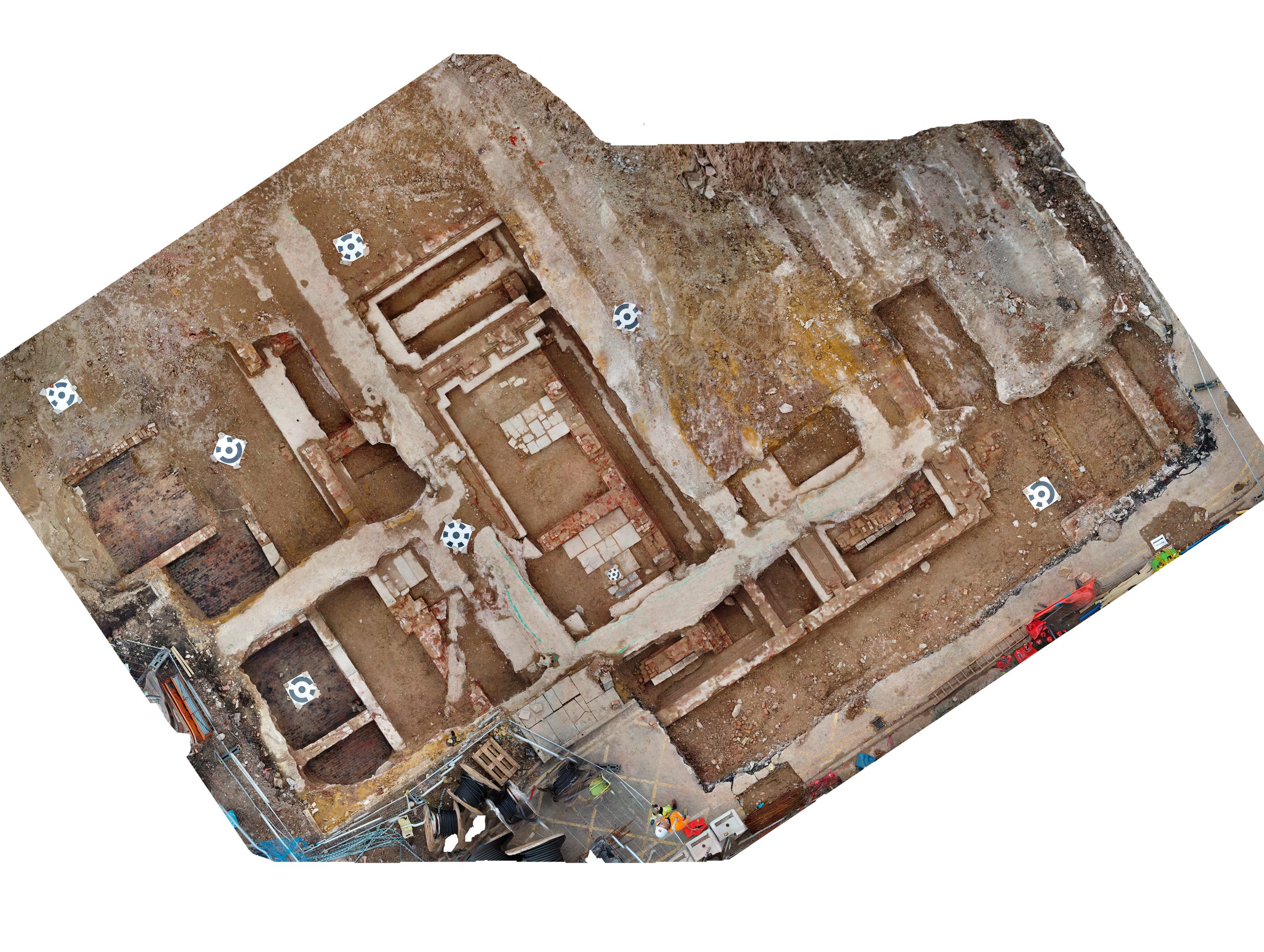
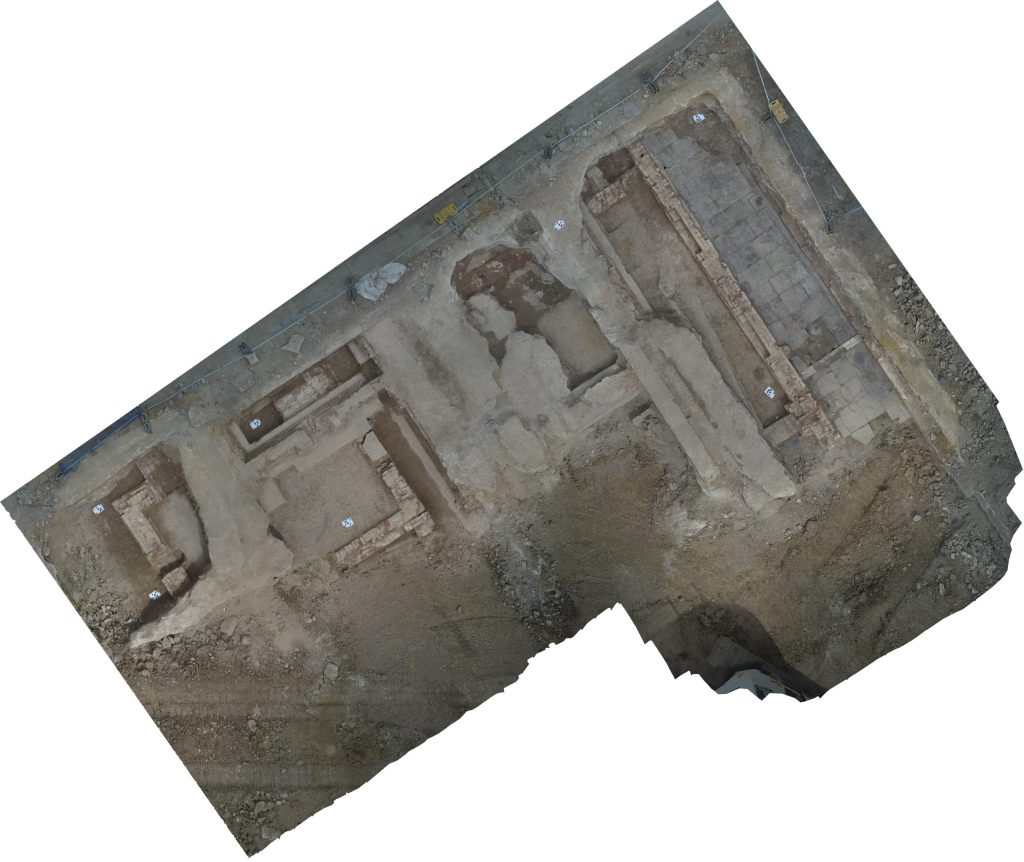
Known as Oriel, the new centre for eye care, research, and education is a joint initiative between Moorfields Eye Hospital NHS Foundation Trust, UCL Institute of Ophthalmology, and Moorfields Eye Charity, and continues the long tradition of healthcare provision that has been offered on the site since 1812. It is set to open in 2027, and with its footprint overlying a significant portion of the demolished workhouse remains, MOLA have excavated a 2-acre area to document any surviving archaeology. Their discoveries have added illuminating details to our understanding of the site – particularly of its early years, about which previously little was known beyond outlines on parish maps – and offer evocative insights into the experiences of those who lived in and administered the workhouse.
Institutional echoes
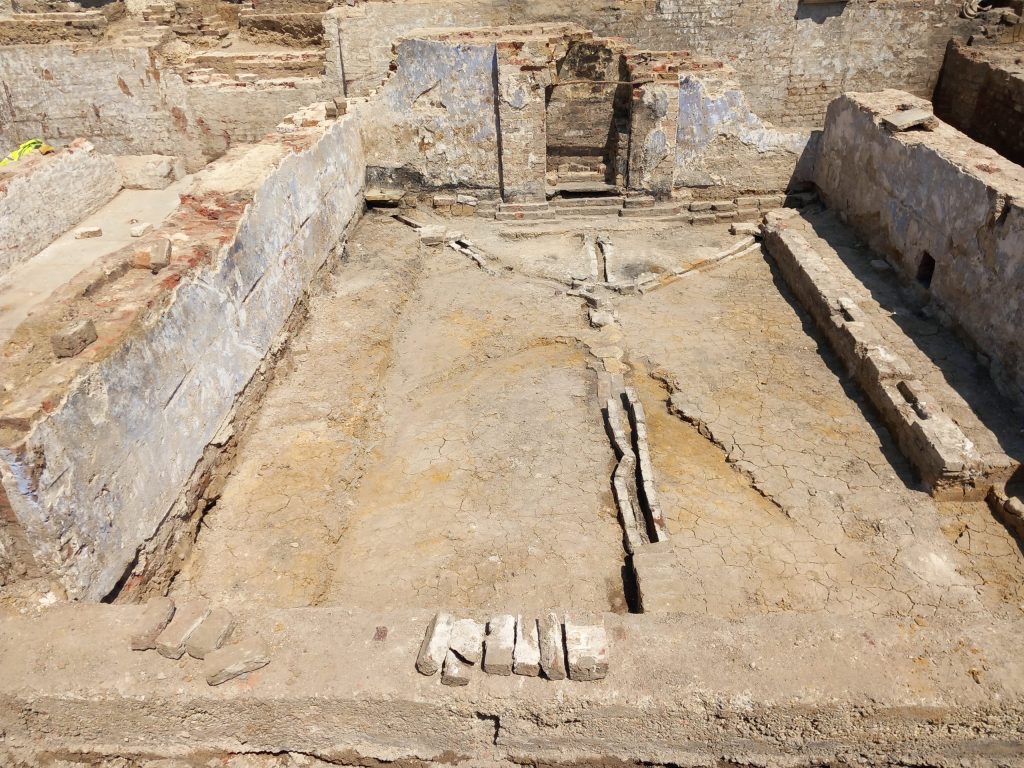
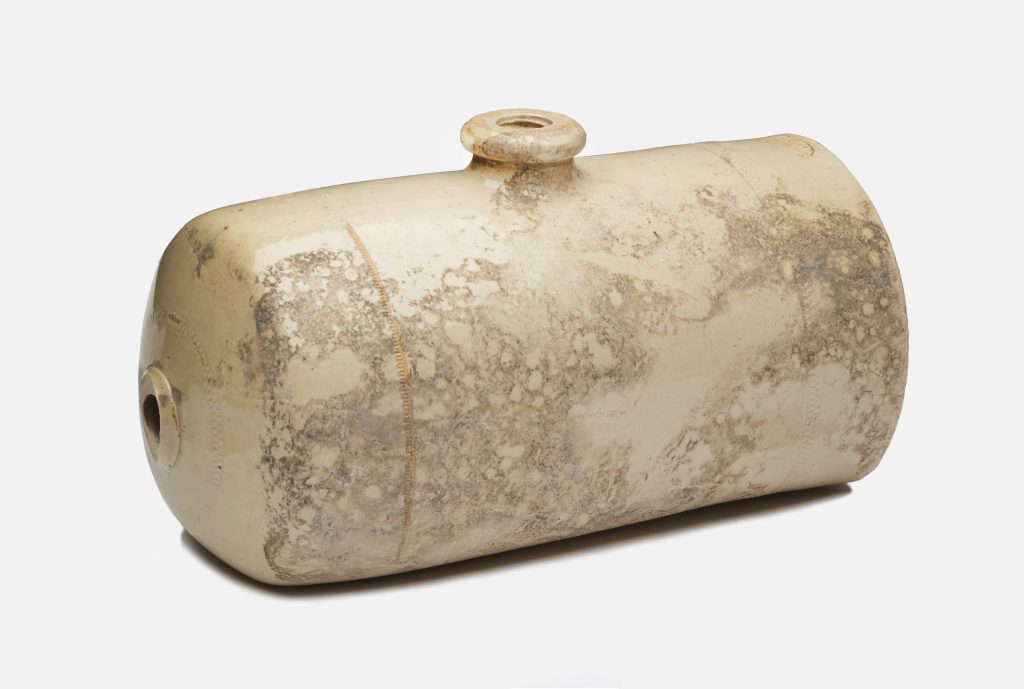
Men and women were housed separately in 19th-century workhouses, and some of the best-preserved remains uncovered by MOLA belonged to the original female wards, whose walls survived to over 1m high. Contrary to stereotypes of workhouses being drab institutions, these were covered with vibrantly blue painted plaster, and the rooms were also furnished with fireplaces, indicating that at least some provision had been made for their occupants’ comfort. Artefacts including a ceramic hot-water bottle and a bone toothbrush with horsehair bristles added to interpretations that, initially at least, life in this institution was not expected to reflect the barest minimum. While conditions were undeniably spartan, this was not a prison; and, while life within the workhouse’s walls was far from luxurious, inhabitants were not being punished for their presence.
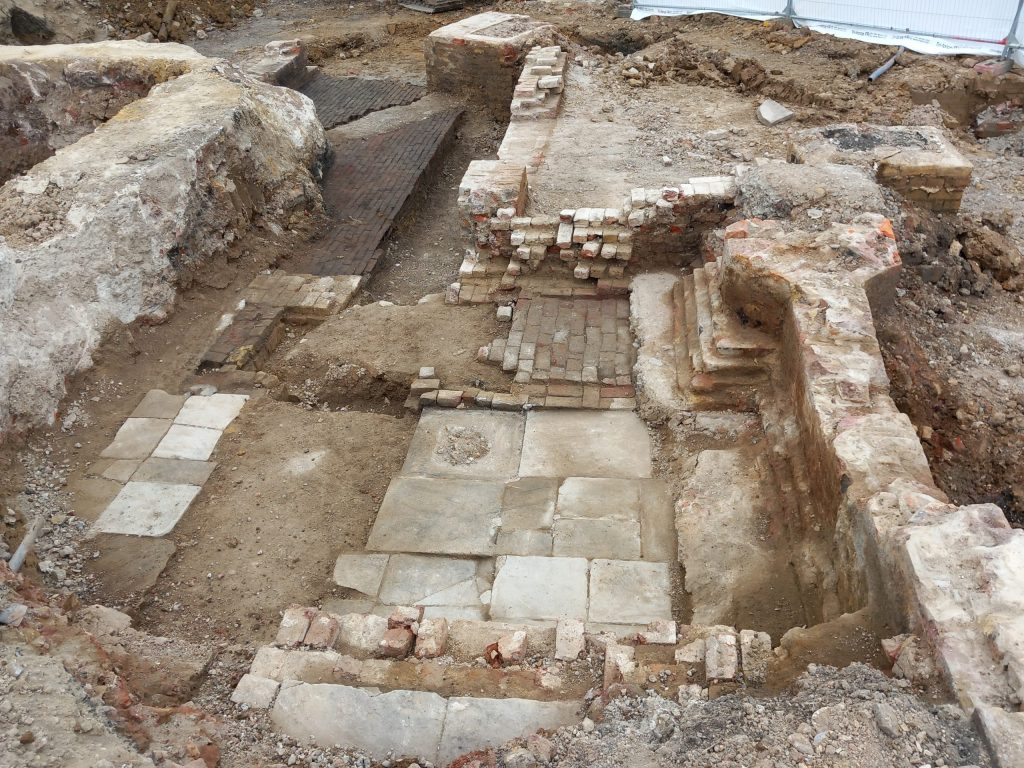
This austerity was not expected of everyone, of course, and the marked disparities in status that existed between the institution’s impoverished inhabitants and those running the workhouse were clear in the archaeological evidence. A particularly striking example of this was a series of rooms and adjoining corridors thought to represent the remains of the master’s offices and living quarters, which were floored with expensive Yorkstone slabs.
MOLA’s investigations also uncovered the remains of the sick wards that were added to the infirmary in the 1840s to combat overcrowding. There was little in the way of artefacts to give insights into the kind or quality of medical care being provided there, suggesting that these rooms had been carefully cleared before their demolition, but other spaces did reveal more details of how the workhouse had operated. These included functional rooms such as the institution’s kitchen, which was discovered beneath the footprint of the hospital kitchen built in the 1940s. This was not the only example of the hospital reusing elements of its predecessor: in a number of places walls had been built on top of earlier foundations, while in the workhouse laundry 1940s concrete was found channelling water into the same soakaways that had originally been used by the large Victorian water tanks that still survived in situ. This space would have been a hive of constant activity, and by the mid-19th century this work was aided by cutting-edge technology of its day: in 1857, The Illustrated London News published a short article about the St Pancras Workhouse’s new steam-powered washing machines.
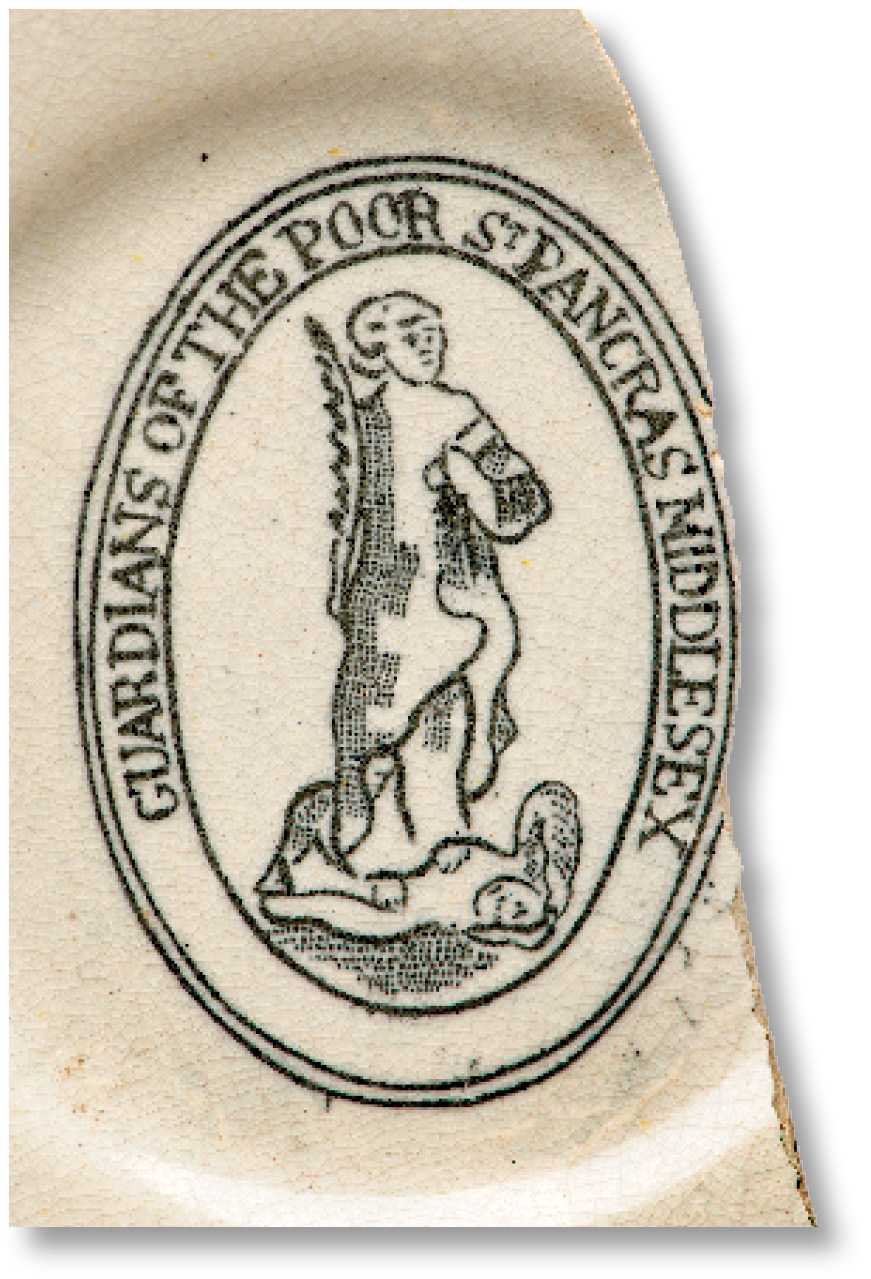
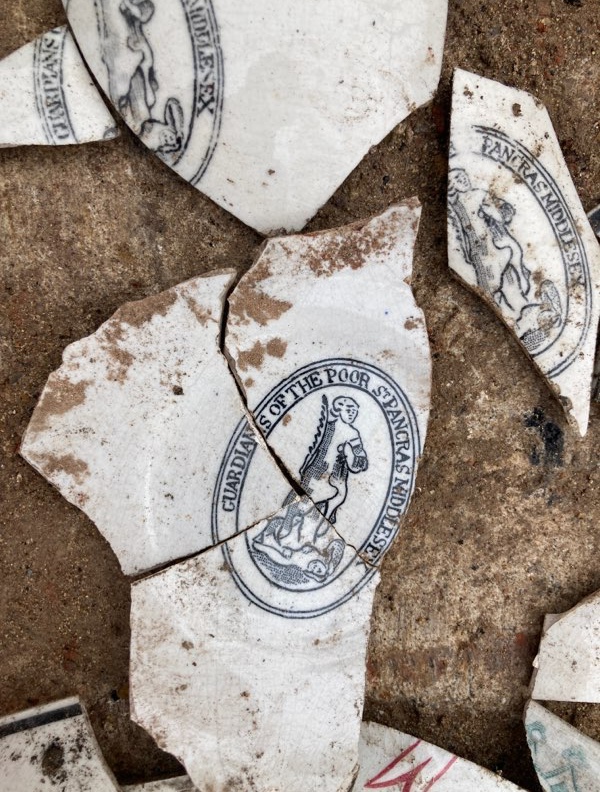
Large quantities of coal would have been required to heat water and power the institution’s facilities, and this is believed to have been stored in a series of seven simple lower-ground-floor rooms whose foundations were found running along the front of the building, and whose recycled brick flooring was covered in soot. Interestingly, one of these rooms produced large numbers of pottery fragments too – these were all official institutional crockery, stamped with wording that vividly illustrated the workhouse’s perception of its purpose: ‘GUARDIANS OF THE POOR, ST PANCRAS MIDDLESEX’.
Changing attitudes
If the institution set out to operate with such benevolent intentions, however, where did it all go wrong? By the 1850s, the workhouse was undeniably overcrowded and attracting damning reports in newspapers and medical journals alike – understaffed, insufficiently furnished, and no longer meeting the needs of its inhabitants. This stands in stark contrast to the hints of care for the pauper population’s comfort that, archaeological evidence suggests, were at least a consideration in St Pancras’ early years. To understand this apparent change of attitude, let’s delve deeper into the history of workhouses in England.
As mentioned at the start of this article, the 1723 Workhouse Test Act is often seen as the birth of the workhouse system in England and Wales, creating designated buildings where the destitute could be housed. Prior to that, provision of social support had its origins in the reign of Elizabeth I. Today known as the Old Poor Law, the 1601 Acte for the Reliefe of the Poore essentially formalised arrangements, administered at a parish level, that had gradually developed after the Dissolution of the Monasteries in 1539 had done away with a key aspect of charitable provision and social support. Able-bodied recipients were expected to work in return for aid, but it was issued on an individual basis, and people could remain in their own homes unless they could not care for themselves.
It was industrialisation that brought the biggest change. During the Industrial Revolution, people flocked from rural settlements to seek work in the city. Urban populations soared and, with them, rates of urban poverty. The cost of providing relief to the poor rose in tandem, leaving local authorities faced with two choices: to tackle the social and economic factors that were causing so many to live in extreme hardship, or to deter people from claiming the relief in the first place. The result was the 1834 Poor Law Amendment Act, today known as the New Poor Law. It took its lead from a report by the Royal Commission that held the view that poverty was caused by indolence rather than external factors, and so the solution to the rising costs of supporting the urban poor was to put off all but the most desperate from accessing the increasingly stretched public funds.
Instead of administering aid to individuals at parish level, the new Act brought support under central control, administered by boards of Guardians overseeing groups of parishes called Unions. Crucially, it made all assistance for the able-bodied poor conditional on them entering the workhouse, while also ensuring that conditions within these institutions were sufficiently unpleasant as to make this a last resort.
Life in the workhouse was deliberately harsh. Inhabitants – called ‘inmates’ – were clothed, but in uniforms. Their children were given some schooling, but families were forced to live apart, with men, women, and children housed separately within the institution. They were given free (if monotonous) food, shelter, and medical care – but in exchange all able-bodied individuals were required to spend their days in repetitive tasks and hard labour. Adults could be set to picking oakum, breaking stones, crushing bones for fertiliser, making sacks, or working in the institution’s kitchen and laundry. Children as young as seven, meanwhile, could be sent away as indentured apprentices (which meant they were contracted until the age of 21 – or, if female, until marriage) to work in mills and factories far from the city that they knew. CA 403 gave the other side of this story, describing a recent cemetery excavation that has illuminated the experiences of children who were sent to labour in mills around Fewston in North Yorkshire.
The new system was so hated that there were protests and riots against it, particularly in the north of England, and a series of scandals surrounding miserable living conditions caused popular outrage. The most famous case concerned the Andover Workhouse in 1845, where half-starved inmates were found to be eating decaying meat stripped from the animal bones that they had been tasked with crushing.
Campaigning voices
Among the most-famous of the voices raised in opposition to the suffering that was being caused by the New Poor Law was Charles Dickens. The author’s compassion drew from his own precarious economic position during childhood: his father had been confined in the Marshalsea debtors’ prison in Southwark, living there with his wife and all but one of his children – that being the 12-year-old Charles, who was sent out to work in a local blacking factory. While this part of his past was a closely guarded secret in Dickens’ lifetime, debtors’ prisons loom large in his novels Little Dorrit and David Copperfield. Workhouses, meanwhile, most-famously feature in Oliver Twist. The building that is thought to have inspired this tale is the Strand Union Workhouse on Cleveland Street, which stood a short distance from where Dickens lived, but some researchers have suggested that Twist himself could have been based on a particular inhabitant of the St Pancras Workhouse. He was Robert Blincoe, who became famous in the 1830s after releasing a memoir about his childhood in a workhouse and as an indentured apprentice sent to work in cotton mills in Derbyshire and Nottinghamshire.
If you are reading this magazine when it is newly out in December, the festive period might also put you in mind of another of Dickens’ stories, namely A Christmas Carol. There, the miserly Ebeneezer Scrooge refuses to make a donation to a charity aiming to provide ‘meat, drink, and a means of warmth’ to the local poor, neatly expressing the sentiments behind the New Poor Law as he says: ‘I can’t afford to make idle people merry. I help to support [prisons and workhouses]… those who are badly off must go there’. Horrified, one of the collectors protests that ‘many can’t go there; and many would rather die’, to which Scrooge gives a callous response that is almost as famous as his cry of ‘humbug’: ‘If they would rather die, they had better do it, and decrease the surplus population’.
Later, these words are thrown back at him by the Ghost of Christmas Present as they contemplate the likely fate of the impoverished and disabled child Tiny Tim – an appealingly innocent representative of the otherwise anonymous masses who were struggling in poverty at this time. Similar imagery also occurs in Dickens’ journalism, such as when, in 1850, Household Words magazine carried his account of a visit to an unnamed ‘large metropolitan workhouse’. After recounting the abject conditions endured by its inhabitants and the inadequacy of provision being made for them, Dickens ends by describing gazing into the ‘tiny face’ of an injured child lying in the infirmary, and imagining him pleading ‘in behalf of the helpless and the aged poor, for a little more liberty – and a little more bread.’
Sentimental though Dickens’ words were, they expressed views held by many campaigners of the time. Florence Nightingale, too, was deeply critical of the thinking behind the New Poor Law, arguing that ‘the principle must be not to punish the hungry for being hungry’. Even so, it was not until 1929 that the New Poor Law system was disbanded and workhouses handed over to local authorities. Many, like the St Pancras institution, became hospitals and, from 1948, were a key part of the new social welfare system that finally provided a reliable safety net for those in need.
Further information:
• You can read more about the history of workhouses at https://historicengland.org.uk/research/inclusive-heritage/disability-history/1832-1914/the-changing-face-of-the-workhouse.
• To learn more specifically about the St Pancras Workhouse, and to see historical images of some of its buildings, see http://www.workhouses.org.uk/StPancras.
• If you would like to explore a Victorian workhouse for yourself, the Workhouse and Infirmary in Southwell, Nottinghamshire, is the best-preserved surviving example. It is now in the care of the National Trust: http://www.nationaltrust.org.uk/visit/nottinghamshire-lincolnshire/the-workhouse-and-infirmary.