
Subscribe now for full access and no adverts
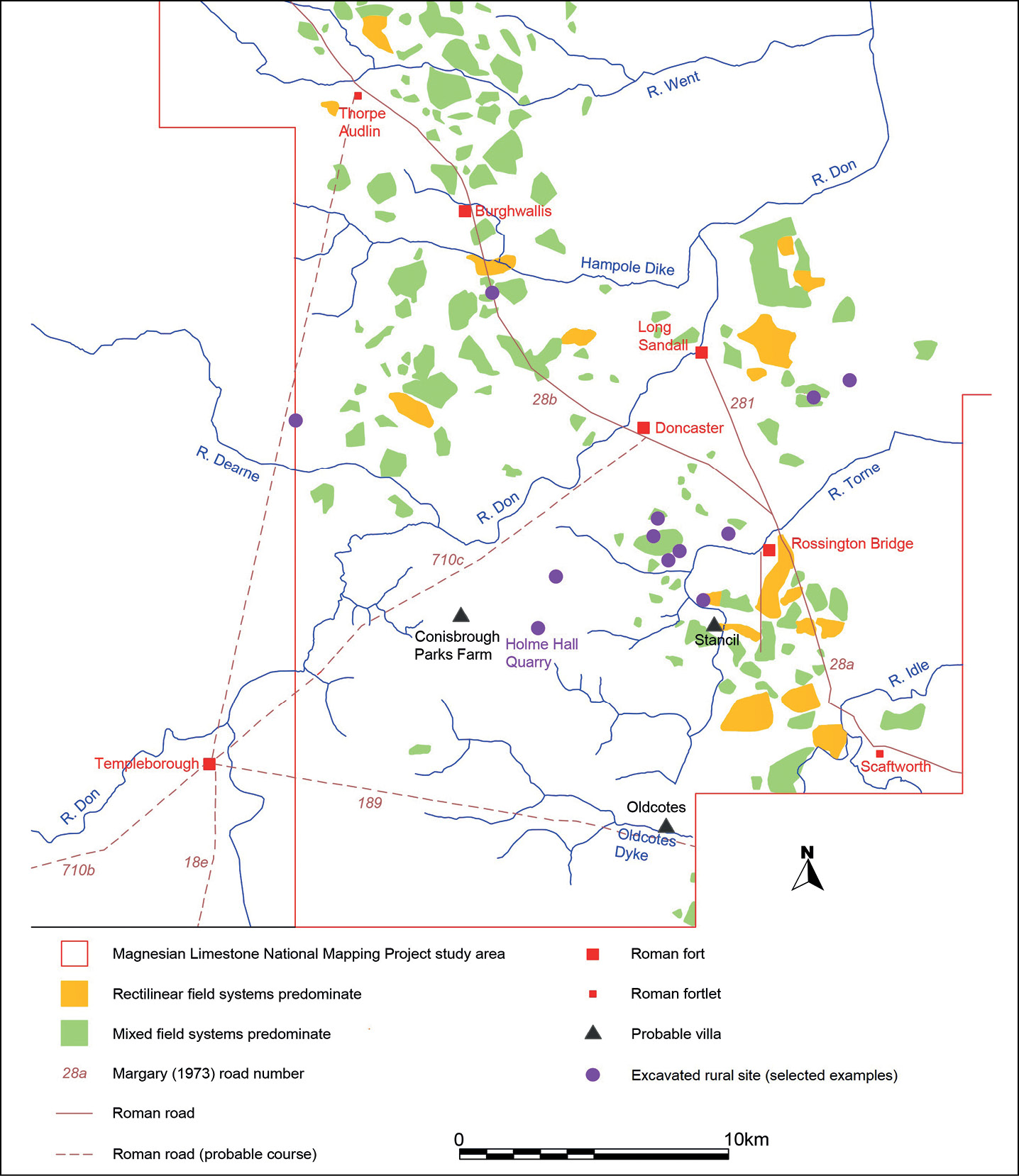
The Magnesian Limestone ridge, an ancient outcrop that sweeps across north-east England, has long been a focus of archaeological interest. Iron Age and Roman field systems are widely visible as cropmarks on this geology and its margins in County Durham, West Yorkshire, South Yorkshire, north Nottinghamshire, and north-east Derbyshire, and since the 1990s several examples have been investigated in developer-funded excavations. They tend to be distinctive in form, often with a regular ‘coaxial’ pattern (uniform fields running along a common axis) extending over long distances. Nevertheless, significant research questions remain, particularly regarding precisely when these field systems were established, when they were abandoned, and the role that they played in relation to the Roman military who occupied forts in the surrounding landscape from the mid- to late 1st century AD onwards in the areas south of the river Don. This picture is now becoming clearer, however, as recent large-scale excavations at Holme Hall Quarry, which is operated by Breedon Group, have contributed significantly to our understanding, offering detailed insights into how the early Roman frontier region in Britain was organised prior to the invasion of the territory of the Brigantes in c.AD 69.
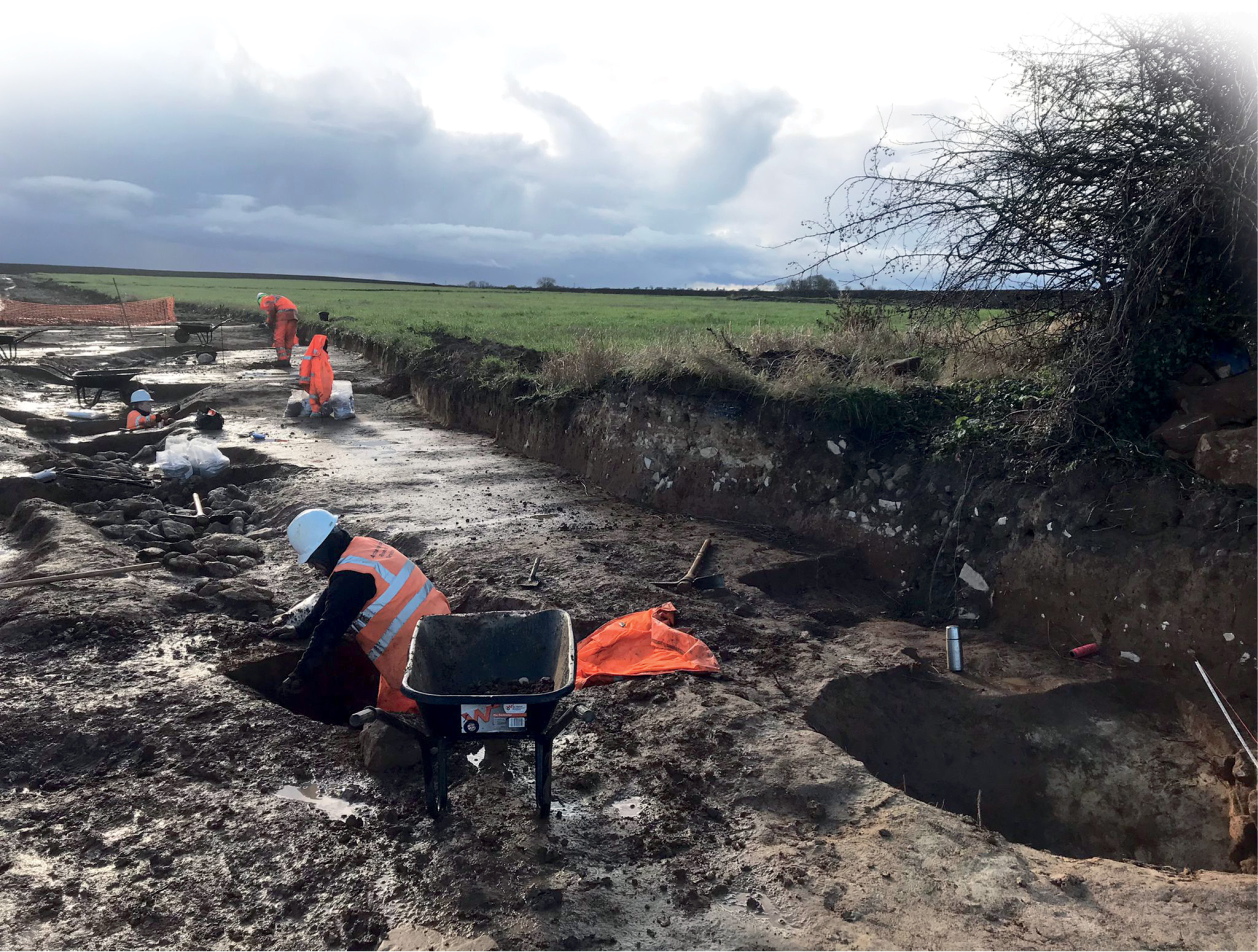
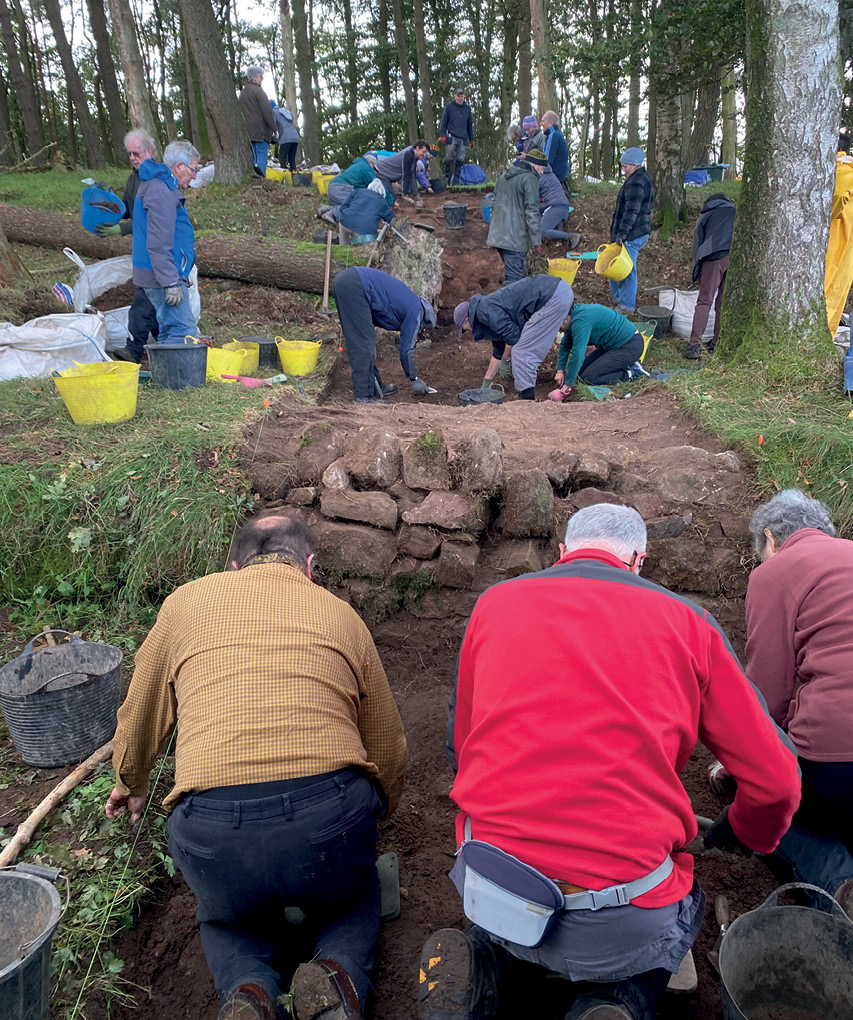
Holme Hall Quarry is a large limestone extraction site in South Yorkshire, lying immediately south of the M18 motorway, 7.6km (4.7 miles) south-west of Doncaster, and 3.2km (2 miles) south of the River Don. Archaeological Research Services Ltd were commissioned by Breedon to investigate an area of some 34 hectares (84 acres), as part of a planning application to extend the quarry workings. An initial extensive geophysical survey revealed the presence of several possible enclosures, field ditches, and a droveway of possibly Iron Age/Roman date, and excavations followed in 2015 and 2019-2022. Together, this work has literally put the quarry’s historic landscape on the map, revealing a busy landscape of multi-period remains across an area where very little archaeology had previously been known.


An evolving landscape
Our story begins long before the Roman period. The earliest evidence of a human presence identified on the site came in the form of 206 chipped lithics ranging in date from the Mesolithic to the early Bronze Age. The vast majority of these were found in topsoil rather than contemporary features, but they provide important context for the hunter-gatherer groups who once utilised this landscape, as well as its more extensive use by the Early Neolithic farmers who built their burial monuments along the Magnesian Limestone ridge. Middle Iron Age occupation also emerged during our investigations. Two pits were radiocarbon-dated to the 4th to 2nd centuries BC, and one of these appeared to be associated with a possible post-built structure that was otherwise undated. These features provide a useful addition to our knowledge of a period which is not well represented in South Yorkshire due to the paucity of pottery of this date.

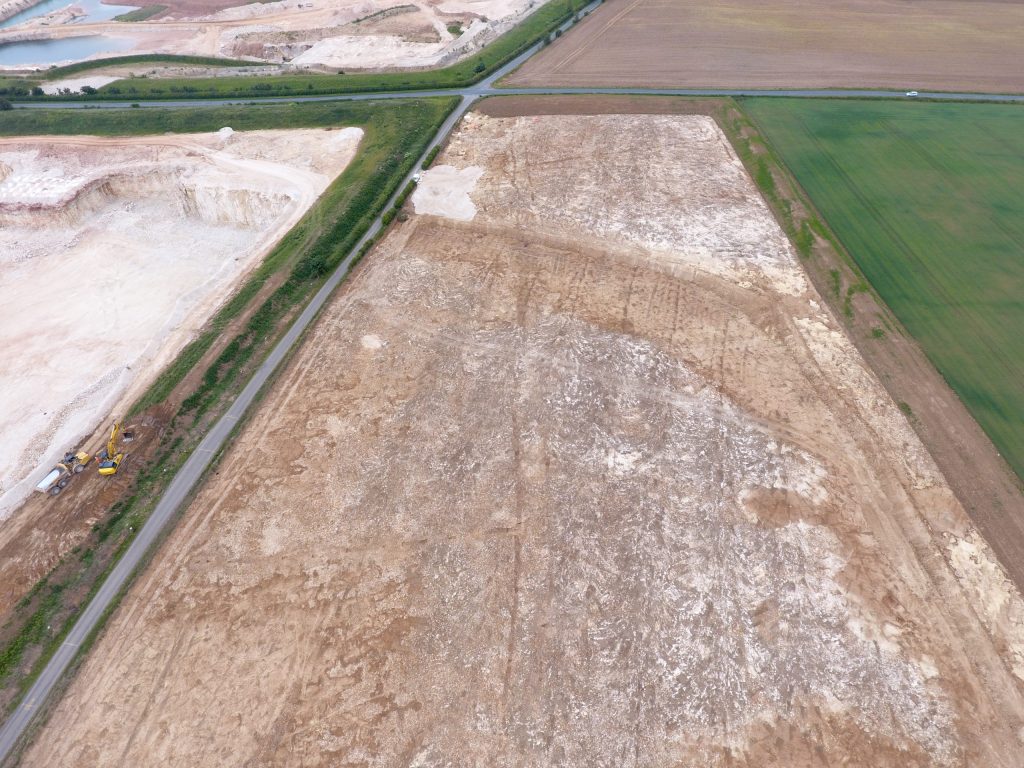
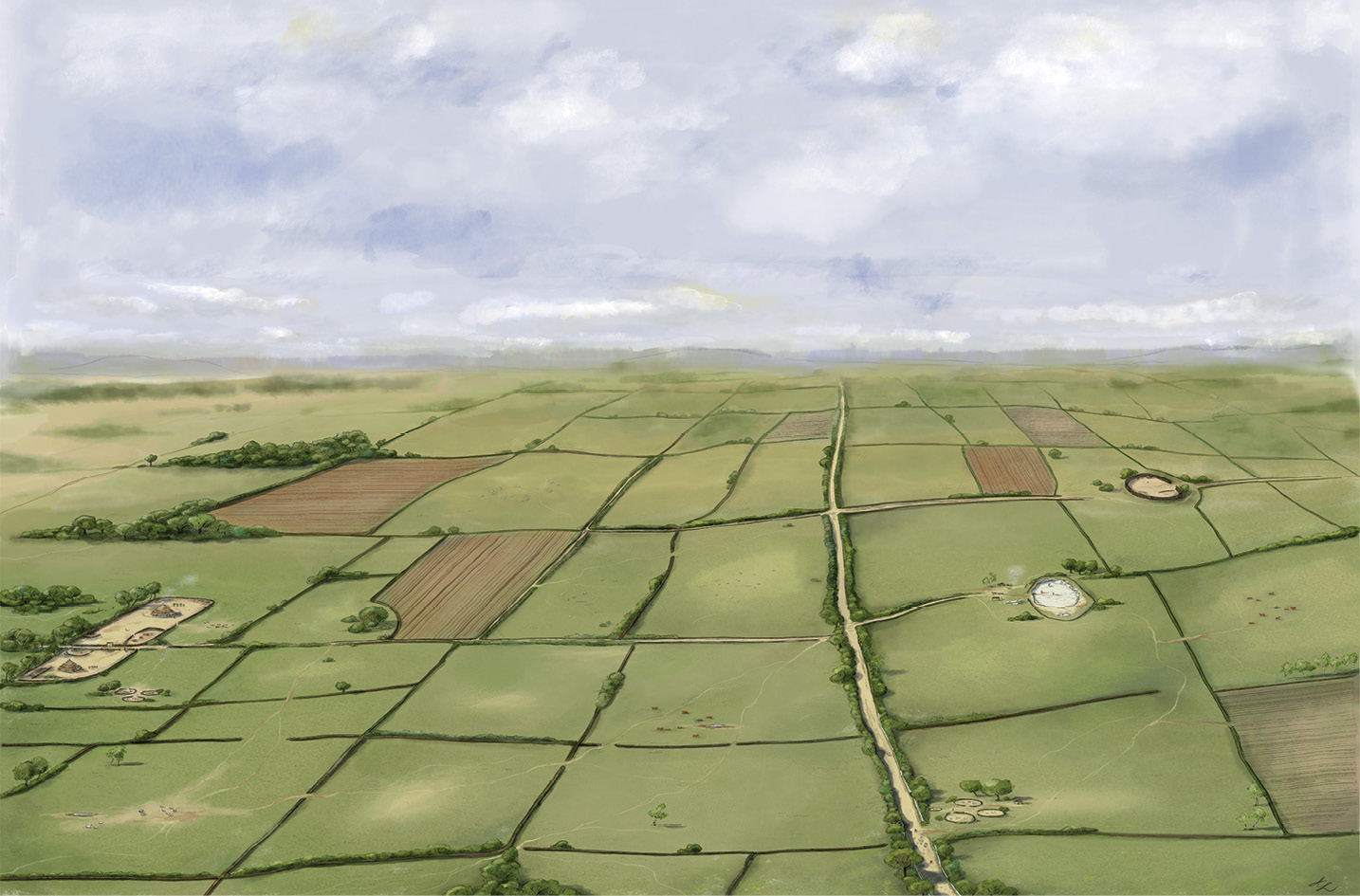
The main phase of occupation of the site, however, was during the Roman period (just possibly beginning in the late Iron Age – based on the radiocarbon date standard deviation, but this is considered unlikely). It was represented by an extensive, well-preserved field system spanning at least 650m (2,133ft) east–west by 495m (1,624ft) north–south, which was sample-excavated across a large, continuous area covering some 25.8 hectares (63.8 acres) in the western and central parts of the site. Following the familiar rectilinear/coaxial pattern, the fields were typically around 0.5-0.9 hectares (1.2-2.2 acres) in area, though larger and smaller examples were also documented. Although a few field- and enclosure-ditches had been recut, we could not see any clear evidence for this mass of features developing in different phases. This is significant, as it suggests that the entire field system could have formed part of a large-scale reorganisation of the landscape, with a focus on increasing agricultural production.
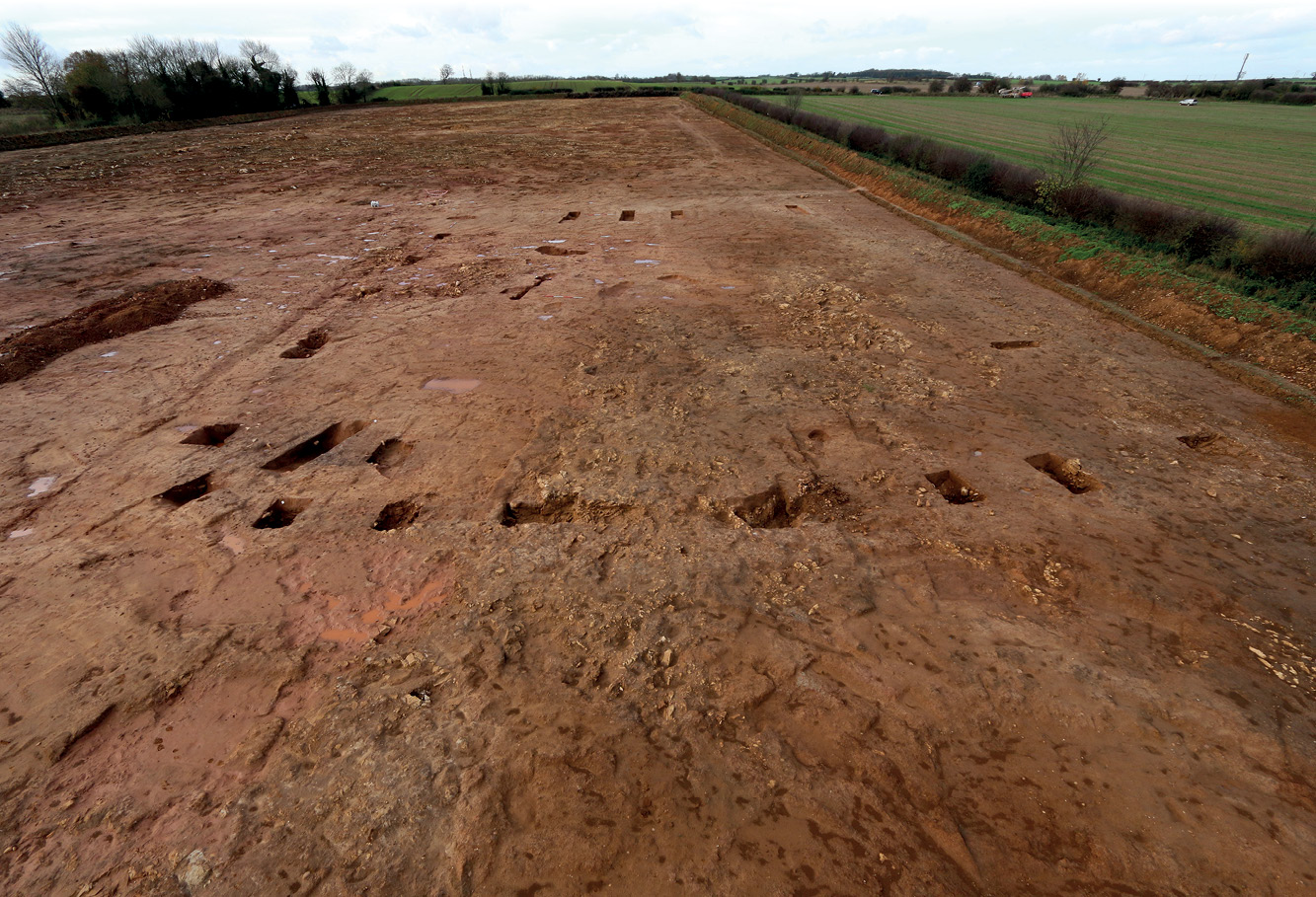
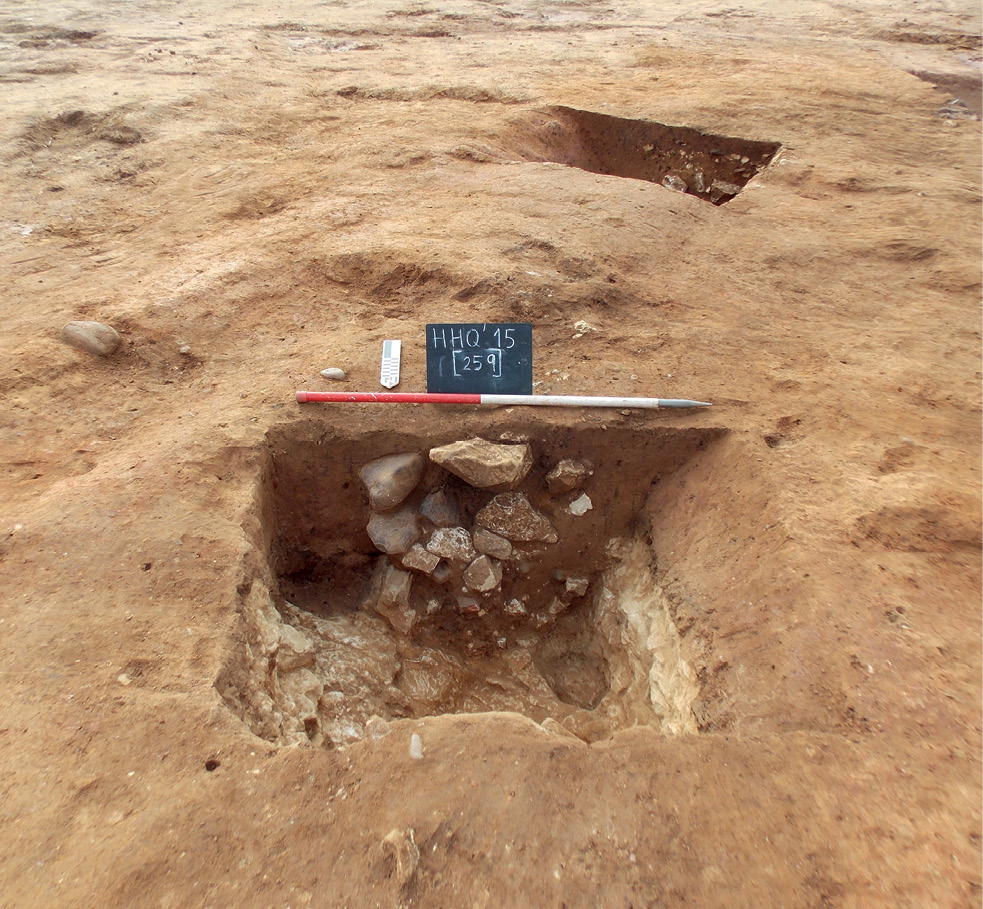
The different fields may have been demarcated by stone-faced earth or earth-and-rubble banks following the lines of their ditches. Such constructions have been found preserved just 2km (1.2 miles) to the north of the site at Edlington Wood, and at Holme Hall Quarry the discovery of limestone rocks and blocks within the fills of the field ditches were interpreted as possible collapsed or cleared examples of the same. These fills also produced pottery fragments suggesting that the field system had been established in, or just possibly even before, the 1st century AD, and were backfilled during the Roman period – but only small amounts, indicating a generally low density of occupation at this time. The earliest pottery identified was in the Lincolnshire/Trent Valley native/Iron Age tradition, associated with the 1st to mid-2nd centuries AD. This was found in the fills of four ditches in different parts of the site. Other field boundaries produced a few Roman sherds (with nothing necessarily post-dating the mid-2nd century), as well as a handful of other finds including iron nails, a small iron bar, and a scrap of copper-alloy sheet.
Contrasting with these dispersed finds, a major feature associated with the field system was a droveway that ran for at least 489m (1,604ft) north–south across the full extent of the excavated area. This gently sloping track measured 3.1-5.5m (10.2-18ft) wide between its ditches, and these flanking features contained no artefacts to indicate its likely date. A possible pit or area of wear within its surface yielded ten probable hobnails – perhaps from a discarded or lost shoe – indicating that this route had been active during the Roman period. It would have been travelled by both people and livestock, and may have linked up with the Roman east–west road 3km (1.9 miles) to the north, which probably ran between the forts at Templeborough and Doncaster. It possibly formed the fortified frontier of the Roman Empire in this region prior to AD 69.

Farmsteads and funerary rites
Roman occupation at Holme Hall Quarry appears to have focused on a number of enclosures, especially two probable farmsteads which we labelled Enclosure 1 and Enclosure 2a/b. The latter site was a rectangular complex, possibly divided in two parts, with associated fields, which was found in the eastern part of the site. Inside, we uncovered evidence of food-preparation and -consumption, while its ditch fills produced pottery suggesting that the origins of this enclosure may lie in the late 1st to mid-2nd centuries AD, with its outline recut in perhaps the late 2nd or early 3rd century – something that was subsequently confirmed through radiocarbon dating of birch charcoal, cow bones, and charred grain.
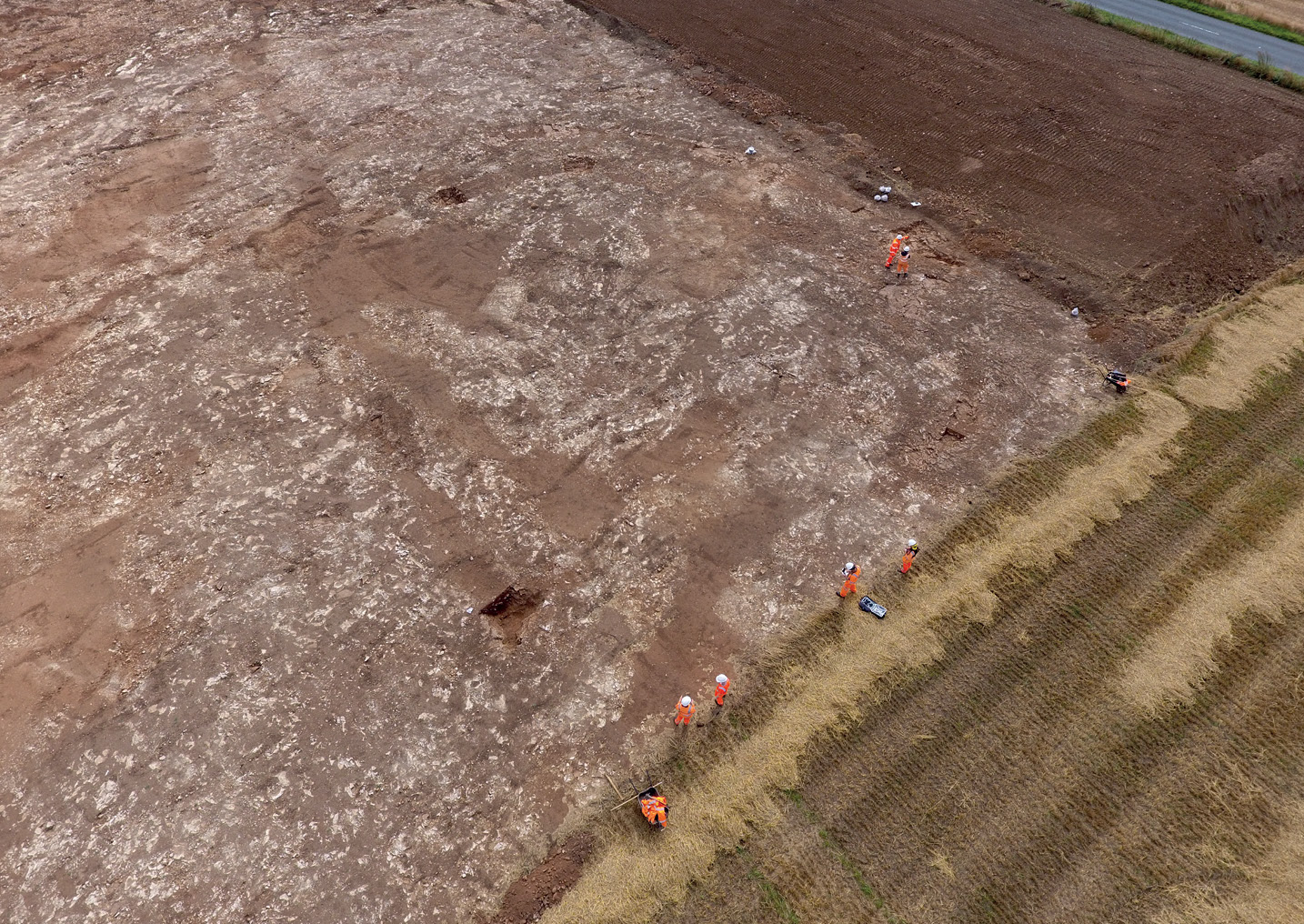
Enclosure 1, meanwhile, which lay c.0.7km (0.4 miles) further south, had originally been excavated by the ARCUS (University of Sheffield) in 2004. This farmstead was sub-circular in form, and its interior produced evidence of cooking and for the presence of a blacksmith. Pottery from the enclosure ditch suggests it was probably dug at some point in the late 1st to 2nd centuries, with its use continuing into at least the early 3rd century. Neither farmstead produced certain evidence of structures, which might suggest that any building that had once stood within them had been made of timber, with foundations laid directly on the now plough‐truncated or hard rock ground-surface, and therefore left no archaeological trace.
Four more enclosures (numbered 3-6), all quite different from each other, were identified in the central and western parts of the site. Number 4, which was curvilinear in form, contained a small limestone quarry, perhaps for the repair of field-boundary walls, though this is not certain. The enclosure’s fills contained a few sherds of Lincolnshire/Trent Valley native/Iron Age tradition pottery, datable to the 1st to mid-2nd centuries, but also a South Yorkshire greyware jar of late 2nd- to perhaps mid-3rd-century style. Radiocarbon-dating from animal bone supports this later date range for the feature.
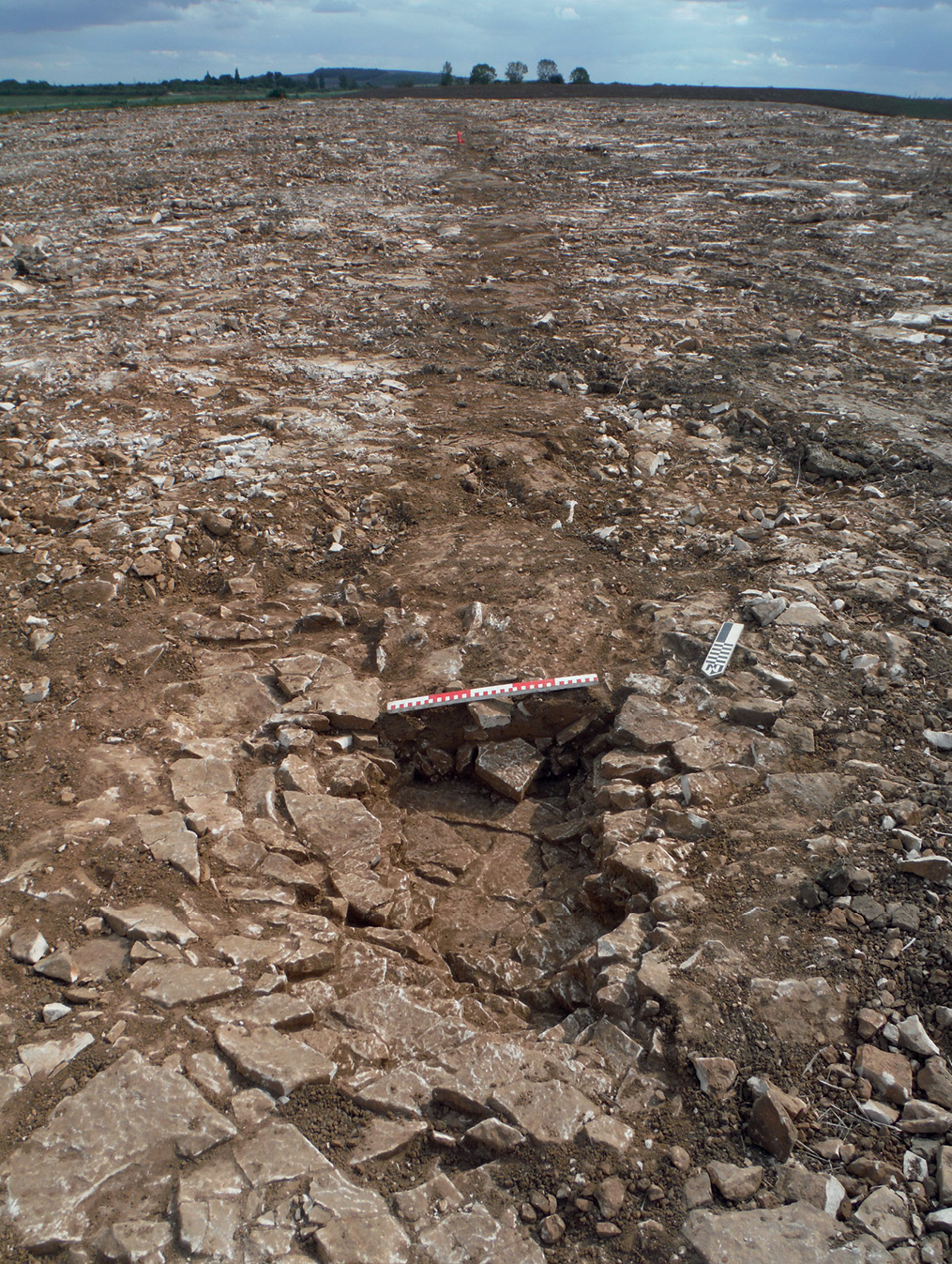
The other enclosures exhibited diverse designs, including a double-ditched D-shape (number 3), a horseshoe-shaped one with outer and inner ditches (5), and a possible rectilinear enclosure or small field/paddock (6). It is thought that they may have been used to corral livestock. As for the dates of this disparate group, they were not too dissimilar. Pottery evidence for Enclosure 3 indicates that it was established at some point in the 1st century AD and was possibly out of use by the later part of that century, while radiocarbon dating of charcoal from a pit within its interior produced a consistent result of AD 5-125. The outer ditch of Enclosure 5 yielded 1st- to mid-/late 2nd century AD pottery, and similarly consistent radiocarbon dates of AD 9-167, and Enclosure 6’s ditch contained pottery of the late 1st- to mid-2nd century AD.
We also encountered the remains of some of the people who had once inhabited this landscape, in the form of four deposits of burnt or charred fragments of human bone. This included a disturbed urned cremation, c.40m (130ft) south-west of Enclosure 2a, which had been placed in a jar of late 1st- to 2nd-century style. Radiocarbon dating of a skull fragment within the vessel helped to clarify this further, producing a result of AD 24-213 at 95.4% probability, or AD 64-129 at 68.2% probability. These finds suggest that people were being cremated and their remains interred within the agricultural landscape that they had known, not far outside the settlement enclosures. Roman burials are very rare on rural sites in South Yorkshire, presumably because the funerary rites of local communities left little archaeological trace. It is perhaps notable that, at Holme Hall Quarry, the cremations all appear to have been isolated, with no dedicated burial areas identified, and in only one case had the remains been formally placed in an urn. In all cases, they were situated outside of the settlement area, consistent with Roman practice.
Interpreting the evidence
As mentioned above, the settlements and field system at Holme Hall Quarry appear to have been established as part of a large-scale, deliberately planned reorganisation of the landscape, which will have intensified agricultural production on what were fertile soils situated over limestone. Based on pottery and radiocarbon dates, this change probably came about during the mid-1st century AD, most likely (but not certainly) with the appearance of the Roman military in the area, probably from the early AD 50s onwards.
Why, though, had such extensive field systems appeared at this site and others in the region? One possibility is that some or all had been set up by ‘native’ communities, either initially in the late Iron Age or early in the Roman period – possibly as a result of a cultural shift that saw a change from transhumance (the seasonal movement of people and their livestock) in a largely unbounded landscape to more settled form of agriculture with stricter control of the best land. Such a transition could have been driven by pressure from increases in population and livestock numbers at this time. Alternatively, the arrival of the Roman army from the mid-1st century may have had a catalysing role in these processes, perhaps as a result of Roman authorities and/or landowners restricting local people to specific localities and placing obligations on them to pay taxes or otherwise supply the military with goods.
Another option, which could well explain the apparent early Roman imposition of rectilinear field systems at sites like this, and is favoured here, is that following occupation of the region in the AD 50s the Roman military may have reorganised land tenures in order to increase agricultural yields and ensure their own supplies in an initially unstable and potentially hostile frontier zone. It is possible that the land around Holme Hall Quarry area was confiscated or its ownership transferred to preferred individuals or groups, such as Roman military veterans, rich absentee landlords, or more-compliant ‘native’ leaders. These new landowners might then have arranged the installation of planned field systems, possibly hiring (or compelling) local people to construct them and to work or sublet the land that they had once called home.
These new landowners might have arranged…field systems, hiring or compelling local people… to work or sublet the land that they had once called home.
Hints of a similar scenario might be gleaned from an interesting local discovery, made centuries earlier than our own investigations, known as the ‘Stannington Diploma’. This fragmentary sheet of copper alloy was found to the west of Sheffield in the 1760s. Now in the collections of the British Museum and dating to the reign of Hadrian, it represents the discharge papers of a Roman auxiliary soldier, granting him citizenship at the end of his service. From items like these, we can imagine other retired auxiliaries buying or being granted land elsewhere in South Yorkshire in the early 2nd century. The sudden change of the large late Iron Age enclosure at Whirlow Hall Farm, south-west of Sheffield, to a fully Romanised settlement accompanied by a possible signal station in around the late 1st century also emphasises the stamp that Rome was putting on the landscape at this time (see ‘Further reading’ below).
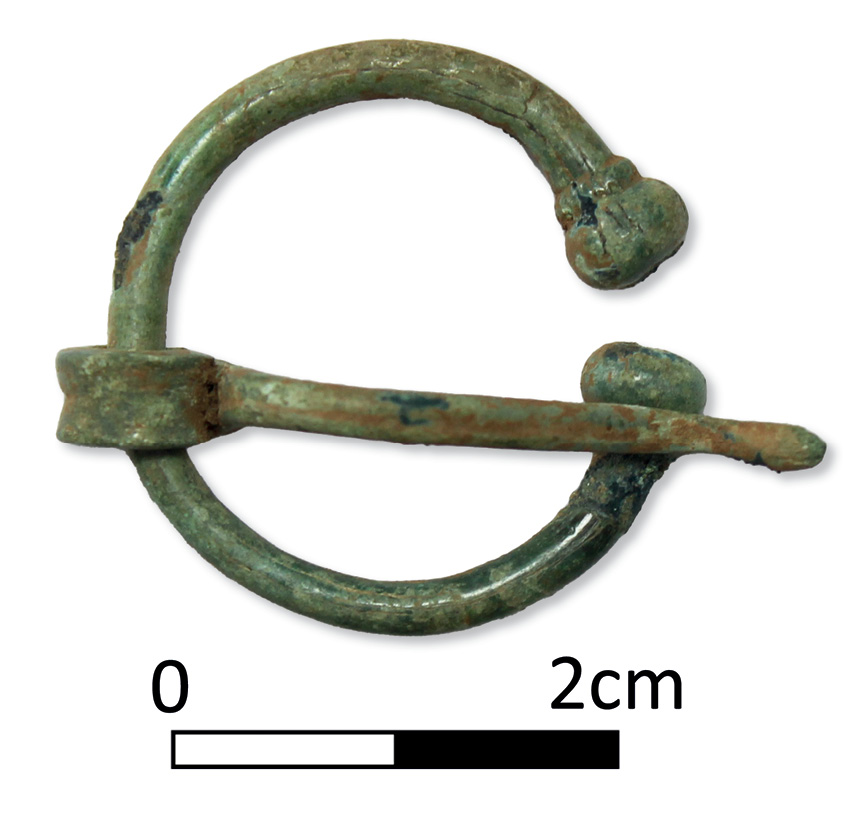
Above & below: Distinctively Roman-style artefacts from the site included this copper-alloy penannular brooch and part of a glass bead, both of which were recovered from a ditch that formed part of Enclosure 5; they may represent a deliberate deposit.

Furthermore, while Roman-style rural villas seem to have been rare in this region, in contrast to much of central and southern England, we do have possible evidence for a resident, wealthy, land-owning elite in contemporary South Yorkshire. A villa complex may lie at Conisbrough Parks Farm, just 2.7km (1.7 miles)west-north-west of Holme Hall Quarry; another likely example was found at Stancil, 6km (3.7 miles) east of our site; and a third probable villa was discovered over the Nottinghamshire border at Oldcotes, c.9.4km (5.8 miles) to the south-east, in 1870.
Agriculture, imports, and industry
Whoever owned this land during the early Roman period, we have gained useful insights into contemporary farming practices thanks to analyses of animal bones and environmental samples collected from the Holme Hall Quarry site. These evoke a mixed economy that probably supported local consumption as well as producing surplus for the Roman military. Bones of all three main meat-yielding species were identified, with cattle being the most common (52.6%), closely followed by sheep/goat (41.4%), with smaller amounts of pig (6%). Charred grains of spelt wheat and barley, identified at Enclosure 2a/b, speak of crop-processing at this rural farmstead, while fragments of quern stones from Enclosures 1 and 2a indicate the grinding of grain.
The site’s inhabitants presumably had to give up or sell a proportion of their agricultural produce in order to pay taxes to support Roman military garrisons in the surrounding region. They might also have had to pay rent ‘in kind’ to a hypothetical landowner, perhaps based at the nearby possible villa at Conisbrough Parks Farm, who then sold on these goods to the army. Nevertheless, there appears to have been enough surplus for the inhabitants of the site to barter or sell in order to obtain other goods – particularly pottery in the 2nd and 3rd centuries. A considerable amount of late Iron Age/Roman and Roman pottery (more than 11,100 sherds, weighing 117.6kg or 259lbs) was recovered from the excavations. This was largely of relatively local production (from the Doncaster area, for example), but some vessels came from adjacent regions or other parts of Britain, and there was also a handful of more exotic imports, including red, glossy Samian tableware from Gaul and olive-oil amphorae from Spain.
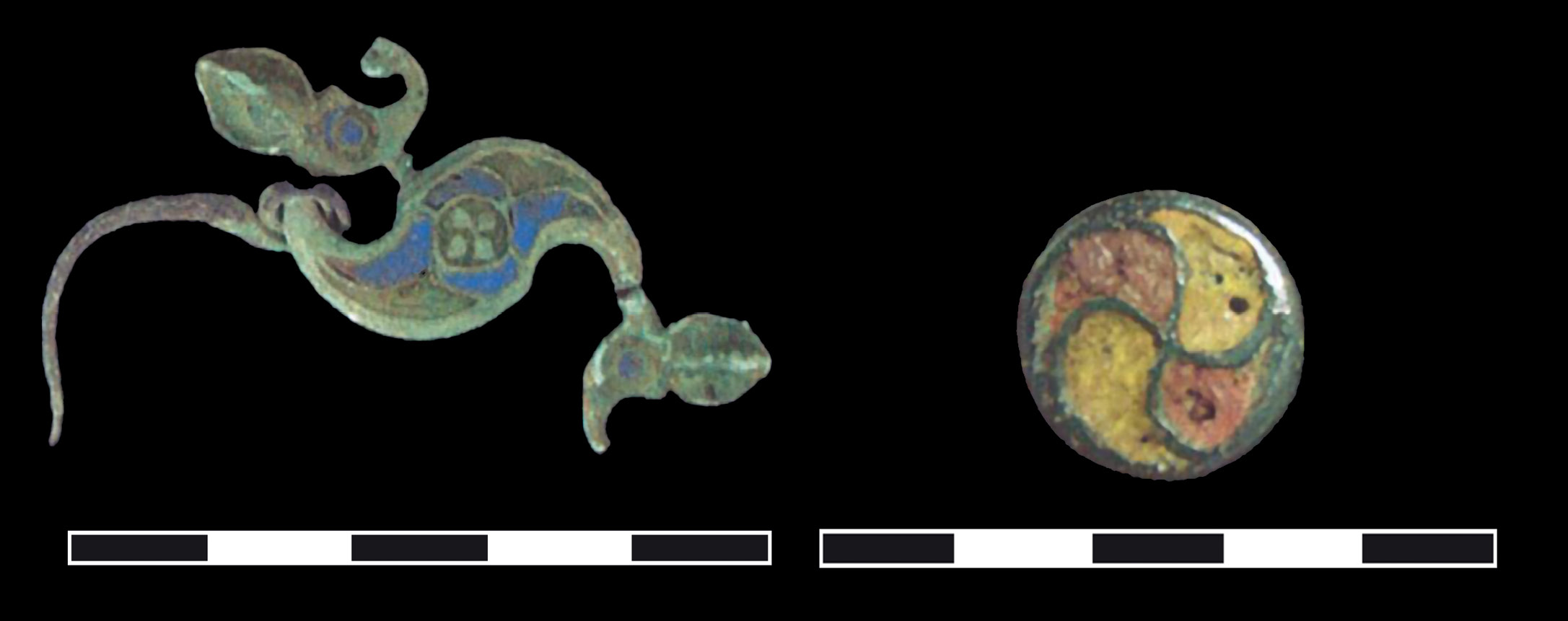
These were not the only traces of Roman material culture on the site. Other evidence of this influence included four copper-alloy coins; part of a ring-shaped blue-glass bead and a copper-alloy brooch, which both came from the primary fill of one of the inner ditch segments of Enclosure 5, and may have been deliberately deposited there; an enamelled copper-alloy dragonesque brooch, found in a crack in the natural limestone bedrock within Enclosure 1; an enamelled copper-alloy stud from a deposit immediately outside the same enclosure; and other metalwork, with a considerable amount of ironwork again found near Enclosure 1.
How did the site’s use change as the Roman period progressed? The surviving parts of the field- and enclosure-ditches appear to have been infilled by the late 2nd or early 3rd centuries, but the boundaries may have remained in use (perhaps as hedges or banks) into the later part of the Roman period or even the early medieval period. The farmstead represented by Enclosure 2a/b appears to have remained active into the late 3rd century, with numerous late Roman pits and post-holes found inside its rectilinear outline, while Enclosure 1 also offered considerable evidence for occupation down to at least the late 3rd century. There is, however, virtually no evidence for Roman activity on the site in or after the early/mid-4th century – perhaps due to a disruption of the previous system of military supply, and/or because of the unrest and instability that was widespread across the Roman Empire, including within Britain, at this time.

This did not, however, spell the end of occupation at Holme Hall Quarry. A scatter of pits containing burnt material were radiocarbon-dated to the 7th to 10th centuries, offering a useful addition to our knowledge of the early medieval period in this region, which is archaeologically poorly represented in South Yorkshire. There was little evidence for activity in the later medieval period, or during the 16th to 17th centuries, when the landscape is likely to have been one of open fields and perhaps partly wooded. This environment was transformed again, though, during the 18th and 19th centuries, when the site once again became part of an enclosed agricultural landscape.
Limestone was clearly now also being quarried on a considerable scale, to produce lime for ‘marling’ the fields in order to boost the increase in agricultural production required to support the Napoleonic war effort, as well as to meet the needs of growing urbanisation. We recorded several infilled quarries of this date, one of which, set in the south-east corner of the site, contained the remarkably well-preserved base of a mid-19th-century limestone-built lime kiln (probably of flare kiln type). This extractive activity was a precursor to the much larger-scale modern limestone quarrying at Holme Hall that began after the Second World War – tangible traces of an industry that would ultimately lead to our own investigations on the site, bringing the experiences of long-vanished communities to light once more.
Acknowledgements: We are grateful to Breedon Group for their funding and support for the archaeological works at Holme Hall Quarry, and for supporting the public participation activities, and publication and public dissemination of the results.
Further reading:
• F M Morris (2025) Excavations at Holme Hall Quarry, South Yorkshire, available as both a paperback (£40) and an open-access .pdf eBook from the publisher at http://www.archaeopress.com. It is also free to download from https://archaeologicalresearchservices.com/holme-hall-quarry.
• C Waddington (2017) ‘A forgotten frontier? Investigations at Whirlow Farm, Sheffield’, Transactions of the Hunter Archaeological Society 29: 8 57; https://archaeologicalresearchservices.com/projects/whirlow-hall farm.
• I Roberts, with A Deegan and D Berg (2010) Understanding the Cropmark Landscapes of the Magnesian Limestone (Archaeological Services WYAS, ISBN 978-1870453448).
All images: Archaeological Research Services Ltd, unless otherwise stated