

Subscribe now for full access and no adverts
I am fortunate that my work as an archaeologist takes me to many churches: a typical day might see me driving down narrow lanes to a secluded Cotswold village, or scaling scaffolding high up on Gloucester Cathedral – all a long way from the noise and intensity of major urban excavations that I have worked on previously, like the investigations at Spitalfields in London (CA 270 and CA 310). It should come as no surprise that archaeologists often encounter religious structures: for well over 1,000 years, the Church has been at the heart of nearly every urban and rural landscape in Britain, representing an institution at the centre of communities and a building that often bears physical witness to the passage of centuries. Churches come in all shapes and sizes, from tiny chapels to huge cathedrals, Saxon minsters to Victorian red-bricks; most are still in use, some stand empty and redundant, and others lie in ruins or buried beneath the ground. So, what does it mean to work on sites like these?

Other denominations have their own historic and significant places of worship, but here we will concentrate on active Church of England (CoE) parish churches – which are usually the oldest standing buildings in an area – and will use recent work in Gloucester diocese to explore some of the more distinctive elements of current church archaeology. While development-led archaeology in other areas has evolved over the last 35 years, church archaeology has, in some ways, stayed in its own lane, preserving many of its own particular features and challenges. Most parish churches are important archaeological sites of great historical and community significance: their graveyards hold our past populations and genetic information; their buildings, fixtures, and fittings are testament to changing liturgy and belief; and their stratigraphy can be extremely complex.
Ecclesiastical encounters
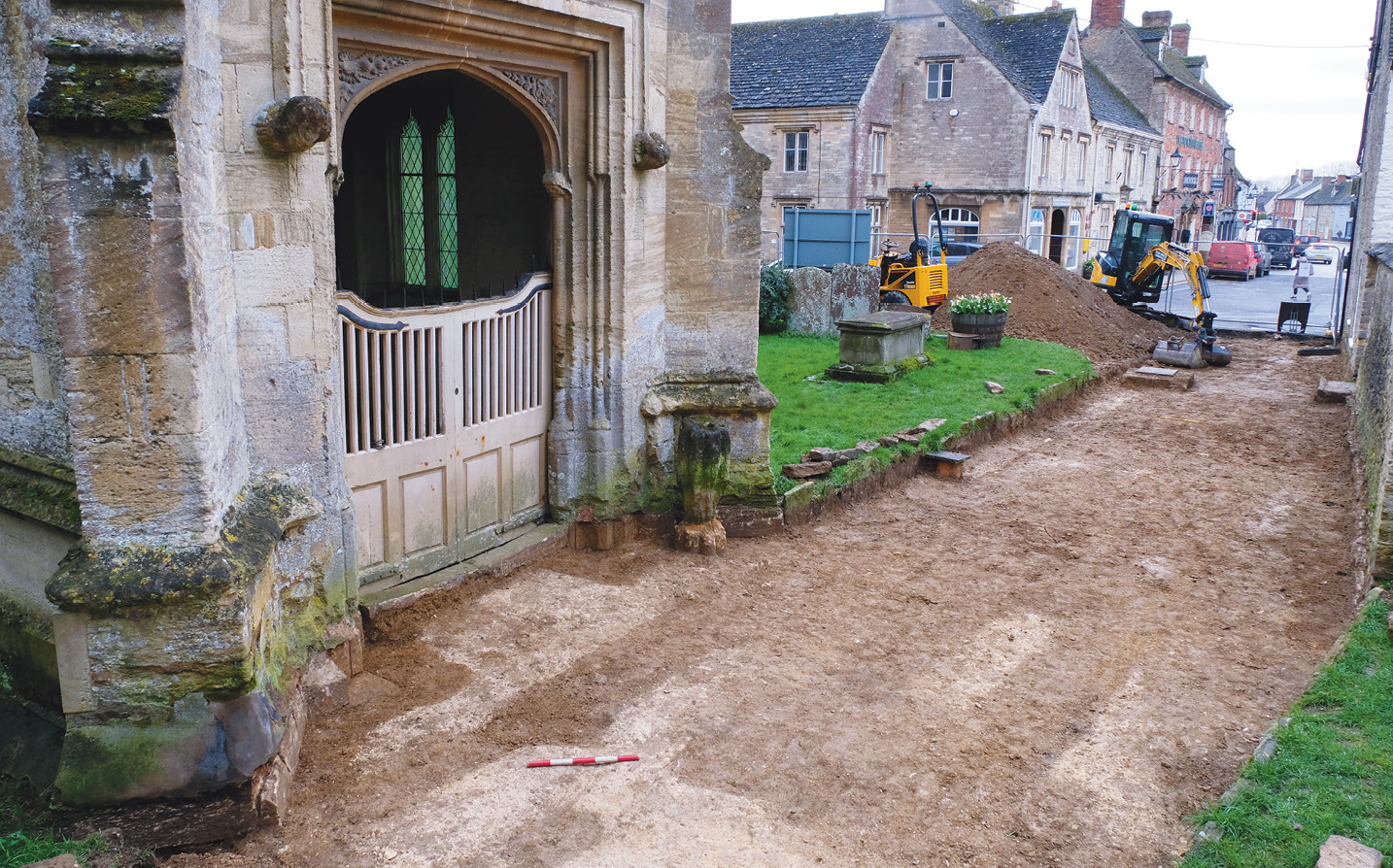
What type of work happens in CoE parish churches and churchyards, and how might it affect archaeological and historical remains? As you would expect, any large and potentially ancient building needs ongoing maintenance, and where this affects historic fabric such as timbers or walls archaeologists should be involved. Intervention may also be needed to address structural problems, or to repair or replace failing masonry or timber. In addition, many churches are striving to improve the facilities they offer so that they can be better used by their communities. The addition of toilets and kitchens may require recording and excavation inside and outside the building; meanwhile, where there is no water or power supply, trenches must be dug to accommodate them, and French drains (to reduce internal damp) also need excavation.
Any work that takes place in a graveyard might affect buried human remains, as well as historic memorials and tombs (which may be listed in their own right), and evidence of previous phases of the church. Moreover, many churches are built on top of prehistoric or Roman sites, meaning that construction could impact these earlier archaeological remains. Inside a church there may be complex sequences of floors and walls, burials and tombs – and archaeology does not stop at ground level. The standing fabric of a church includes important evidence, too: there may be graffiti, wall plaster and paintwork, and fixtures and fittings, all of which may be affected by modern initiatives and require assessment and recording before these take place.
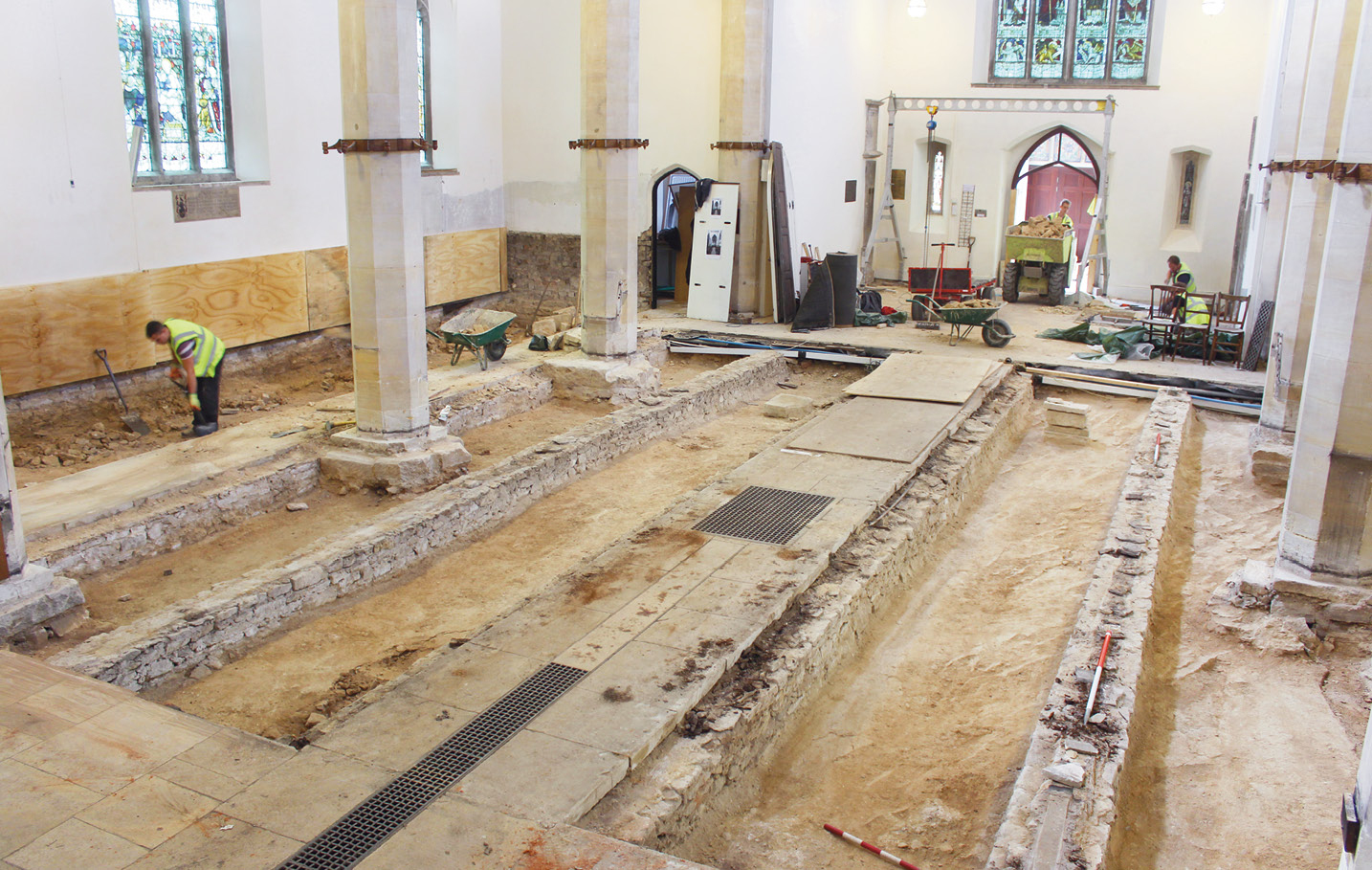
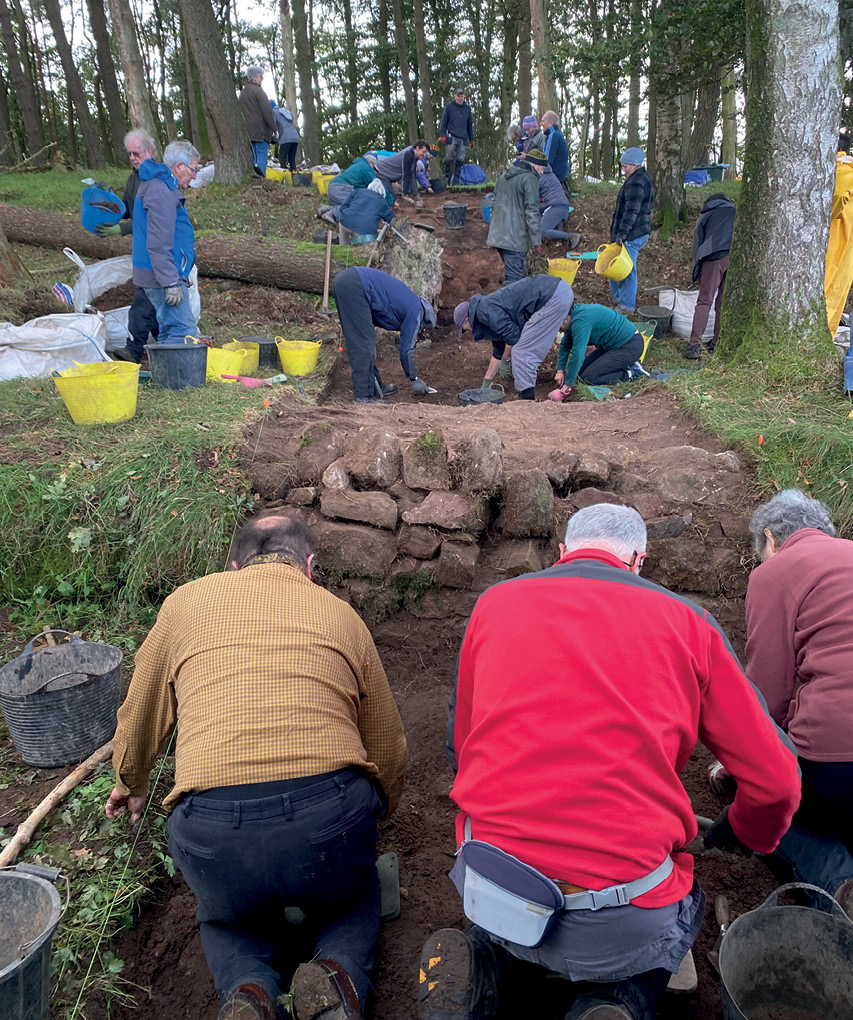
Larger, more ambitious projects that seek to ‘reorder’ churches may involve significant building works and the removal or alteration of historic fixtures. We might, for example, see the replacement of Victorian pews with chairs to permit the more flexible use of space; removal of existing floors and digging to instal underfloor heating and improve accessibility; or the construction of new vestries, extensions, or galleries. While some works require large archaeological excavations, on many projects the fieldwork may only last a day or two. Nevertheless, any work on a church and its churchyard may have an impact on archaeological remains, and it is important that archaeological considerations – and their potential costs – are considered from as early as possible in the planning of the project.

Parochial permissions
Nearly all of our surviving medieval parish churches are listed buildings which would ordinarily require Listed Building Consent (LBC) for any work affecting their fabric. Under ‘Ecclesiastical Exemption’, however, the CoE maintains a parallel system for its parish churches under Faculty Jurisdiction Rules. This is a very significant exemption, as 45% of Grade I-listed buildings are places of worship, and the vast majority of these are CoE parish churches. Instead, the Parochial Church Council (PCC) of a parish church must seek a Faculty (Archdeacon’s Authorisation for some minor changes) from the diocesan Consistory Court, although where works affect the external appearance of a listed church the local authority might be involved, too, under a ‘dual lock’.
To support their application, the PCC justifies proposals in a ‘Statement of Need’, while a ‘Statement of Significance’ (SoS) describes the church and its history, and assesses the impact of the proposals. For smaller projects, the SoS is often based on a simple copy of a church guide or the Listing text, but for larger reorderings a detailed history and appraisal of the church will be needed. The resulting archival research can often unearth important documents – indeed, this process can be an excellent opportunity to research the church’s history, and although professional archaeological assistance is very useful in assessing significance and impact, much is usually done in-house by the parish.
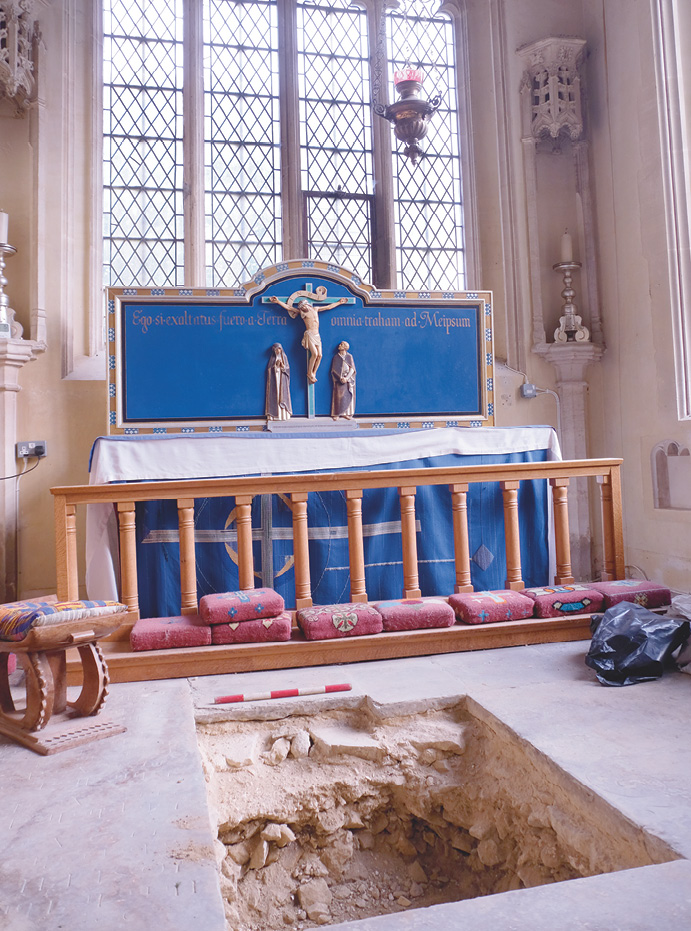
As with development-led work, thorough desk-based research leads to better designed projects and avoids unexpected costs and delays – a critical consideration when nearly all parishes struggle to raise funds even for essential work. As with secular sites, there is a presumption in favour of preservation in situ, and design teams work hard to avoid or minimise any impact on underlying archaeological remains, especially burials and complex stratigraphy. Test pits or trial trenches help us to understand the archaeology of a site, and also inform the design of the proposed scheme, demonstrate its impact, and estimate archaeological timescales and costs.
Faculty applications are considered by the Diocesan Advisory Committee (DAC), with statutory consultees such as Historic England, the Society for the Protection of Ancient Buildings (SPAB), and the Victorian Society invited to comment on proposals. The DAC is a committee of volunteer experts in relevant fields such as architecture, conservation, sustainability, and liturgy, and includes the Diocesan Archaeological Advisor who covers archaeological aspects. The DAC advise on and appraise applications, and make recommendations to the diocesan Chancellor, who adjudicates on the case. As with an LBC or planning consent there may be archaeological conditions on the Faculty which must be discharged by fieldwork, reporting, and archiving in the same way as planning-led projects.
Grave affairs
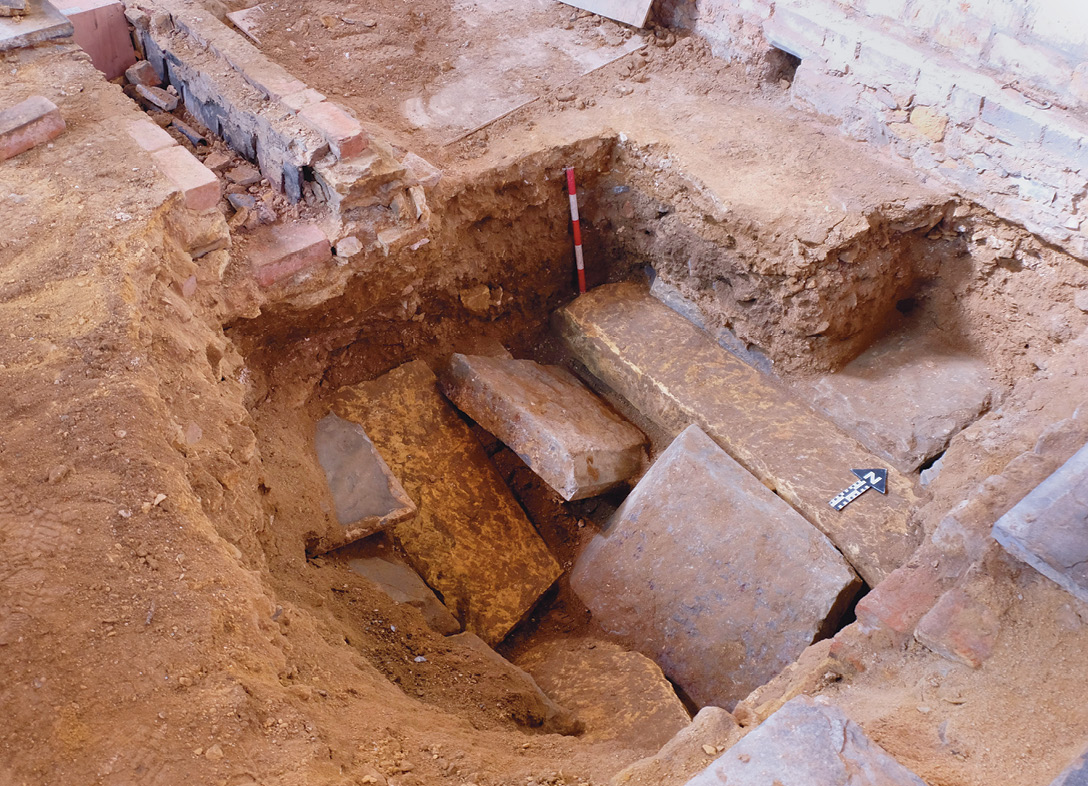
A major concern on church projects is the disturbance of historic burials and human remains (although many chapels and chapels-at-ease did not have burial rights), and ethical and legal constraints need to be considered fully. With many rural churchyards still used for burial, there is the risk as well of disturbing modern burials or cremated remains.

One might think it obvious that graveyards will contain burials. However, it is not uncommon to find that the question of human remains has not been properly considered. A surprisingly frequent assumption is that burials are always marked by a gravestone or tomb, and that interments are all ‘six feet under’. Given that your average parish church may be 1,000 years old, if just ten parishioners died each year then each graveyard could contain 10,000 burials, but the earliest surviving gravestone is usually no more recent than the mid-17th century. Historic graves were often very shallow, and burials should be expected from as little as a foot below the surface – even less, if Victorian architects have landscaped the site. Churches expand, and new portions are often built over burials, while many church interiors are a honeycomb of graves, tombs, and vaults, some of which may contain lead-lined coffins, and can present significant engineering difficulties in their own right.
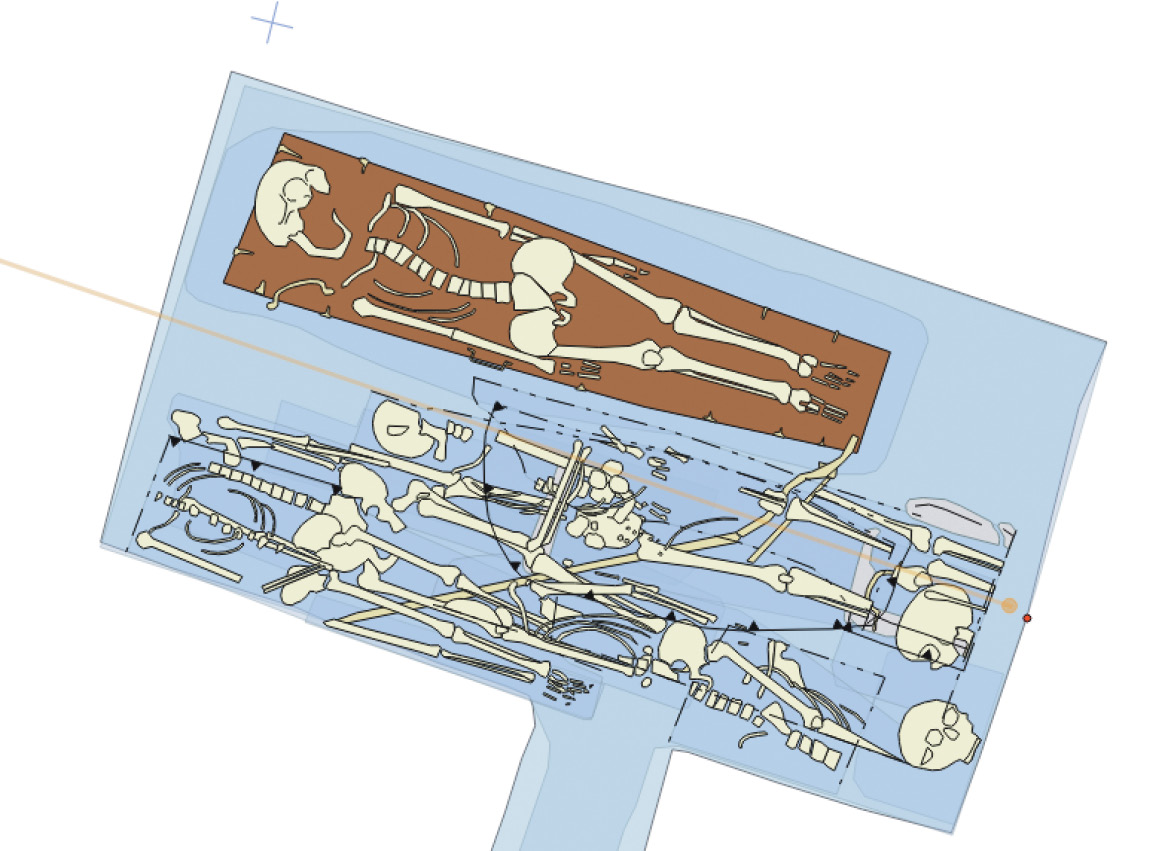
Where there is no alternative but to excavate human remains, this is often in narrow trenches where only a part of a skeleton is recovered – something that greatly limits what we can learn about the individual. Where larger areas are excavated, skeletal assemblages can give us valuable insights into past populations, including the potential for isotope and genetic samples. However, although excavated skeletons are assessed, they are usually then reburied in the churchyard, so there is often limited time, opportunity, or funding for scientific sampling of human remains from parish churches compared to the many large urban cemetery populations that have been excavated in advance of redevelopment in recent years – for example, the burial grounds that were uncovered during works for Crossrail (CA 257 and 313) and HS2 (CA 349, 357, and 398).
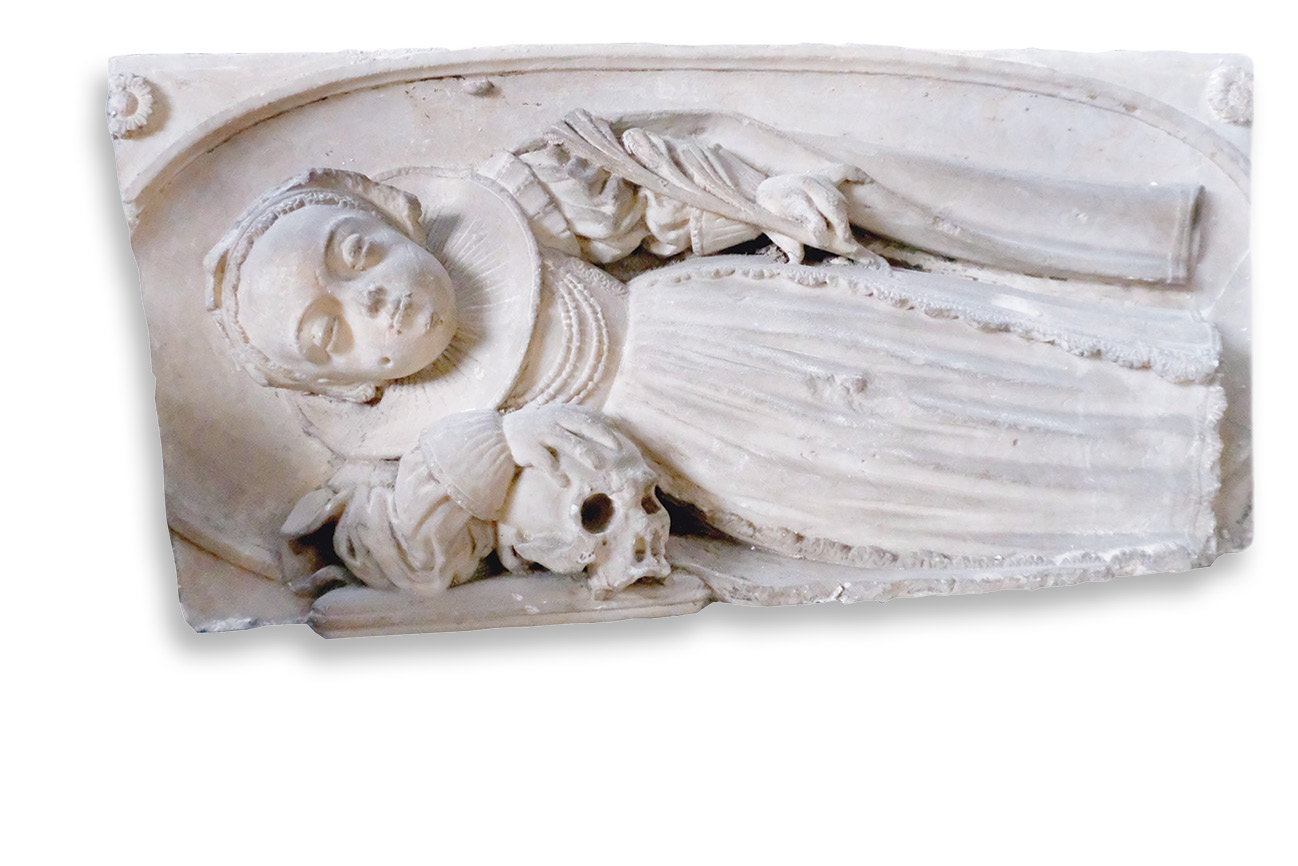
Aside from human remains, associated memorials such as cross- slabs, headstones, ledger slabs, tombs, and plaques may require conservation work, or detailed research to make sense of the fragments that are often found in excavations. Some can be linked to parish records, or to the work of antiquarians like the Ralph Bigland who recorded memorials and inscriptions in Gloucestershire churches in the 18th century – including a poignant 17th-century memorial that was, unusually, dedicated to a newborn baby. Anne Baynham was less than a month old when she died, but her short life is nonetheless commemorated by an alabaster and limestone memorial, once decorated with paint and gilding, which depicts the infant girl fashionably dressed in clothing that befits the status of her parents, who lived at nearby Lypiatt Manor.
Holistic heritage
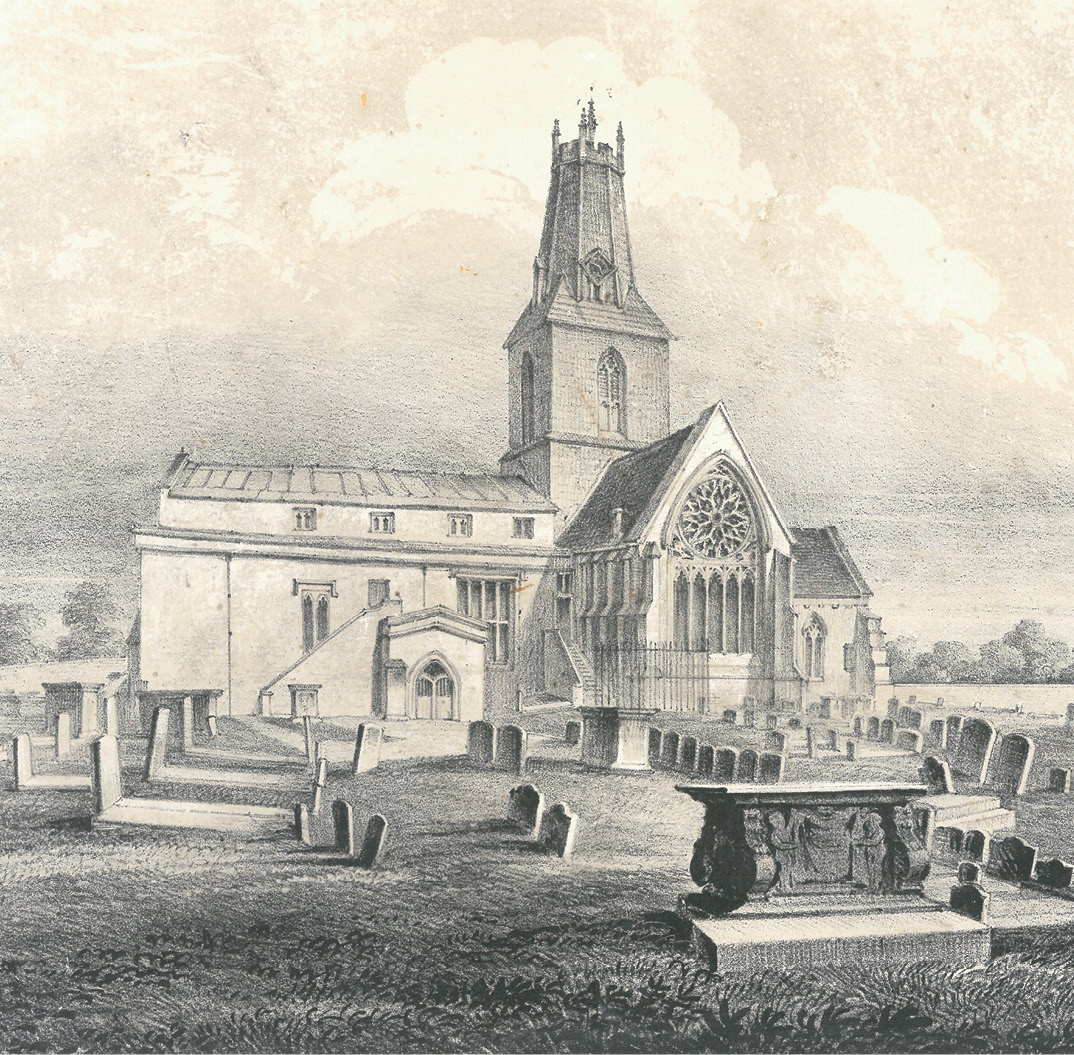
As well as burials, historic churches often contain complex stratified sequences of floors and walls that provide valuable information on the building’s evolution over time. Although internal burials or Victorian restorations have often destroyed much of a church’s medieval stratigraphy, even small surviving portions can shed invaluable light on the site’s form and development, and must be carefully excavated. Sometimes it is possible to link architectural details established during our excavations to the standing fabric or to antiquarian drawings; it is also vital to document even the most everyday features that we encounter. Fixtures and fittings such as pews are an integral part of a church and its history, and need recording and assessment if they are affected by proposals. Individually and as an institution the parish church has evolved over the centuries, and evidence from all periods of its history is important.
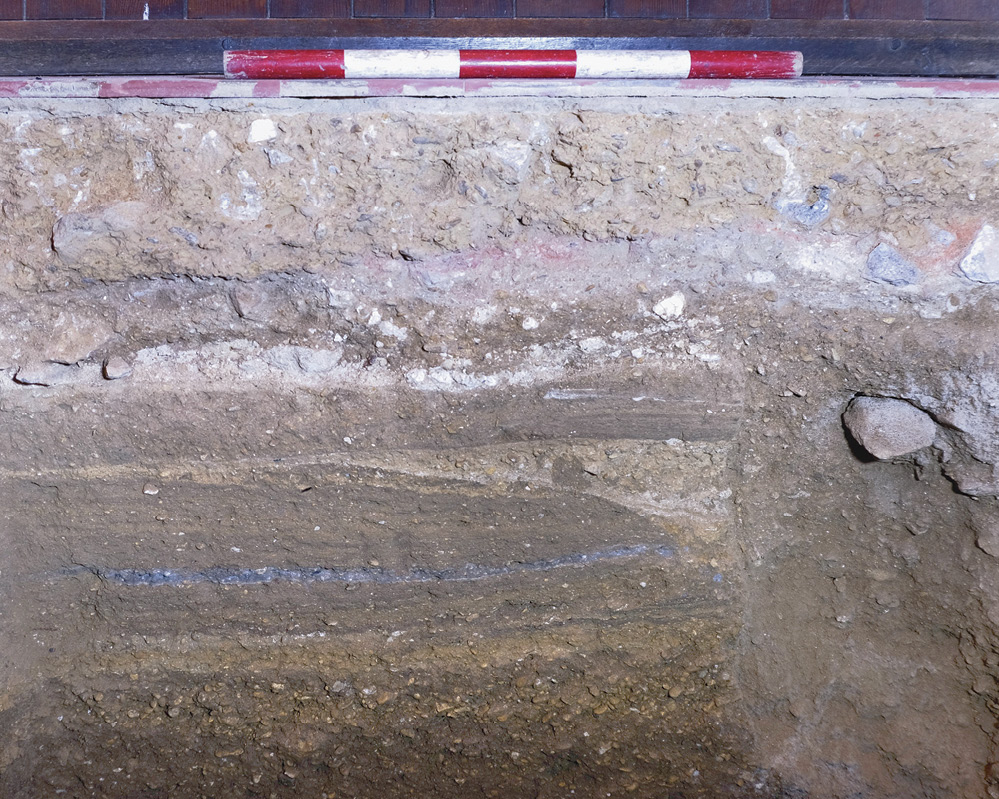
Archaeology is a magpie discipline, borrowing and burrowing into a wide range of related disciplines, and church archaeology is certainly a ‘total archaeology’ involving the weaving together of above- and below-ground excavated, recorded, and architectural information, as well as finds and documentary sources. Medieval manuscripts, chantry certificates, churchwardens’ accounts, vestry minutes, eye-witness accounts, antiquarian engravings and descriptions, old postcards, and plans – all must be synthesised to tease out the story of a site. Meanwhile, although large-scale excavations of active parish churches are relatively rare, these offer opportunities to understand a church that go far beyond the skin-deep architectural appreciation of listing texts.
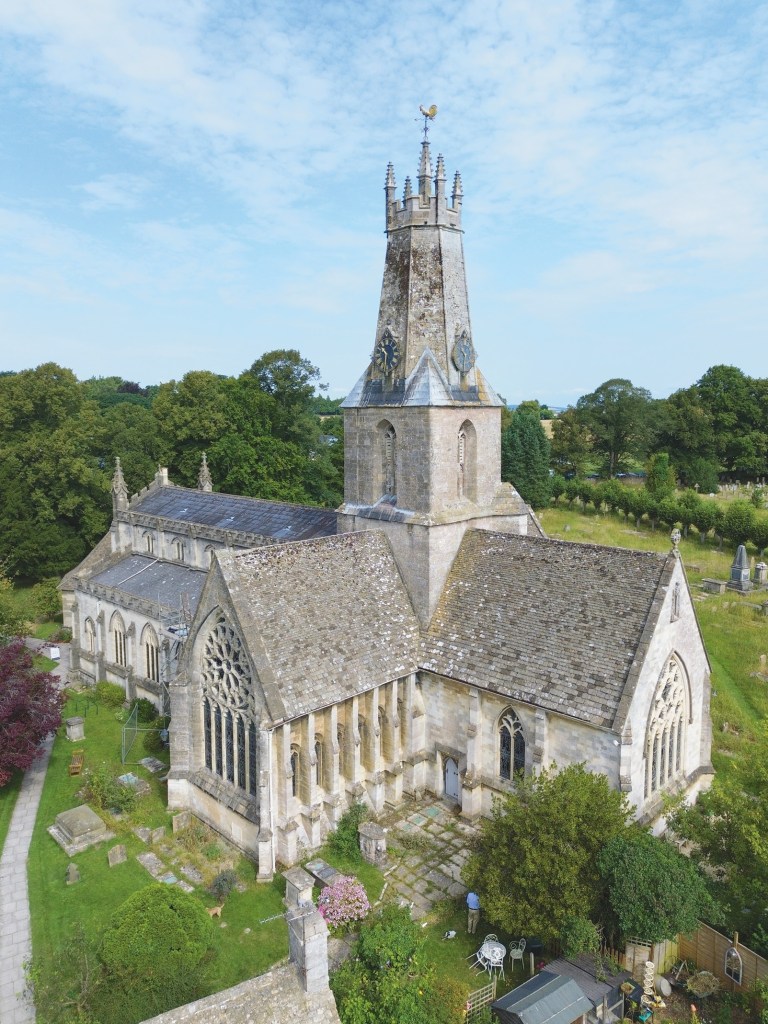
Having completed the project, the same professional assessment, publication, and archive standards must be met as for any development- led investigation, and thought must also be given to including the wider community in the findings. At Holy Trinity, Minchinhampton, that led to a comprehensive history of the church being published as a book (see ‘Further information’ below); smaller projects may see a note in the parish magazine. Most work on parish churches is small-scale, but every site adds further data both to our knowledge of the individual building, and to our regional and wider understanding. While congregations might have dwindled, churches are still at the heart of communities and – like all archaeology – their story belongs to all of us.
Source: Chiz Harward is Senior Archaeologist at Urban Archaeology (https://urban-archaeology.blogspot.com).
Further information: Chiz Harward (2025) ‘Your Church Newly Built…’: a history of the Church of the Holy Trinity, Minchinhampton, Gloucestershire (Hobnob Press, £20, ISBN 978-1914407871).
All images: Chiz Harward, unless otherwise stated