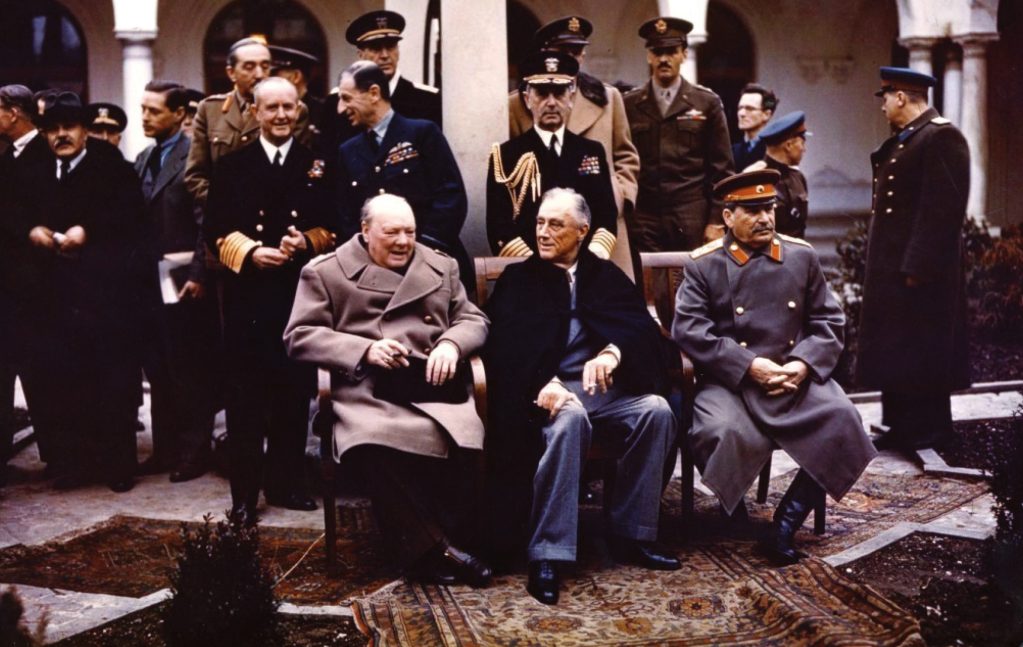

above Churchill, Roosevelt, and Stalin awkward allies at the Yalta Conference.

Churchill and Stalin: an unlikely alliance

From 1917 to the 1950s, Winston Churchill had a long and bumpy relationship with the Soviet Union, and it had a profound effect on his reputation in America. Taylor Downing charts the zigzags.
Start
This article is from Military History Matters issue 106


Subscribe now for full access and no adverts

‘Kill the Bolshie. Kiss the Hun.’ This was Winston Churchill’s message as Secretary of War in 1919. He suggested being lenient to Germany, the defeated power in the Great War, while doing all that was possible to bring down the new Bolshevik government in Russia.

Churchill had a tumultuous relationship with the Soviet Union that continued for more than 40 years of his political career. And it started badly.
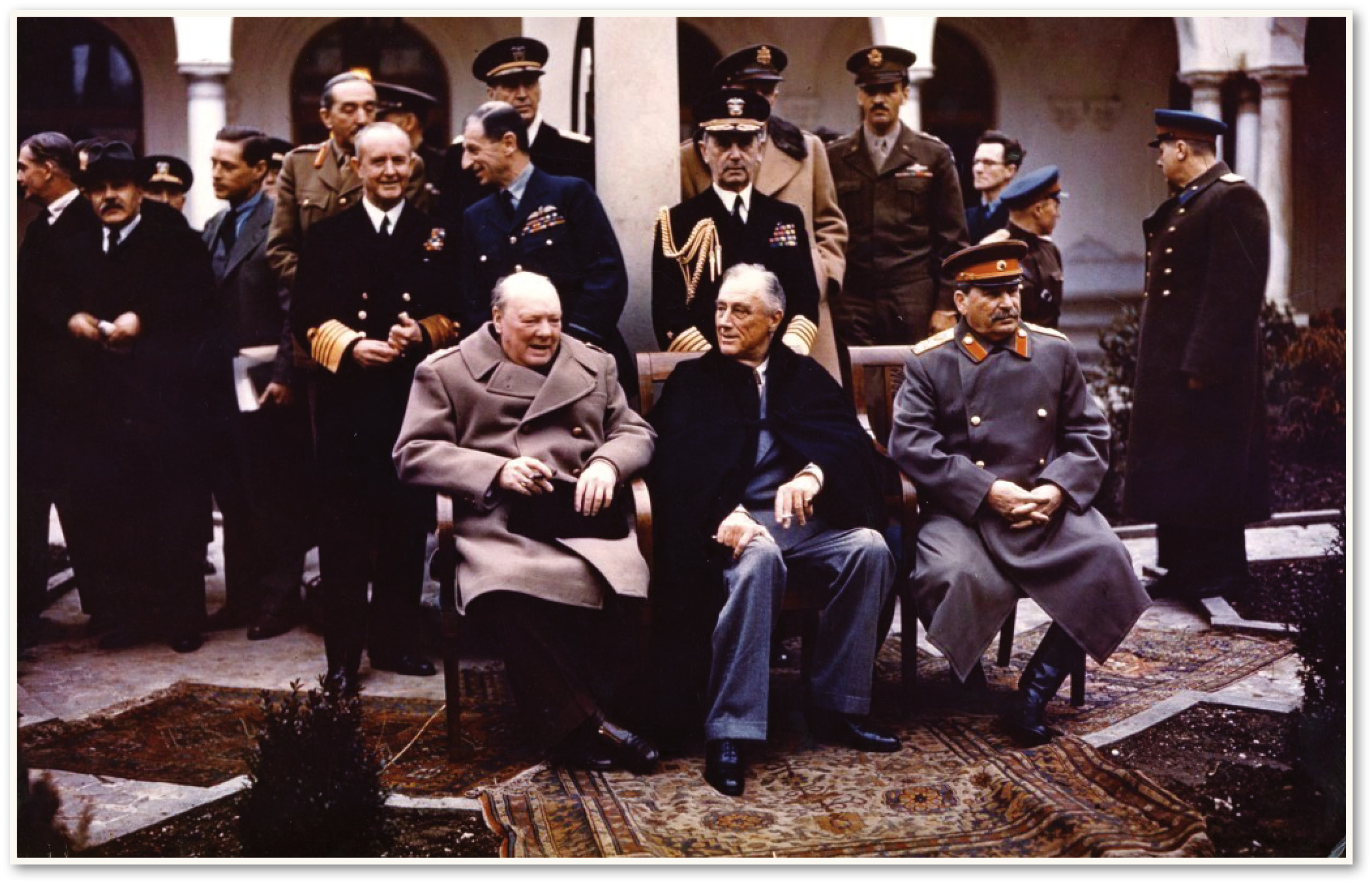
Churchill, Roosevelt, and Stalin – awkward allies – at the Yalta Conference.

It is not surprising that Churchill, a member of one of the leading aristocratic families of Britain and naturally conservative in his thinking, was diametrically opposed to Communism. The Bolsheviks had launched a revolutionary programme of workers’ control over industry and peasant control over land. All private property was seized by the state, including the country houses and estates of the aristocracy and the rich.

If Bolsheviks had come to power in Britain, they would no doubt would have taken over Blenheim Palace, Churchill’s birthplace, and used it to rehouse the poor.

Churchill was intellectually and emotionally horrified by the collectivist principles of Communism, and he sent an army of 14,000 men to support the White Russians, or anti-Bolsheviks, in their fierce Civil War against the Communists. The war ravaged Russia for several years, and caused many more deaths than the Great War.

Churchill perceived a mortal threat in the Bolshevik Revolution of 1917, and he gave active support to the White counter-revolutionaries in the subsequent Civil War.

Stalinism

Churchill’s attempt – supported by many others – to strangle the Soviet state at birth failed. Peasants and workers across Russia rallied behind the call for peace, bread, and land. The Red Flag of a new state, the Union of Soviet Socialist Republics, was successfully raised in 1922, and the Bolsheviks renamed themselves the Communist Party of the Soviet Union.

But the ideal of the rule of the people and the collective sharing of wealth proved to be a chimera. In a society torn apart by war, poverty, and famine, the revolutionary movement disintegrated. Lenin himself had sowed the seeds for an all-powerful centralised state, but under Stalin this grew into a monstrous totalitarian dictatorship.

Already a subscriber? Sign in here


Read this article now for free!

Enter your email below to read the full article, and to receive our weekly newsletter with a round-up of The Past's top stories.

-- or --

Or, subscribe for unlimited access

By Country

Popular
UK • Italy • Greece • Egypt • Turkey • France

Africa
Botswana • Egypt • Ethiopia • Ghana • Kenya • Libya • Madagascar • Mali • Morocco • Namibia • Somalia • South Africa • Sudan • Tanzania • Tunisia • Zimbabwe

Asia
Iran • Iraq • Israel • Japan • Java • Jordan • Kazakhstan • Kodiak Island • Korea • Kyrgyzstan •
Laos • Lebanon • Malaysia • Mongolia • Oman • Pakistan • Qatar • Russia • Papua New Guinea • Saudi Arabia • Singapore • South Korea • Sumatra • Syria • Thailand • Turkmenistan • UAE • Uzbekistan • Vanuatu • Vietnam • Yemen

Australasia
Australia • Fiji • Micronesia • Polynesia • Tasmania

Europe
Albania • Andorra • Austria • Bulgaria • Croatia • Cyprus • Czech Republic • Denmark • England • Estonia • Finland • France • Germany • Gibraltar • Greece • Holland • Hungary • Iceland • Ireland • Italy • Malta • Norway • Poland • Portugal • Romania • Scotland • Serbia • Slovakia • Slovenia • Spain • Sweden • Switzerland • Turkey • Sicily • UK

South America
Argentina • Belize • Brazil • Chile • Colombia • Easter Island • Mexico • Peru

North America
Canada • Caribbean • Carriacou • Dominican Republic • Greenland • Guatemala • Honduras • USA

Discover more from The Past

Subscribe now to keep reading and get access to the full archive.

Continue reading