
A life on the tiles: Exploring the work of David Neal as artist and archaeologist

David Neal’s name is synonymous with Romano-British mosaics: since 1960, he has documented every new discovery (more recently in collaboration with Stephen Cosh). His meticulous records and reconstructions fill the five-volume corpus of Roman Mosaics of Britain published by the Society of Antiquaries between 2002 and 2024 (see CA 223). Based on his new autobiography, Chris Catling reports on David’s formative years and the people who led him to a life in archaeology.
Start
This article is from Current Archaeology issue 425


Subscribe now for full access and no adverts

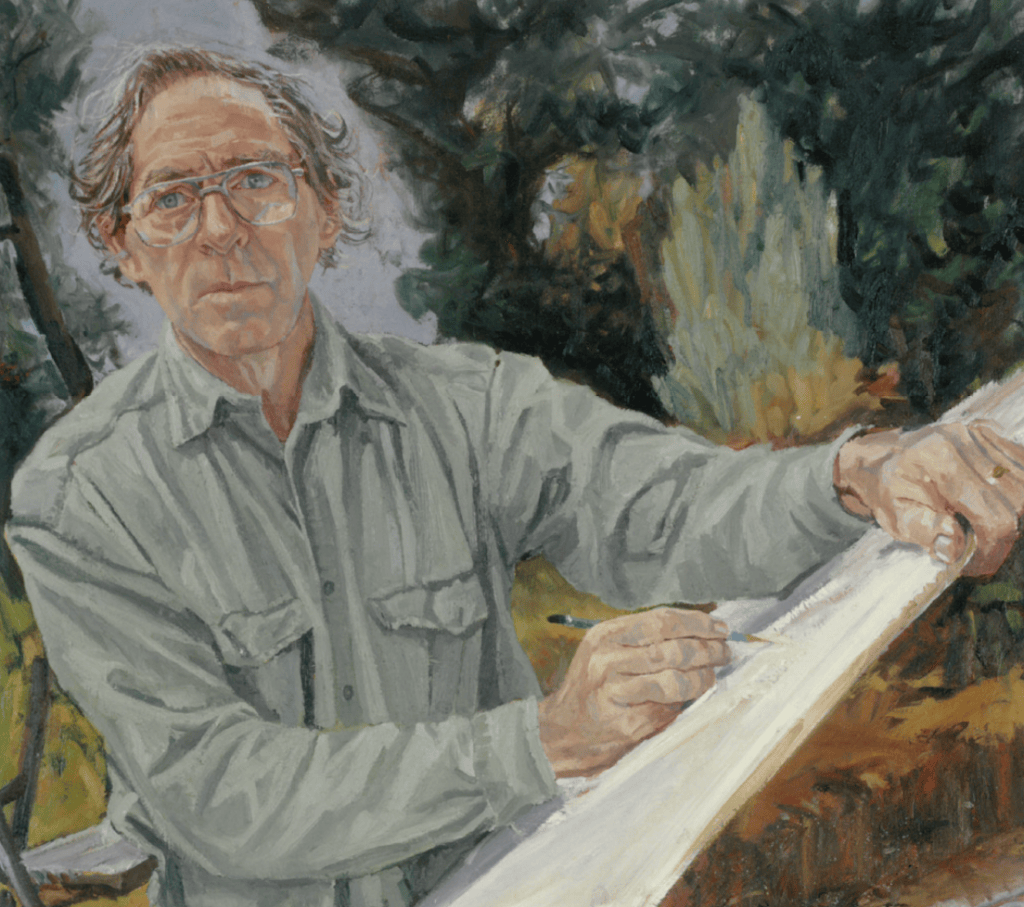
Chris Prewett’s portrait of David Neal at work, holding a large drawing board between hand and hip, forms the frontispiece to David’s autobiography (see ‘Further reading’ below). That figure will be familiar to anyone who has worked on a Romano-British site in the last 60 years or who has watched a Time Team programme in which a mosaic has been discovered. Although these mosaics will have been captured through a full photographic survey, there is something richer and more truthful about David’s paintings, especially in the way they capture the slight irregularities and subtleties of colour that enrich even the simplest of pavements made of grey and white tesserae.

In his introduction to the autobiography, Mark Hassall asks whether these paintings cross the boundary between archaeology and art, and he compares David’s work to that of a similar artist-archaeologist who specialised in Romano-British mosaics: Samuel Lysons (1763-1819), the English antiquary whose works include engravings of the Bignor Villa mosaics and of the most accomplished of all the mosaics yet found in the province: the Orpheus mosaic from Woodchester in Gloucestershire.
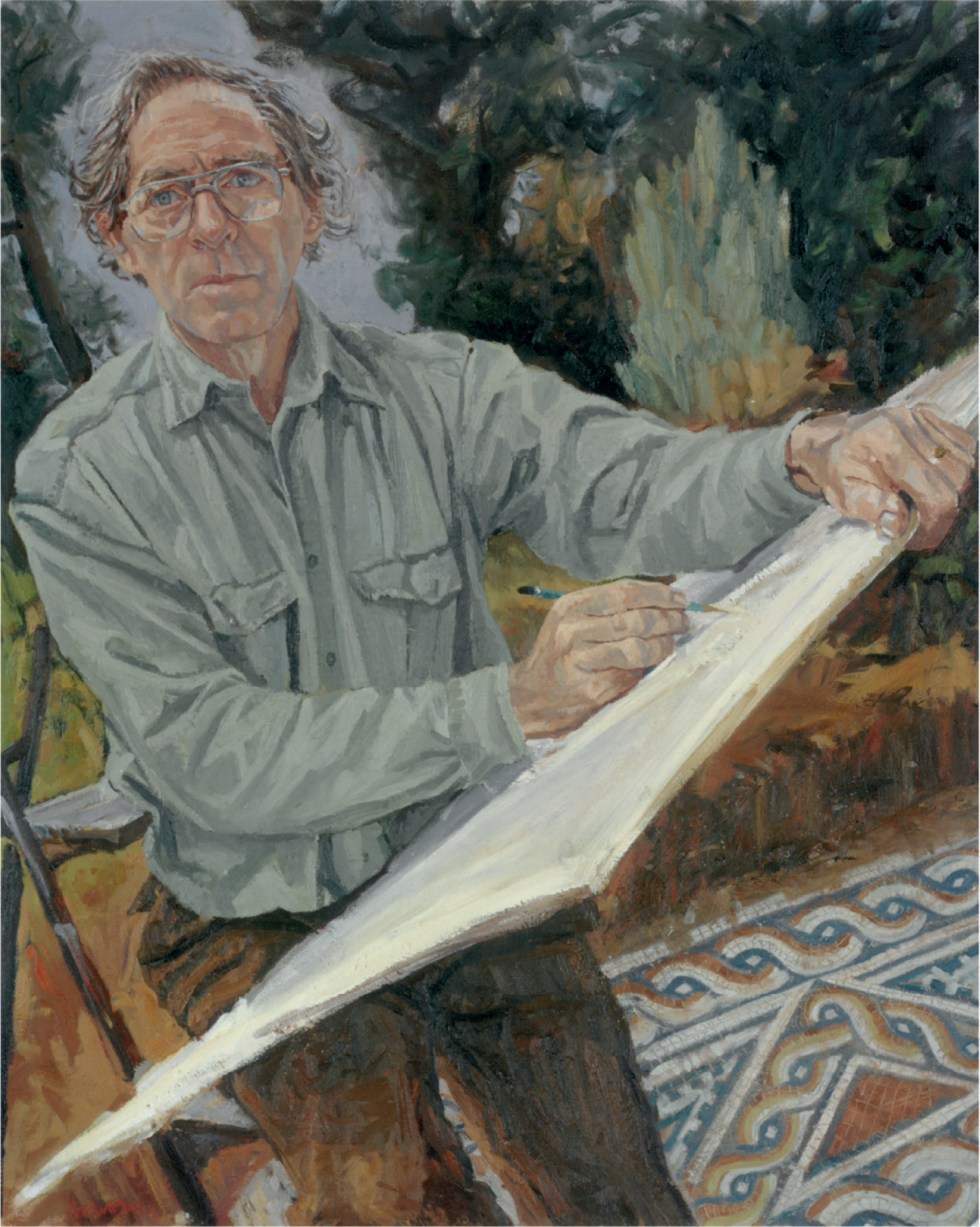
A portrait of David S Neal by Chris Prewett. Lead Image: Chris Prewett 

Uncertain beginnings

David’s artistic talent was evident from an early age. Born on 16 August 1940 in Acton, west London, in the middle of an air raid (‘I was placed in a “cage” under my mother’s bed for protection from shrapnel and flying glass’), he was evacuated to Pontycymer, near Bridgend, in south Wales, where the landscape of the mining town was to him one big ‘adventure playground’. He returned to Acton as a four-year-old, in time to witness the ‘wild’ VE Day celebrations of the night of 8 May 1945, ‘when it seemed every person in London was on the streets singing and dancing’; the street party that followed was memorable for David’s first taste of ice cream.
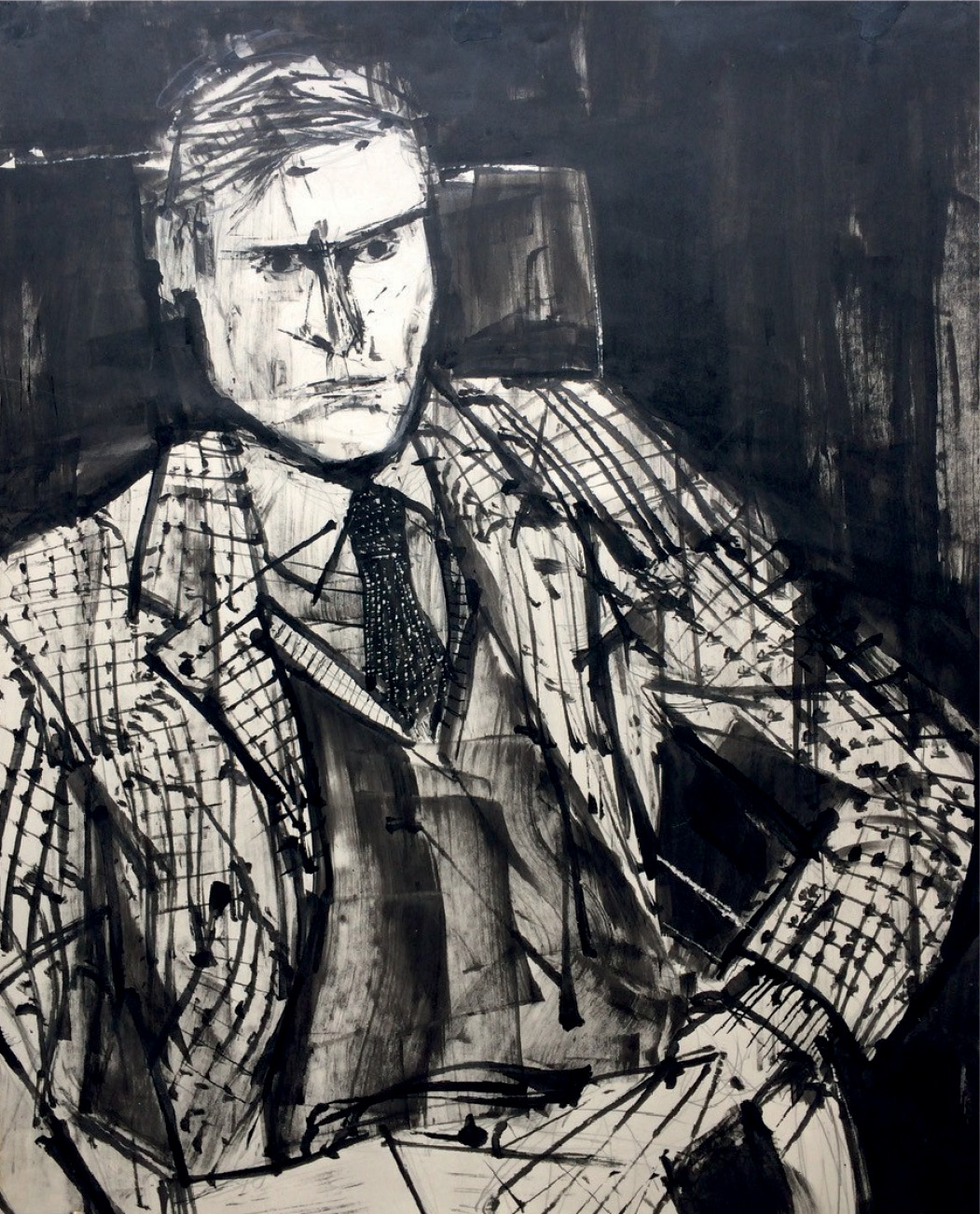
 David’s portrait of his flatmate Mark Hassall, painted in 1963 when Mark was a student at the Institute of Archaeology.

Icy weather was to follow with the severe winter of 1946/1947, when the seven-year-old David transferred to Rothschild School and won some brushes and a set of watercolours in an art competition: ‘My first school prize but perhaps a glimpse into the future’. Moving to the new town of Hemel Hempstead in February 1950, David went to Leverstock Green Junior School in Pancake Lane, ‘a “country bumpkin” Victorian church-school with a playground at the front and a maypole at the back’. There, he was regularly caned by a headmaster who believed it was the only way to instil mathematical principles in a slow learner.

David was regularly caned… ‘I became scared to attend school [though] I never played truant, which I so desperately wanted to do.’
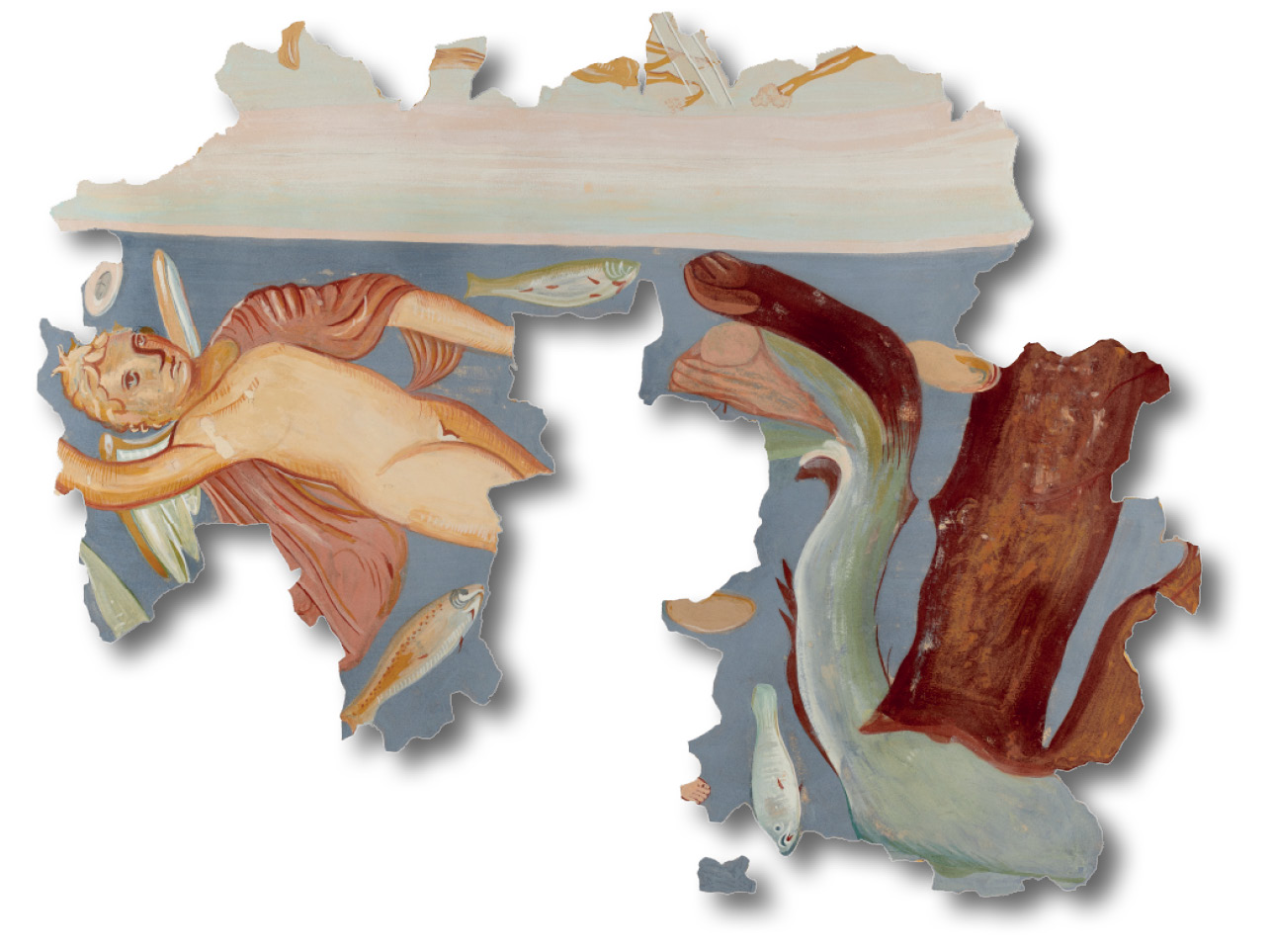
David’s 1963 depiction of a boy swimming among fish from a Romano-British bath suite in Southwell, Nottinghamshire.

As a result, David ‘became scared to attend school [though] I never played truant, which I so desperately wanted to do’. The school, however, had one blessing – art lessons on Thursday afternoons: ‘Virtually every week I would be asked to stand in front of the class to exhibit my paintings, some of which depicted Kew Gardens.’ David recalls that his family often went to Kew for picnics before they moved out of London, and that painting the Rock Garden and Palm House from memory was probably his means of escape from the misery of school.

Being one of the first families to live in Hemel Hempstead New Town, the Neal family was selected to meet Queen Elizabeth II when she visited on 20 July 1952 to lay the foundation stone in nearby St Barnabas Church. David recalls: ‘Officials visited the house to teach us etiquette – how to bow and curtsy correctly. My parents bought new clothes and I had to endure a haircut – “short back and sides”… Her Majesty was very photogenic – wearing her Norman Hartnell dress and a wide-brimmed hat. I think she asked my parents how they liked their new house, but although I cannot remember whether she said anything to me, other than “nice to meet you”, she did give me a delightful smile… I was [subsequently] featured shaking hands with the Queen on the Pathé News in the local cinema (I felt I should not have been expected to pay for my ticket)’.

An 11-year-old David is introduced to Her Majesty Queen Elizabeth II, on 20 July 1952, outside his family’s new home in Homefield Road, Hemel Hempstead.

It was about this time that David encountered archaeology for the first time on1 regular visits to family friends who lived in Northolt, north-west London, where John Hurst was excavating the site of the medieval manor: ‘I would take the opportunity of exploring the excavations, but my visits never coincided with the archaeologists actually at work. However, in 1953, they were, and I was invited to help. I distinctly remember excavating a tiled floor, set herringbone fashion, paving a kitchen.’

Having been judged unlikely to pass the 11-plus exam, David went to Adeyfield Secondary School at Longlands, where the headmaster, Mr Pierson, and two art teachers, Robin Bonas and Richard Parsons, were instrumental in encouraging his artistic talents and pushing him in the direction of Watford School of Art when he reached the school leaving age of 14. Perhaps David needed no persuasion, as he observes that ‘typical of all art schools, it had a reputation for wild students and parties’.

There, David found himself, a young working-class boy, mixing with better-off students and some in their early 20s who had only recently left the armed forces – listening to them talk, he decided to drop his London accent and learn to ‘talk posh’. He studied graphic design under one of Eric Gill’s former students, so there was an emphasis on typography, but David tried his hand at all manner of artistic techniques and stayed late most evenings to do so. He admits that drawing nude models was difficult at first for a young teenager, but he soon learned to affect an air of nonchalance. One of David’s paintings from this period – entitled Garden’s End, showing an old boiler used as an incinerator next to an apple tree – was chosen for showing in the Young Contemporaries Exhibition in the Royal Academy galleries in London’s Suffolk Street.

David’s teachers clearly recognised his talents because, despite his lack of O- and A-levels, he was allowed to enrol for the National Diploma in Design. For the next four years, he combined one day and four evenings a week at Watford with his first job, working for the Eastern Gas Board in the design of showroom displays and posters promoting the sale of gas appliances.

Archaeological awakening

At the same time, David would regularly cycle to St Albans to view Sheppard Frere’s Verulamium excavations. One day, site supervisor Molly Cotton, recognising him as a frequent visitor, asked if he would like to help and passed him a trowel. He eventually spent so many hours working at Verulamium that he ‘became part of the team and excavated a wide variety of features and was one of the few students allowed to excavate at weekends without supervision’. On one occasion, however, site supervisor John McCullough remarked that art students were not to be trusted because he felt that David had been overly creative in his excavation of some timber foundation slots.

Professor Sheppard Frere, director of the Verulamium excavations, giving a site tour in 1958.

David’s first encounter with a mosaic took place at St Albans in 1959 when he witnessed an early experiment – not entirely successful – to lift the Dolphin pavement that had been found the previous year by coating it in plaster of Paris and rolling it up (rather than cutting it into sections). That mosaic is now embedded in the floor of Verulamium Museum.

The following year, David was entrusted with the excavation of a very large but fragmentary mosaic. He was told that a specialist would be visiting the site shortly to analyse it. When the expert arrived, ‘she seemed to be confused by its complexity and did not understand the overall configuration of its meander pattern (Greek key) and, somewhat over-confidently, I sketched out its original design in front of her. Effectively our roles had reversed – I was advising her.’ David decided to make his own drawing on graph paper at the imperial scale of one inch to a foot, and he later showed the completed image to Frere, who asked David to leave the drawing at the Institute of Archaeology to be photographed.

The Dolphin mosaic from Verulamium being rolled up in 1958 for restoration and display in the floor of the Verulamium Museum.

‘When I returned to the Verulamium excavations in 1960, I was welcomed by the throng with cordial whoops of “Hello, Mr David Neal!”. I had no idea as to the reason for the banter, but when the fifth interim report on the 1959 excavation was placed in front of me, I understood – occupying a whole page was an illustration of my mosaic painting with an acknowledgement to “Mr D S Neal” – my first archaeological illustration to be published.’

The subject of David’s next drawing was to be the extraordinary mosaic, depicting a shaggy lion with long tail holding the severed and bleeding head of a stag in its jaws, discovered at St Albans that same season: ‘As we slowly revealed the mosaic,’ David recalls, ‘we were on tenterhooks, fearing that the mosaic might be damaged, but it was perfect, except for a scar on its plain coarse border caused by the widening of the adjacent road.’

 David recording the Lion mosaic from Building XXI, 2, Room 4, Verulamium in 1960.
David’s painting of the Lion mosaic.

This time, to record the mosaic, David employed a three-foot-square drawing frame divided into three-inch units. The entire mosaic was photographed with this grid superimposed. Black-and-white images were then printed to the same scale and mounted together to create a large montage, which David then transposed on to graph paper before adding the colour. ‘In retrospect, painting gouache directly on to graph paper was not sensible, because the lines on the paper showed through (and still do), so I changed my technique: the working drawing being traced on to high-quality Whatman paper [made of cotton and much favoured for watercolour painting] aided by an underlying light box’.

The resulting work was then displayed in the exhibition Art in Roman Britain at the Goldsmith’s Hall in the City of London (26 June-22 July 1961). As an aside, David remembers that on one occasion he saw a visitor step down on to the pavement, pull out a penknife from his pocket, and start to prise a tessera out for a souvenir. ‘I was horrified and gave the visitor a souvenir with my language.’

Illustrious illustrator

By 1961, David was suffering from itchy feet; his ambitions were frustrated by the restrictions of his day job promoting the sale of gas appliances – using the slogan ‘Mr Therm Burns to Serve’. His old-fashioned employers rejected the progressive graphic design principles then being pioneered by London advertising agencies. Spending his evenings in ‘jazz- and skiffle-clubs and parties in artists’ studios’, David wanted to break free, so once his art-school exams were over, he wrote to Sheppard Frere asking whether he could offer temporary paid work. Frere wrote back to say: ‘I happen to know that the Ministry of Works, Ancient Monuments department, has a job for a draughtsman and they are looking for suitable candidates. I suggest that you write to Mr A J Taylor, FSA, Inspectorate of Ancient Monuments, Ministry of Works.’

In his subsequent interview, David was asked ‘whether I could paint fallen Roman wall plaster’, and he replied ‘probably’. The reason for the question became clear once David began his new job as ‘Temporary Illustrator’ with the Ancient Monuments Inspectorate and was asked to make a record of the painted plaster that had been found in the cellar of the Roman villa at Lullingstone, Kent, in 1949. This involved not just creating full-sized paintings on Antiquarian-sized sheets (787mm by 1,346mm or 31in by 53in) of Whatman paper, but also trying to make sense of the jigsaw of broken plaster pieces that David was asked to piece together. It is thus thanks to his work that we now have the six figures standing in the Christian attitude of prayer that is a highlight of the British Museum’s Romano-British gallery.

The mosaic from Lullingstone, Kent, which David considers to be one of the most puzzling. he has ever recorded.
 David’s 1962 painting of the Romano-British wall painting found in fragments at Lullingstone, Kent, showing a figure in the ‘orans’ posture, an early Christian attitude of prayer.

David working on a new painting of the Lullingstone mosaic in his studio in 2023.

This project brought David into contact with Dr Norman Davey, a specialist in the reconstruction of painted Roman wall plaster and former Director of the Building Research Station based at Garston, Watford. Dr Davey had been instrumental in constructing the models of the Ruhr dams used by Barnes Wallis in the designing of ‘bouncing bombs’ for the ‘Dambuster’ raids in Germany on the night of the 16/17 May 1943. Davey invited David to stay in his Grade I-listed home, ‘a truly wonderful medieval property named Porch House, at Potterne, Wiltshire’ with its large timbered open hall rising to the roof. ‘I enjoyed a warm welcome, with meals cooked by his wife, and stimulating conversation. One of the stories associated with personalities in the house, and scandalous at the time, involved a fracas in 1941, resulting in Mavis Wheeler, the second wife of Mortimer Wheeler, shooting her impresario lover Lord Vivian.’ (Vivian lived; she spent six months in Holloway for unlawful and malicious wounding.)

Anecdotes like this fill David’s account of the eventful 22 years that he spent as a civil servant with the Ancient Monuments Inspectorate and its successor bodies until 1983, when English Heritage was formed; taking advantage of a voluntary severance scheme, David ‘retired’ at the age of 47. And, though he is best known for his mosaics corpus, it is clear from the central chapters of the book, describing all the projects that he took part in over those years, and the memorable characters he worked with, that drawing pavements formed only a small part of his life as an artist and archaeologist. His talents as a draughtsman were deployed to record the plans and sections of some of the best-known archaeological excavations of the 1960s and 1970s, as well as drawings of pottery and small finds, architectural drawings and reconstructions, and portraits of friends.

While working for the Ancient Monuments Inspectorate, David was asked in 1973 to record this series of prehistoric stone structures on the island of Nor’nour, part of the Isles of Scilly.
One of David’s duties at the Ancient Monuments Inspectorate was to draw reconstructions. This drawing shows the North Gate in Lincoln.

An eye for detail

Explaining his approach to drawing, David says it is a skill accumulated over time, with constant practice, but also: ‘An illustrator’s eye has to be sharp, able to spot every anomaly, but at the same time suppress (on the drawing) what was irrelevant, such as corrosion. For example, a medical illustrator would not be required to represent blood. On a mosaic, tesserae disturbed by natural means would not need to be recorded in detail, but if changed by human agency they needed to be accurately depicted as this might add to the understanding of the mosaic’s archaeological sequence. The errors inbuilt into a mosaic need to be recorded; nor must its lost remains be re-created in detail – its scars may represent later historical human activity, such as the post-holes of a timber building.’

Cherry-picking some of the more entertaining anecdotes, David remembers the Inspectorate moving into Fortress House, Savile Row, in 1972, and how ironic it was that a street synonymous with bespoke tailoring should house a motley collection of scruffy archaeologists and historic buildings specialists. He remembers that Patrick Moore, the astronomer, was a familiar face in the foyer; Moore encouraged David and colleagues to attend the meetings of the Scientific Society in the building’s ground- floor lecture room.

Working with John Hurst on Romano-British pottery imports from the Netherlands, David visited the home of Dutch entrepreneur H J E van Beuningen, an enthusiastic and knowledgeable collector of medieval pottery found mostly on building sites in Rotterdam. 

David was elected a Fellow of the Society of Antiquaries on 20 May 1971, and he recalls that Fortress House would typically be deserted on a Thursday afternoon because most staff were having tea at Burlington House, the Piccadilly home of the Society. Tea preceded lectures presented by eminent colleagues, illustrated by ‘lantern slides’. For David, these lectures were like a university education, ‘where I was privileged to hear famous archaeologists, both old and young… the lectures were supposed to finish at 6pm [but] they were followed by discussions, often long and contentious… though sometimes the soporific effects of lantern slides made staying awake difficult, no matter how stimulating the speaker.’

David’s talents as a sculptor were brought into play when the popular and long-serving Librarian, John Hopkins, retired in 1986 after 53 years with the Society. The smell of John’s tobacco pipe, perpetually alight, still lingers in the pages of the books closest to where he had his desk. John was noted for his exhaustive knowledge of the Library’s contents and his love of risqué jokes. As a tribute to John, David made a sculpture of his head, cast in bronze, which is now on permanent display in the library.

David worked with Hurst and van Beuningen on Pottery Produced and Traded in North-West Europe 1350-1650 (1986), with David’s dust-jacket design inspired by van Beuningen’s display cabinets.

It was while having tea at the Society prior to a lecture in 2012 that David was talking with Professor Warwick Rodwell, the archaeologist for Westminster Abbey, who said he was having problems obtaining good photographs of the abbey’s medieval Cosmati floor (CA 359) due to the variety of its materials, textures, and light-reflecting qualities. Perhaps somewhat foolishly, David offered to ‘make a painting of it in my usual style’. Warwick invited David to see the pavement, which brought home the immensity of the task.

The mosaic, using the opus sectile technique, was composed of a wide range of individually shaped stones of different geologies, and were not of a standard size, unlike those on most Roman mosaics. The shape of every stone had to be correctly replicated, and so too its colour. The biggest individual challenge was the central roundel, a slab of alabastro di Busca from Piedmont, Italy, located on the spot where the monarchs of Britain are anointed, with its cloud-like swirls of colour.

Examples of David’s sculptural work: his brother-in-law Naoaki Kanazome; the pottery collector H J E van Beuningen; the renowned potter Brian Dewberry, whose classes David attended; and John Hopkins, long-serving Librarian at the Society of Antiquaries of London.

Also challenging was dealing with the constant stream of questions from thousands of curious visitors, and the extraordinary complaint from one visitor who remarked that he had paid good money to see the ‘exhibit’ and that he did not like seeing an archaeologist at work. Others did, however, and David became a popular figure on Time Team when villas or mosaics were involved, such as the week-long ‘Time Team Special’ broadcast in 2005, when the villa at Dinnington, in Somerset, was excavated live.

The mosaic forming the floor of the main reception room of the house had collapsed into an underlying hypocaust and was later disturbed by robbing. The hypocaust contained many hundreds of mosaic fragments, which David was expected to fit together like pieces of a jigsaw – an almost impossible task, until the programme was about to draw to a close. Phil Harding was talking to the camera and holding a fragment representing Daphne being transformed into a laurel bush. David realised that another fragment he had just retrieved was part of the same figure: ‘I thrust it forward, joining it up with the piece Phil was holding, shouting out – “and it fits!”.’ It made entertaining television, just as David Neal’s autobiography – itself a large mosaic of many different stories – is a thoroughly entertaining read.

 David’s 2012-2013 painting of the central panel of the Cosmati work mosaic in the Sanctuary at Westminster Abbey, dating from 1268.

Further reading: David S Neal (2025) A Mosaic of Recollections: memoirs of an archaeologist (Archaeopress, £35, ISBN 978-1803279350).

All images: David S Neal, unless otherwise stated

By Country

Popular
UKItalyGreeceEgyptTurkeyFrance

Africa
BotswanaEgyptEthiopiaGhanaKenyaLibyaMadagascarMaliMoroccoNamibiaSomaliaSouth AfricaSudanTanzaniaTunisiaZimbabwe

Asia
IranIraqIsraelJapanJavaJordanKazakhstanKodiak IslandKoreaKyrgyzstan
LaosLebanonMalaysiaMongoliaOmanPakistanQatarRussiaPapua New GuineaSaudi ArabiaSingaporeSouth KoreaSumatraSyriaThailandTurkmenistanUAEUzbekistanVanuatuVietnamYemen

Australasia
AustraliaFijiMicronesiaPolynesiaTasmania

Europe
AlbaniaAndorraAustriaBulgariaCroatiaCyprusCzech RepublicDenmarkEnglandEstoniaFinlandFranceGermanyGibraltarGreeceHollandHungaryIcelandIrelandItalyMaltaNorwayPolandPortugalRomaniaScotlandSerbiaSlovakiaSloveniaSpainSwedenSwitzerlandTurkeySicilyUK

South America
ArgentinaBelizeBrazilChileColombiaEaster IslandMexicoPeru

North America
CanadaCaribbeanCarriacouDominican RepublicGreenlandGuatemalaHondurasUSA

Discover more from The Past

Subscribe now to keep reading and get access to the full archive.

Continue reading