Subscribe now for full access and no adverts
Cancel culture, the practice of denying somebody a platform for their views or boycotting their work, is seen as a modern phenomenon, the product of the social-media age, but archaeologists and historians might disagree. The word ‘boycott’ is itself an indication that the practice is not new. Meaning to ostracise somebody as a protest against their values for moral, social, political, or environmental reasons, the term was first used in the 1880s and refers to Charles Cunningham Boycott (1832-1897). He suffered the wrath of the community in County Mayo in the north-west of Ireland as part of a campaign against the exploitation of tenants by landlords organised by the Irish National Land League. Pubs refused to serve him, shops to supply goods, farm labourers to obey his instructions.
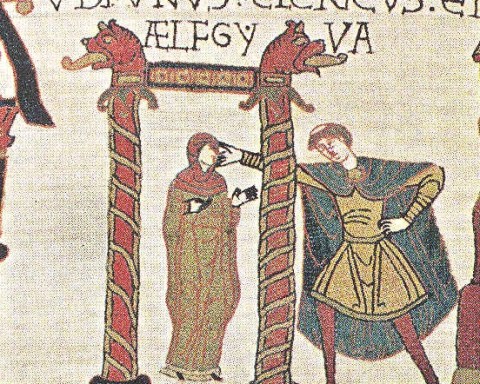
Older still is the practice of sending somebody to Coventry. Why Coventry, a prosperous cathedral town in the English Midlands that, until it was flattened during bombing raids in 1940 to 1941, was a maze of narrow streets lined with flamboyant medieval timber-framed buildings and fine churches? Popular culture links it to ‘Peeping Tom’, a Coventry tailor who was ostracised by the community because he alone of all Coventry’s citizens spied on Lady Godiva when she rode naked through the city’s streets in protest against the oppressive taxes levied on tenants by her own husband, Leofric, Earl of Mercia (d. 1057).
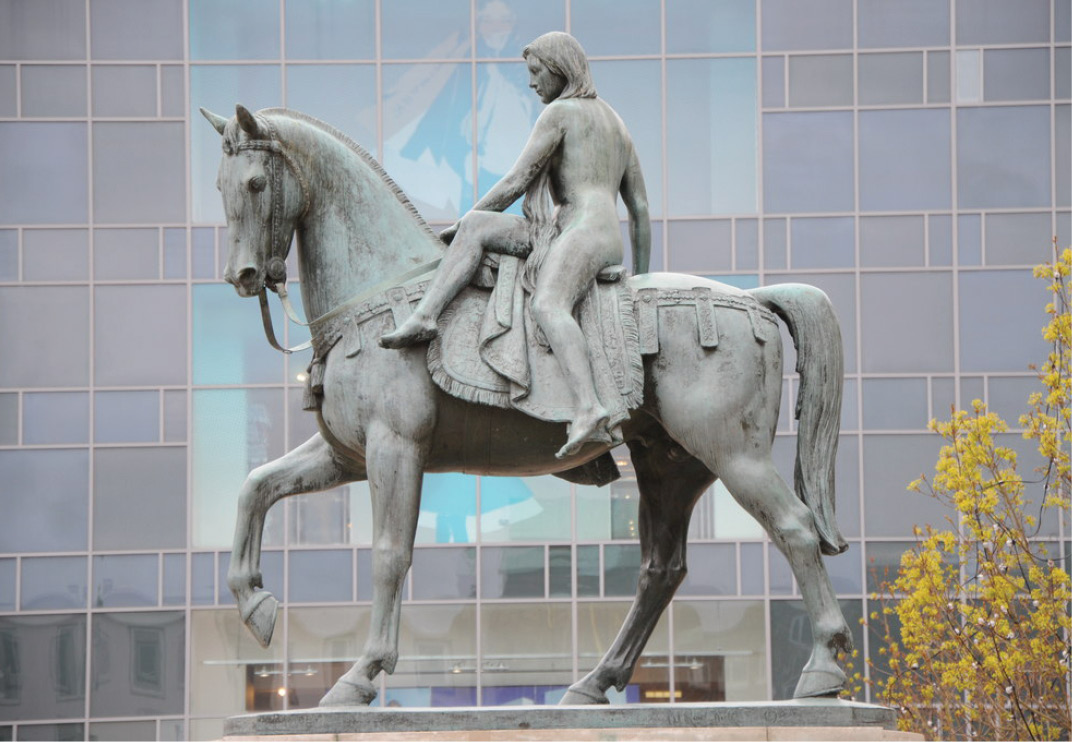
The problem with this attribution is that the earliest recorded use of the phrase dates from 1647, so it is much more likely to have a Civil War origin – perhaps, suggests one commentator, it was a form of discipline exercised by Cromwell’s New Model Army to punish anti-social behaviour, but the choice of Coventry remains a mystery.
Damnatio and iconoclasm
And then there is the ancient Roman practice of damnatio memoriae (‘condemnation of memory’), about which this magazine has reported on several occasions, used as a sanction against emperors (such as Nero) who were deemed to have brought dishonour on Rome and its institutions: their statues were defaced or recycled, and their names expunged from the records.
Archaeological evidence too exists for attempts by early Christians to ‘cancel’ pagan practices by desecrating temples, such as the one dedicated to Sulis Minerva that stood over the sacred springs in the city of Bath. No doubt those early Christians would say that this was relatively mild revenge for the sufferings of martyrs, persecuted by Roman emperors (the name of Nero again springs to mind) in an attempt to destroy the new religion and its adherents. Less can be said in favour of the iconoclasm of the Reformation in Europe, and its successful destruction of artefacts deemed to be ‘papist’: all carved and painted images – even of the Crucifixion – all relics and all symbols of ‘ritualistic’ practice, such as vestments, processional banners, altars, rood screens, musical instruments, or chantries.
In 13th-century Florence, cancel culture took the form of excluding citizens from their birthright, shutting them out of the city walls, and condemning them to exile – a punishment meted out to Dante Alighieri when his political enemies controlled the city. Two centuries later, the hard-line Dominican prior Savonarola organised house-by-house collections of paintings, mirrors, gaudy clothing, jewellery, and erotica, which were burned on great ‘bonfires of vanity’ in the city’s main square. Even the artist Botticelli got caught up in this, when he condemned his own early work for depicting pagan deities and vowed only to paint religious subjects in the latter part of his life.
Medieval prejudice
Many more examples could be cited, but one observation is relevant to all. The attempts to erase somebody’s life and work or take down a statue or monument often has the opposite effect: of giving publicity to something that might otherwise have been forgotten. How many people, for example, have walked past the façade of the Stadtkirche in Wittenberg without noticing a 13th-century carving known as the Judensau (‘Jews’ sow’). This depicts a rabbi lifting the hind leg of a pig to inspect its rear end, while others are feeding on the sow’s teats.