Subscribe now for full access and no adverts
If you admit to being an archaeologist in answer to the question ‘What do you do?’, you will often elicit the response: ‘My daughter/son is very keen on fossils/dinosaurs’. The polite reaction is to smile and nod, rather than pointing out that archaeologists study human culture, and that dinosaurs were long extinct by the time the human race began. But it appears that archaeologists and palaeontologists do have one thing in common: a deep-seated concern about the privatisationof objects that form part of our common heritage.
Palaeontologists, according to a recent report inThe Times, are unhappy about the recent sale of a Tyrannosaurus rex skeleton to a private collector forUS$6.1 million. The auction house said it was the firsttime in Europe that an entire T. rex skeleton had been offered for sale – though to call it ‘entire’ stretches a point: it is known as the ‘Trinity’ skeleton because it consists of bones from three different T. rex finds, excavated between 2008 and 2013 from the Hell Creek and Lance Creek formations in Montana and Wyoming.
For a T. rex skeleton to be classed as ‘high quality’, at least half of the bones have to be genuine fossils; in this case, fossil bones comprise just over the magic 50 per cent, while the rest are made from plaster and epoxy resin, cast from other bones. For this reason, Professor Steve Brusatte of the University of Edinburgh has described Trinity as ‘a Frankenstein rex’. Even so, the sale is seen as part of a growing trend that harms science by putting fossil specimens out of researchers’ reach. ‘These fossils are rare and scientifically important’, Professor Brusatte said, ‘and I feel they properly belong in a museum where they can be kept safe, studied by scientists, and inspire kids and members of the public of all ages.’

Could museums cope?
Dr Thomas Carr of Carthage College in Wisconsin estimates that there are 74 T. rex specimens in private hands and 59 in museums, where they often form the star attraction, on a par with such glittering detectorist finds as the Staffordshire Hoard. But do museums in the UK even want any more finds – especially the more mundane artefacts that result from developer-funded excavations?
The recently published Options for Sustainable Archaeological Archives report, commissioned jointly by the Arts Council and Historic England, talks about a tipping point in the near future when the amount of new material coming out of the ground will exceed the space available for storing it. Commenting on the report, Barney Sloane, National Specialist Services Director at Historic England, told the BBC that ‘the clock is ticking – we have four or five years before we really do start seeing massive problems. It would be a shame if we couldn’t find a way of making sure that archaeological archives are protected for the future.’
Adding to the shortage of space is the lack of dedicated archaeological curators with the skills to interpret the material and make it accessible. According to the Society for Museum Archaeology, fewer than half of museums in England now have an archaeological curator.
One solution being canvassed is to create one big national repository for all the finds; another is to ‘put them back where they came from, under the ground’ – though this rather misses the point that the place they came from no longer exists, which is why they were excavated in the first place. Such finds can also make attractive public displays. Underground stations in a number of European cities have glass-walled installations that are a cross between archaeological display and artwork, made up of finds from the construction of the transit system. The London Mithraeum at Bloomberg’s European headquarters in the City of London (see CA 334) is another example.
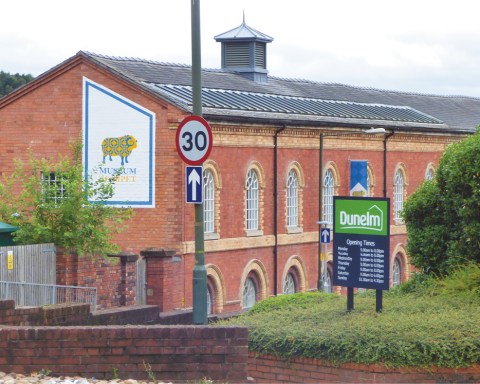
MOLA (Museum of London Archaeology) turned its store into a popular visitor attraction in its own right (albeit one that is currently closed while the Museum of London relocates), and some museums – for example, the National Railway Museum in York, and Reading’s Museum of English Rural Life – have publicly accessible stores that are as fascinating as the main displays.