Subscribe now for full access and no adverts
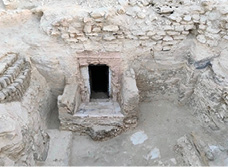
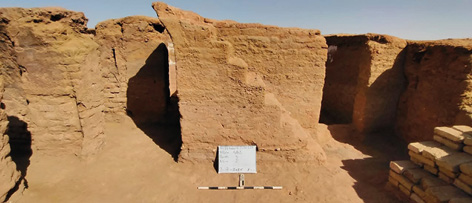
In 2001, the mission of the Metropolitan Museum of Art, New York, which was working at Dahshur, re-excavated the mastaba of the Twelfth Dynasty court official Khnumhotep III. He was high steward and vizier, and therefore one of the leading officials at the royal court under Senusret III (c.1874-1855 BC) and perhaps under Amenemhat III (c.1855-1808 BC).
Decorated tomb chapels are often the main source of evidence about officials in most periods of Egyptian history, but – in stark contrast to the Old and New Kingdoms – not much is known about the court officials of the Middle Kingdom. The evidence we have is based only on stelae, scarabs, and statues, as very few of their tombs have yet been excavated. We most often just have their name and titles – family members are rarely attested. Khnumhotep is one of the rare cases where it is possible to reconstruct his career.
Khnumhotep was the son of the provincial governor Khnumhotep (II), who is well known from his painted tomb chapel at Beni Hasan. As young man, he came to the royal court and was educated there. We know from a stela found at Wadi Gasus, on the Red Sea coast, that he took part in an expedition to the ‘God’s land’ in year one of the reign of Senusret II (c.1880 BC).
Khnumhotep’s tomb was discovered at the end of the 19th century by the French archaeologist Jacques de Morgan (1857-1924), who had a run of good luck finding several Middle Kingdom mastabas and intact burials of princesses. However, de Morgan missed numerous inscribed limestone fragments – or at least did not publish them in his lavishly produced excavation report from 1895. Their significance only came to light during the 2001 re-excavation of the tomb.

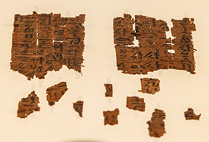
The inscriptions are badly damaged, but it is still possible to see they record an expedition to Byblos which appears to have become entangled in a conflict between the king of Byblos and the ruler of an as yet unlocated town called ‘Ullaza’.
These inscriptions dramatically change our evidence for Egypt’s foreign contacts. Previously, contacts between Egypt and the Levant were mostly known only from archaeology. Many Egyptian objects were found in the Levant, but the nature of the trade and political intervention was unknown.

The discovery of these fragments was of special importance to me, as I wrote my Master’s thesis on the high stewards of the Middle Kingdom. I felt in some strange way connected to these officials, and so I was particularly excited to see the appearance of new data that sheds more light on their otherwise shadowy existence.
Wolfram Grajetzki: Honorary Senior Research Associate at University College London