Subscribe now for full access and no adverts
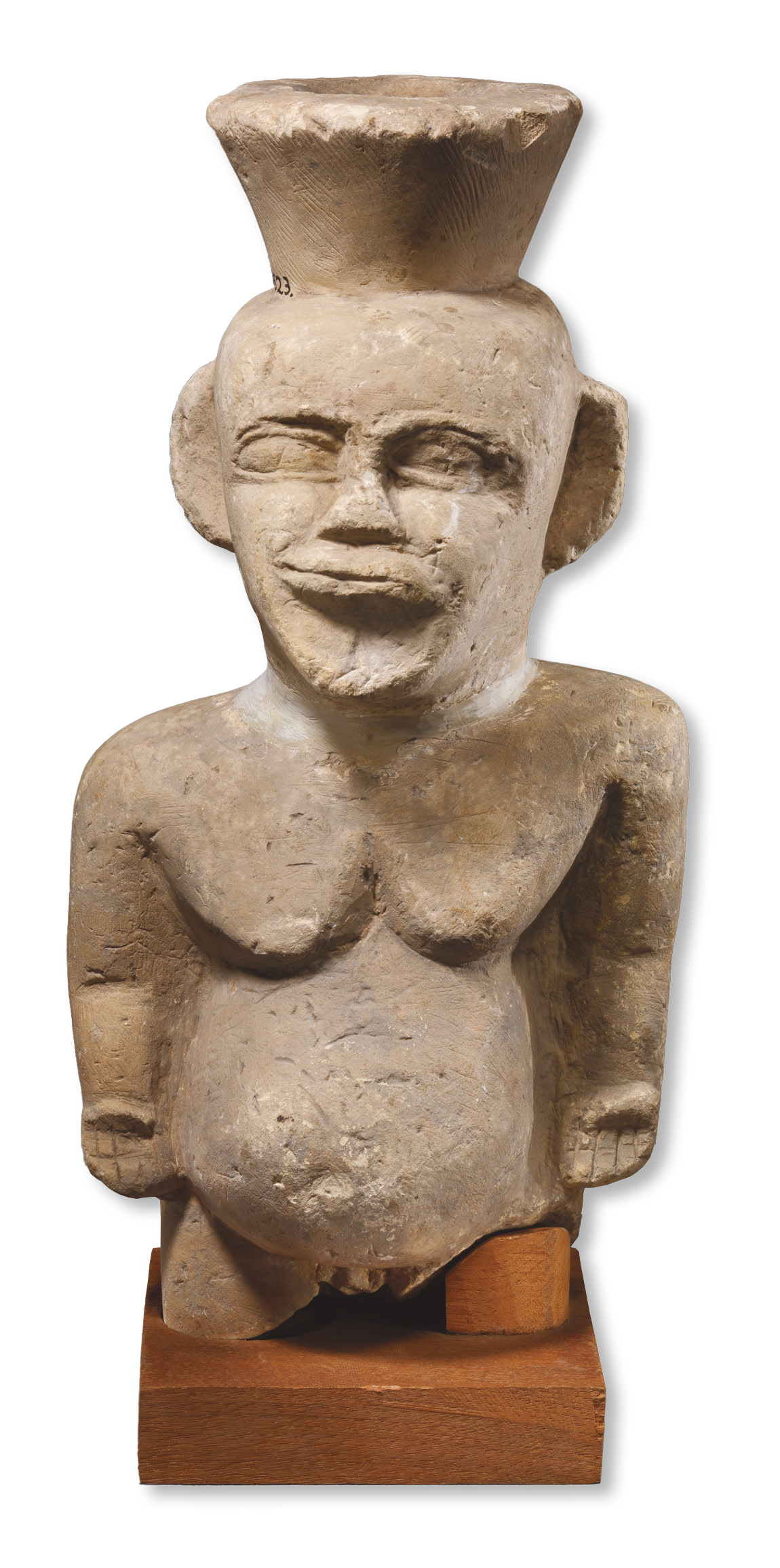
Striking to modern eyes because of its human shape, this short limestone stand was found at Kahun, a town built to accommodate workers on the pyramid of King Senusret II and must date to his reign (c.1877-1870 BC) or not long thereafter. Similar stands – crafted to support a lamp wick or incense burner – are known from the same site, and a close parallel was unearthed during recent excavations in a Middle Kingdom settlement at Memphis. These find-spots suggest a common domestic context for the lamps, although whether they were items of household ritual furniture, or set up in a local chapel or temple, is difficult to prove.
The shortened proportions of the figures into which the lamp stands are shaped stand in contrast to the traditional pharaonic canon of proportion for the human body. Dwarves had considerable significance in Egyptian culture, and are represented throughout the pharaonic period. Dwarves were clearly accorded high social status from the Old Kingdom onwards, and appear in skilled trades such as jewellery-making. They could also occupy high positions at court, as was the case with a Fifth Dynasty dwarf named Seneb – an ‘overseer of palace dwarfs’, ‘chief of the royal wardrobe’, and a priest in the funerary cult of King Khufu. An association with the divine may have existed at this time, although it is not articulated explicitly.
During the Middle Kingdom, the short divinity named Aha (meaning ‘the fighter’) appears in so-called ‘birth tusks’ and other magical and protective contexts. Later, Aha morphs into a dwarf known as Bes, the fearsome god particularly responsible for driving off danger during childbirth. These attestations come mainly from the New Kingdom and later, but fit with the domestic setting in which the Middle Kingdom lamps have been found. Perhaps burning a flame atop one of these stands activated the protection ordinary Egyptians would most wish at home?
Image: courtesy of the Petrie Museum of Egyptian and Sudanese Archaeology, UCL