
Subscribe now for full access and no adverts
Temperance traditions
The interesting article about the Temperance movement (CA 434) reminded me of the Cornwall temperance connection at the Padstow ’Obby ’Oss festival, which takes places every May Day.
The original Oss has always emerged from the Golden Lion pub, but in the 19th century, as the Temperance movement took hold (Cornwall, of course, being strongly Methodist), a second Oss was established, wearing blue as opposed to the red of the original, and emerging from the Institute. It is now more often known as the Peace Oss, and supporters wear red or blue to indicate their allegiance.
Is the Oss a horse? How far back does the tradition go? Nobody knows!
Constance Moore, St Just in Penwith, Cornwall
Defending detectorists
I’m just enjoying CA 429 (sorry, it takes a few months for my copy to arrive in Tasmania) and taking a break from the latest doom-and-gloom news by catching up on the pleasant news from your magazine.
One disappointing observation, if I may: I know there’s a certain amount of mutual concern both ways between archaeologists and metal-detectorists, but that won’t be helped by the inherent bias displayed in the article ‘Search ongoing in Essex for missing Second World War pilot’. Listing all the types of individuals who helped, the phrase used was ‘and trusted metal-detectorists’. Aren’t all people, including paid staff, volunteers, diggers, finds experts, etc, all requiring a degree of trust? How often have we heard in the news of charges laid against a museum curator for theft? Or reports of academic misrepresentation? To single out metal-detectorists alone as specifically requiring trust will only reinforce the stereotypes in both directions and widen the gulf between two groups who are each a part of our societies, and where respect and communication are essential in order for our understanding and knowledge to progress.
Alex Thomson, Hobart, Tasmania
Edible Archaeology
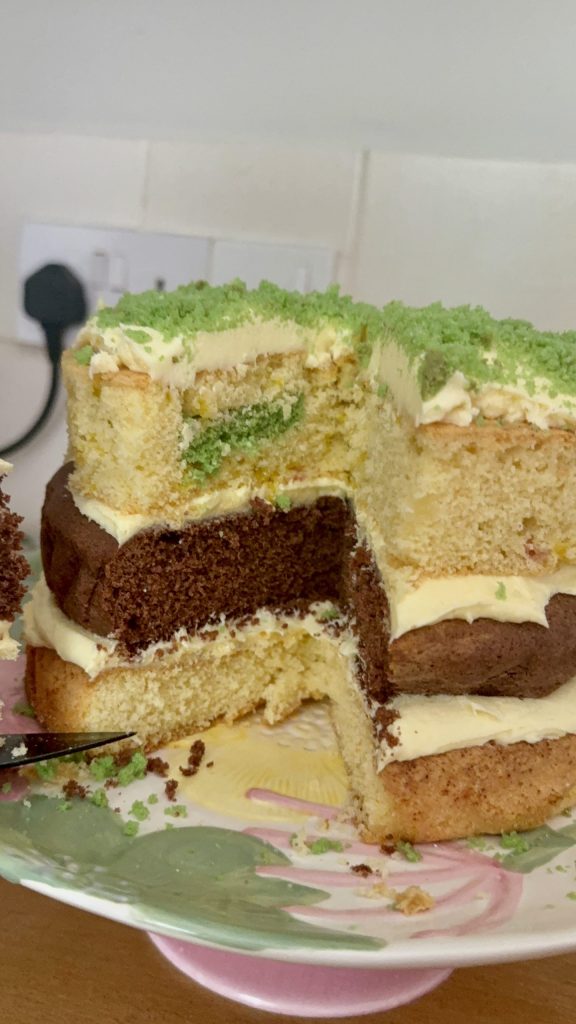
I chose to make a stratigraphy cake because I’ve always been interested in how stratigraphy allows archaeologists to piece together the history of a site layer by layer, and I thought it would be a really fun and creative way to explore that idea in an edible form. Making the cake was honestly such an enjoyable process, because it combined creativity, baking, and archaeology all together. I especially enjoyed planning the different layers and thinking about how each one could represent different deposits and archaeological features. It also helped me understand stratigraphy more clearly – particularly how archaeologists interpret the order of layers and use them to understand what happened over time on a site. Turning those ideas into a cake made the learning process much more hands-on and memorable.
I was really inspired by the idea that archaeology can be both educational and creative, and I loved finding a way to present a scientific concept in such a fun and accessible way. Fancy having a go yourself? Go to: http://www.yac-uk.org/activity/make-a-stratigraphy-cake.
Sophie Nutt, Council for British Archaeology’s Youth Engagement Volunteer
CA ONLINE: What you shared with us this month
Dr Francis Young @drfrancisyoung.bsky.social
I see my first skeet has made it into @current archaeology.bsky.social!

Martin Paul Eves @eve.gd
Don’t forget about us small people now that you’ve made the big time!
Daniel Bellingradt @dbellingradt.bsky.social
You win the internet today!
Hàìghlèàgh Winslade BA BA MRes @hiegleah
@CurrentArchaeo received my copy of #CA435 today. Really enjoyed Neil Mortimer’s article about Aubrey Burl’s The Stone Circles of the British Isles, 1st published 50 years ago in 1976. I have the 5th imprint, published in 1979, together with Burl’s 1999 Circles of Stone.

Write to us at: CA Letters, Current Publishing, Office 120, 295 Chiswick High Road, London, W4 4HH, or by email to: letters@archaeology.co.uk
For publication: 300 words max; letters may be edited.