
Subscribe now for full access and no adverts
Lord Lisvane, former Clerk to the House of Commons and Chairman of the Royal College of Organists, sparked a lively correspondence in The Times earlier this year when he asked whether he was alone in deploring the popularity of ‘All Things Bright and Beautiful’, especially ‘when there are so many wonderful alternatives’.
Lord Williams of Oystermouth, the former Archbishop of Canterbury, then weighed in to say that the hymns we sing today are at ‘primary school level’, and that ‘the great classics have fallen out of common memory’. ‘All Things B&B’ was indeed written for a volume called Hymns for Little Children in 1848 and, as well as being bland, said Lord Williams, it has a verse that describes ‘the rich man in his castle, the poor man at his gate’, as if their social positions had been ordained by God.
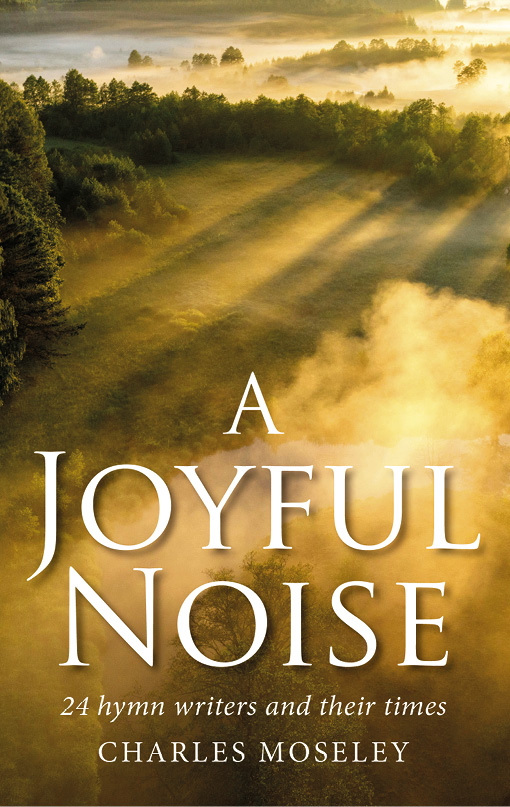
The exchange of letters was a reminder that hymns are not just ‘inspiring and uplifting’, as the Songs of Praise website would have us believe: many have a long history, and reflect the social and theological ideas and the musical fashions of their time – and both can be highly controversial.
Few worshippers who open their English Hymnal on a Sunday realise, for example, that it caused outrage when it was first published in 1906 because of its use of English folk melodies (courtesy of Ralph Vaughan Williams, the Hymnal’s music editor). Furthermore, its supposedly Catholic flavour featured too many references to the Virgin for staunch Protestants to stomach – though one of the most controversial hymns could more accurately be described as omnistic: William Blake’s belief that all religions are one is succinctly summed up in his hymn ‘To Mercy, Pity, Peace, and Love’. In it, he asserts that ‘all must love the human form/ In heathen, Turk, or Jew/Where Mercy, Love, and Pity dwell/There God is dwelling too’.

Perhaps that is why the Hymn Society of Great Britain and Ireland, of which Lord Williams is Honorary President, says that – in addition to supporting ‘study and research in hymnody’ – it encourages ‘the discerning use of hymns and songs in worship’. The highlight of the Society’s year is the annual three-day conference, at which lectures from eminent hymn historians are combined with hymn-writing and -singing workshops, and a hymn festival with professional conductors and organists.

Further information: https://hymnsocietygbi.org.uk
Is there a society that you would like to see profiled? Write to theeditor@archaeology.co.uk
Images: Darton, Longman & Todd Ltd; The Vaughan Williams Foundation; Eebahgum