Subscribe now for full access and no adverts
Almost every TV costume drama begins with the sound of horses’ hooves and the rumble of carriage wheels as members of the cast arrive at some stately home or other, ready for the story to unfold. And no royal or state occasion would be complete without the splendid sight of gilded coaches, harnessed horses, and postilions in livery.
Despite these being thoroughly familiar scenarios, the knowledge and the skills involved in the use and care of carriages – a crucial part of our transport system until 100 years ago – have all but gone. That is why a group of museum curators, conservators, historians, and enthusiasts for horse-drawn vehicles came together in 1991 to form The Carriage Foundation.

The Foundation recognised that the carriages within many museum collections were either misinterpreted or misunderstood, and so they set out to compile a publicly accessible register of horse-drawn vehicles, publish newsletters and a journal, and provide educational resources, advice, study days, and study tours.
A successful professional family at the start of the 19th century would probably employ at least one coachman and would own a brougham (a closed carriage for bad weather and night-time use) and a victoria (an open carriage for use in fine weather). The Foundation’s website tells you which museums and stately homes you can visit to see good examples of both of these – many of them owned and cared for by the National Trust.
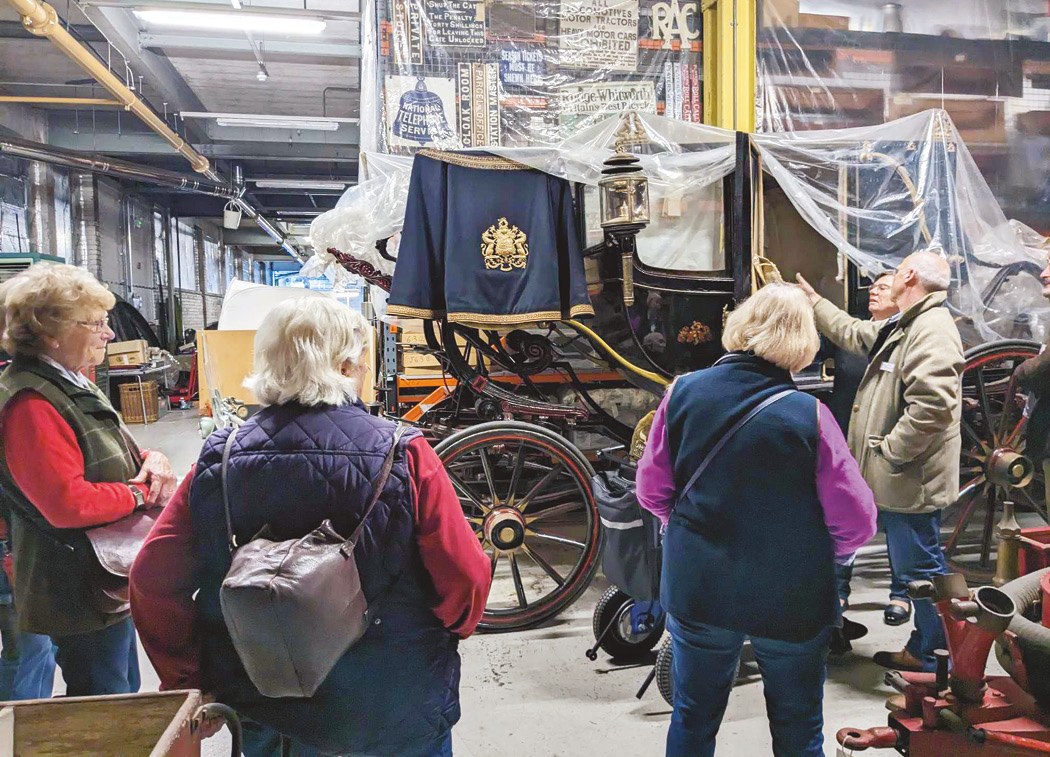
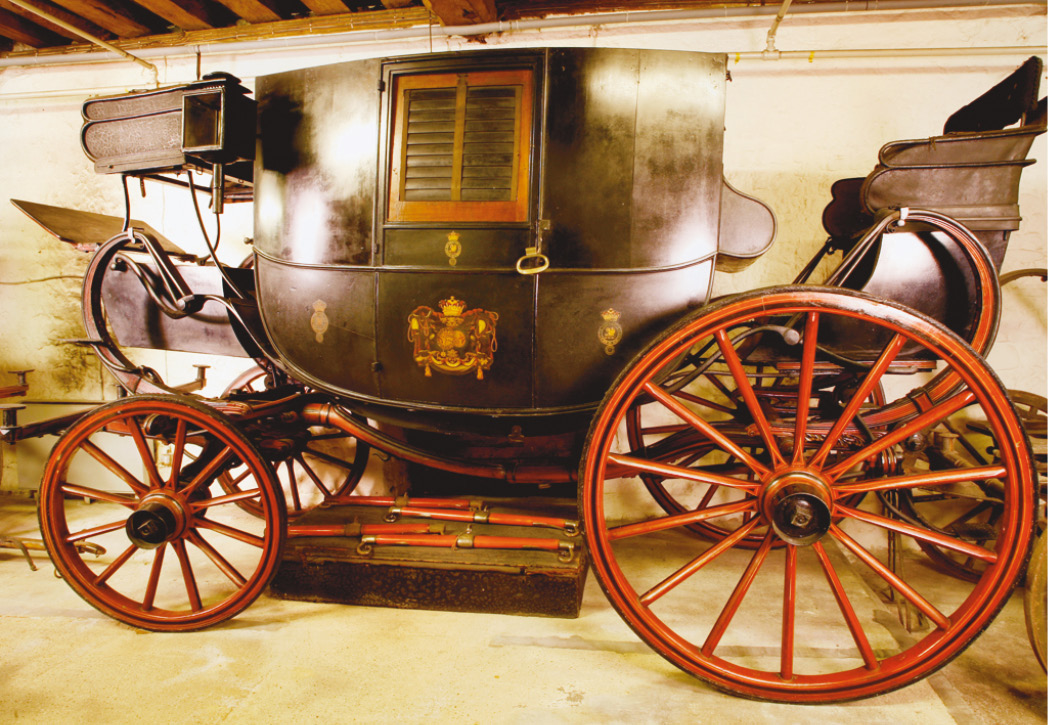
Many of the carriages are static displays. However, for the sights, sounds, and smells of coaches and horses, nothing beats the Royal Mews at Buckingham Palace, where you might be surprised to learn that riding in a swaying carriage can make you travel sick – the State Coach used for the Coronation of King Charles III has very modern hydraulic stabilisers to prevent this.
The Foundation’s ultimate dream is to see the creation of a national carriage museum, but for now the best substitute is the Foundation’s first book – The A to Z of Carriages – in which nearly 400 carriage types are illustrated, with a physical description and the story of how they came into being – so no excuses for not knowing your landau from your barouche, or your cariole from your phaeton (all terms that were once commonly understood, along with the associated social status).
Further information: http://www.thecarriagefoundation.org.uk
Text: Christopher Catling / Images: The Carriage Foundation

Is there a society that you would like to see profiled? Write to theeditor@archaeology.co.uk