Subscribe now for full access and no adverts

REVIEW BY MICHAEL TUNNICLIFFE
Ancient Kellis was a site in the Dakhla Oasis that was occupied from Late Ptolemaic times to the end of the 4th century AD. Excavations have exposed houses, cemeteries, temples, and churches. Important documents were found here relating to both mainstream Christianity and the dualistic Manichaean religion, whose followers were also disciples of the 3rd-century Persian prophet Mani. This volume concentrates on the Christian churches and cemeteries dating to the 4th century, with the previous volume having focused on Roman Period cartonnage.
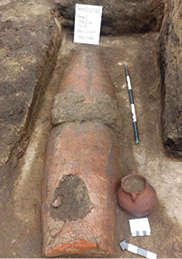
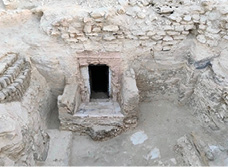
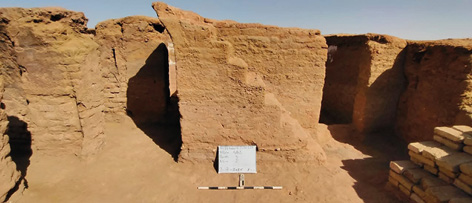
Excavations revealed three mud-brick churches. The Small East Church, which may have begun as a house church, dates from the beginning of the 4th century. The nearby Large East Church was grander and purpose-built – probably the oldest such structure in Egypt. The West Church had two burials in the floor and was near a cemetery; it may have been a funerary church. The buildings seem to have belonged to a mainstream Christian group rather than to the Manichaean community. There is a large cemetery called Kellis 2, which replaced the earlier Kellis 1, and marks the transition from paganism to Christianity. Importantly, infants and foetuses were afforded the same level of attention as adults. About 65% of the dead were under 15 years old and the majority were very young. It seems that, by the 4th century, these believers were following the directives of the Christian church with regard to burial practices.
This detailed archaeological report contains a full account of the buildings and graves, together with studies of all the material remains. These include descriptions of pottery, glass, coins, ostraca, wood, lamps, metal, and flora and fauna. Each of these can provide insights into daily life, as well as death rituals. The volume contains maps, drawings, photographs, and charts, plus a selection of colour plates at the end.
The multidisciplinary approach to the material and physical remains offers a picture of life in the 4th century, providing a detailed study of an Egyptian village undergoing the transition from paganism to Christianity. It seems that the site was abandoned after the year AD 392. With the Large East Church dating to the time of Constantine, and with clergy named in some documents, it demonstrates that Christianity had supplanted traditional Egyptian religion by the 330s. Furthermore, it shows that some developments previously thought to have come later, or to have been imported from Syria in the 5th century, do in fact occur at an earlier time within an Egyptian context.
The Excavations at Ismant Al-Kharab: Vol. II, The Christian Monuments of Kellis: The Churches and Cemeteries
by Gillian E Bowen
OXBOW BOOKS, 2024
ISBN 978-1-78925-963-6
HARDBACK, £60