Subscribe now for full access and no adverts
REVIEW BY ROGER FORSHAW
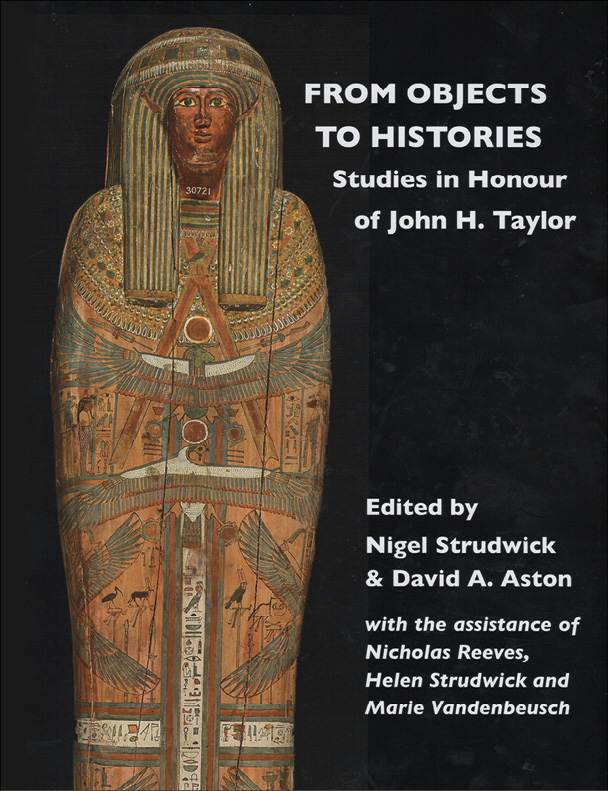
This monumental Festschrift, four years in preparation, celebrates John H Taylor’s distinguished career at the British Museum, both as a curator and a scholar. Aptly titled, the volume captures John’s remarkable dual expertise: his keen ability to analyse an artefact’s physical presence, and his talent for unravelling the intricate historical narratives interwoven with these objects.
John is a leading authority on funerary artefacts from the New Kingdom and Third Intermediate Period, with a particular focus on coffins. His extensive bibliography reflects not only his expertise in this area, but also his deep engagement with disciplines such as art history, archaeology, and funerary religion. He is also widely recognised for his pioneering work in applying non-destructive investigative technologies to the study of mummified remains.
The volume assembles more than 45 essays contributed by colleagues and friends, presenting a diverse spectrum of insights. The papers range from technical examinations of Egyptian coffins to broader reflections on how material culture shapes historical narratives. For example, Peter Lacovara’s study scrutinises fragments of coffins and funerary equipment excavated from the plundered tombs of Twenty-fifth Dynasty pharaohs and their successors at El-Kurru and Nuri. By piecing together these preserved remnants, it has been possible to reconstruct the coffins, shedding light on the Nubian artistic tradition, and revealing the selective adaptation of Egyptian motifs.
Maria Canata’s analysis of a 3rd-century BC letter (P. BM EA 10439) suggests a unique, monopolistic control over embalming materials, an arrangement not recorded in any other known source. An intriguing study by Marie Vandenbeusch and her colleagues employed advanced multidisciplinary analyses on the mummified remains of a young boy from Roman Egypt, housed in the British Museum. Their cutting-edge methods revealed concealed painted decorations, and provided fresh insights into the boy’s life, enriching our understanding of his cultural and historical context.
Charlotte Hunkeler and her team have conducted a detailed analysis of the exceptionally crafted coffin of Nehemester, a chantress of Amun from the Twenty-second Dynasty, discovered in KV64. The coffin’s intricate decoration is striking, with its registers presenting distinctive scenes that seamlessly blend familiar vignettes into innovative compositions.
Ultimately, From Objects to Histories emerges as an important contribution to Egyptological literature, testifying to John’s extensive scholarship and enduring impact.
The volume offers compelling insights into the dynamic interplay between artefacts and the historical narratives they evoke. Whether you are a seasoned academic or an enthusiastic student of Egyptology, this collection is an invaluable resource, offering thoughtful perspectives on the diverse topics that have defined his career.
From Objects to Histories: Studies in Honour of John H Taylor
ed. Nigel Strudwick and David A Aston
Abercromby Press, 2024
ISBN 978-1-912246-19-9
Hardback, £95