Subscribe now for full access and no adverts
Archaeologists from MOLA have uncovered evidence of a medieval windmill during work on the National Highways A428 Black Cat to Caxton Gibbet improvement scheme.
Located in Cambridgeshire, the structure is an example of a sunken Post Mill – the earliest type of mill found in Europe – and has a construction date of the late 12th or early 13th century. The date of its destruction is harder to determine, since nothing remains of the original building. ‘We know it was gone by at least the late 19th century, as OS maps show the mound but no mill,’ MOLA Project Manager Simon Marcus stated, noting that some of the 19th-century pottery finds were most likely deposited after the site was abandoned.
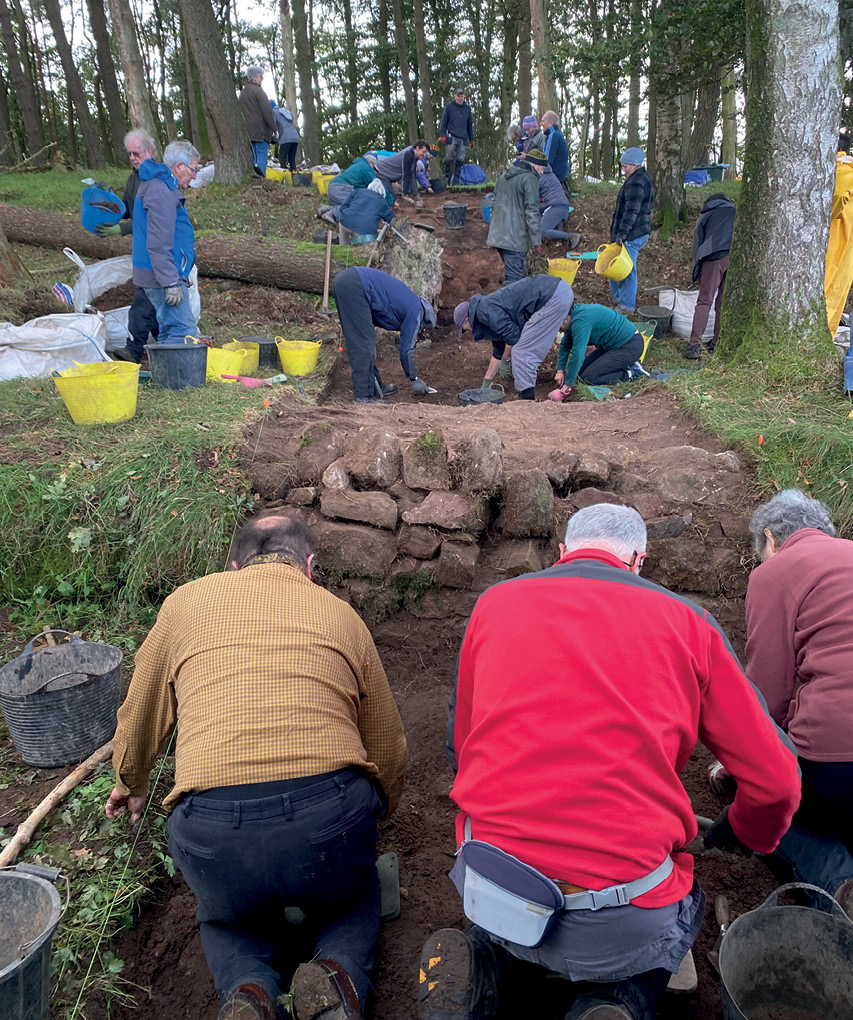
What does remain is evidence of the moat that surrounded the structure: this was formed during the construction process, which involved creating a mound of soil for the mill to sit in to raise the sails higher into the wind. The mound was later flattened during farming, but the outline of the moat remained and was revealed when archaeologists began removing topsoil at the start of the dig.
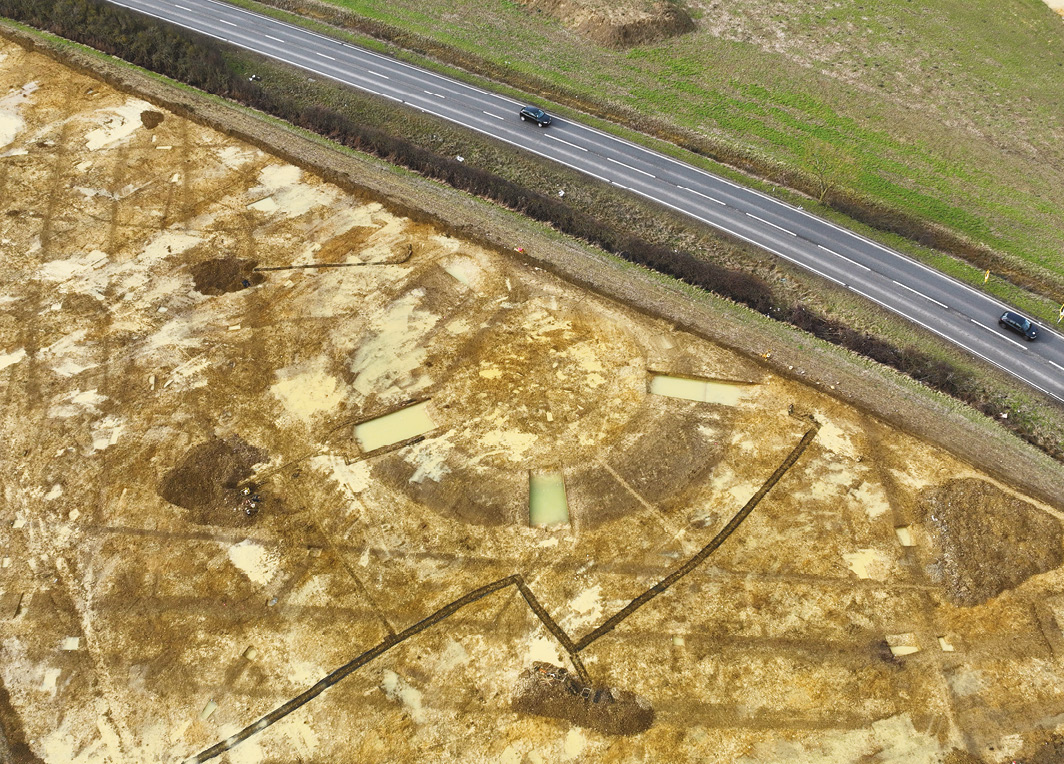
During the mill’s lifetime, this ditch gradually filled with water and archaeological material which was disposed over hundreds of years; it has therefore produced a wealth of interesting finds, including animal bone, farming tools, personal items such as shoe buckles, and more than 100 nails from the original wooden building. However, the most exciting of these finds are 17 pieces of the medieval millstones, including a ‘lava’ type with a rough surface which made it a popular choice for grinding. This particular type of millstone was imported from Mayen, Germany. The pieces of this millstone, and of a later example that was probably its replacement, are quite small, suggesting that larger pieces of broken stones were reused elsewhere rather than being disposed of.
The finds from the time-capsule moat are currently being investigated as part of the site’s post-excavation analysis, and it is hoped they will give interesting insights into the running of this fascinating structure.
Text: Rebecca Preedy / Image: MOLA