Subscribe now for full access and no adverts
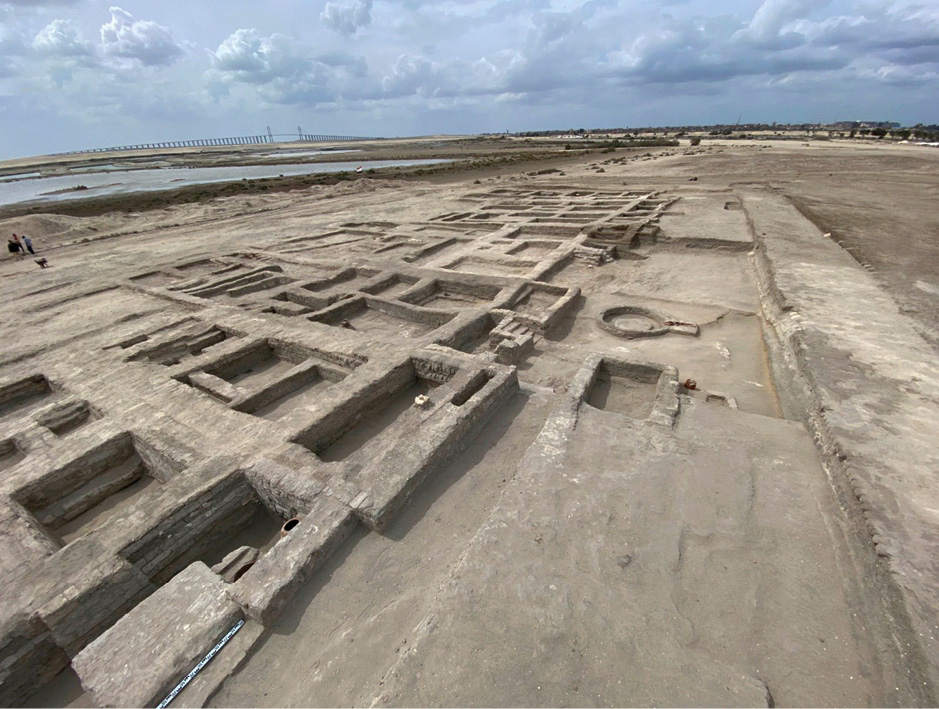
Recent excavations at Tell Abu Saifi in the Qantara region (Ismailia) have revealed new military architecture at the site of two fortresses dating back to the Ptolemaic and Roman periods. Located in the northern Sinai Desert, the ‘Fortress of the East’ was a strategic site built to protect Egypt’s eastern borders. The Egyptian mission has now uncovered residential housing for soldiers and their families, as well as the remains of a tree-lined road. Stretching from the eastern gate of the Roman fortress into the centre of the site, the paved road is 100 metres long and 11 metres wide, and bordered by more than 500 mud circles where trees were once planted.
Other discoveries at the site include a huge defensive trench more than 2 metres deep, architectural elements from the eastern gates, and underlying structures that appear to date to an earlier period. The discovery of four large lime kilns for producing quicklime suggests that the site became an important industrial centre towards the end of the Roman era, when most of the military structures were dismantled.

Text: Sarah Griffiths / All images: Ministry of Tourism and Antiquities