Subscribe now for full access and no adverts
Excavations this past summer have revealed the remains of three Bronze Age barrows, as well as a large Anglo-Saxon cemetery in New Alresford, Hampshire.
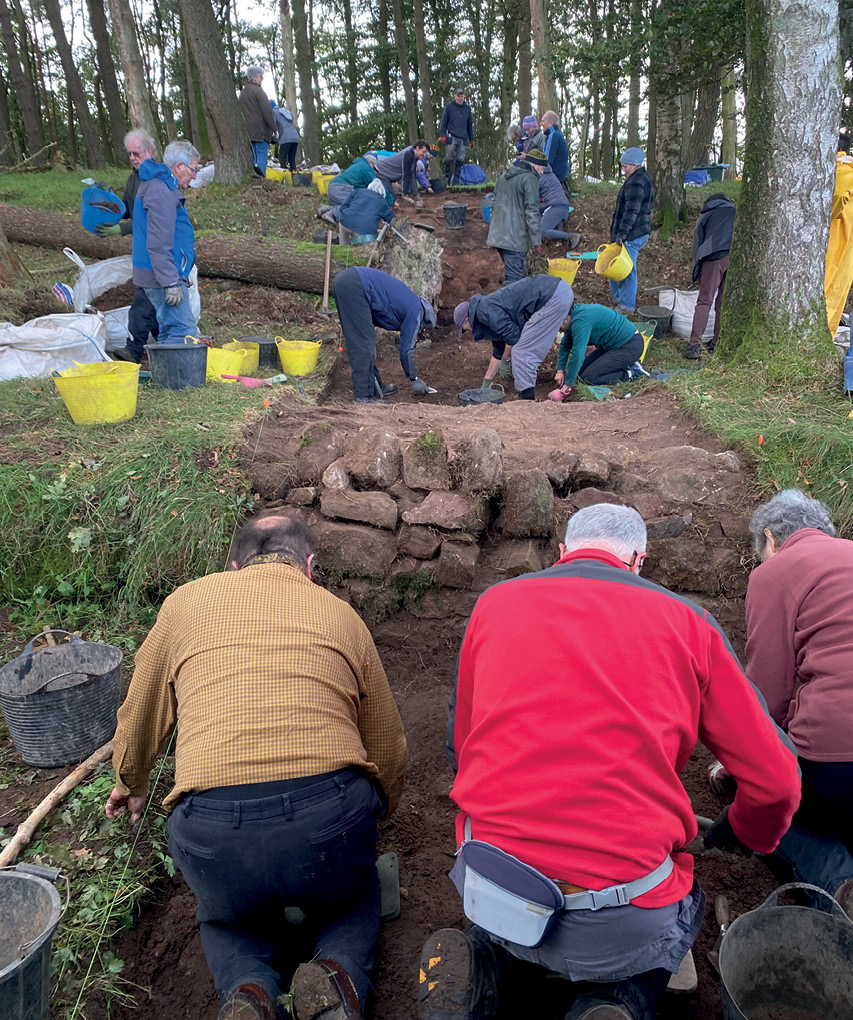
Led by PCA Winchester and the environmental consulting group RPS, the project was carried out last July in advance of development of the site by Taylor Wimpey. The Bronze Age barrows had initially been spotted in the form of cropmarks on an aerial photograph taken in 1968, and subsequent trial work in 2015 confirmed their presence, located high on Tichborne Down, overlooking the River Alre. The 2023 excavation has now revealed the barrows in full, finding two urned cremation burials and two crouched inhumations that are believed to have been interred during the first phase of Bronze Age activity on the site. All show the effects of ploughing.
As well as the prehistoric discoveries, a large Anglo-Saxon cemetery was found inside and around the barrow ring- ditches. More than 120 graves, all dating to the 7th century AD, were uncovered, making this one of the largest Anglo-Saxon cemeteries yet discovered in Hampshire – and it is thought that, like the barrows, many of the burials were badly damaged by ploughing. Almost all of the Anglo-Saxon burials were aligned east–west and appear to have been well organised into distinct rows with little overlap, suggesting it was a well-maintained cemetery. While post-excavation analysis is ongoing, the site is believed to have been a long-lived burial ground for a nearby early medieval community.

One of the burials, although poorly preserved, yielded clues to indicate that it was that of a young woman who was buried with a rare gold disc pendant decorated with fine gold filigree forming a cross shape – perhaps once part of a necklace. Since the cemetery is believed to date to the Conversion Period, this could be evidence of the possible Christian religious beliefs of at least some of the cemetery’s occupants. Other small finds from within the cemetery included small iron knives, a sword, and a pair of shears.
Now that the excavations are complete, the team will turn to post-excavation analysis hoping to reveal more about this intriguing and important site. The excavation also recently featured in the new series of Digging for Britain; you can find out more on the BBC iPlayer at http://www.bbc.co.uk/programmes/b014hl0d.