
Subscribe now for full access and no adverts
On 4 July 2026, tens of millions of Americans across the United States will celebrate the 250th anniversary of the country’s Declaration of Independence. Largely written by Thomas Jefferson, this extraordinary foundational document formally announced the separation of 13 North American British colonies from Great Britain – a revolutionary call to arms eloquently justified by its argument that ‘these United Colonies are, and of right ought to be, free and independent States’, and by its claim that King George III was ‘unfit to be the ruler of a free people’.
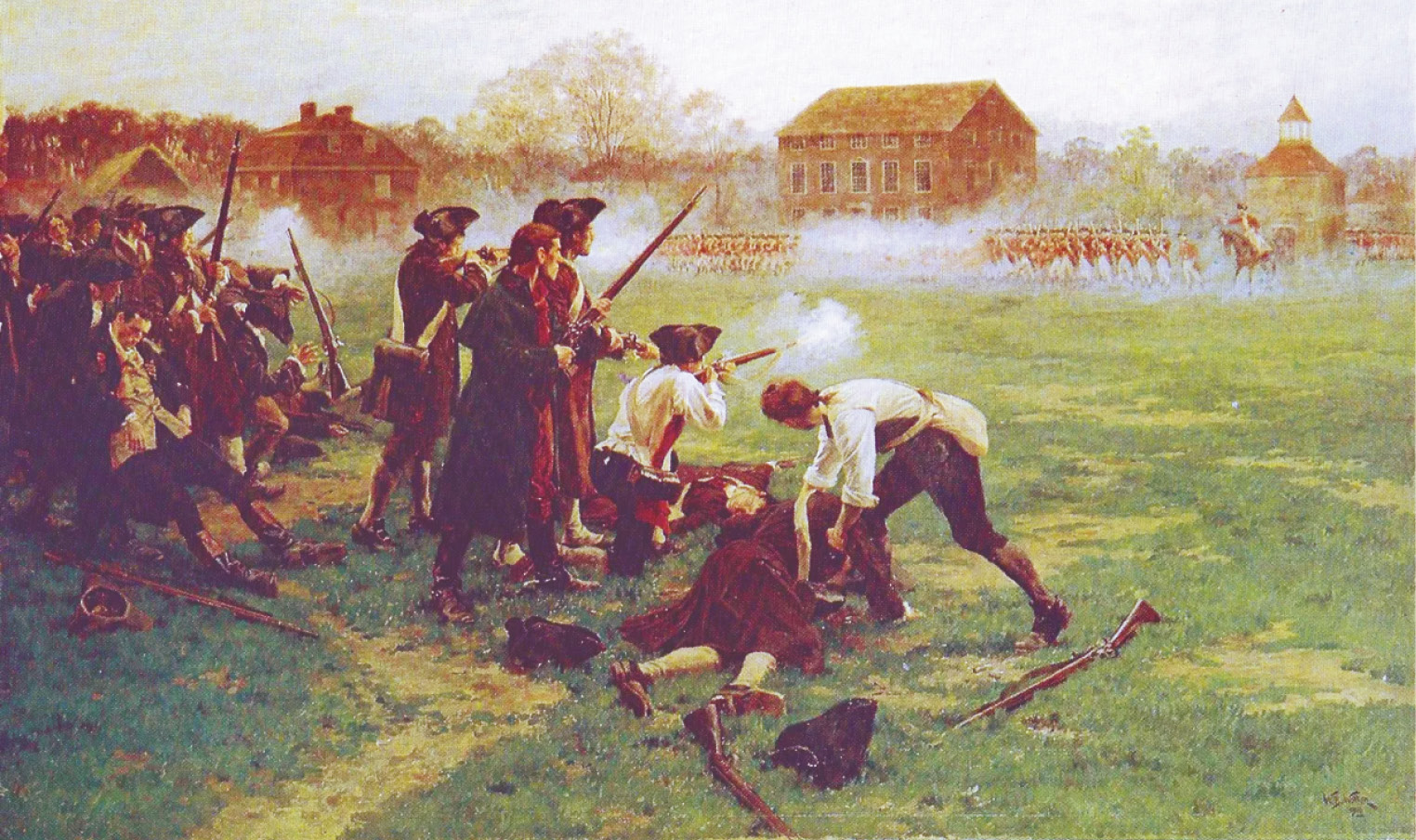
As we discover in our special feature for this issue, the Declaration’s publication was actually just one in a complicated sequence of world-changing events that resulted in America’s eventual independence. A conflict which had begun several years earlier as an argument between two groups of British subjects over trade and taxes exploded into open warfare in April 1775, when the first shots were exchanged during a brief skirmish between British infantrymen and a small group of American militiamen who had assembled on the green in the centre of the town of Lexington, outside Boston.
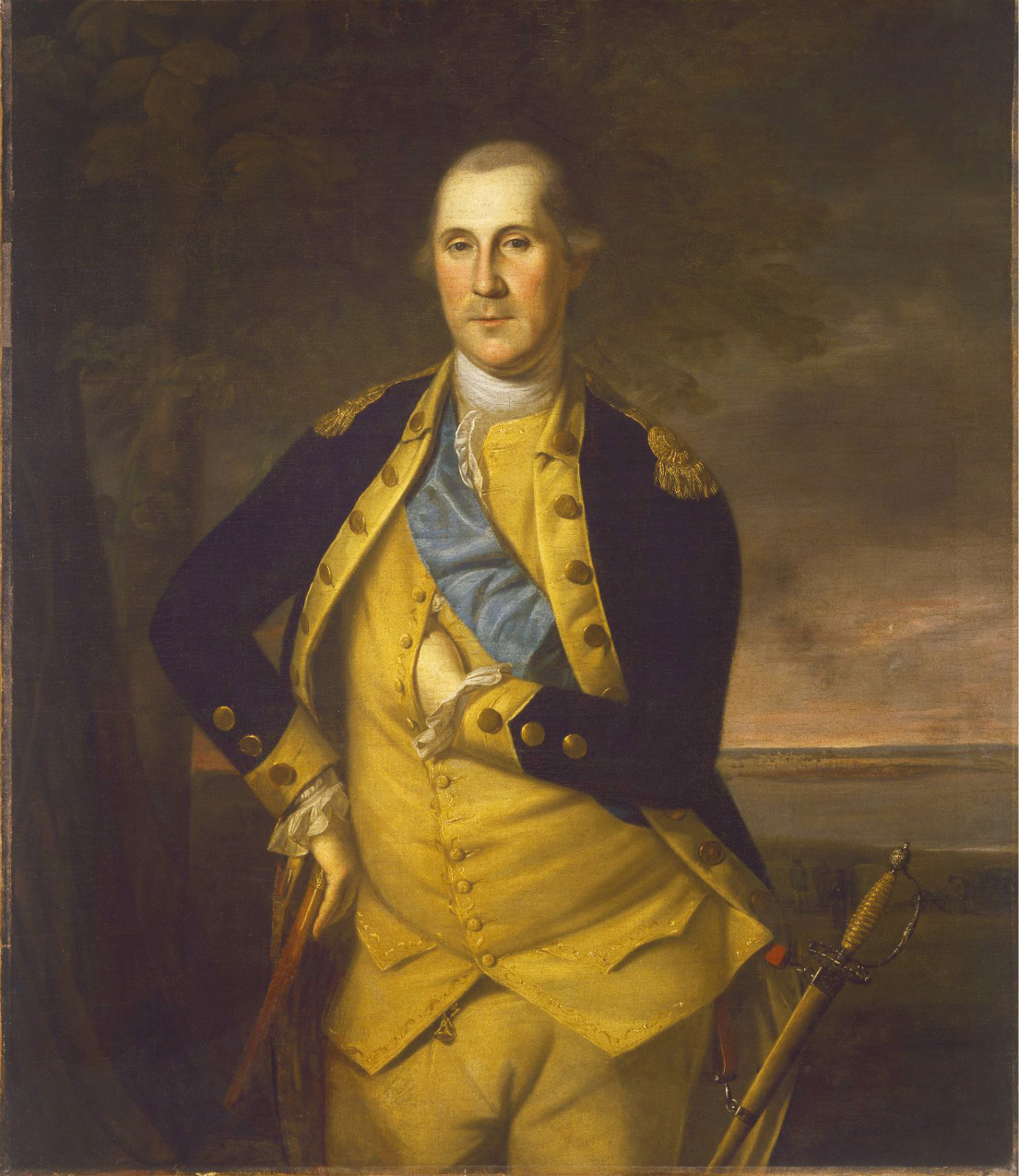
As matters escalated, the rebel forces would find an inspirational new leader in George Washington – the man who would become the country’s first President – and new allies in the form of Britain’s traditional rivals France and Spain, while six years of armed struggle would see a cat-and-mouse war waged up and down the continent’s eastern seaboard. By the time of the final British surrender at Yorktown, Virginia, in October 1781, thousands on both sides had been killed – but America had won its freedom at last from colonial rule, and a new superpower had been born.
In our latest four-part series, Fred Chiaventone examines the genesis of America’s Revolutionary War, and traces the history of a conflict whose repercussions are still being felt 250 years on.
The gathering storm: The American Revolution: Part 1 – countdown to conflict
As far as wars go, it was a surprisingly small and limited affair – one that, in contemporary terms, involved relatively small armies and rather smaller casualty figures. But, in the great scheme of world affairs, it has had long-lasting and even explosive consequences. It had its roots in the remarkable expansion of the British Empire, which had begun in the 16th century and had, by the middle of the 18th century, grown to include possessions from the Indian subcontinent to Africa, the Caribbean, and North America. Trade had inextricably resulted in conflict with competing French, Dutch, and Spanish efforts. While the English had successfully populated the portion of the North American coast stretching from what is now Maine to Georgia, the French had acquired what is now Canada, and had also penetrated the interior along the Mississippi River.
Armed conflict between Great Britain and France was seemingly inevitable, and Europe’s Seven Years War (1756-1763) spilled over into North America. The North American phase of this conflict, frequently referred to as the French and Indian War, was, oddly enough, ignited when a young Virginian lieutenant colonel named George Washington attempted unsuccessfully to oust French troops from the area near present-day Pittsburgh, Pennsylvania (see MHM 122, June/July 2021). By 1763, the English had thoroughly trounced the French and their Indian allies, taking control of the bulk of the North American continent. Of the 45,000 troops deployed, only half were British regulars, with the other half made up of colonial volunteers.
It was, however, a costly affair. Britain’s national debt had climbed to £133 million, with annual debt payments of £5 million, and an annual budget of just £8 million. Parliament was determined to recoup the losses. Its natural answer was do so through the collection of taxes. Although the native English carried the bulk of the burden, the colonists in North America were outraged by the taxes imposed on them. After all, the war had affected them most directly, they had participated fully in the struggle, and they were given no voice in the matter of finances. The slogan ‘no taxation without representation’ echoed through the colonies.
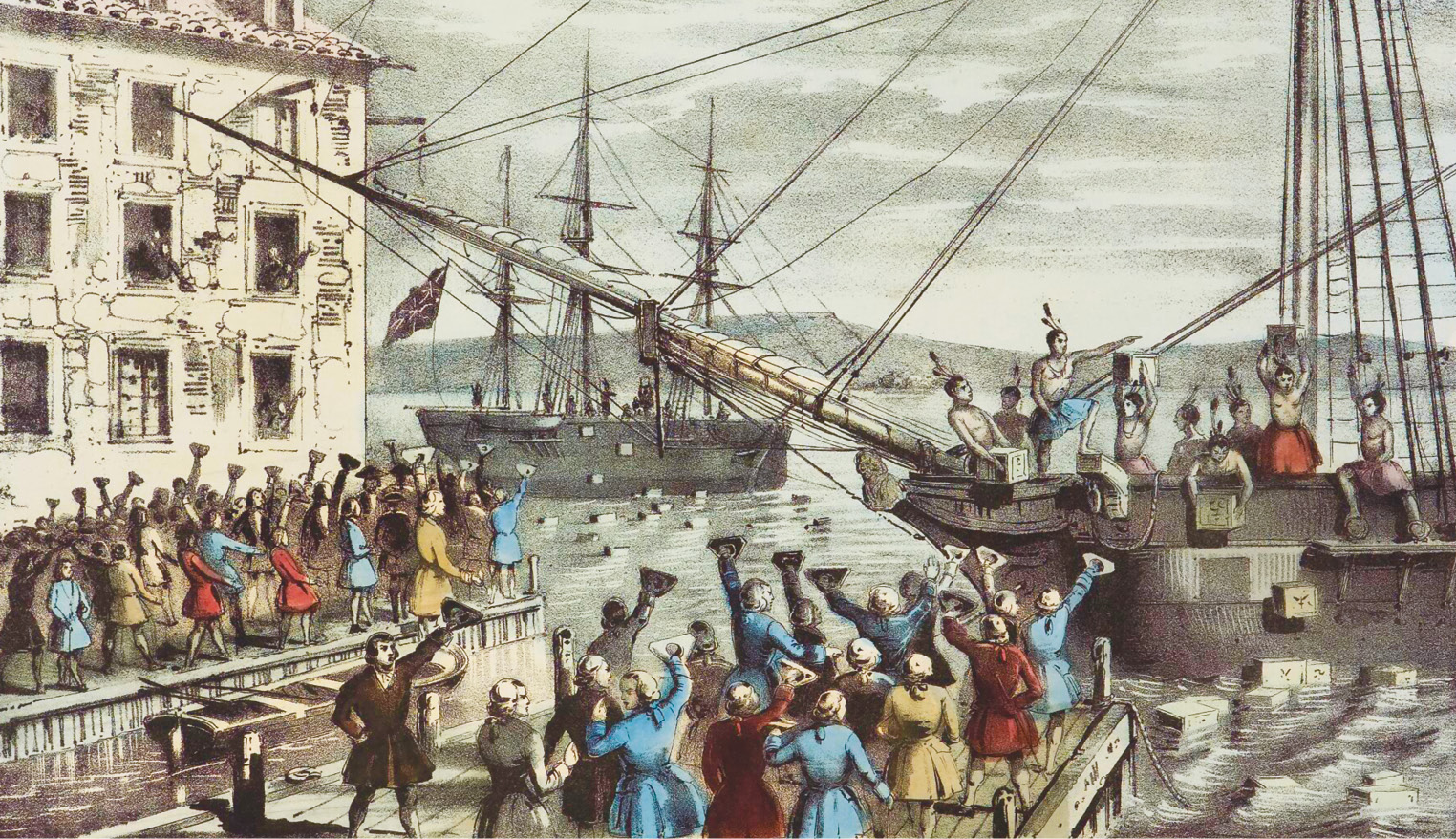
Having resisted the Crown’s repeated attempts to tax everything from paper to playing cards, and from newspapers to official documents, the colonists made life uncomfortable for England’s collection agents; and when this Stamp Act of 1765 was repealed the following year, it was replaced by the Townshend Acts and tariffs on paper, glass, and tea. The reaction in the colonies to what were referred to as the ‘Intolerable Acts’ was almost universally unfavourable, with some of the strongest protests originating in the port of Boston, where a group calling themselves the ‘Sons of Liberty’ staged violent demonstrations against the Crown.
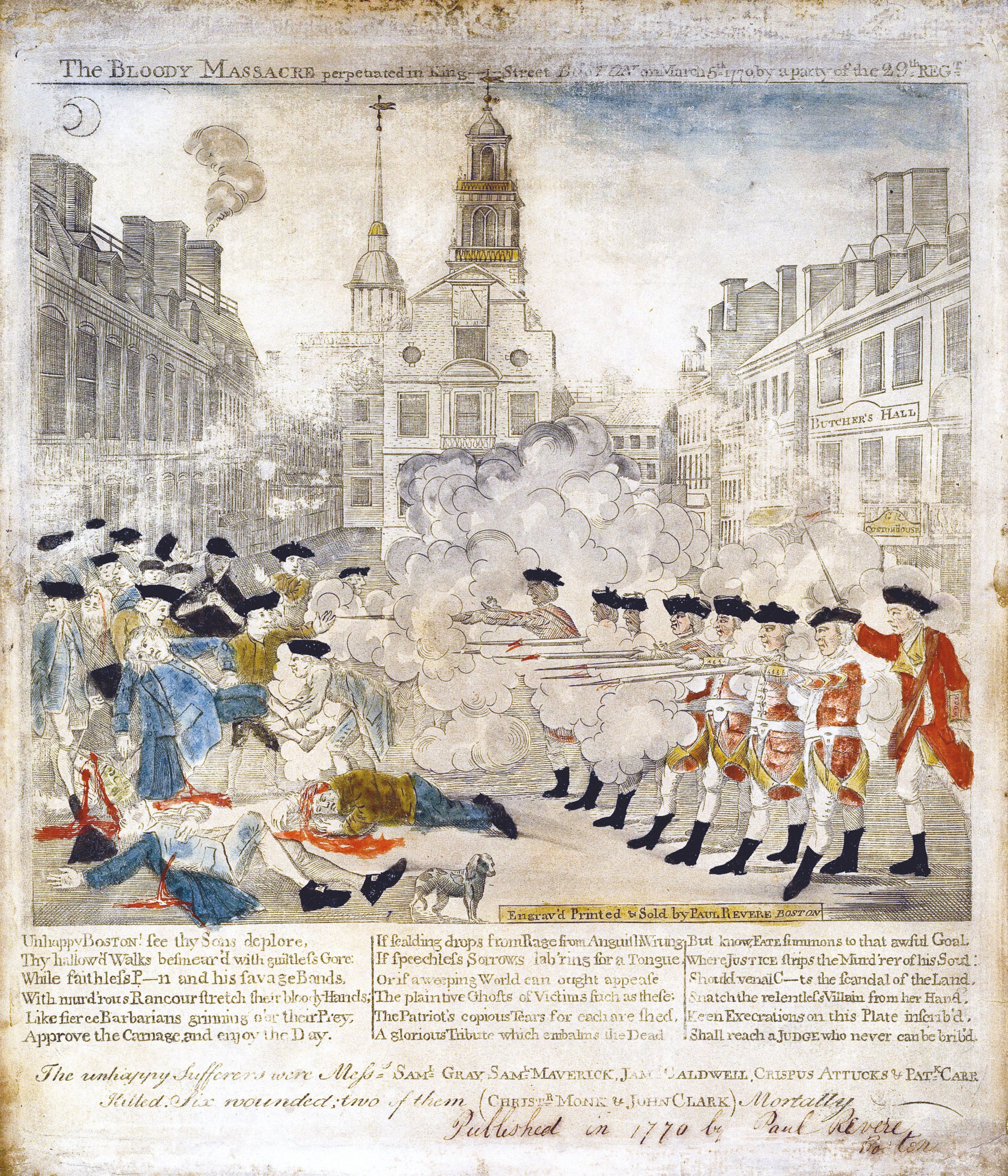
King George III dispatched additional troops to Boston to quell the growing unrest, resulting on 5 March 1770 in the small but deadly confrontation known as the Boston Massacre, which left five protestors dead and a detachment of soldiers on trial for the incident. Tensions continued to grow; and, in December 1773, a mob of the ‘Sons of Liberty’, disguising themselves as Mohawk Indians, boarded an East India Company ship in Boston Harbor and dumped its entire load of imported tea into the water. The subsequent punitive laws and the closing of Boston Harbor did little to assuage the growing discontent – but motivated colonies up and down the eastern seaboard to form into a collective known as the First Continental Congress.
A shot heard round the world
The Crown determined that stronger preventive measures must be taken; and, in April 1775, General Thomas Gage, military governor of Massachusetts, dispatched Lieutenant Colonel Francis Smith and 700 infantrymen on a mission to seize and destroy any military supplies stored by the colonists at the town of Concord, outside Boston. A small group of American militia had assembled on the green in the centre of the nearby town of Lexington, and shots were exchanged, leaving eight militiamen dead and one English soldier wounded. Advancing to Concord, Colonel Smith’s column found and destroyed three pieces of artillery and dumped barrels of flour and musket balls into a nearby pond. While a successful foray for Smith’s force, danger lurked in the countryside. Scores of patriot militia (as those colonists who took action against British control became known) had poured into the area, and the British troops had to run the gauntlet as the rebels sniped at the column on its way back to Boston. By the time they reached sanctuary, they had lost 73 men killed and 174 wounded versus a rebel loss of 49 killed and 39 wounded. War had come once again to North America.
Dismayed by the colonists’ violent reaction to British troops destroying military supplies, Lord George Germain, Britain’s Secretary of State for the Colonies, made the decision to close the port of Boston. More troops were sent from England. Immediately following the engagements at Lexington and Concord, colonial militia units totalling some 15,000 men sealed off the port of Boston, occupying the heights on the Charlestown Peninsula directly opposite the town, and commanding access via the Charles River. By late May, the number of English troops had swelled to 6,000 men.
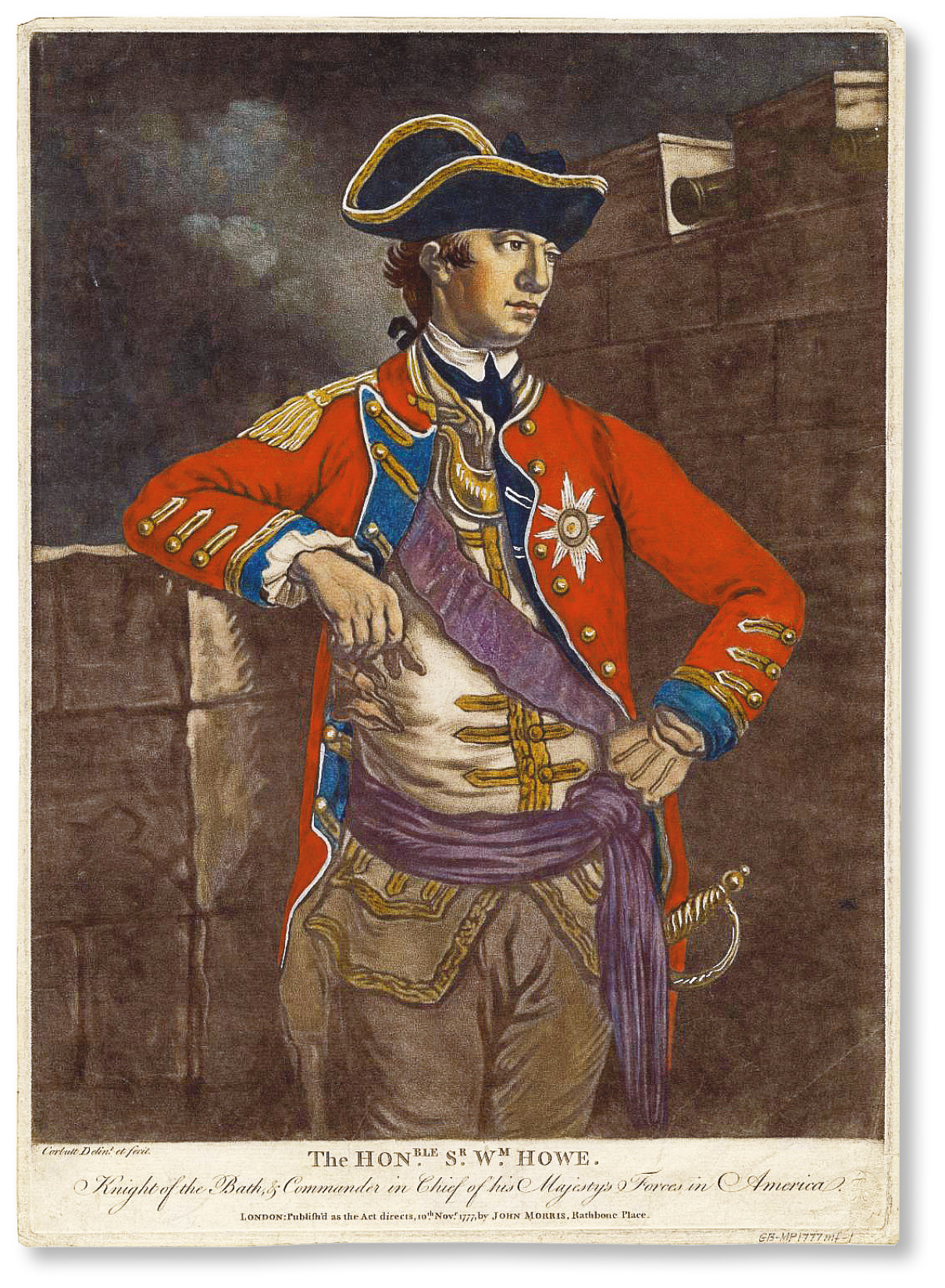
Having observed the rebel troops occupying the heights opposite, Governor-General Gage determined to take action before marine access to the port could be disrupted. Meanwhile, the rebels had taken possession of Breed’s Hill and the adjacent Bunker Hill, and erected defensive positions there. Due to the elevation of the hills, naval gunfire was unable to neutralise the colonials’ positions. Gage decided that the rebels must be ejected by force, and entrusted the assault to Major General William Howe, whose older brother Lord George Howe had died in the unsuccessful British assault on Fort Ticonderoga in 1758, during the French and Indian War.

On 17 June 1775, General Howe led his men in a direct assault on the colonists. Moving slowly, the British troops, who were wearing packs and heavy wool uniforms, trudged up the steep slopes in the brutal early summer heat. The first two attempts were beaten back with terrible losses. Howe’s entire staff was cut down around him by the colonists’ fusillade. In the end, the British drove the rebels from their positions, but the cost was horrendous – there were more than 1,000 casualties, about double the losses of the rebels. As General Henry Clinton, who had come to Boston with Howe, noted in his diary: ‘A few more such victories would have shortly put an end to British dominion in America’.
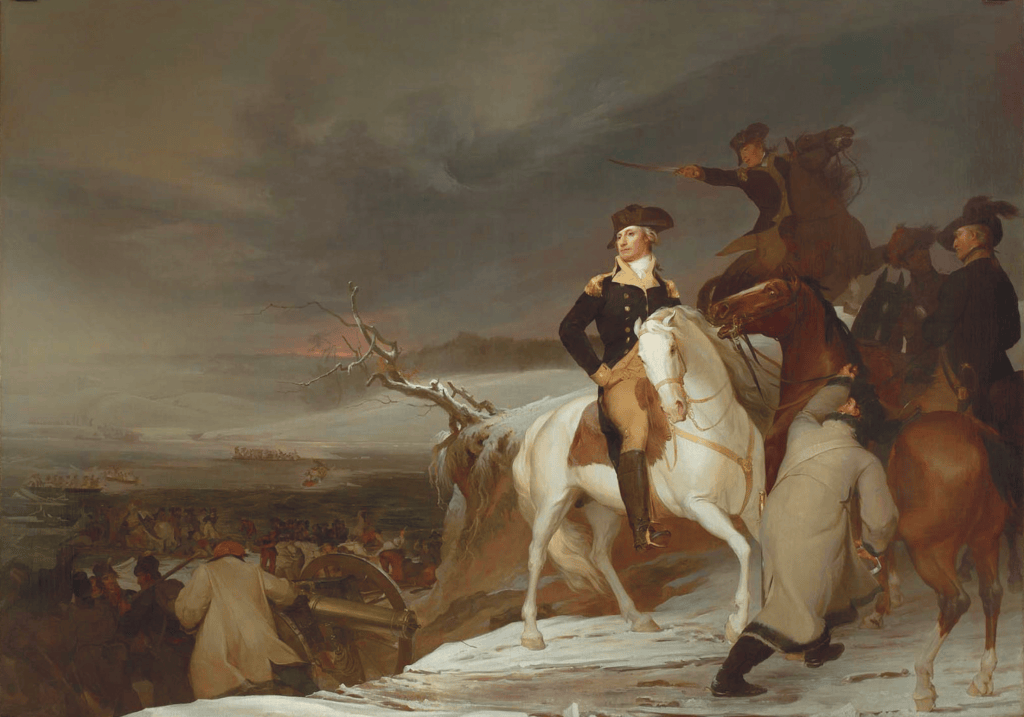
One would think that the costly success on Bunker Hill and Breed’s Hill would have solved General Gage’s problem with the rebels – but that proved not to be the case. Just prior to the fight, the Continental Congress in Philadelphia had named the aforementioned George Washington as the Commander-in-Chief of all patriot forces. Having reluctantly taken the job, Washington – who was 43 years old – rushed on 3 July 1775 to Boston, where patriot forces had continued to gather on Dorchester Heights, overlooking the city. The Americans fortified their positions and began a months-long waiting game with the British troops occupying Boston.
When Henry Knox, a former Boston bookseller who had directed American cannon fire at Bunker Hill, arrived in December, he brought with him 58 pieces of artillery (weighing more than 60 tons) that he had gathered up from the recently captured Fort Ticonderoga (located at the southern end of Lake Champlain in what is today northern New York State) and dragged some 300 miles over snow-covered mountains and across frozen water obstacles. It was an amazing feat – and Knox was an unlikely hero. Tall but quite stout, he was largely self-educated, speaking Latin, Greek, and French, and had a voracious appetite for military history and the science of artillery. His bookstore had been exceptionally popular with British officers and their families, but with the onset of the war, Knox had devoted all of his energies to the American cause, and would soon become Washington’s chief of artillery.
With the appearance of this new weaponry, which the rebels situated on Dorchester Heights, General Howe, now commanding all British forces in Boston, realised that his people were at the mercy of the enemy. He quickly organised an assault on the rebel positions – but his plans were abandoned when a freak snowstorm intervened and made it unfeasible. There was simply no alternative but to evacuate Boston and leave it in rebel hands. Thanks to Knox, Washington had won his first confrontation with Great Britain. It would be a long time before this feat was repeated.
Abortive attempts
The artillery which Colonel Knox delivered had, as noted previously, been taken from a British garrison at Fort Ticonderoga. The men who had accomplished this bloodless coup were led by two remarkable characters: a tall, lanky backwoodsman named Ethan Allen, dispatched by Connecticut; and a pugnacious, self-important colonel named Benedict Arnold, dispatched by Massachusetts. Neither was initially aware of the other’s involvement. Luckily, however, they were able to coordinate their actions, and acquire Knox’s guns. Almost immediately afterwards, both were enlisted in a colonial effort to neutralise British control in Canada, and to bring that territory into the rebel camp.
This two-pronged thrust saw a column under General Philip Schuyler and General Richard Montgomery moving north from Ticonderoga, while a second column under Benedict Arnold paralleled them, moving up the coast from Cambridge, Massachusetts. Schuyler and Montgomery moved up inland waterways, while Arnold and his unit landed in Maine and moved overland through an unrelenting wilderness towards Quebec. Both expeditions began in September 1775, and it was late October before Montgomery (Schuyler having dropped out due to failing health) was able to seize Montreal, forcing the British Governor-General Guy Carleton to retreat to Quebec.
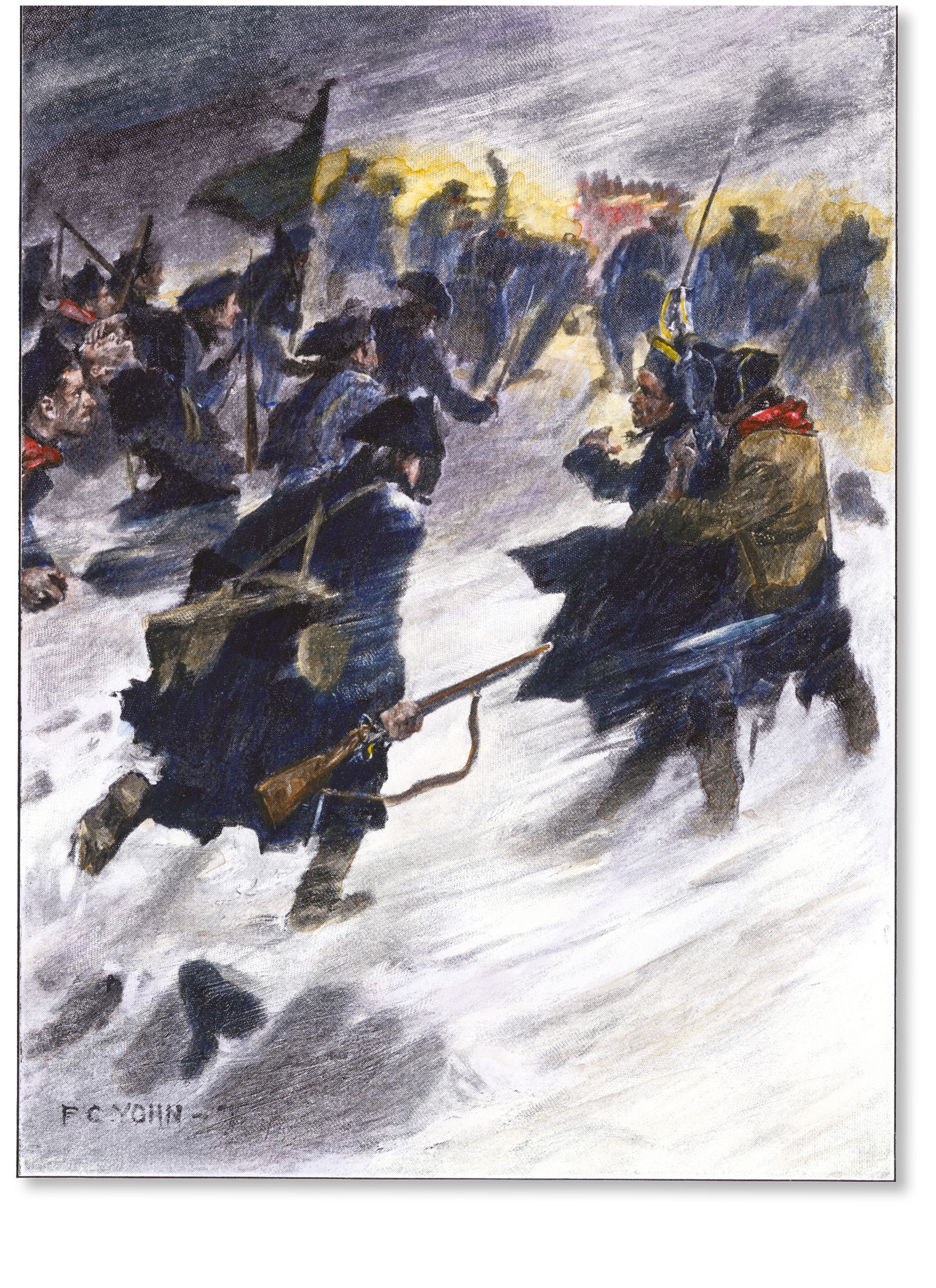
As Montgomery pushed past Montreal, Arnold’s column was still struggling northwards, having underestimated the challenges presented by the terrain and the rapidly deteriorating weather. During the move north, both columns had suffered terribly from sickness, starvation, exhaustion, and desertion, so that when they linked up near Quebec each totalled fewer than 1,200 men. While a fierce Canadian winter enveloped both sides, Carleton’s own small force remained securely behind Quebec’s walls. When Montgomery and Arnold finally launched an attack on the city on 31 December 1775, it went horribly awry: the former was killed by a blast of grapeshot and the latter had his leg shattered by a musket ball. A sizable portion of the invading force was captured, while Arnold and the remainder settled down to a shambolic siege – which, without adequate artillery, was ultimately futile.
Hungry, low on ammunition, and with their clothing reduced to rags, the Americans hovered outside Quebec until May of the following year, when, with the arrival of British warships and transports carrying more than 9,000 reinforcements, it became painfully obvious that they were outnumbered and outclassed. A frantic retreat followed, as the surviving Americans hurried south ahead of Carleton and his pursuing forces. Both sides paused hostilities as each worked feverishly to build vessels to facilitate rapid transit down the 107-mile-long Lake Champlain, past Fort Ticonderoga and into the rebels’ rear.
By October, both had their watercraft ready – the British with 25 armed vessels, including the Inflexible of 18 guns and the Thunderer of 14 guns, out of a total of 80 guns. The Americans were able to field only 16 vessels of considerably smaller size and firepower – three schooners, a sloop, four row galleys, and eight gundolas (essentially low gunboats powered by sails and long oars) – none of which carried ordnance comparable in range, weight, or accuracy to that of the British vessels.
As Carleton sailed down Lake Champlain, the hastily built American flotilla commanded by Benedict Arnold (whose pre-war existence had included stints as a ship’s captain) fled ahead until it came abreast of Valcour Island. At this point, Arnold guided his small group of vessels into a secluded bay to the west of the island and out of sight of the pursuing British fleet. The result of this manoeuvre was Carleton and his boats overshooting the Americans’ sanctuary, giving the Americans the weather gauge.
On 11 October, Arnold’s small flotilla burst out of hiding and engaged Carleton’s fleet. Things did not go well for the Americans, however, owing to their inferior firepower – although they managed to inflict enough damage to slow down the British thrust. Having lost the bulk of his force, Arnold waited until dark to sneak the remainder of his command quietly past the anchored British fleet. When Carleton realised that the Americans had slipped away, he gave chase the next day – but, while he was able to damage Arnold’s flotilla further, a number of the smaller craft eluded him. The surviving Americans managed to run their boats aground and destroy them before heading out overland to Fort Ticonderoga. Overly cautious, and fearing that the quickly approaching winter season would disrupt his lines of supply and ability to finish off the rebels, Carleton halted his offensive about three miles short of Fort Ticonderoga and returned to Canada.
The play continues
While Montgomery and Arnold had been making their doomed attempt to capture Quebec, matters had been progressing rapidly in the colonies. Washington had obliged General Howe’s forces to evacuate Boston and the colonies’ assembled representatives in Philadelphia had collaborated in writing and signing their Declaration of Independence, officially separating themselves from Great Britain. But the war was about to enter a more perilous phase. Having dropped back to Halifax, Nova Scotia, to regroup and replenish his forces, Howe then moved them southwards again, and threatened another critical area. As George Washington wrote to his brother Jack, ‘We expect a very bloody Summer of it at New York’. It would prove to be even worse than he had expected.
You can read the second part by Fred Chiaventone on how the conflict escalated as the two sides struggled to gain the upper hand here and find an infographic here